Yes — Link supports Bluetooth music and call streaming, while Nuance measured 0.0/5 on streaming music in lab testing and doesn't support call streaming at all. If streaming matters to you, Link is the clear pick.
Eargo Link vs. Nuance Audio Hearing Glasses
Check out our comparison of the Eargo Link vs Nuance Audio Hearing Glasses. Listen to audio samples and see how the two hearing aids differ in terms of sound performance, features, accessories, and more.
Published Updated
Quick Verdict
AI summarizedSummarized with AI assistance from our human-researched product information, in-lab testing, objective sound measurements, and expert ratings.
The real choice is streaming versus eyewear-integration: Link is the cheaper, earbud-style pick for anyone who wants Bluetooth music and calls, while Nuance sacrifices streaming entirely in exchange for putting hearing support inside glasses frames you'd wear anyway.
Link
Choose the Eargo Link if you want Bluetooth audio streaming for music and calls, a more discreet earbud design, and to pay roughly $400 less for a pair.
Hearing Glasses
Choose the Nuance Audio Hearing Glasses if you already wear glasses and want hearing support built into the frames, and you value strong lab-measured speech-in-quiet performance over streaming or all-day battery life.
What actually separates them
AI summarizedForm factor and who it suits
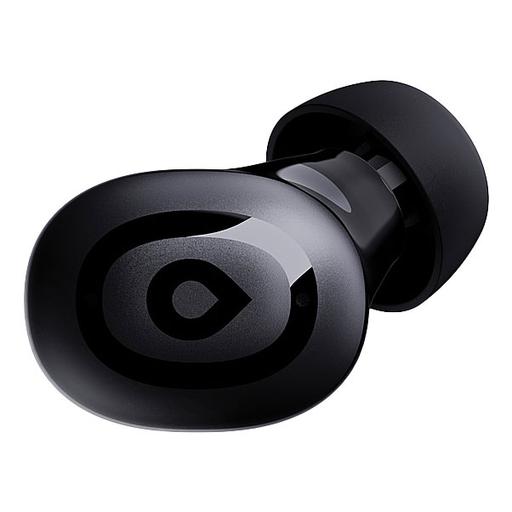
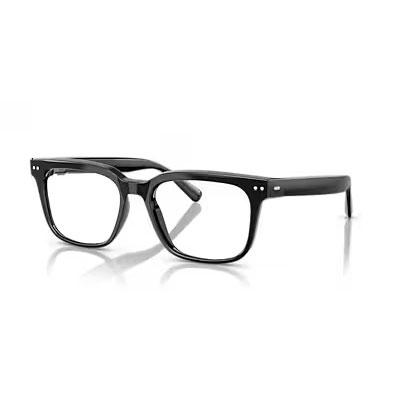
SpecLink is a Bluetooth earbud-style hearing aid, while Nuance is built into eyeglasses frames — a real fit for people who already wear prescription lenses and want to avoid an extra in-ear device.
Audio streaming
Lab measuredLink streams music and handles calls over Bluetooth 5.3, a feature reviewers called a genuine upgrade for Eargo; Nuance's Bluetooth is app-control only, with a measured 0.0/5 music streaming score and no call streaming at all.
Price
PriceLink runs about $400 less per pair than Nuance, per current street pricing.
Speech-in-quiet lab performance
Lab measuredNuance's tuned speech-in-quiet score of 4.3/5 is notably higher than Link's 2.9/5, though Link's speech-in-noise score (2.2/5) is close to Nuance's (2.1/5) — neither pulls ahead there.
Product Overview
Link
Hearing Glasses
Form Factor
Form FactorNon-custom earbud style device.
Form FactorCombines hearing aids and prescription lenses in a single unit.
Expert Rating
Score
3.7
Score
3.5
User Rating
—
1.63 reviews
Hearing Loss LevelHearing Loss LevelThis represents HearingTracker's best guess on suitability. Please consult a licensed audiologist to confirm your own candidacy for this device.
MildModerate
MildModerate
Product Features
RechargeableiPhoneAndroid
Rechargeable
Expert Ratings
Compare comprehensive test results and expert opinions.
Link
Hearing Glasses
HearingTracker Score
Link
3.7AVERAGE
The Link by Eargo is an over-the-counter hearing aid designed to offer discreet and user-friendly hearing enhancement. It features advanced sound processing technology, competitive pricing, and has been positively reviewed by independent labs for its performance and reliability.
Read full reviewHearing Glasses
3.5BELOW AVERAGE
Nuance Audio Glasses seamlessly combine prescription eyewear with discreet over-the-counter hearing enhancement, offering solid performance in speech clarity but with some limitations in battery life and audio streaming.
Read full reviewHearAdvisor SoundScore
Link
4.1ABOVE AVERAGE
Eargo Link achieved a SoundScore of 4.1/5 and a SoundGrade of A in HearAdvisor lab testing. It ranked #15 of 65 OTC Hearing Aid devices tested. The OTC Hearing Aid category average SoundScore was 3.71/5.
Hearing Glasses
4.0AVERAGE
Nuance Audio Glasses achieved a SoundScore of 4.0/5 and a SoundGrade of A in HearAdvisor lab testing. It ranked #20 of 65 OTC Hearing Aid devices tested. The OTC Hearing Aid category average SoundScore was 3.71/5.
Build Quality
Link
3.8BELOW AVERAGE
The Eargo Link seem to be a slight regression in build quality and have an IP54 rating, which is lower than other Eargo models. This means they are not water-proof and will require extra care to continue working well long term.
Hearing Glasses
3.9BELOW AVERAGE
Nuance Audio Hearing Glasses have an IPX4 rating, which means they can withstand light splashes of water but may require extra care to ensure long-term reliability. Fortunately, their delicate components are less susceptible to moisture damage since they aren't positioned inside the ear like traditional hearing aids.
Battery
Link
2.9BELOW AVERAGE
I liked the portable charging case and magnetic locks. However, the 9 hour rechargeable battery life means they will not last all day and will be better suited for situational use rather than all-day hearing help.
Hearing Glasses
1.9BELOW AVERAGE
Nuance Hearing Glasses use internal lithium-ion batteries that provide up to 8 hours of use. To extend battery life throughout the day, Nuance recommends using them situationally and turning them off when not needed. Recharging takes approximately 3 hours.
Bluetooth
Link
5.0EXCELLENT
I was impressed with Eargo Link's audio quality for both streaming and hands-free calls. The Bluetooth 5.3 compatibility is a significant upgrade from Eargo's other products that don't support streaming.
Hearing Glasses
Not yet rated by our experts
App Features
Link
Not yet rated by our experts
Hearing Glasses
3.5BELOW AVERAGE
The Nuance Audio mobile app is user-friendly and available for both iOS and Android devices. It includes useful features such as volume control, microphone directionality, and noise reduction. Nuance hearing glasses are preset-based and use 4 default programs for adjustment, but they are not customizable based on a hearing test.
Comfort
Link
4.0AVERAGE
Link were moderately comfortable in my ears and feel like typical wireless earbuds. I was able to switch through the included ear tips to find the right fit for both comfort and sound quality.
Hearing Glasses
4.5EXCELLENT
Nuance Hearing Glasses are comfortable, lightweight, and fit similarly to other broad-rimmed eyeglasses. If you're accustomed to wearing both glasses and hearing aids, you may feel less encumbered since there's no need to fit both glasses and hearing aids on your ear.
Design
Link
4.5EXCELLENT
With their modern earbud-like appearance, Link is definitely more bold than other Eargo models. While I like the earbud look, you will have to decide whether you prefer a more discrete hearing aid option.
Hearing Glasses
5.0EXCELLENT
Nuance Audio currently offers two frame styles that may appeal to different aesthetic preferences. However, the frames are larger than traditional eyeglasses to accommodate the internal hearing components.
Value
Link
3.8AVERAGE
Eargo Link has a value score of 3.8/5 based on lab performance and public display price.
Hearing Glasses
3.3BELOW AVERAGE
Nuance Audio Glasses has a value score of 3.3/5 based on lab performance and public display price.
Handling
Link
3.5BELOW AVERAGE
Instead of typical multi-function buttons, Link uses touch sensors. These worked well, and more reliably than other products I've tested, though the app would be a nice addition for manual controls.
Hearing Glasses
5.0EXCELLENT
Nuance Audio Hearing Glasses are easy to use, especially if you're already accustomed to wearing glasses. However, care is required when placing them on the charger, as they must be in a specific orientation to magnetically lock and charge properly.
Pro Support
Link
1.0BELOW AVERAGE
Eargo is one of the first direct to consumer hearing aids, but support is unfortunately limited to to their Client Care team and personal hearing professionals. While Eargo claims they work alongside audiologists, it is not the same as direct professional hearing care.
Hearing Glasses
1.0BELOW AVERAGE
Nuance Audio Hearing Glasses can be ordered and picked up in-store, where a vision professional will provide basic fitting guidance. Remote technical support is also available online and through the Nuance Audio mobile app. However, remote programming and support from a hearing specialist is not currently offered.
Lab Recordings
Listen to direct output recordings from our acoustic test lab.
Link
Hearing Glasses
Busy CafeBusy CafeSpeech intelligibility improvement in loud environments
Hear this scene unaided, for comparison
Link
Hearing Glasses
Quiet OfficeQuiet OfficeSpeech intelligibility improvement in quiet and moderate environments
Hear this scene unaided, for comparison
Link
Hearing Glasses
Streaming MusicStreaming MusicStreaming music provides a full range of bass and treble
Hear this scene unaided, for comparison
Link
Hearing Glasses
Lab recordings not yet available
HearingTracker partners with HearAdvisor to provide recordings and performance data from an acoustic laboratory that follows standard scientific procedures. All hearing aids are fitted and performance-tested for mild sloping to moderate hearing loss. All audio samples cutoff above 10kHz.
Accessories
Compatible accessories for each hearing aid
Link
Hearing Glasses
Battery Charger
Link Charger
Charges Link by Eargo OTC hearing aids.
Charging Pad
The Nuance Audio Glasses charge via a tabletop magnetic charging pad that requires wall power and takes about three hours for a full recharge.
Remote Control
None
Remote Control
The compact Nuance Audio remote offers quick, on-the-go control of volume, audio modes, and hearing assistance for your glasses.
Smartphone App
None
Nuance Audio App
The Nuance Audio app lets you customize, control, and optimize your Nuance Audio Glasses for real-time hearing enhancement, with features like sound presets, noise reduction, and remote volume adjustment—all from your smartphone.
Hardware
Link
Hearing Glasses
Bluetooth® AudioBluetooth® AudioThis hearing aid is capable of streaming Bluetooth® audio certain phones and/or devices.
- Bluetooth® (A2DP)
- Bluetooth® Low Energy (LE)
No
Hands-Free CallingHands-Free CallingIt is possible to have a hands-free phone call with this hearing aid. You are not required to hold the phone up to your mouth.
—
No
IP Rating
No
IPx4
Push ButtonPush ButtonThe hearing aid features a push button which allows toggling across different sound processing programs
No
- Program control
- Power on/off
Rechargeable BatteriesRechargeable BatteriesCharge your batteries overnight in a docking station and get a full day's use (in most cases) of battery life the following day.
Lithium-ion
Lithium-ion
Tap ControlsTap ControlsThe hearing aid may be controlled by physically tapping it with your fingers.
- Change program
- Accept/end calls
- Pause/Resume
- ANC On/Off
No
Software Features
Link
Hearing Glasses
Active Noise Cancellation (ANC)Active Noise Cancellation (ANC)ANC is different than typical hearing aid noise reduction in that it reduces both steady state and dynamic background noise using sound wave inversion.
Yes
No
DirectionalityDirectionalityDepending on the types and number of microphones a hearing aid has, the hearing aid may be able to boost sounds from specific directions (by reducing sounds from other directions). This can be helpful to focus on a speaker directly in front of the hearing aid user, as well as to give the user information about where different sounds are coming from.
No
Yes
Feedback SuppressionFeedback SuppressionIf any sound amplified by the hearing aid escapes the ear canal, it may reach the hearing aid’s own microphone and cause a harsh whistling noise. Some hearing aids are able to recognize when this feedback occurs and reduce or eliminate it.
Yes
No
Noise ReductionNoise ReductionThis feature uses modern hearing aids’ processing power to examine the incoming sound signal, determine if noise is present and reduce the volume of the troublesome sound to increase comfort.
Yes
Yes
Bottom Line
AI summarizedThe Verdict
Link is the better fit for someone who wants a conventional wireless-earbud experience with real streaming and calling, priced about $400 less than Nuance — its 2.2/5 speech-in-noise score is unremarkable but roughly matches Nuance's, so streaming and price are what separate them, not noise performance.
Nuance's strength is its 4.3/5 tuned speech-in-quiet score and its 2-in-1 glasses format, but that comes with zero music streaming, no call support, and a shorter battery life, so it's a niche pick for glasses-wearers rather than a general recommendation.
Which is right for you?
Neither device should be mistaken for an all-day solution — Link runs about 9 hours and Nuance about 8 — and both rely on preset programs rather than a true audiogram-based fit, so if your hearing loss is more than mild-to-moderate or you want fine-tuned programming, a self-fitting OTC device or a prescription hearing aid fitted by a professional is worth considering instead.
Before you buy
AI summarizedTest Link's 9-hour battery against your day
Link's rechargeable battery lasts about 9 hours, so situational use rather than all-day wear is the realistic expectation — use its 45-day return window to confirm this fits your routine.
Try Nuance's frame fit and calibration
Nuance's performance depends on completing the app's voice calibration step and getting the frame's speaker distance right for your head size, so try that process during the 30-day return window before committing.
Match hearing-loss level to presets, not a test
Both devices use preset programs rather than a fitting based on your actual audiogram, so take an online hearing screening first to check you fall in the mild-to-moderate range either is designed for.
Frequently Asked Questions
AI summarizedNuance scored notably higher, with a tuned speech-in-quiet score of 4.3/5 versus Link's 2.9/5. For speech in noise the two are close, at 2.1/5 and 2.2/5 respectively.
No, Link is the cheaper of the two by roughly $400 per pair at current street pricing.
You don't strictly need to, since Nuance offers frame-only options without a prescription, but the format is built primarily for people who wear or plan to wear prescription eyewear alongside hearing support.
Link rates at about 9 hours per charge and Nuance at about 8 hours, so both are meant for situational rather than all-day use.