Oticon Hearing Aids: Models, Features, Prices, and Reviews
Oticon hearing aids typically cost $1,300 to $3,500 per hearing aid ($2,600 to $4,800 or more per pair), depending on the model, technology tier, and where you buy.Our expert team selects and tests products rigorously. We may earn commissions if you buy through our links. Here's how we keep reviews independent.

Oticon builds its hearing aids around a different bet than most competitors: Instead of isolating speech and suppressing everything else, its BrainHearing philosophy and onboard Deep Neural Network (DNN) processing aim to give the brain the full soundscape it needs to make sense of speech on its own.
Below, we break down how that approach holds up across Oticon’s current lineup, from the flagship Reveal and Zeal platforms to older Intent, Real, and More devices, with compact reviews built on pricing, expert ratings, key features, and comprehensive performance data from our in-house testing in collaboration with HearAdvisor, an independent hearing aid testing lab.
)
)
Oticon Intent is a top-tier flagship with excellent lab-verified speech performance, strong streaming and connectivity, and smart features like 4D sensors and fast charging, though its slightly bulkier fit, simpler button controls, and the still early LE Audio and Auracast rollout may be drawbacks for some users.
)
Hearing aid glossary
Looking that up…
Terms are matched automatically. A definition may not fit every context.


Oticon is a leader in hearing aid innovation. Oticon Reveal and Oticon Intent, the company’s marquee models, are among the five best-performing hearing aids, as rated by our independent HearAdvisor test lab (4.8 and 5.1 tuned score, respectively, out of 5), and rate among the best (4.5 for both) in HearingTracker scores for overall performance and features. Below, we introduce Oticon’s full line of hearing aids and accessories, discuss the latest technology, and explore the company’s history and legacy products.

Oticon Hearing Aid Models
Oticon makes premium hearing aids programmed by an audiologist or other hearing care professional based on your hearing test results. Oticon’s Reveal, Intent, Verit, Zeal, Real, More, Jet PX, Own (and Own SI), and Xceed lead a comprehensive family with a broad range of hearing aid features and choices for people of all ages.
Oticon hearing aids serve the entire spectrum of hearing loss, ranging from mild to profound. They come in all form factors—from the tiniest invisible-in-canal () to super-power behind-the-ear () styles—with tailored solutions for first-time users and children, for older adults, and for people with severe-to-profound hearing loss. Solutions also include Made-for-iPhone and Android -compatible hearing aids, Bluetooth LE and (Intent), Bluetooth streaming accessories, smartphone-controlled apps, and rechargeable solutions offering a full day of battery life on a single charge.
Compare the Best Oticon Hearing Aids of 2026
Model | Style | Battery Life | IP Rating | Rechargeable | Bluetooth | Telecoil | Streaming | Tinnitus Mgmt |
|---|---|---|---|---|---|---|---|---|
RITE | 24 hrs | IP68 | LE Audio | |||||
RITE | 20 hrs | IP68 | LE Audio | |||||
CIC | 20 hrs | IP68 | LE Audio | |||||
IIC | 3-5 days | IP68 | 4.0 (BLE) | |||||
RITE | 24 hrs | IP68 | 4.0 (BLE) | |||||
RITE | 24 hrs | IP68 | 4.0 (BLE) | |||||
BTE | full day | IP68 | 4.0 (BLE) | iOS only | ||||
RITE | 16 hrs | IP68 | 4.0 (BLE) |

Latest Flagship: Oticon Reveal
Oticon Reveal is Oticon’s latest flagship hearing aid built around what Oticon calls Dual architecture: Speech AI works to make voices clearer while Context AI preserves more of the surrounding sounds that help a setting feel natural. Launched in August 2026, Reveal builds on the technology found in Oticon Intent (see below) and adds new AI processing, upgraded feedback management, improved connectivity, and support.
Oticon's VP of Audiology and Research Thomas Behrens told HearingTracker that the two AI systems are integrated on the same chip and continually share information so they know what each other is doing. This allows them to be much faster and more precise than in the past, with Speech AI becoming three times faster at detecting speech than that of Intent.
Reveal builds on the 4D Sensor technology introduced with Intent, which uses information about the listening environment, conversations, and the wearer’s head and body movements to adjust sound processing. The goal is to make speech clear while preserving enough of the surrounding soundscape to help the brain understand context and maintain a more natural sense of place. A hearing care professional can adjust Speech ’s focus through three settings—Front, Wide, and Full.
:format(webp))
Reveal’s updated wireless platform is designed to improve connection stability and range for audio streaming and hands-free calls. It supports compatible iPhones and Android phones, Bluetooth , Google Fast Pair, and Auracast™ broadcast audio from launch. A built-in provides access to , while an optional rechargeable RE solution serves people with single-sided deafness. In hands-on use, HearAdvisor found Bluetooth pairing straightforward and the connection stable.
The new hearing aid also updates two practical features: Wind and Handling Stabilizer 2.0 aims to reduce interference from wind, hair, and contact with the microphones. The Reveal Optimizer is designed to control whistling while preserving amplification.
Oticon specifies up to 24 hours of battery life under its test conditions (streaming and other factors will affect actual use). A 15-minute charge can provide up to 4 hours of use, and buyers can choose a desktop charger or a portable SmartCharger.
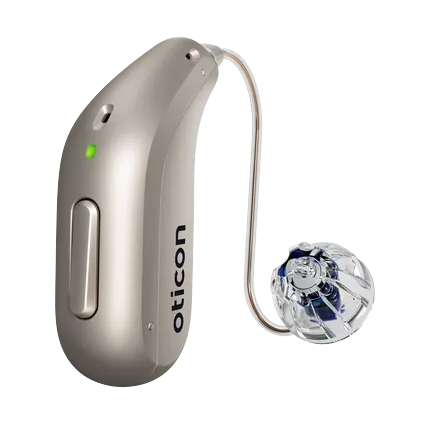
Oticon Reveal combines strong lab speech results with comfortable hearing aids and stable Bluetooth. Our reviewer questioned the charger lid’s sturdiness.
Key Features
Expert Review
Launched in August 2026, Reveal is currently available in one rechargeable style, the miniRITE R, with the same external shell and physical look as Intent. Oticon is likely to add more Reveal styles and options over time. It is offered in four technology levels, from Reveal 1 (premium) to Reveal 4 (essential).
HearAdvisor’s testing of Reveal 1 found strong speech performance in quiet and noise, with no audible whistling during its feedback tests. Reveal earned a HearAdvisor 5.1 SoundScore and a 4.5/5 HearingTracker Score. See our full review for the details.
Previous Flagship: Oticon Intent
Oticon Intent is the company’s previous flagship hearing aid released in February 2024. Employing the company’s Sirius chip platform, Intent uses 4D Sensor technology to understand each user’s listening intentions, moment by moment. This advancement, along with a second-generation Deep Neural Network ( 2.0) system and new features like the Smart Speaker, Bluetooth® LE, and ™-enabled technology, marked a significant leap forward in personalized hearing support. In combination with Oticon’s tinnitus solutions (more below), this also makes Intent one of the best hearing aid for tinnitus.
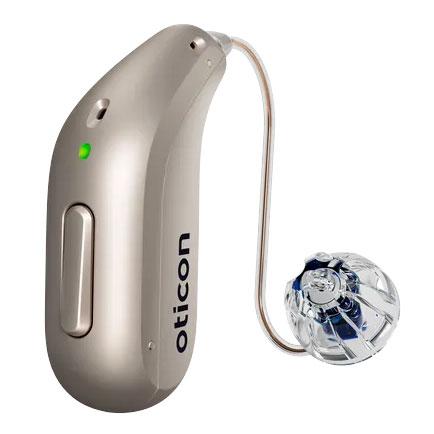
Oticon Intent is a top-tier flagship with excellent lab-verified speech performance, strong streaming and connectivity, and smart features like 4D sensors and fast charging, though its slightly bulkier fit, simpler button controls, and the still early LE Audio and Auracast rollout may be drawbacks for some users.
Key Features
Expert Review
As noted previously, Oticon Intent is among the best-scoring hearing aids for acoustic performance, as tested by the independent HearAdvisor lab, and among the best-scoring aids by HearingTracker when considering overall acoustic performance as well as other qualities like comfort, battery life, Bluetooth, build quality, etc. (see scorecard above).
Oticon Intent’s 4D Sensor Technology monitors acoustic environments, head and body movements, and conversation activity to adjust sound processing accordingly, ensuring seamless adaptation to user requirements. It reportedly enhances speech understanding by 15%, enabling users to focus their attention on desired sound sources effectively.
Further enhancing Intent’s capabilities, MoreSound Intelligence 3.0 offers improved clarity and balance, with up to 12 noise suppression, resulting in 35% more access to speech cues compared to previous models. Additionally, a larger and more diverse set of sound samples makes up the second-generation Deep Neural Network ( 2.0), a form of artificial intelligence that mimics the brain’s learning process and facilitates accurate representation of sounds in different situations.
Intent introduced a fully-redesigned exterior in a rechargeable miniRITE (receiver in the ear) hearing aid style. Even with its small size, it reportedly provides 20 hours of battery life even when streaming on a full 2-hour charge. Intent also features faster recharging with a quick 15-minute charge giving you 4 hours of use and a 30-minute charge giving you 8 hours.
:format(webp))
Users of Intent can enjoy direct Bluetooth streaming and hands-free communication via iOS devices (iPhone 11 or later) and compatible Android™ phones and tablets (Android 10 or later), and Windows PCs. Featuring Bluetooth LE and -enabled technology for future-proof connectivity, Intent should overcome the recent connectivity challenges experienced in some of the company’s devices by using the new Oticon Companion app. (See the Oticon compatibility page for more details.)
For Android users of smartphones like the Samsung Galaxy S25 (and S24 and Pixel 9 with Android 16), the new capabilities not only mean hands-free calling, but also the ability to adjust the aids’ presets using native settings. The functions should also improve battery life.
Albeit with a slightly bulkier design and the removal of the rocker switch that we tend to prefer, Oticon Intent prioritizes comfort and simplicity with its single-button design and compact minRITE form.
Intent comes in 9 color options and is available in 4 technology levels (levels 1 to 4, with 4 offering the most advanced features).
New Full-Featured Instant-Fit NXT: Oticon Zeal
Launched in the U.S. in January 2026, Oticon Zeal is positioned as a new form factor the company calls "NXT In-the-Ear": a small, stigma-busting, modular hearing aid designed to bridge the gap between almost-invisible completely-in-canal () and what people want in a -type device—including advanced sound processing, rechargeability, Bluetooth audio streaming, and instant-fit capabilities (as well as custom-fit). It uses the same -powered Sirius chip as Oticon Intent and Own SI, offering an "always-on" AI engine that delivers speech-in-noise performance close to that of Intent RITEs, despite being a single-microphone device.
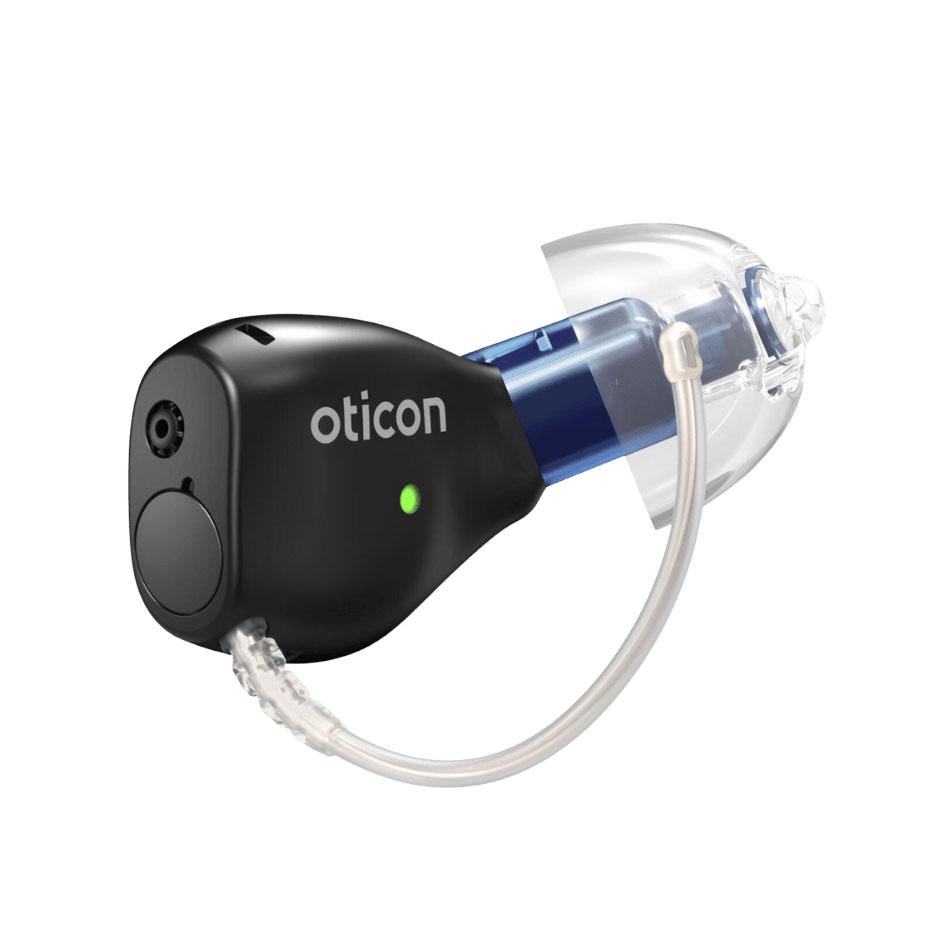
Oticon Zeal is an instant-fit, nearly invisible, rechargeable prescription hearing aid with AI-driven processing and modern Bluetooth LE Audio connectivity for Android and Apple iOS.
Key Features
Expert Review
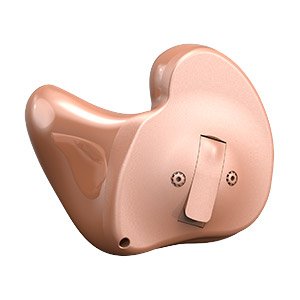
Oticon has engineered Zeal so you can use it right out of the box without the need for custom earmolds (although that's an option too). It incorporates a first-of-its-kind manufacturing approach for hearing aids that fully encapsulates the electronics in protective resin, reducing the risk of damage from moisture, debris, and mechanical stress. This has also allowed the battery's capacity to expand, so it can provide up to 20 hours of use on a single charge with typical streaming. Zeal’s unique wrap-around antenna serves as a 3-in-1 device that leverages in-ear physics and the body’s conductive properties: it works as both a retention arm and an extraction cord, and it's a flexible antenna for wireless connectivity.
:format(webp))
Compatible with both iOS and Android devices, Zeal is the first hearing aid to support Google Fast Pair. This allows users to pair it easily with Android phones—and, once paired, the connection is automatically recognized across other Android devices logged into the same Google account. Its antenna enables audio streaming and hands-free calling for iOS and Android phones with , and allows control from the Oticon Companion App. Additionally, Zeal is also one of the few hearing aids to enable broadcasts right now (i.e., no firmware update required).

New Battery-Powered Premium Family: Oticon Verit
Oticon Verit, introduced in April 2026, is a premium hearing aid family designed for people who prefer traditional disposable zinc-air batteries rather than rechargeable hearing aids. While rechargeable models now dominate much of the market, many wearers still prefer the option of replacement batteries and the ability to immediately restore power—especially for travel, long days, or situations where charging is inconvenient (e.g., living in places where prolonged power outages occur).
:format(webp))
Powered by Oticon’s Sirius platform—the same core platform used in Oticon Intent—Verit brings many of Oticon’s newer BrainHearing technologies to a battery-powered lineup. This includes MoreSound Intelligence 3.0, MoreSound Amplifier 3.0, MoreSound Optimizer, and second-generation sound processing designed to help users hear a fuller, more balanced sound scene as listening environments change throughout the day. However, importantly, Verit does not have the Intent’s 4D Sensor / user-intent sensor system, which is the motion/inertial-sensor-driven feature that incorporates head and body movement.
Verit is available in three styles—miniRITE T (standard ), miniBTE T 85 (standard ), and BTE T 105 (power BTE)—providing a premium non-rechargeable options that can fit a wide range of hearing losses. The family also includes comfort-oriented features such as SuddenSound Stabilizer and Wind & Handling Stabilizer to help manage abrupt sounds, wind, and handling noise.
On the connectivity side, Verit is more modern than many people may expect from a traditional battery-powered hearing aid. It supports Made for iPhone streaming and hands-free calling, Bluetooth for compatible Android devices, Google Fast Pair, and broadcast audio through the Oticon Companion app. They even include a . In short, Verit is ideal for users who want the reassurance and flexibility of disposable batteries without sacrificing premium sound processing or modern wireless features.
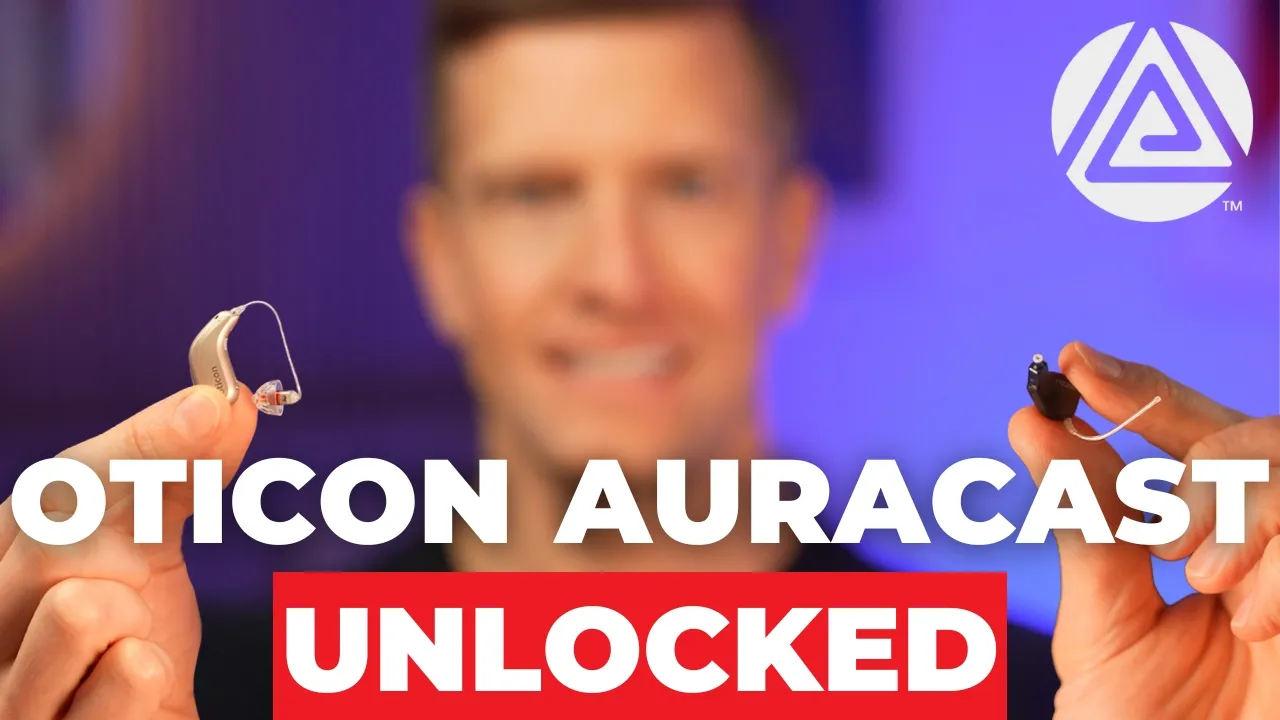
Take a look at Matthew Allsop's video below for his review of Oticon Verifit.
Previous Generation: Oticon Real
Oticon Real was launched in February 2023 and uses the Polaris R chip set. Building on Oticon More’s advanced and features, Oticon Real identifies which sounds are important, like speech, without relying on traditional hearing aid algorithms for defining listening environments.
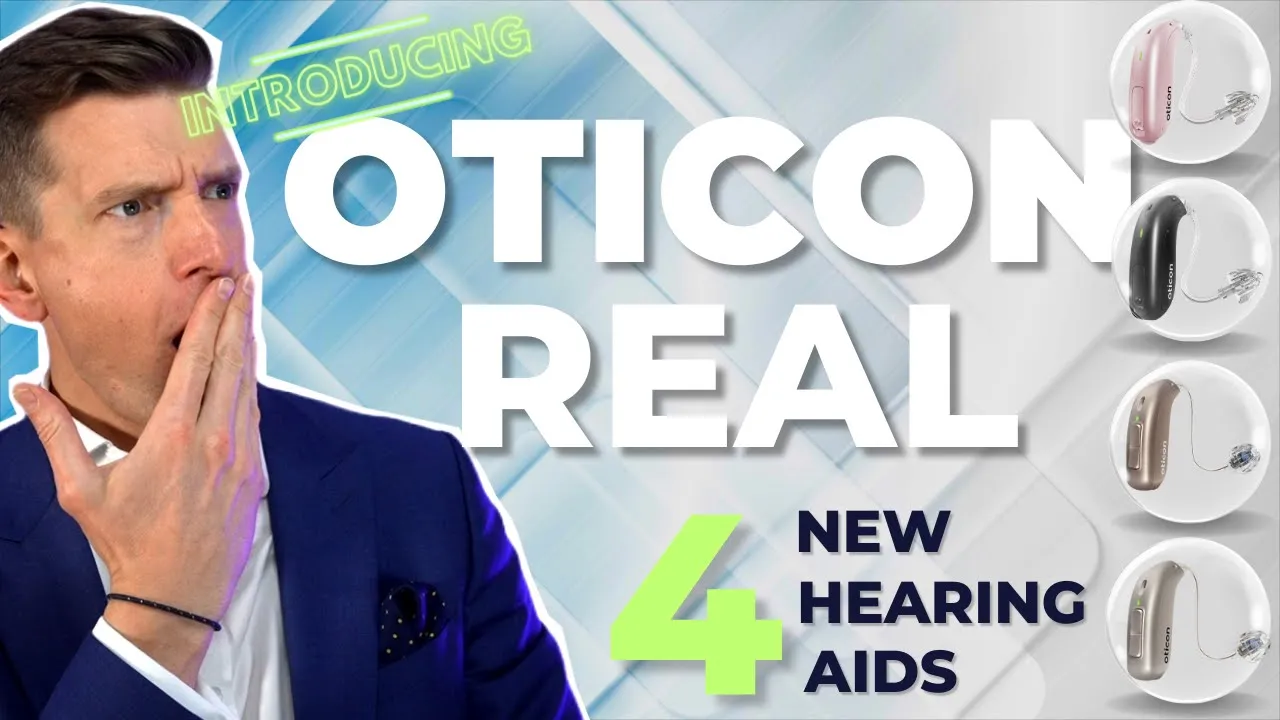
Additionally, Oticon Real includes detectors for better sound processing when confronted with sudden noises, wind, or when you jostle the hearing aids—minimizing distracting sounds and increasing speech clarity. True to its BrainHearing engineering, these features are designed to significantly reduce listening effort, giving users confidence in their ability to engage and focus.
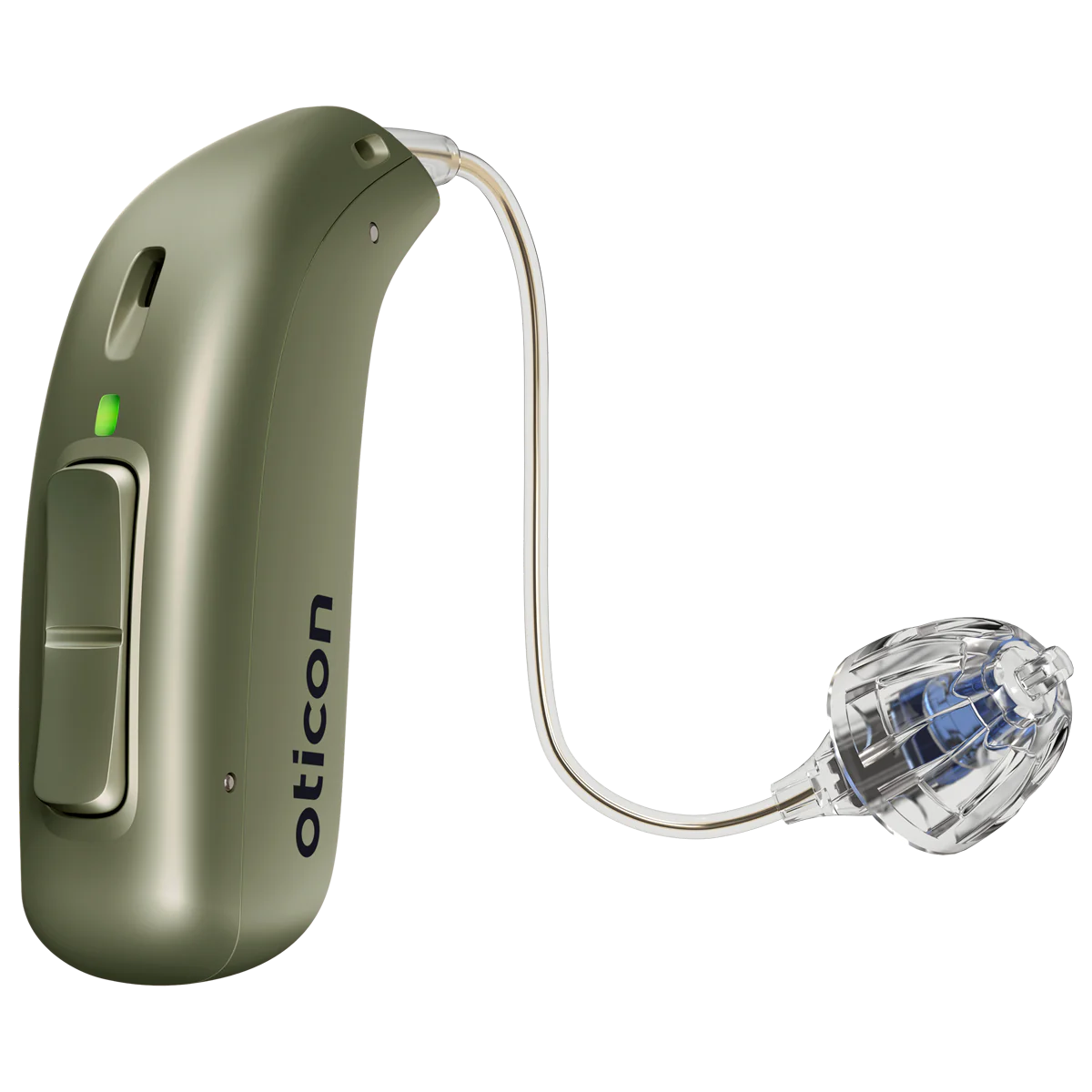
The Oticon Real Hearing Aid is the latest flagship model from Oticon, featuring advanced technologies such as Bluetooth audio streaming, Deep Neural Network (DNN) technology, and water resistance. It offers significant improvements over previous models with new features like the wind and handling stabilizer and Sudden Sound Stabilizer, enhancing speech clarity and reducing background noise for a more natural listening experience.
Key Features
Real offers Bluetooth 5.0 streaming for Apple and Android devices, using the Made-for-iPhone (MFI) Bluetooth LE and streaming protocols, meaning you can stream audio directly into both your hearing aids. It also offers 2-way audio for hands-free calling with iPhones and Apple-compatible devices (v15.2 and higher). Android phone users can stream audio directly into both ears but will need to talk into the phone receiver (if the hands-free feature is important to you, see the Oticon Connect Clip accessory below).
All models have for streaming audio from the more widely installed loop systems, as well as landline telephones. However, because they do not use Bluetooth LE 5.2, they won't be forward-compatible with the upcoming streaming system; however, as noted above, Oticon Intent does have Auracast compatibility.
Like Oticon Intent, Real can be controlled using onboard push-buttons and the Oticon Companion app.
:format(webp))
The Oticon Real line currently consists of four models—the MiniRITE R, MiniRITE T, MiniBTE R, and MiniBTE T—offered in the Receiver-in-the-Ear () and Behind-the-Ear () styles in 9 different colors. The R denotes rechargeable batteries while the T denotes the use of disposable size 312 batteries. Available In 3 technology levels, all Real hearing aids are IP68 rated for moisture and debris protection which is the highest level available for hearing aids.
Real's rechargeable models come with two options for recharging: the SmartCharger lets you recharge your hearing aids on-the-go with a built-in power bank, while the Desktop charger is a more standard plug-in charger. Both give you a full day of battery life (16-22 hours) on a full charge, and 6 hours of battery life with a quick 30-minute charge.
Many accessories are available for Oticon Real, including ConnectClip, TV Adapter, Edumic, and more. Scroll down for more information about compatible accessories.
Rechargeable Budget Family: Oticon Jet PX
Oticon Jet PX is Oticon’s latest essential-level hearing aid, and the first -powered budget-priced hearing aid available from a global manufacturer. Powered by the same Polaris™ platform found in Oticon More, Jet PX introduces AI-driven features—including a built-in Deep Neural Network ()—to help wearers enjoy clearer, more natural sound in everyday environments.
However, there are some notable features missing from Jet PX, making it substantially different to the more advanced Oticon models. For example, although Jet PX 1 includes a built-in DNN, it has a more limited implementation than Intent, uses an older version of MoreSound Intelligence, and offers fewer adaptive features (e.g., no wind or sudden loud sound reduction), fewer bands, and relies on simpler decision rules.
Available in miniRITE and miniBTE styles with both rechargeable and disposable battery options, Jet PX is designed for adults with mild-to-severe hearing loss who want dependable performance and modern connectivity. The embedded DNN in Jet PX 1 models has been trained on 12 million real-life sound scenes, enabling the device to instantly balance and clarify speech in noisy settings for more effortless listening.
Jet PX includes Oticon’s second-generation OpenSound Navigator™ (Oticon Intent uses Gen-3 technology), providing 360° sound access while helping to reduce background noise. BrainHearing™ technology supports the brain’s natural ability to interpret sound, helping wearers stay engaged and reduce listening fatigue.
:format(webp))
With built-in Bluetooth Low Energy, Jet PX supports direct audio streaming from iPhone and compatible Android devices, and enables hands-free calling on select Apple products. The Oticon Companion app allows wearers to discreetly control their hearing aids, adjust volume and programs, access tinnitus relief sounds, and connect with their hearing care provider through Oticon RemoteCare.
Rechargeable models offer 24 hours of battery life and fast charging with the Oticon SmartCharger, while disposable battery models typically provide 5-7 days of use per battery. Jet PX also works with a full range of Oticon accessories, including TV adapters, remote mics, and more.
Jet PX is ideal for new and experienced users alike who want a simplified, budget-friendly yet powerful hearing solution.
Custom In-Ear: Oticon Own
Oticon Own and Own SI are discreet custom in-ear hearing aids that feature the company’s powerful BrainHearing technology—providing pure, clear sound signals that reduce listening effort.
:format(webp))
Oticon Own is available in five different styles, five different technology levels, and five different colors. Own borrows its technology from the Oticon More product line, while the newer Oticon SI borrows its tech from Oticon Intent. Both offer the company's proprietary BrainHearing technology for easier listening as well as on-board Deep Neural Network () artificial intelligence technology (available in the top-3 technology tiers), which recognizes and adjusts to literally millions of sounds and listening environments.
All are custom-made to fit the unique contours of your ear. HearingTracker has recognized Oticon Own as one of the best invisible hearing aids.
As you might expect, the newer Own SI—available in tiny invisible-in-canal () and completely-in-canal () models—has a more advanced -driven speech-in-noise system and also boast a new Sudden Sound Stabilizer that makes listening more comfortable. Because of their size, Bluetooth streaming and telecoils are not available in these models.
Oticon Own, launched in August 2022, is available in the three larger and styles, can accommodate mild to severe hearing losses, and offer Bluetooth connectivity for audio streaming, as well as a .
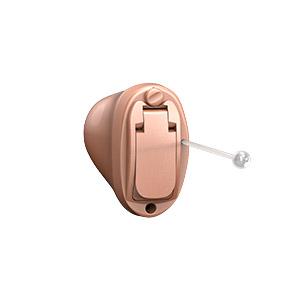
The Oticon Own Hearing Aid is a customizable in-the-ear device that offers advanced hearing solutions using the company's new Polaris chip platform. Available in five styles and five technology levels, it features the innovative BrainHearing and Deep Neural Network technologies for enhanced sound clarity and reduced listening effort, making it suitable for a wide range of hearing losses.
Key Features
Several Oticon Own styles are Made for iPhone® and compatible Android™ devices, offering direct, high-quality streaming, so users can enjoy their favorite music, as well as take calls through their hearing aids. However, there is no rechargeable option for Oticon Own; the and styles take a size 10, while the and half- and full-shell take a size 312 battery.

Older Budget Family: Oticon Zircon
Zircon is an older “essential” product family from Oticon, which, with the advent of Jet PX in 2025, will be gradually phased out. Zircon is powered by the same Polaris platform inside Oticon’s former flagship More products (introduced in 2020), and the products are physically identical to the miniBTE and miniRITE form factors in the More family.
The Oticon Zircon is a cost-effective hearing aid that integrates Oticon's advanced Polaris™ chip platform, designed to provide quality sound processing and essential features such as hands-free calling, audio streaming, and tinnitus support. Available in two technology levels and multiple styles, the Zircon offers flexibility for various hearing needs and comes with both rechargeable and standard battery options, making it a versatile choice for users seeking modern hearing aid technology at a lower price point.
Key Features
Like More, Zircon is available in a rechargeable miniBTE or miniRITE, and a non-rechargeable miniBTE and miniRITE—with similar audio streaming, charging, and connectivity capabilities. On the hardware side, the primary difference seems to be color options—Zircon offers 5 color options versus More’s 8 options.
In terms of technology, Zircon lacks More’s “Neural Noise Suppression,” which Oticon claims improves speech clarity in background noise more than Zircon’s OpenSound Navigator (available only in Zircon 1). If OpenSound Navigator sounds familiar, it’s because you’ve probably heard it before—Oticon’s previous-generation Opn S relied on the same technology to handle difficult listening environments.
See more differences here: More vs Zircon
Power Aids: Oticon Xceed
In 2019, Oticon introduced the Xceed family of hearing aids for people with severe-to-profound hearing loss. The company claims Xceed is the world’s most powerful hearing aid, with 146 and 87 full-on gain. Powered by the Velox S chip platform, and featuring BrainHearing technology, it also provides the same extensive connectivity options provided by the Opn S family. Xceed is available in two styles (Super Power and Ultra) and seven different colors to match your skin tone or hair color.
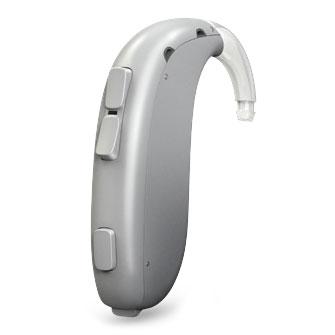
The Oticon Xceed is a powerful behind-the-ear (BTE) hearing aid designed for individuals with severe-to-profound hearing loss, offering up to 146 dB SPL and 87 dB full-on gain. Powered by the Velox S platform with BrainHearing technology, it features OpenSound Navigator for improved speech clarity, iPhone streaming capabilities, and is available in two styles and three technology levels, starting at around $5,000 per pair.
Key Features
Xceed hearing aids deliver many of the same high-performance benefits found in the Opn S hearing aids. OpenSound Navigator provides 360° access to speech. Oticon’s BrainHearing technology provides better speech clarity and less listening effort. OpenSound Optimizer handles whistling and static in a whole new way, preventing it from even happening.
A full range of connectivity options includes direct Made-for-iPhone wireless streaming as well as 2.4 GHz streaming from Oticon’s ConnectClip remote mic and TV Adapter. And the Oticon ON App provides smartphone control.
Finally, Xceed Play is a model that provides super power for pediatric patients with severe-to-profound hearing loss.
For Kids: Oticon Play SI, Play PX, and Opn Play
HearingTracker does not typically cover pediatric hearing aids in the same depth as adult devices, because childhood hearing loss is a specialized area that should be managed closely by a pediatric audiologist. However, Oticon has long been one of the leading manufacturers in pediatric hearing care, with hearing aid families designed specifically for children, teens, classrooms, and active everyday life.
:format(webp))
Oticon Play SI is the company’s newest and most advanced pediatric hearing aid family. Built on Oticon’s latest Sirius chip platform, Play SI includes second-generation sound processing, 4D user-intent sensors that can be enabled by the hearing care professional when appropriate, and modern connectivity, including Bluetooth , support through the Oticon Companion app, Made for iPhone support, and Android Fast Pair. It is offered in rechargeable miniRITE R and miniBTE R styles, with child-friendly colors, hook, and sticker options.
Oticon Play PX is another important pediatric family built around Oticon’s BrainHearing approach. Introduced as the first pediatric hearing aid with an onboard Deep Neural Network (), Play PX is designed to give children broad access to meaningful sounds in their environment while also offering child-focused features such as IP68 durability, LED status indicators, tamper-resistant battery compartments, rechargeable and disposable-battery options, wireless streaming, and compatibility with Oticon’s EduMic for classroom listening.
Oticon Opn Play is an older but still notable pediatric family that helped bring Oticon’s open sound philosophy to children. It uses OpenSound Navigator to provide 360-degree access to speech and environmental sounds, with styles for mild to severe hearing loss, colorful options, smartphone connectivity, ConnectClip compatibility, and EduMic support.
For children, the hearing aid itself is only one part of care. Parents should work with a pediatric audiologist to choose the right style and power level, verify the fitting, manage school and remote-microphone needs, and monitor hearing and language development over time.
Oticon CROS Solutions
Oticon has integrated its top technologies into a CROS (contralateral routing of signal) solution for people with single-sided deafness. A transmitter on the deaf side sends sound to a hearing aid on the side with better hearing. That way, users get 360-degree sound and overcome the “head shadow” effect that blocks sound from the side of the head with the deaf ear.
:format(webp))
Oticon’s solutions also feature TwinLink technology, which connects the hearing aids to external audio sources via 2.4 GHz Bluetooth low energy, while simultaneously receiving sound transmission via Near-Field Magnetic Induction () from the poorer to the better ear. This enables patients to watch television or listen to music while carrying on a conversation with someone positioned on their poorer ear side.
A and rechargeable CROS PX are offered. Both options can be used for CROS or setups, where CROS is used when your better ear has normal hearing, and BiCROS is used when your better ear needs amplification. Oticon’s CROS products are compatible with Real, More, Opn S, Opn Play, Xceed, Xceed Play, and Ruby, with the exception of Opn S 3 and Opn Play 2.
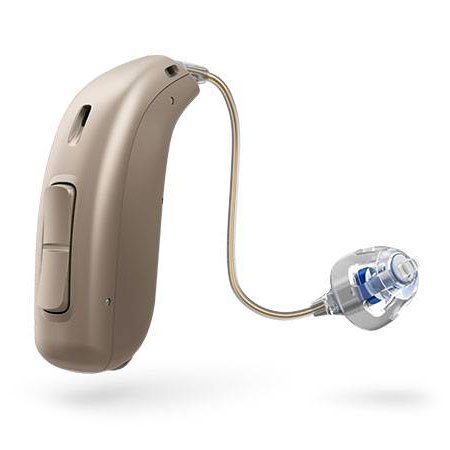
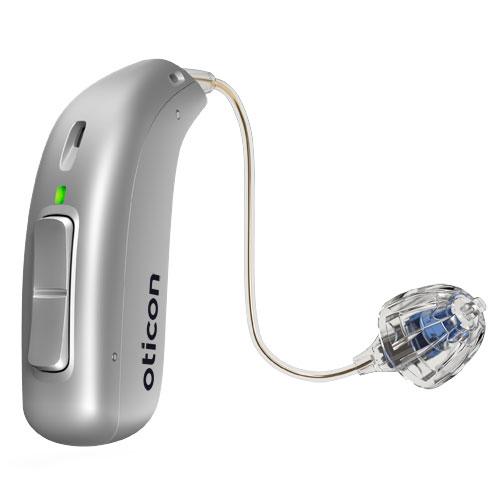
CROS
- CROS System
Oticon CROS sends a wireless signal via Near Field Magnetic Induction (NFMI) from the poorer ear to a receiver on the better ear.
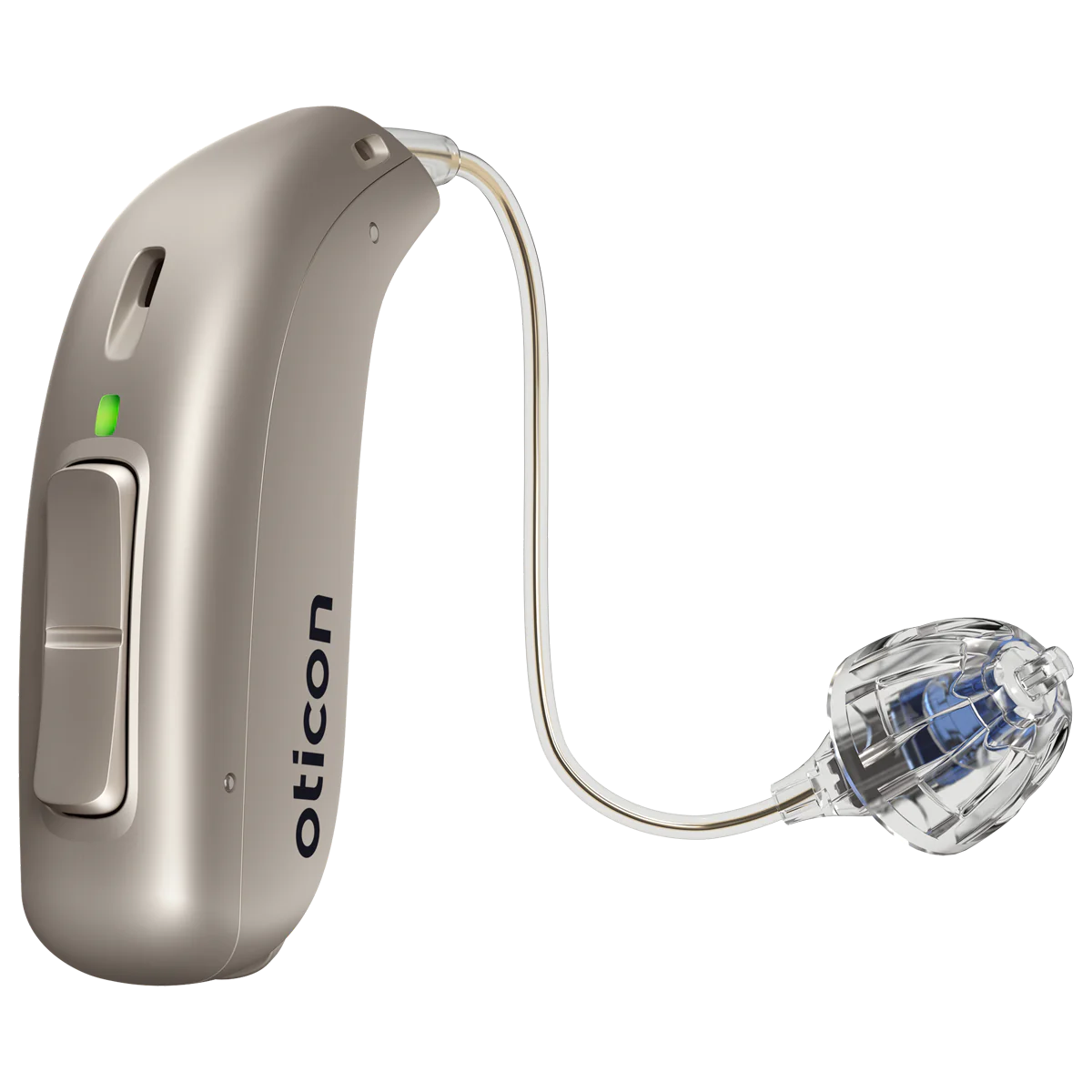
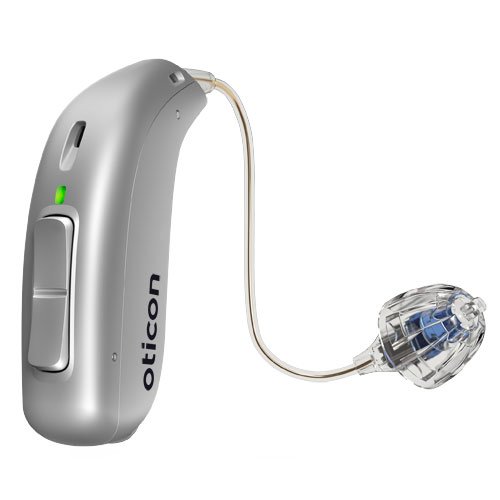
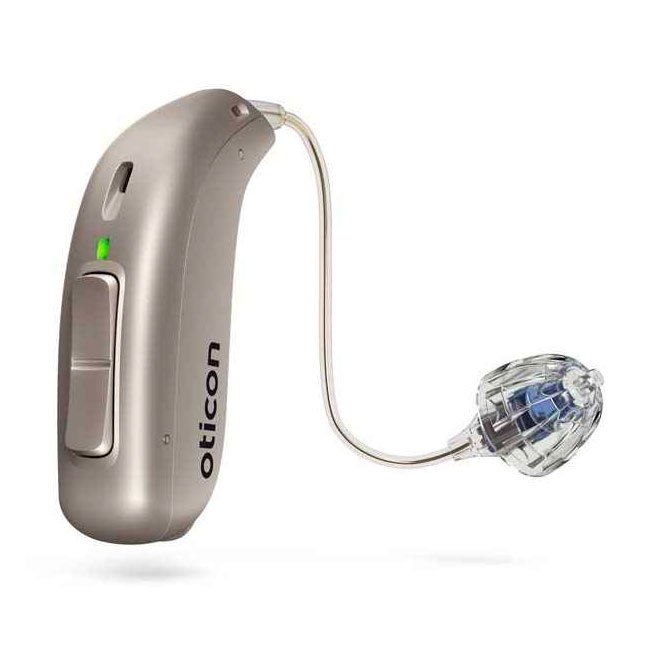
CROS PX
- CROS System
The new Oticon CROS PX is rechargeable and offers TwinLink™ dual streaming technology, which provides access to more sounds in challenging listening environments and handles wireless streaming at the same time.
Oticon Wireless Hearing-aid Apps and Accessories
Oticon hearing aid accessories transmit audio from your phone and TV directly to your hearing aids. And Oticon smartphone apps let you control your hearing aid programs and Bluetooth settings. Following are accessories for popular Oticon hearing aid models. Make sure to check with your provider to see which accessories work with which models.
Connect Clip Microphone
A microphone small enough to clip to your collar, Connect Clip can turn your hearing aids into a wireless stereo headset. It transmits audio to your hearing aids, allowing you to listen to someone speaking from a distance. It also lets you make hands-free phone calls from your iPhone or Android smartphone. And it enables you to adjust your hearing aids using a remote control function.
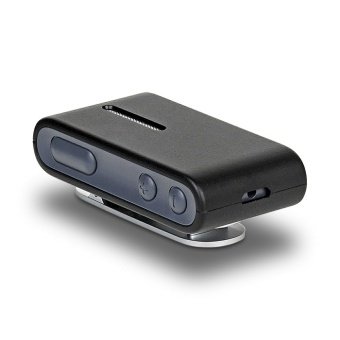
ConnectClip
- Remote Control
- Bluetooth Streamer
- Remote Microphone
- Smartphone Streamer + Hands Free
Transmits audio to your hearing aids from a distance, lets you make hands-free phone calls, and adjusts your hearing aid volume and program settings.
TV Adapter 3.0
Oticon’s TV Adapter works with More, Opn and Opn S hearing aids and connects to almost any audio device using standard cables provided. It streams audio directly to your hearing aids at the volume you choose and has an effective range of up to 45 feet.
TV Adapter 3.0
- TV Streamer
Streams TV audio directly to your hearing aids at the volume you choose with an effective range of up to 45 feet.
Oticon Companion App
The new Oticon Companion app and its predecessor, the Oticon ON app, let you adjust volume, mute, and change the programs on your hearing aids with the touch of a button.
The new Oticon Companion app replaces the Oticon ON app and Remote Care app, combining the two and providing users with an easier and faster navigation experience. It allows you to monitor battery levels for each hearing aid, find your devices should you misplace them, and meet virtually with your hearing care provider (if they offer that option). The professional can also make some remote adjustments to your hearing aids, potentially reducing trips to their office. The app also adds connectivity troubleshooting; however, it does not carry over the HearingFitness and Advanced Tinnitus Equalizer (although it does retain the basic Tinnitus functions) from the Oticon ON app.
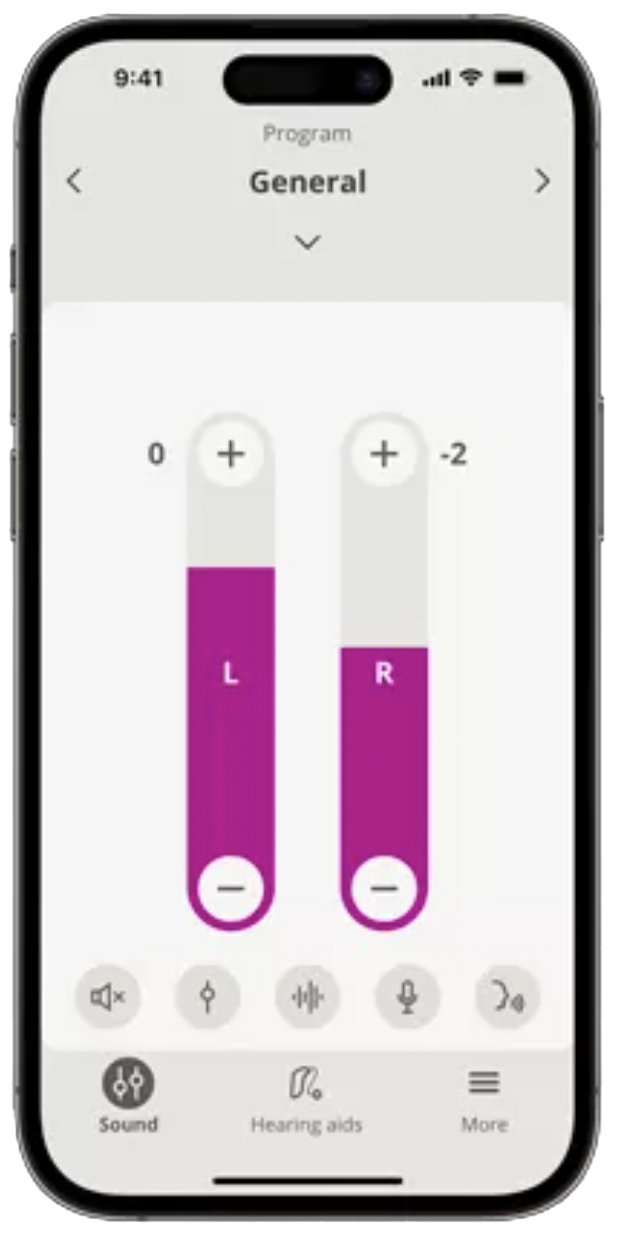
Companion App
- Remote Control
- Smartphone App
- Remote Adjustments
App that lets you adjust the volume, mute your hearing aids, and change listening programs. Includes streaming EQ and remote care.
Oticon On App
The Oticon ON app allows control of your hearing aids from your smartphone and uses the “if this then that” (IFTTT) internet-of-things protocol. For instance, the Oticon ON app lets you set your More and Opn hearing aids to trigger your lights, home alarm or smart thermostat. Otherwise, it essentially has the same functionality as the newer Oticon Companion app, except as noted it doesn't offer Connectivity troubleshooting, and if you want virtual online assistance from your provider, you'll need to download and use the RemoteCare app.
See the Oticon compatibility page to learn more about both apps and their requirements.
On App
- Smartphone App
Lets you control your hearing aids from your smartphone and interact with other Internet-connected devices and services.
Oticon Chargers
Oticon Real and More rechargeable hearing aids take 3 hours to fully charge, and if necessary, a 30-minute charge will provide up to 6 hours of use. Oticon says its lithium-ion battery technology provides enjoy a full day of hearing, including streaming from smartphones and other Bluetooth devices.
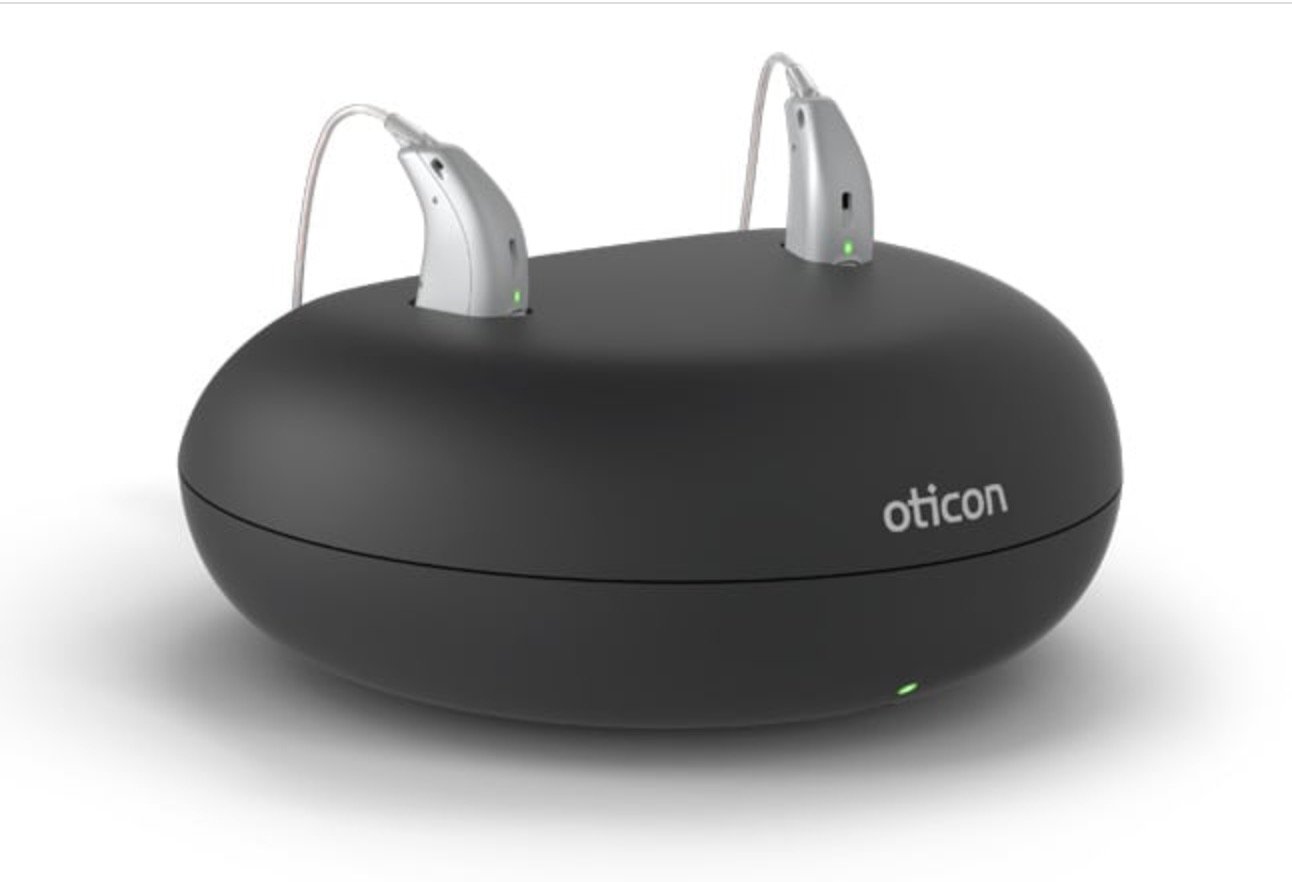
Oticon charger
- Battery Charger
An overnight lithium-ion battery charge provides all-day power, and a 30-minute fast charge provides up to six additional hours of hearing aid use.
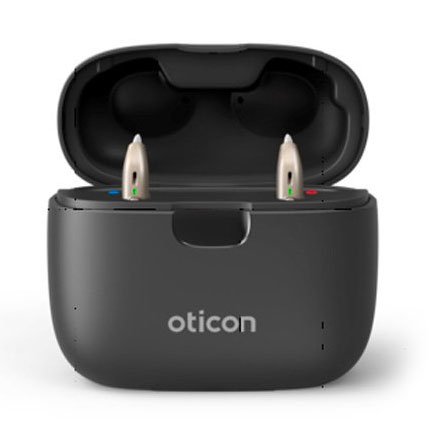
SmartCharger
- Battery Charger
The new SmartCharger includes a protective lid and built-in battery for charging when away from a power outlet. The drying function automatically removes moisture from your hearing aids.
Compatible with
ConnectLine Streamer Pro
Oticon also has a range of ConnectLine accessories for hearing aid models that came before Opn and Opn S. A wireless streamer with built-in microphone, ConnectLine Streamer Pro is worn around the neck. It can be used to make hands free phone calls. It also receives audio signals from the Connect Clip microphone or from the ConnectLine TV adapter and retransmits them to your hearing aids.
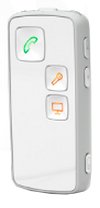
ConnectLine Streamer Pro
- Remote Control
- Bluetooth Streamer
- Telecoil Streamer
- 3.5mm Line to Streaming
- Smartphone Streamer + Hands Free
A neck-worn streamer that works with your phone for hands-free calls, with the Connect Clip remote microphone, and with the ConnectLine TV adapter.
And ConnectLine App is an iPhone and Android smartphone app available from the app store that works with ConnectLine StreamerPro. It allows you to remotely control the settings and switch programs on your hearing aids, to check your battery level, and to manage wireless, hands-free phone calls.
Oticon Tinnitus Solutions
Oticon hearing aids with Tinnitus SoundSupport play a wide range of tinnitus relief sounds, such as white noise and soothing ocean waves to mask the ringing, humming and buzzing of tinnitus sounds in your head. You can discreetly control the sounds in your hearing aids using the Oticon ON App for iPhone and Android. Users can also wirelessly stream alternative tinnitus relief options from your phone.
About Oticon
Oticon is the flagship brand of Demant A/S of Denmark, the world's second-largest hearing aid manufacturer. Founded in 1904 by Hans Demant, whose wife had hearing loss, Oticon has a long history of producing innovative hearing aid technology. For example, Oticon launched DigiFocus, the world's first fully digital behind-the-ear () hearing aid in 1996, and in 2016, with the introduction of its first Made-for-iPhone Oticon Opn hearing aids, the company helped usher in wireless "internet-connected hearing aids," along with advances in artificial intelligence () driven hearing aid processing.
Released in 2024, Oticon Intent is a significant leap forward and picks up where its predecessors Oticon Real, More, and Opn S left off. Intent advances the company's BrainHearing™ philosophy with 4D Sensor technology and AI in a 2nd-gen Deep Neural Network () model.
How Oticon's BrainHearing Philosophy Drives Its Technology
To understand Oticon hearing aids, you should know a little about its philosophy for addressing hearing loss. Oticon has conducted extensive research at its Centre for Applied Audiology Research and Eriksholm Research Centre in Denmark about how the brain processes sound. The company has introduced numerous proprietary sound processing algorithms designed to deliver BrainHearing™, an engineering philosophy introduced in 2014 that “supports your brain by giving it the conditions it needs to create meaning from sound—instead of overloading it by turning up the volume.”
With so much scientific research pointing out the links between cognition, dementia, and better hearing, this engineering strategy has proven to be a trendsetter for hearing aid manufacturers. One major goal of BrainHearing is to support the way the brain makes sense of sound, allowing you to listen with less effort. The idea is if you can conserve brainpower (i.e., potentially reducing "cognitive load”) via easier listening speech processing, you'll have more available resources for other cognitive activities—like formulating your own thoughts and word choices—while reducing mental fatigue during conversations and interactions with others.
Starting with its Opn S hearing aids in 2019 and progressing through 2020 with Oticon More, the company improved its products' hearing-in-noise capabilities while providing access to a more natural sound experience and then by utilizing the industry's first onboard Deep Neural Network () technology. Using its DNN engine trained with over 12 million sound samples, Oticon More could identify and adjust the device's sound parameters accordingly. Oticon Real followed in 2023 with several practical improvements, like recognizing and reducing annoying "side-effect" sounds (e.g., a scarf/hat rubbing against the case of the hearing aid and wind noise).
Oticon Intent is the company's latest flagship hearing aid, introduced in February 2024. Powered by the all-new Sirius chip platform, it's said to be the first hearing aid designed to understand and enhance a person’s unique communication intention. Oticon Intent uses four different types of sensors to understand your listening situation and seamlessly support your listening needs while giving you access to the full sound environment. It also introduces the company's second-generation DNN system, uses Bluetooth LE, and is -ready, pending a firmware update (more about this below).
:format(webp))
Artificial Intelligence (AI) Trailblazer in Hearing
In November 2020, Oticon changed hearing aid technology when it introduced Oticon More, the first hearing aid that used and to improve speech understanding. Previously, hearing aid companies had launched machine learning and AI platforms to provide greater sound quality and listening comfort, but improving speech understanding using these futuristic technologies has been the holy grail for consumers and hearing aid manufacturers alike.
Oticon’s latest approach, dubbed RealSound technology, uses an onboard Deep Neural Network () to process sounds and “create contrast” between speech and other sounds while reducing annoying noises. Oticon claims their unique process makes focusing and following conversations easier, leading to improved speech understanding. This approach has been further enhanced with onboard sensor technology in Oticon Intent, which aims to actually understand what you most want to hear in a full 360° soundscape.
Other hearing aid manufacturers, including Starkey, Phonak, and Signia, are now employing artificial intelligence in hearing aids and their apps. HearingTracker predicted that by the end of 2025, all of the global hearing aid manufacturers would employ AI and/or some type of DNN system in their devices. In 2026, this trend will continue.
Why? Because our lab findings show it works. The top-3 prescription hearing aids that excel in speech in noise, as ranked by HearAdvisor, all have DNN-enabled chips with sensor technology.
 Oticon Hearing Aids
Legacy Hearing Aid Models
Oticon continues to support a broad range of legacy hearing-aid models based on previous generations of its sound-processing technology. Because these models still provide high-performance sound processing and functionality, some audiologist may still sell them at lower price points than the latest models.
Oticon More
The Oticon More, launched in 2020, includes receiver-in-canal () and behind-the-ear () models, with rechargeable (-R) and disposable battery (-T) options. These hearing aids feature , Bluetooth streaming for iPhone and Android, and hands-free calling. The miniRITE models come with a push-button rocker switch, while the miniBTEs use a single push-button. Available in various colors, including a unique pink option, the Oticon More offers versatility to suit different preferences.
Key features include Oticon’s “open sound experience,” designed to enhance speech understanding, and Speech Rescue LX, which shifts frequencies to areas with better hearing. The OpenSound Optimizer ensures consistent amplification while preventing feedback. Accessories like the ConnectClip, TV Adapter, and SmartCharger enhance functionality, making the Oticon More a comprehensive hearing solution for its time.
Oticon Opn S
Oticon introduced its popular Opn hearing instruments in 2016. And in 2019, it followed up with a significant upgrade, Opn S. Oticon says their BrainHearing sound processing technology results in less listening effort, better speech understanding, and capacity to remember more of what one has heard.
Based on the upgraded Velox S sound processing platform, the hearing aids reduce the mental processing power required to understand speech in noise, giving the brain more capacity to process speech and to understand and remember what's being said.
Oticon Siya
Oticon Siya hearing aids include a broad range of models and technology levels, and are a more affordable product family running on the Velox platform. Behind-the-ear models include the Siya miniRITE, the Siya BTE13 PP, and the Siya miniRITE-T, which were introduced in 2018. And there are Siya in-the-ear models ranging from tiny invisible-in-the-ear (IIE) custom hearing aids that sit deep within the ear canal to slightly larger and more powerful models.
:format(webp))
Alta and Alta2
Oticon Alta hearing aids include at least nine unique models and two unique technology levels. Models include the Alta miniRITE, the Alta , the Alta miniBTE, the Alta , the Alta , the Alta , the Alta HS, the Alta , and the Alta designRITE. Technology levels include the Alta Pro and the Alta. Oticon Alta2 is a family of hearing aids that includes at least three unique models, including the Alta2 miniRITE, the Alta2 , and the Alta2 BTE13 100.
Nera and Nera 2
The Oticon Nera hearing-aid family includes at least nine unique models and two technology levels . Models include the Nera miniRITE, the Nera RITE, the Nera miniBTE, the Nera CIC, the Nera BTE, the Nera ITC, the Nera HS, the Nera FS, and the Nera designRITE. Technology levels include the Nera Pro and the Nera.
The Oticon Nera2 RITE is a receiver in the ear hearing aid that has a , a dedicated volume control, a push button, an ingress protection rating of IP57, and uses size 312 hearing aid batteries and has directionality and adjustment synchronization.
Ria2
The Oticon Ria2 miniRite is a receiver-in-the-ear hearing aid that has a push button and uses size 312 hearing aid batteries. It has directional microphones, adjustment synchronization, and tinnitus relief.
Agil
The Oticon Agil family of hearing aids includes at least eight unique models and two technology levels. Models include the Agil miniRITE, the Agil RITE, the Agil miniBTE, the Agil BTE, the Agil CIC/MIC, the Agil ITC, the Agil HS, and the Agil LP/FS. Technology levels include the Agil Pro and the Agil .
Acto
The Oticon Acto hearing aid family includes at least eight unique models and two technology levels. Models include the Acto miniRITE, the Acto RITE, the Acto miniBTE, the Acto BTE, the Acto CIC/MIC, the Acto ITC, the Acto HS, and the Acto LP/FS. Technology levels include the Acto Pro and the Acto .
Ino
Oticon Ino hearing aids include at least eight unique models and two unique technology levels. Models include the Ino miniRITE, the Ino RITE, the Ino miniBTE, the Ino BTE, the Ino CIC/MIC, the Ino ITC, the Ino HS, and the Ino LP/FS. Technology levels include the Ino Pro and the Ino .
Chili
The Oticon Chili is a behind-the-ear super-power hearing aid that has a telecoil, a dedicated volume control, a push button, an ingress protection rating of IP57, and uses size 13 hearing aid batteries. Technology levels include the Chili SP9, the Chili SP7, and the Chili SP5.
Dynamo Super-power Hearing Aids
Oticon’s Dynamo super-power hearing aids were the first to bring the benefits of Oticon’s BrainHearing technologies to people with severe-to-profound hearing loss." In addition to super-power amplification without feedback, Dynamo hearing aids include Oticon's Speech Rescue feature which preserves the high frequency speech information by shifting it to the wearer's better-functioning mid frequencies.
)
Abram Bailey, AuD
Founder and PresidentDr. Bailey is a leading expert on consumer technology in the audiology industry. He is a staunch advocate for patient-centered hearing care and audiological best practices, and welcomes any technological innovation that improves access to quality hearing outcomes. Dr. Bailey holds an Au.D. from Vanderbilt University Medical Center.