Cearvol Wave OTC Hearing Aid Review: Lab Tested
A budget self-fitting hearing aid with useful streaming and a versatile touchscreen case, plus fitting and battery trade-offs.Our expert team selects and tests products rigorously. We may earn commissions if you buy through our links. Here's how we keep reviews independent.
Hearing aid glossary
Looking that up…
Terms are matched automatically. A definition may not fit every context.
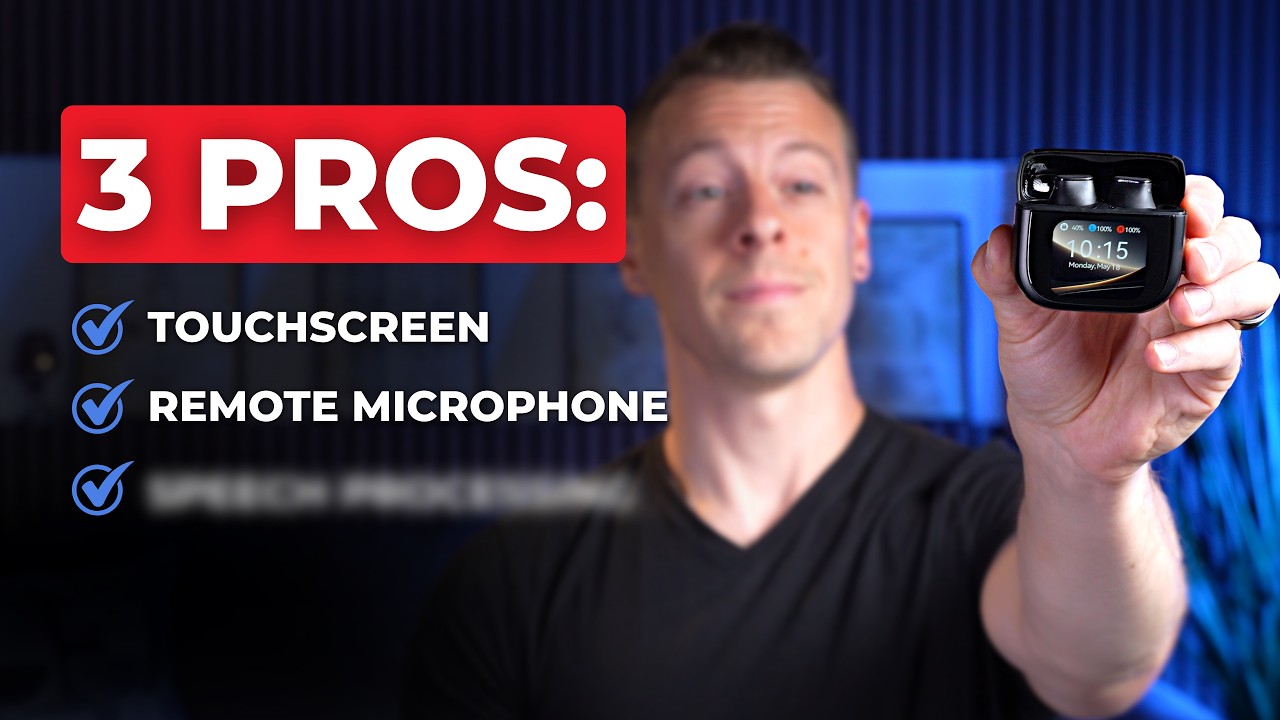
Cearvol Wave is a budget-priced over-the-counter hearing aid that is self-fitting—meaning it comes with its own fitting systems—and has an unusually ambitious feature set for its $397 price tag. It also means it is intended for adults with no worse than perceived mild-to-moderate hearing loss. This review covers Wave; Wave Lite is a separate model, and the testing results below apply to Wave.
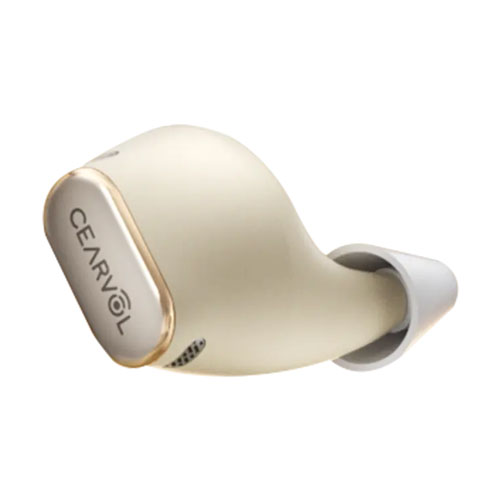
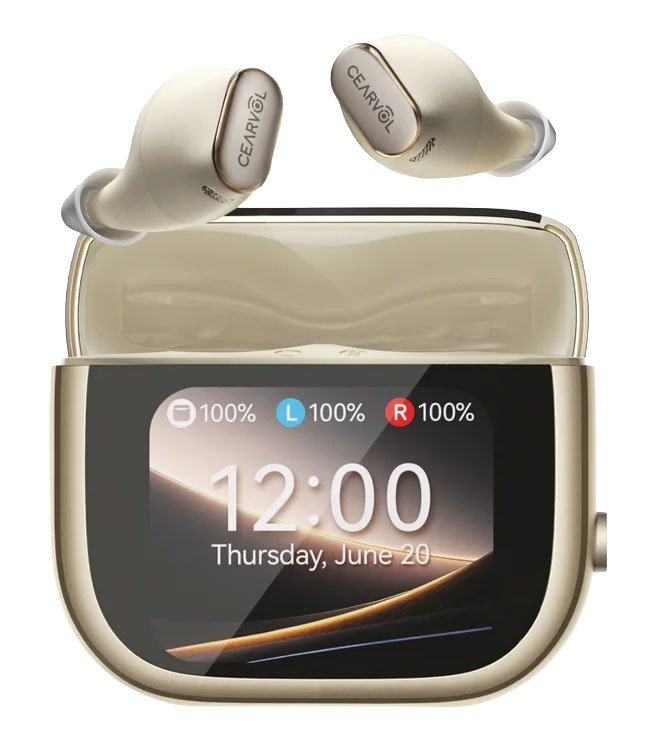
Right away, you will notice that Wave does not look like a traditional hearing aid; it looks much more like a wireless earbud. Depending on your preferences, that may be a major plus or downside. However, this design gives Cearvol room to include Bluetooth streaming, rechargeable batteries, app-based personalization, and even a mode built into the case. Additionally, it has a unique multi-function touch-screen portable charger.
In its marketing, Cearvol is making some big claims. The company says Wave is powered by its “NeuroFlow 2.0” platform, with advanced Deep Neural Network () processing designed to analyze the listening environment, enhance voices, suppress noise, reduce feedback, and make the user’s own voice sound more natural. As always, those kinds of AI claims deserve careful scrutiny.
About our testing: This review combines hands-on evaluation for HearingTracker with standardized laboratory testing from HearAdvisor. The companies are separate but have overlapping leadership, and co-author Steve Taddei is also HearAdvisor’s co-founder and lab director. HearAdvisor determines its testing methods and SoundScores independently of manufacturers; HearingTracker is responsible for this review’s editorial conclusions. First-person observations in this review are Steve’s.
Compare prices & care
Compare sellers and the care included. Prices are per pair.

Risk-free trial
- 30-day trial
- Money-back guarantee
- Direct delivery
- Remote support
Never miss a price drop
Get notified when prices drop for this product
:format(webp))
Quick Take
Cearvol Wave’s current HearAdvisor SoundScore is 3.9 out of 5, a B SoundGrade. Speech in quiet and noise were above the category averages, although difficult group conversations remain a limitation. Music streaming remains a strength.


At around $400 per pair, its appeal is the combination of hearing support, Bluetooth, app-based fitting, and a touchscreen case. The shorter battery life, limited water resistance, and plugged-up own voice are meaningful compromises; the case’s also introduced an audible delay in my hands-on testing.
:format(webp))
HearAdvisor Test Results for Cearvol Wave
Wave provided useful speech benefit in the lab. Streaming and self-fitting controls add to its appeal, while feedback and own-voice comfort remain weaker areas.

Lab-guided adjustments of the app-based 3-band EQ produced a modest speech improvement. That does not establish a precise fit for your hearing loss; ear tips and individual hearing needs still matter.
Understanding the results
In HearAdvisor’s laboratory testing, I used a KEMAR acoustic manikin and a standardized sloping moderate (N3) hearing loss. Initial Fit follows the manufacturer’s fitting process; Tuned Fit uses lab measurements to seek a closer match to prescribed amplification targets. category averages include older tested devices.
Cearvol Wave
Wave also scored well in music streaming, supporting Cearvol’s marketing of Wave as a 2-in-1 hearing aid and Bluetooth audio device, intended for both everyday hearing support and direct streaming from phones, TVs, computers, or other audio sources.
The picture is not all positive, though. The biggest weakness in the lab data was own-voice comfort, which suggests some users may notice their own voice sounding hollow, boomy, or plugged up. This is often related to occlusion, which happens when the ear canal is more physically blocked by the device or ear tip. Some people adapt to this sensation over time, but for others it can be a significant drawback.


Feedback handling was a relative weakness in both fit conditions; the current results show no measured improvement from tuning. Cearvol says its AFC 2.0 feedback-control algorithm dynamically evaluates the feedback path and adapts to changing wearing conditions. The lab results suggest that feedback control may be adequate for many users, but it does not appear to be one of the Wave’s standout strengths compared with other hearing aids.
:format(webp))
Of course, acoustic performance isn’t the only thing that determines satisfaction with hearing aids; factors like build quality, battery life, comfort, app features, Bluetooth functionality, pro support, etc., also make a big difference in the wearer’s experience. You can find ratings for these at the top of the page on your smartphone or in the moving sidebar to the right on a computer.
Taking everything into account, Cearvol Wave achieved a healthy HearingTracker Score of 4.2 out of 5. It scored well on most dimensions with the exeption of Battery (only 10-hour battery life) and Pro Support—you won't have the option to get help from an audiologist (remotely or in person) as you would with prescription (and some ) hearing aids.

You can listen to HearAdvisor lab sound samples of Cearvol Wave in different listening situations (e.g., cafe, office, music streaming) at the bottom of this page. For best results, please use high-quality headphones or earbuds.
Cearvol Wave is an affordable earbud-style OTC hearing aid with Bluetooth streaming, self-fitting controls, wired audio input, and a touchscreen charging case. Current lab results show useful speech benefit and good music streaming, with a B SoundGrade. Shorter runtime, a plugged-up own voice, and remote-microphone delay are its main compromises.
Ideal for
Key Features
Expert Review
Unboxing and First Impressions
Inside the box, you’ll find the Cearvol Wave hearing aids seated in their portable charging case. Both the case and hearing aids feel well built, and as soon as you open the lid, the touchscreen comes alive, giving you access to many of Wave’s controls and settings.


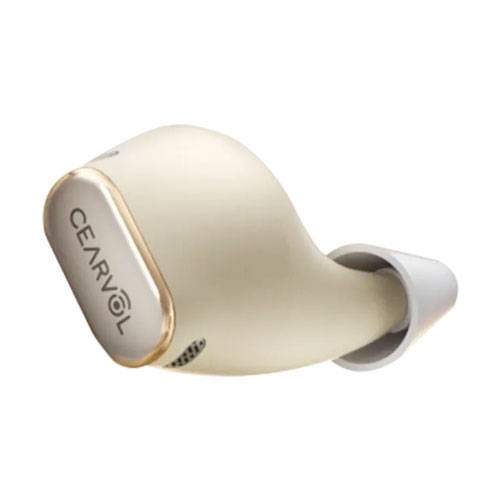
The hearing aids themselves have an earbud-style design. They definitely lean more toward the look of consumer electronics than discreet prescription hearing aids, which some people may like and others may not.
:format(webp))
You’ll also find user documents, which I recommend reading before getting started. I know instruction manuals are not exactly thrilling, but setup details matter with hearing aids—and taking a little time at the beginning can help you get better results.
Under the packaging are several ear-tip sizes, a USB charging cable, and a 1/8-inch—or 3.5 mm—audio cable. That cable can be used to connect the charging case to an external audio source and stream the sound directly to the hearing aids. We’ll return to that feature because it is one of the more unusual aspects of Wave.

At $397, Wave costs considerably less than many self-fitting hearing aids and dramatically less than most prescription devices. Wave performed surprisingly well for the price in HearAdvisor testing, particularly for speech in background noise and streamed music. In my hands-on listening, I noticed a hiss in quiet environments. Its feedback handling and own-voice performance were less impressive, however, so fit and personalization may be especially important.
:format(webp))
Battery Life
Wave is rated for up to 10 hours of use per charge. Cearvol advertises 28 hours of use with the charging case, plus roughly three hours of use from a 15-minute quick charge.


The portable charging power is convenient, but 10 hours per charge is still something to consider. It may be enough for many people’s typical day, but it is shorter than the all-day battery life offered by some competing and prescription hearing aids. Rechargeable battery capacity can decline with age; the rate varies with use and charging conditions.
Actual battery life will also depend on how much you stream, your volume settings, the listening programs you use, and how hard the hearing aids are working to manage noise. Heavy Bluetooth users may need to recharge Wave before the end of the day.
:format(webp))
Personalization and App Controls
Wave connects to both iOS and Android mobile devices through Bluetooth. Once the hearing aids are paired, your first step is personalization, and Wave gives you two options.
The best option is to enter the results from a professional hearing test and , if you have one. Cearvol says Wave uses the widely recognized fitting formula to apply those results and balance speech audibility with listening comfort across frequencies.
Without an audiogram, you can complete an on-ear hearing assessment through the Cearvol app. The app plays tones at several frequencies and uses your responses to personalize the hearing aids.
This is where I’ll repeat my usual recommendation: Start with a professional hearing test whenever possible. setup can otherwise be a bit of a shot in the dark because you do not have the same objective verification you would receive in a clinic. The better your starting information, the better your chances of success.

Once setup is complete, you arrive at the main Control section of the app. I am not too crazy about the app’s overall aesthetic, but it worked reliably and offered quite a bit of control. More importantly, many of the adjustments produced meaningful changes, which is not always the case with hearing aid apps.
Wave includes four listening programs, and you’ll want to spend some time trying them in different environments. One downside is that Wave does not offer an automatic program, so you may need to switch programs manually more often than you would with some other hearing aids.
Tapping the gear icon takes you deeper into each program’s settings, where you’ll find controls for noise reduction and a 6-band equalizer (EQ).
The noise reduction helped reduce some unwanted ambient sound in my testing, although I would not describe the effect as dramatic. Cearvol promotes its NeuroFlow 2.0 platform as using advanced processing to analyze the environment, enhance voices, and suppress noise. I would be cautious about taking any company’s AI terminology at face value without more technical validation. Wave’s current lab results show above-average speech benefit in noise, although the absolute result remains modest.
The six-band equalizer is useful for people who like to tinker. You can adjust different frequency ranges to make speech clearer, reduce sharpness or hissing, or add a little more bass.
That said, I do not think everyone needs to spend a great deal of time adjusting these controls. I spent considerable time experimenting with the sliders and achieved only minor improvements.
One feature worth highlighting is Own Voice Reduction. This is designed to reduce the annoyance of hearing your own voice as boomy, plugged, or unnecessarily loud—a common complaint with more closed earbud-style hearing aids. I found that Own Voice Reduction provided some mild improvement. In the app, you can calibrate by going to My Profile > Own Voice Reduction.
Ear-tip selection will also be important. People bothered by a plugged-up sensation or the sound of their own voice may need to experiment with different tip sizes and settings. Some users may find a good balance between speech clarity, bass response, and comfort. Others may ultimately prefer a more open-fitting hearing aid, even if that means giving up some low-frequency amplification or streaming quality.
:format(webp))
Touchscreen Charging Case Acts as a Control Center and Remote Mic
One of the more unusual parts of the Wave system is the charging case. It does not simply store and recharge the hearing aids. It also acts as a control hub, , and wired audio bridge.
The case lets you control many of the same features you would normally access through the app without pulling out your phone. You can adjust the left and right volume, change listening programs, manage noise reduction and voice enhancement, control calls, and set alarms.


The touchscreen was mostly responsive. Every now and then, I had to swipe twice or tap more than once, so it is not perfect. Overall, though, I give Cearvol credit. The case is practical, easy to access, and potentially more convenient than a phone app—particularly for people who dislike small hearing aid buttons or find smartphone navigation challenging. In this way, its function is similar to the charger/control case used in the Audien Atom X, which Audien currently lists at $389 per pair but which has a lower HearAdvisor SoundScore than Wave.
The Wave’s case also serves as a and direct audio input device. These are functions that prescription hearing aid companies have offered for years, but usually through separate wireless accessories that cost extra. Building them directly into the charging case is a very cool idea, especially in a $397 product.
In remote microphone mode, you can place the case closer to the person or sound you want to hear and stream the signal directly to the hearing aids. For example, you might place it near someone sitting across the table in a noisy restaurant, close to a lecturer, or near a participant during a meeting.
Unfortunately, I encountered a significant limitation when testing this feature: latency.
:format(webp))
I measured the delay at approximately 117 milliseconds. That may sound fast, but it is not fast enough for our ears. We are extremely sensitive to delays, and unless the delay is below roughly 35 milliseconds, we may perceive the second signal as an echo or duplicate of the original sound.
In practice, that echo can be more distracting than helpful when you can hear both the person’s natural voice and the delayed signal coming through the hearing aids. So while the is a promising idea, I do not think the technology is fully there yet in Wave.
The direct audio input may work better. Using the included 1/8-inch cable, you can connect the case to a compatible television, computer, airplane entertainment system, gym machine, or another device with a headphone output. If connecting the cable turns off the device’s external speakers, you should not experience the same echo effect because you are no longer hearing the original and delayed signals simultaneously.
You may still notice a lip-sync issue when watching video, however, because the streamed audio remains delayed behind the picture.
Wave also supports standard Bluetooth audio streaming for music, podcasts, videos, phone calls, and other mobile audio. HearAdvisor’s streamed-music measurements were a strength. Many inexpensive hearing aids either omit Bluetooth streaming or provide a limited listening experience, so Wave’s strong streamed-music performance adds meaningful value for people who want one device for both hearing assistance and personal audio.
Overall, the touchscreen controls, Bluetooth streaming, and wired audio input make Wave’s charging case much more than a place to store and recharge the hearing aids. Some of its more ambitious features still have limitations, but Cearvol deserves credit for trying to bring capabilities commonly associated with more expensive hearing systems into a relatively affordable OTC product.
Who Is Cearvol Wave Best Suited For?
Cearvol Wave is most compelling for people with mild-to-moderate hearing loss who want self-fitting controls, streaming, and a versatile case for around $400. Its lab speech results were above the average, but challenging group conversations remain a reason to compare stronger noise performers.
It may also be a good fit for users who want Bluetooth streaming without paying premium OTC prices. The strong music-streaming result, combined with direct Bluetooth and AUX-IN support, makes the Wave more versatile than many inexpensive hearing aids.
The Wave may not be well suited for users who are highly sensitive to occlusion or who strongly dislike the feeling of something blocking the ear canal. The visible-in-ear design and occluding fit may help with sound delivery and streaming, but the trade-off is that some users may hear their own voice as hollow or boomy. That is not a small issue. Own-voice comfort can make or break the daily usability of a hearing aid.
Cearvol’s product specifications indicate that Wave has an Ingress Protection rating of IPx5. That means it has been tested to resist low-pressure water jets from any direction, so it should tolerate everyday moisture exposures such as sweat, light rain, or brief splashes. The “X” means the device was not rated for dust protection, while the “5” refers specifically to water resistance. Importantly, IPX5 does not mean the hearing aid is waterproof or safe for showering, swimming, or submersion; it simply indicates a reasonable level of protection against incidental moisture during normal daily use. For reference, most top-quality prescription hearing aids have an IP68 rating, which offers significantly higher protection against moisture and dirt/debris—so you should be more careful using this product around water or in dusty conditions.
Users who are prone to feedback or who need a very stable fit should also be cautious. The Wave’s feedback handling was not poor overall, but it was below average in HearAdvisor’s testing.
:format(webp))
Final Verdict
Overall, I think Wave is one of the more interesting lower-cost hearing aids I’ve tested. For under $400, you get a lot and some genuinely unique features. But Wave also has a few important limitations.

Below are my main Pros & Cons for Cearvol Wave:
What I liked about Cearvol Wave
- Good Speech Benefits: During hands-on testing, I found speech clearer in quiet to moderately loud settings. HearAdvisor’s lab measurements showed good, but not great, speech benefit. The app also gives you plenty of ways to personalize the sound.
- Great Value: This brings us to the next point, which is Value. Wave is available for less than $400, which places it well below many hearing aids. While not perfect, Wave offers a lot for the money when we compare it to what’s currently on the market.
- Comfortable Fit: I found Wave comfortable, and I liked the way it twist-locks into the ear. During my testing, I was able to wear them for longer periods without pressure points, pain, or retention problems. That last point does come with an asterisk, which I’ll address below.
Drawbacks
- Noticeable Hiss: In terms of speech clarity, Wave performed well. However, I found it noticeably noisy in quiet environments and occasionally rough around the edges in sound quality. For example, sitting in a quiet room, I could hear a very audible hissing from the hearing aids. Adjusting Noise Reduction in the app improved this slightly, but it is one area I would like to see Cearvol improve Wave in the future, possibly through firmware updates or adjustments to the underlying sound processing
- Earbud Design Tradeoffs: Some people may love that Wave looks like a consumer earbud instead of a traditional hearing aid. However, there are two practical concerns here: 1) Wave sticks out from the ear more than many traditional hearing aids, making it more likely to catch on something, get bumped, or fall out, and 2) Because Wave looks like an earbud, other people may not realize you are wearing hearing aids and assume you are listening to music during a conversation…which is rude. That is not Cearvol’s fault, but it is just one of the social tradeoffs that come with hearing aids that look like earbuds.
- Battery Life: Wave is rated around 10 hours per charge—likely less in the real world—and it may not get you through your full day. If you wear hearing aids from breakfast until bedtime, as most people should, you’ll need to recharge at some point. The quick-charge feature helps, but it’s not ideal, and it’s not the same as a hearing aid that can comfortably last all day without you thinking about it.
Alternatives to Cearvol Wave
As noted above, consumers who want an earbud-like hearing aid with a charging case / control hub for under $400 may wish to check out the Audien Atom X. However, the Atom X has a lower HearAdvisor SoundScore (3.3/5) than Wave and uses preset listening programs controlled from its case, without a companion app. Likewise, Cearvol’s Diamond X1 is an earbud-type device without a touchscreen, with the white version currently listed by Cearvol at $199 per pair. It received a HearAdvisor SoundScore of 3.7/5. Finally, Apple AirPods Pro 3, currently offered through Amazon for $199 per pair, combine Apple’s hearing features with strong earbud functions, but their lab speech results trail Wave’s.
For a more conventional behind-the-ear type hearing aid, you may wish to check out Elehear Beyond ($399) or Elehear Beyond Pro (advertised from $599 without accessories). The original Beyond ranks in the top 10 among devices with published HearAdvisor SoundScores, and both models have higher SoundScores than Wave. ELEHEAR’s ElePro service offers personalized settings recommendations after a hearing screening or submitted ; that professional support process is different from Wave’s automatic app-based fitting.
Review updates
13 September 2026 — Ratings update. We updated this review following HearAdvisor’s July–August 2026 scoring-methodology changes, including revised speech-in-quiet and speech-in-noise ratings. Wave’s HearAdvisor SoundScore is now 3.9/5, lower than the 4.4/5 previously reported here. We also updated its broader HearingTracker Score, which incorporates the lab SoundScore, to 4.2/5, from the 4.4/5 previously reported. This update reflects revised scoring and reporting of the existing review. See HearAdvisor’s SoundScore methodology and methodology change history.
)
Steve Taddei, AuD
Doctor of AudiologySteve Taddei, Au.D., is an audiologist, co-founder and lab director of HearAdvisor, and a hands-on hearing aid and earplug reviewer for HearingTracker. He holds an audio engineering degree from Columbia College Chicago and a doctorate in audiology from Northern Illinois University. He also teaches as an adjunct faculty member at several colleges.
)
Abram Bailey, AuD
Founder and PresidentDr. Bailey is a leading expert on consumer technology in the audiology industry. He is a staunch advocate for patient-centered hearing care and audiological best practices, and welcomes any technological innovation that improves access to quality hearing outcomes. Dr. Bailey holds an Au.D. from Vanderbilt University Medical Center.