Phonak Audéo EON Sphere Hands-On Review with Lab Results
A smaller, more discreet Sphere with Auracast support.)
)
)
Our expert team selects and tests products rigorously. We may earn commissions if you buy through our links. Here's how we keep reviews independent.
Hearing aid glossary
Looking that up…
Terms are matched automatically. A definition may not fit every context.
Quick Take
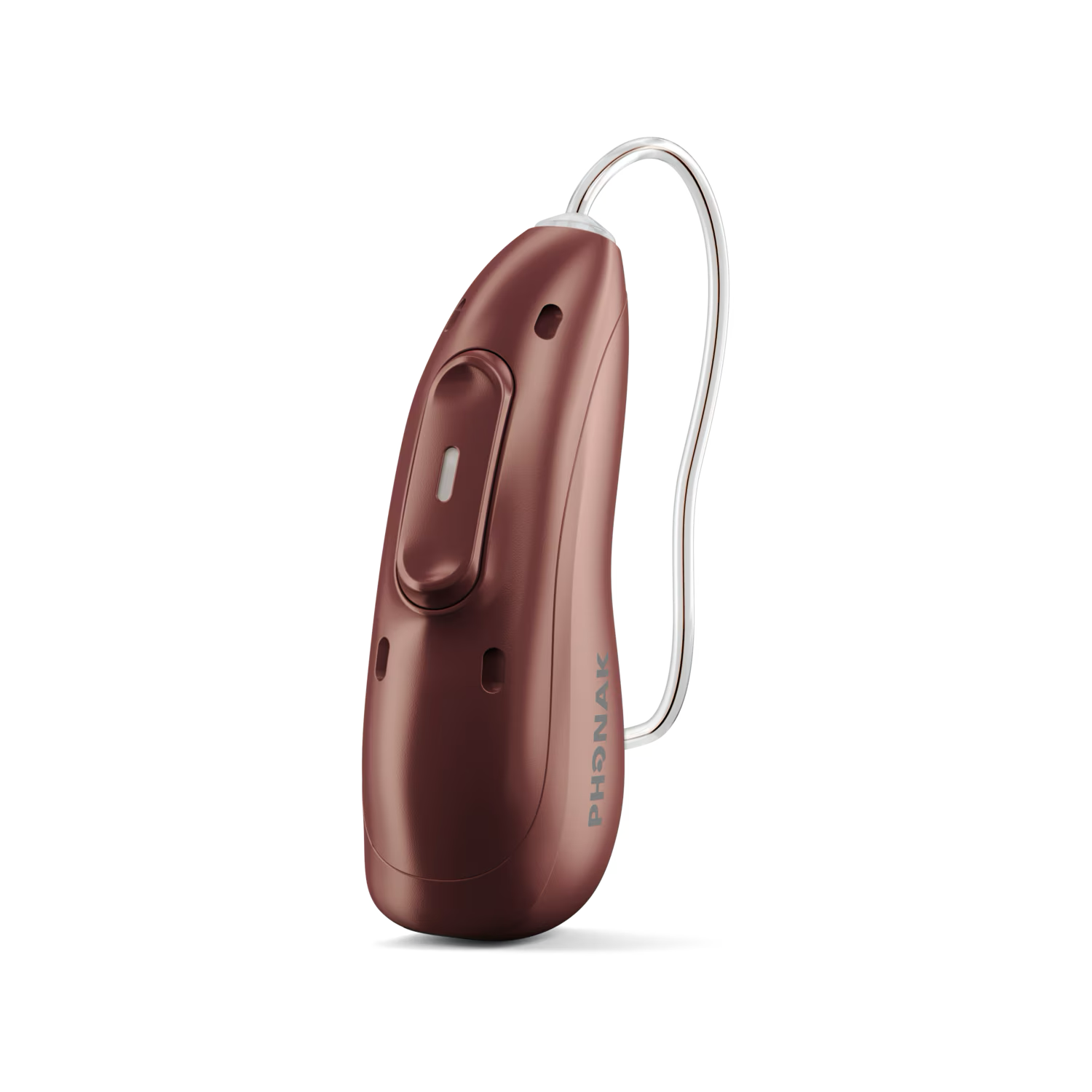
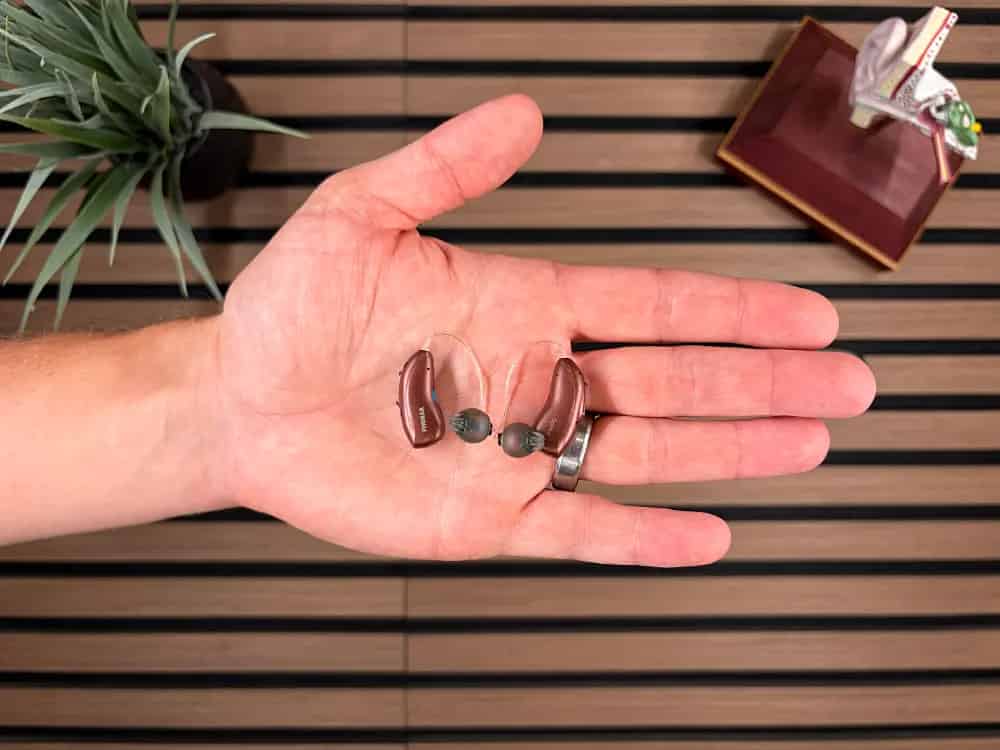
I’ve been wearing and testing the Phonak Audéo EON Sphere for the past few weeks, and the smaller design is the first improvement worth mentioning. Phonak's last generation (Infinio Sphere) was excellent at reducing background noise, but they were much more noticeable behind my ears, and I didn't find them particularly comfortable. EON feels much closer to a conventional hearing aid and still manages to deliver the same great performance that made Infinio Sphere interesting in the first place.
The EON Sphere 90 earned a HearingTracker Score of 4.6/5, slightly higher than Infinio Sphere, and a HearAdvisor SoundScore of 5.0/5 with an A SoundGrade. Those are excellent results.
Compare prices & care
Choose a model and technology level, then compare sellers and the care included. Prices are per pair.

Best for Clinic Care4.8(658 reviews)
- 600+ locations
- Local care included
- 500+ 5-star reviews
- All major brands
Compare models and technology levels
What Premium adds over Advanced
- Added
Never miss a price drop
Get notified when prices drop for this product
About This Review
This review combines my hands-on evaluation for HearingTracker with standardized laboratory testing at HearAdvisor, where I am a co-founder and lab director. HearingTracker and HearAdvisor are separate companies with overlapping leadership. HearAdvisor determines its testing methods and SoundScores independently of manufacturers; its measurements are distinct from my everyday wearing impressions. See how we test and score hearing aids.
Is EON an improvement over Infinio?
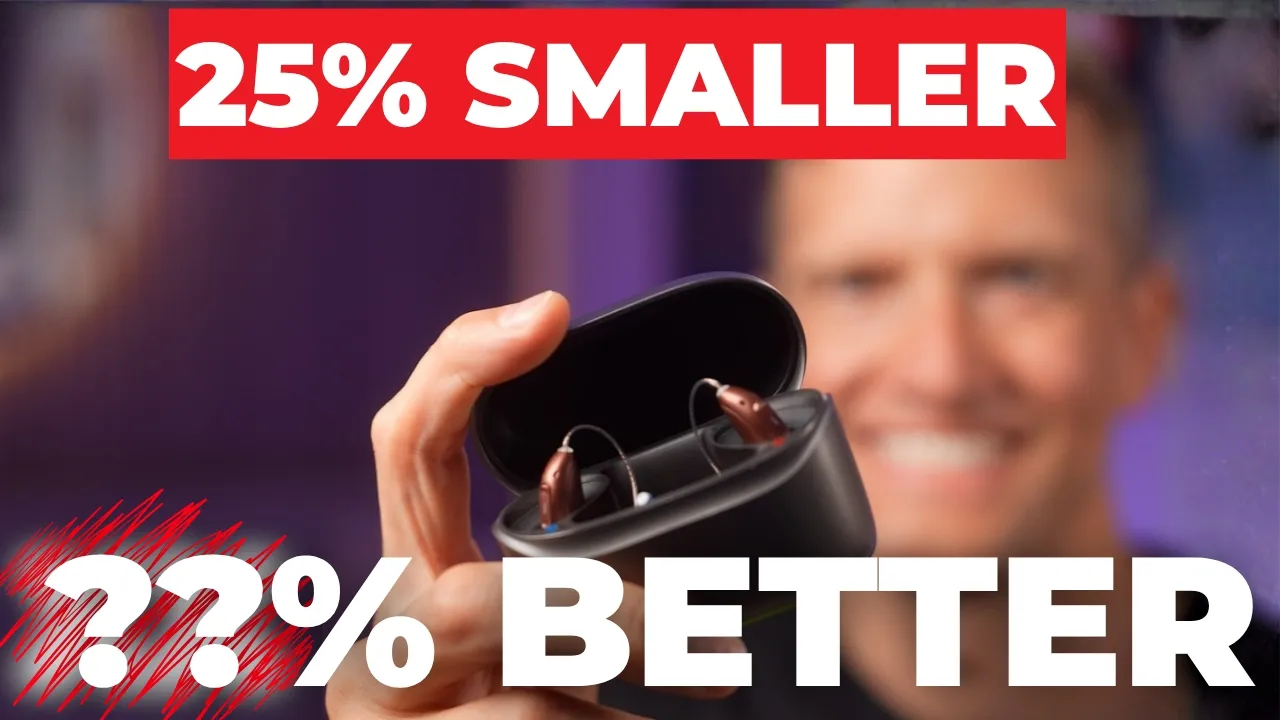
Does EON offer a hearing performance improvement over Sphere Infinio, or just make Sphere smaller and easier to live with? That is the question posed by my colleague Matthew Allsop EON launch coverage (video below):
What’s New in the EON Family
Phonak launched the EON family in the United States on August 24, 2026, with additional markets following in September. There are three devices:
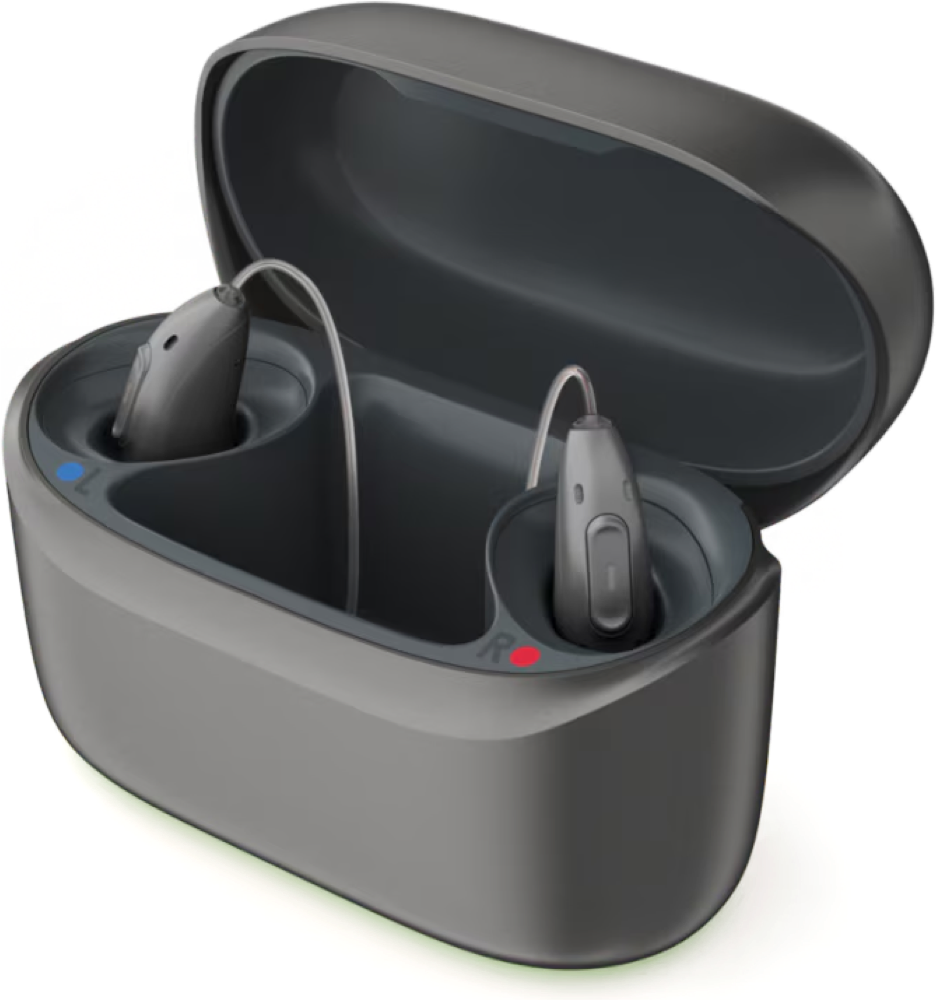
- Audéo EON Sphere: The flagship, with the new Hypersonic processor and Spheric Speech Clarity 3.0 for speech-in-noise processing. This is the model I tested, at the Premium 90 technology level.
- Audéo EON R: A conventional rechargeable for mild to profound hearing loss. It shares AutoSense OS 8.0 and WindBlock 2.0, but does not have Sphere’s dedicated speech-in-noise processor.
- EON: A transmitter for single-sided deafness that pairs with EON R.


EON also introduces broadcast connectivity. Phonak has extended Spheric Speech Clarity to the Standard 50 tier, so you no longer have to buy one of the top two technology levels to get it. My test results are for the Sphere 90, however, and should not be treated as separate evaluations of the 70, 50, or standard EON R.
:format(webp))
A Smaller, Lighter Design
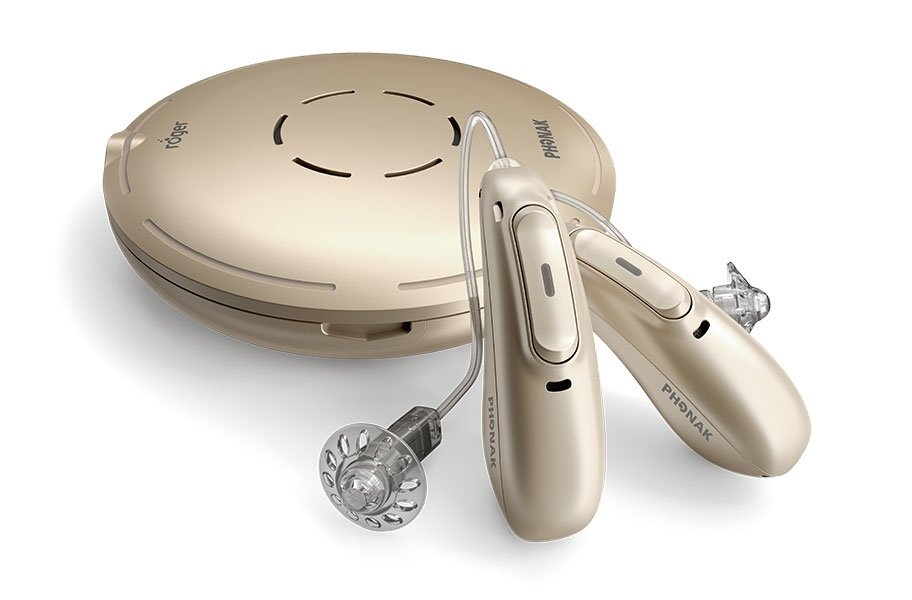
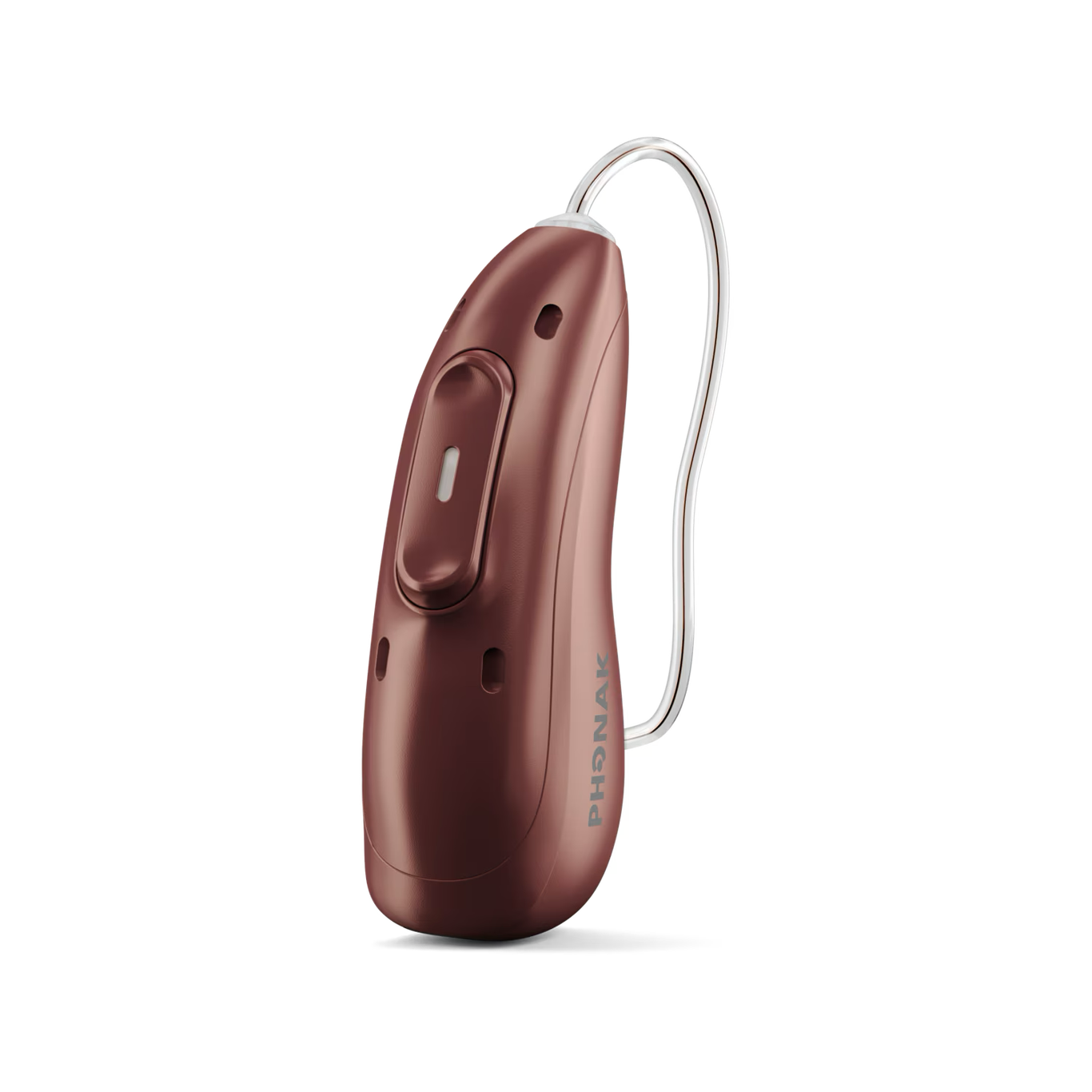
The original Sphere was generously proportioned, to put it politely. Its dedicated DeepSonic processor needed enough battery capacity to get through the day, and that contributed to a larger hearing aid.
EON replaces DeepSonic with Hypersonic. Phonak says the new chip is 25% more efficient, with a retrained algorithm contributing a further 16% efficiency gain. The company describes the combined improvement as 37%, allowing EON Sphere to be 25% smaller and 20% lighter than the previous Sphere generation while retaining the same maximum battery-life rating.
I cannot establish those engineering percentages by wearing the hearing aids, but the size difference is obvious. EON takes up less space behind my ear and feels much more like a standard . I found the redesign particularly comfortable alongside glasses, and the smaller body should also be welcome for people whose ears did not accommodate the previous Sphere comfortably.
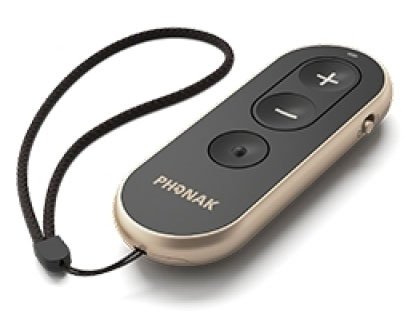
The multifunction buttons and tap controls remain straightforward. Your provider or the app can customize controls for functions such as calls and media playback.
The EON Sphere is one of the strongest hearing aids I’ve seen for speech performance, with exceptional results in background noise and a much smaller, more comfortable design than its predecessor.
Key Features
Expert Review
Lab results: EON Sphere earns a 5.0 SoundScore
TIn HearAdvisor Lab testing, the standout result is speech performance. EON Sphere earned an overall SoundScore of 5.0/5 and an A grade, placing it among the strongest prescription hearing aids tested.
The strongest result was speech in noise, which scored 4.5/5 after professional tuning. That is 2.53 points above the prescription hearing aid category average of 1.96/5. Speech in quiet was also strong at 4.3/5. Professional fitting made a meaningful difference: speech in noise improved from 3.7 to 4.5, while speech in quiet increased from 4.0 to 4.3.
Understanding the results
HearAdvisor uses a standardized mild sloping to moderate hearing loss and a KEMAR acoustic manikin to measure two hearing aid fit configurations. For EON, both fits used a vented EasyGuard dome, medium-power receiver, and AutoSense OS active. Initial Fit was set to the defaults Phonak's software recommended for the mild sloping to moderate hearing loss; Tuned Fit used Phonak's gain controls to adjust toward prescribed amplification targets for the same hearing loss.
Phonak Audéo EON Sphere 90
The rest of the results were more mixed, which is worth keeping in perspective despite the perfect overall SoundScore. Feedback handling scored 4.6/5, while streamed music scored 3.7/5, more than a point above the category average. Own-voice comfort was the relative weak spot at 2.8/5. It was still slightly above average, but it did not stand out in the way EON Sphere’s speech performance did.
Listen to the Recordings
I also recommend listening to the lab recordings near the bottom of this page. You can compare an open-ear reference with EON at its Initial and Tuned fits, then compare an original music track with the sound streamed through the hearing aids. Use headphones and keep the playback volume consistent.
The EON and Sphere Ultra recordings are worth comparing, too. Preferring the older device does not mean you have made the wrong choice. Frequency response, fitting, and your own listening preferences all affect what you like. These controlled recordings help illustrate differences, but they are not a promise of exactly what you will hear through hearing aids fitted to your ears.
My Experience in Background Noise
In cars, stores, and other places with steady background noise, Spheric Speech Clarity noticeably reduced background annoyance while keeping speech accessible. That remains the main attraction for me. The smaller shell makes EON easier to wear, but the noise processing is what makes it worth considering in the first place.
There is a limitation I keep running into, though: separating speech from noise is not the same as knowing which person I want to hear.
Most of the time, the person I am talking to is nearby and relatively loud, which works well. But put a particularly enthusiastic talker at the restaurant table behind me, and that voice can sometimes be the one that stands out. I have experienced this with every generation of Sphere.
I think of it as the “talker-selection problem.” Sphere’s processing works on speech from around you rather than simply aiming a narrow beam in front of you. That can help preserve awareness of surrounding voices, but it also means an unwanted voice can remain prominent. It is not a reason I would avoid Sphere; it is a limitation worth understanding before expecting the technology to isolate your chosen conversation every time.
Battery Life and Charging
Phonak rates EON at up to 38 hours per charge. Its own estimate for use that includes eight hours of streaming and time in noisy environments is closer to 22 hours. Those are manufacturer figures, not a separate battery-runtime result from my review.
For most people, I think the more useful question is whether a hearing aid will make it through a full day, rather than whether one model advertises 28 hours and another advertises 38. Based on its ratings, EON should.
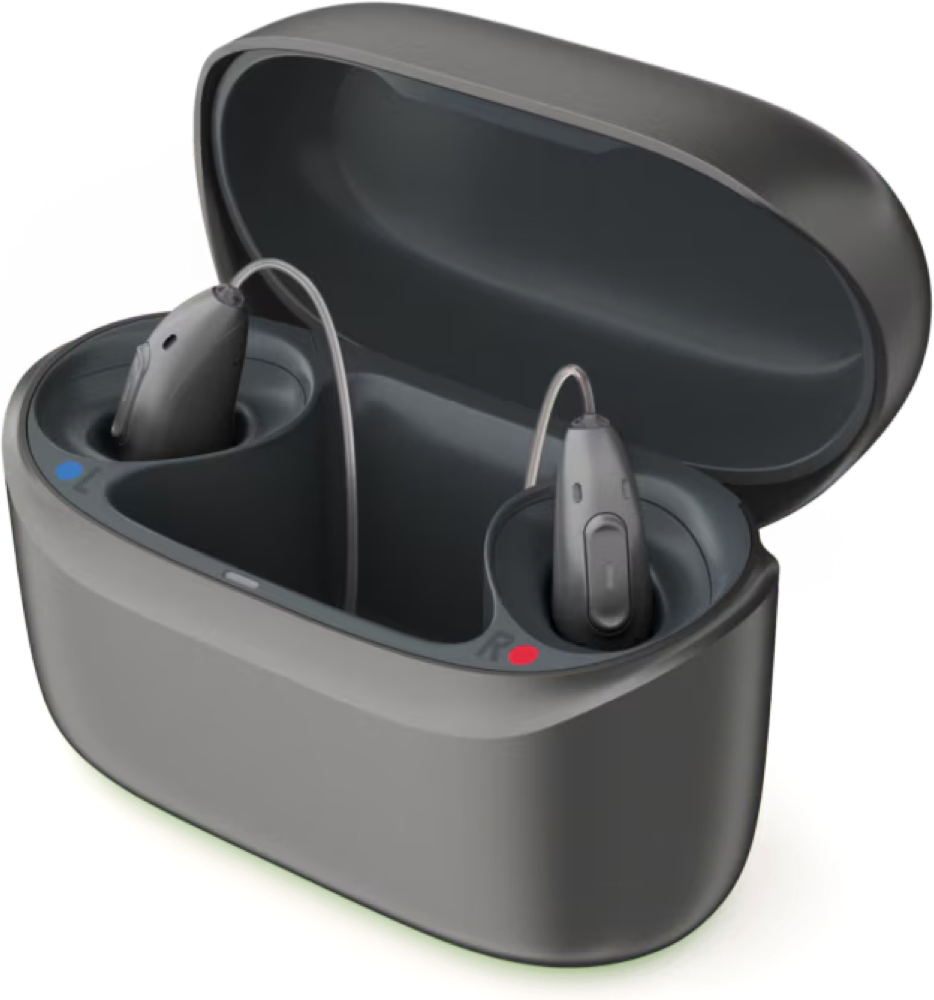
There are two charger options. The wired Charger uses USB-C and needs an external power source. The portable ChargerGo has its own rechargeable battery and provides up to three additional charges away from an outlet. Both worked well for me, although ChargerGo is the more useful option for travel or other time away from reliable power.
A full recharge takes approximately 2.5 hours, down from three hours with the previous generation.
:format(webp))
Spheric Speech Clarity 3.0: What Has Actually Improved?
Spheric Speech Clarity is Phonak’s system for separating speech from background noise, processing speech independently, and recombining the signals. Version 3.0 follows the original Infinio Sphere and the subsequent Sphere Ultra update.
Phonak advertises up to 50% better speech understanding, up to 37% less listening effort, and users being twice as likely to understand speech from any direction. Its launch information also describes an benefit of up to 10 in complex group conversations.
Matthew questioned the comparison behind that 50% figure, and it is an important distinction: it refers to performance against standard directional microphone technology, not a 50% improvement over Sphere Ultra, other leading -based hearing aids, or unaided hearing.
When Matthew asked whether the new processing was better than Ultra’s, Phonak’s answer emphasized maintaining its proven audiological performance. Our tuned-fit speech measurements now give that discussion some context: the two generations performed very similarly in our test setup. EON’s strong results do not establish a dramatic improvement over its predecessor.
The expansion to Standard 50 may be more relevant to some buyers than a small change in peak performance. It makes Phonak’s dedicated speech-separation technology available at a lower technology tier, although the other features and settings still vary by level.
:format(webp))
AutoSense OS AI 8.0
AutoSense is Phonak’s automatic environment-classification system. Phonak says version 8.0 analyzes the listening environment roughly 700 times per second and adjusts settings across six core listening situations: speech in quiet, speech in noise, speech in loud noise, speech in a car, comfort in noise, and music.
Matthew calls AutoSense his favorite Phonak feature. His view is that EON’s improvement may be less about increasing the maximum strength of the noise processing and more about engaging it in more situations. Phonak reports roughly 20% more Speech in Loud Noise activation compared with Infinio Ultra.
That is a different claim from saying the underlying speech-separation system is 20% better. More frequent activation could make the processing useful more often, even when its best-case speech performance remains similar.
Your audiologist can also fine-tune the individual listening programs within AutoSense. Matthew values that flexibility because it lets him adjust the automatic system around a patient’s preferences and everyday environments.
WindBlock 2.0
Wind hitting exposed hearing aid microphones can overwhelm speech. Phonak’s research puts microphone wind disturbance as high as 90 , compared with a conversational speech level of roughly 65 dB.
WindBlock 2.0 is designed to detect the direction of the wind and favor the microphone receiving the cleaner signal. Phonak says it can reduce microphone wind disturbance by up to 50 dB, with an benefit of up to 30 dB, while retaining the natural sound of the surrounding environment. The company also reports that more than 90% of participants in its studies preferred the new version for naturalness.
Those are manufacturer findings, separate from the HearAdvisor results above. Matthew expects this update to be particularly noticeable for cyclists, runners, hikers, people near the coast, and even drivers who like an open window.
Connectivity and Auracast
EON keeps Phonak’s “Made for All” Bluetooth approach and the ERA chip from the Infinio generation. It connects with a wide range of phones, tablets, and computers rather than restricting you to one phone ecosystem. You can pair up to eight Bluetooth devices, with two connected simultaneously. Pairing was reliable in my initial testing.
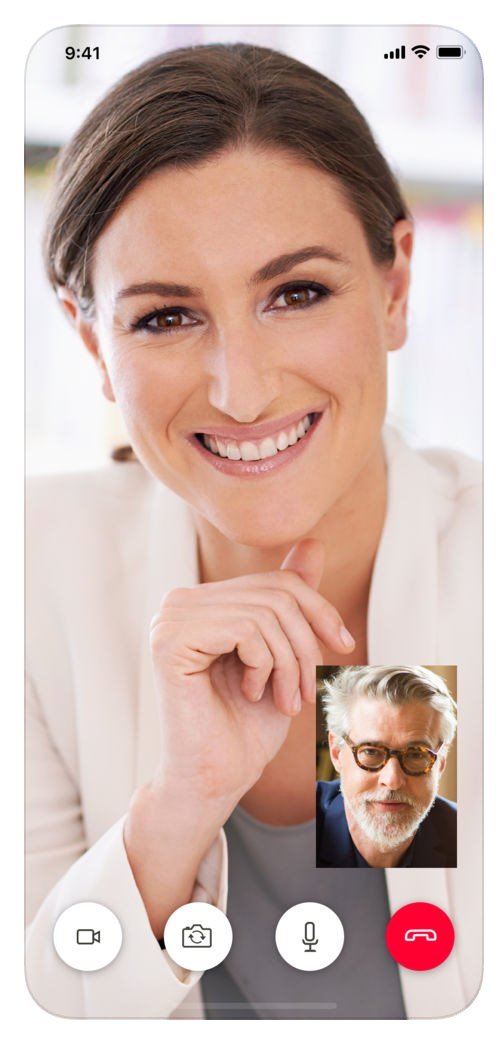
The new addition is working Auracast connectivity. In a compatible theater, museum, airport, or conference setting, lets you receive a shared audio broadcast directly through your hearing aids rather than relying on a conventional one-to-one Bluetooth connection.
The myPhonak app includes an Auracast scanner to find broadcasts. In principle, a venue could also provide a QR code to make joining its broadcast easier.
There is also relevant news for existing Phonak owners. Phonak told me it expects to release firmware updates for many of its other hearing aids during 2026, moving them from “Auracast Ready” to “Auracast Enabled.” That is not confirmation that every older model will qualify. Check support for your specific model and technology level before buying a new pair primarily for Auracast or counting on a future update.
EON still does not have a , which remains a consideration if you use .
:format(webp))
The myPhonak App: Useful Controls, With One Frustration
The myPhonak app will be familiar to existing Phonak users. The main screen provides volume and program controls, alongside a Health tab, connection settings, and options for tap controls. I also recommend enabling Find My Hearing Aids.
One feature I particularly like is the option to add a manual Spheric Speech in Loud Noise program. Your provider has to make it available, but once it is there, you can select it yourself. When I know I am entering a very loud restaurant or store, I like being able to choose the stronger processing rather than waiting for AutoSense to decide when to activate it.
My frustration was with the balance between streamed audio and the surrounding microphones. I appreciate having that control, but the settings did not consistently persist when I switched between apps and streaming sources. Sometimes I returned to myPhonak to make an adjustment and found that the streaming state or balance had already changed.
That was more of a software inconvenience than a hearing-performance problem. Still, I stream constantly, so I noticed it and found it frustrating. Straightforward Bluetooth pairing does not necessarily mean every part of the streaming experience is equally smooth.
Who Should Consider EON?
EON is particularly worth a look if you liked the previous Sphere’s noise processing but rejected it because of the size. The reduction in bulk is obvious in person, and it makes the hearing aid easier to accommodate behind the ear.
It is also a more compelling upgrade for someone coming from hearing aids that are three, four, or five years old than for a satisfied Sphere Ultra owner. Speech in difficult background noise remains a strong reason to consider it, provided you understand that the processing cannot always identify which talker you want to follow.
People who regularly switch between different phones and computers may also appreciate Phonak’s broad Bluetooth compatibility. adds another option where broadcasts are available, while WindBlock 2.0 is worth considering for outdoor use, with the distinction that its specific performance claims here come from Phonak rather than my lab results.
At launch, the EON family is limited to the format. Buyers looking for a custom in-ear device or a different hearing aid form factor will need to consider other options.
Is EON Better Than Sphere Ultra?
For comfort and size, EON is a clear improvement in my experience. It also adds and brings updates to efficiency, automatic program selection, and wind-noise management.
For speech performance after professional adjustment, our results were much closer. EON improved at the manufacturer’s starting settings, but the tuned speech results were nearly identical to Sphere Ultra’s. That is why I would not recommend an upgrade solely on the expectation of a dramatic improvement in hearing conversation.
I do not see urgency for a Sphere Ultra owner who is comfortable and hearing well. Size-related discomfort or a particular connectivity need could make the decision different, but check whether your existing hearing aids are eligible for an Auracast update first.
What I Like
- Excellent measured sound performance: A 5.0/5 HearAdvisor SoundScore, with particularly strong speech-in-noise results.
- A much more manageable size: Noticeably less bulk behind the ear, including alongside glasses.
- Useful control over noise processing: Automatic switching, plus an optional manual Spheric Speech in Loud Noise program.
- Broad connectivity: Phonak’s multi-device Bluetooth support, now joined by .
- More access to Sphere processing: Spheric Speech Clarity is now available at the lower-priced Standard 50 tier.
Drawbacks
- Competing voices can still stand out: The cannot reliably know which person you want to hear.
- Inconsistent streaming controls in my testing: The microphone/streaming balance did not always persist when switching apps or sources.
- Own-voice comfort was less impressive than speech performance: It was the weakest of the five tuned-fit lab scores.
- Limited reason to replace a satisfactory Sphere Ultra: Tuned speech performance was nearly identical in our testing.
- No : Buyers who rely on should take that into account.
Bottom Line
Phonak has made Sphere considerably easier to wear while retaining the noise processing that made it stand out. After several weeks with EON, I appreciate the smaller body, broad phone compatibility, and option to select the stronger speech-in-noise program myself. The competing-talker limitation and inconsistent streaming-balance settings are the two frustrations I would want buyers to know about.
I would happily put EON Sphere on a shortlist for someone who struggles with background noise, especially if the previous Sphere was too bulky or their current hearing aids are several years old. A happy Sphere Ultra owner has much less reason to replace it. Our testing supports EON as a very capable hearing aid, but not as a dramatic leap in speech performance over a well-fitted Ultra.
Dr Steve Taddei
Doctor of AudiologySteve Taddei, Au.D., is an audiologist, co-founder and lab director of HearAdvisor, and a hands-on hearing aid and earplug reviewer for HearingTracker. He holds an audio engineering degree from Columbia College Chicago and a doctorate in audiology from Northern Illinois University. He also teaches as an adjunct faculty member at several colleges.
Matthew Allsop
AudiologistMatthew Allsop is the Video Content Manager at HearingTracker. He has nearly two decades' experience in audiology, and has practiced in both the NHS and the private sector. He is accepting new patients at Harley Street Hearing in London.
Abram Bailey, AuD
Founder and PresidentDr. Bailey is a leading expert on consumer technology in the audiology industry. He is a staunch advocate for patient-centered hearing care and audiological best practices, and welcomes any technological innovation that improves access to quality hearing outcomes. Dr. Bailey holds an Au.D. from Vanderbilt University Medical Center.