MED-EL Launches TICI UNICO, First Fully Implantable Cochlear Implant
With its microphone, battery, and sound processor beneath the skin, the new implant offers continuous, invisible access to sound without an externally worn device.)
Featured Products
Compare allHearing aid glossary
Looking that up…
Terms are matched automatically. A definition may not fit every context.
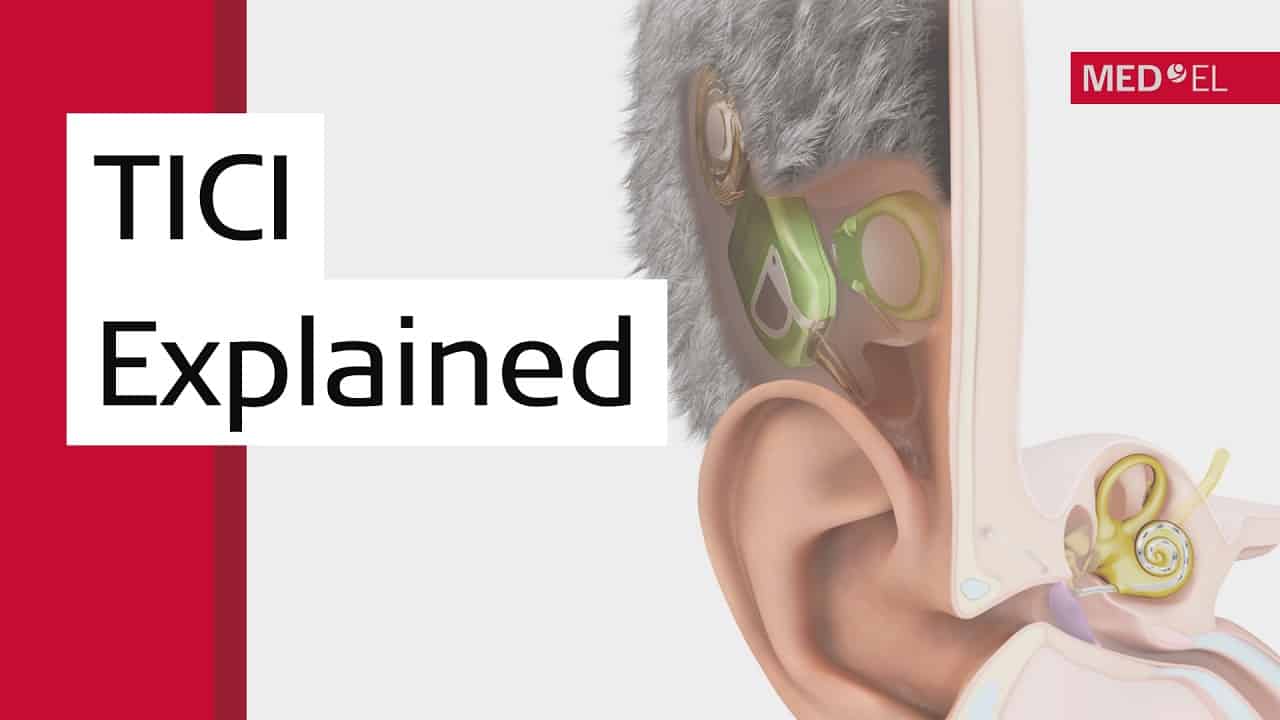
Austrian hearing implant manufacturer has launched TICI UNICO, which it describes as the first commercially available fully implantable cochlear implant. Unlike a conventional cochlear implant, it has no external audio processor to wear behind or on the ear; its microphone, electronics, rechargeable battery, and other components are all placed beneath the skin.
This provides exceptional cosmetic advantages as well as the advantage of benefiting from the device 24/7. A recipient can hear while sleeping, showering, swimming, or charging the implant—times when a conventional external processor is usually removed.
TICI UNICO is currently authorized for adults with severe-to-profound sensorineural hearing loss who are candidates for a cochlear implant. MED-EL says it expands options for suitable cochlear implant candidates rather than replacing conventional systems.


At a September 29 press conference, co-founder and CEO Dr. Ingeborg Hochmair called the launch the fulfillment of an idea dating to the company’s earliest cochlear implant work in the 1970s. “It was a dream that was there in the beginning, and it seemed impossible at the time,” she said. “No battery and no microphone was available, and today, after such a long time, it has become reality.”
How does a microphone hear through skin?
The microphone is arguably the most consequential and innovative part of TICI UNICO’s design. An ordinary cochlear implant processor picks up sound through microphones on the external sound processor, which resembles a behind-the-ear () hearing aid. TICI UNICO’s microphone sits beneath roughly 6 mm of skin, so incoming sound must pass through tissue before it can be captured and processed. The microphone is positioned above and behind the ear and connected by a lead to the implanted stimulator.
:format(webp))
According to the clinicians and engineers at the launch, the skin’s thickness over the microphone is important: too much tissue can dampen sound reaching the microphone, while too little may create problems as the skin changes and thins over time. Surgeons therefore need to consider the tissue over the microphone as part of its placement.
Skin also changes the sound reaching a microphone. The engineering challenge was to capture useful speech information through that barrier and deliver performance comparable to a system with an external microphone. says it developed the microphone specifically for this purpose; however, they did not disclose detailed workings of the design.
“Sound behaves differently when it travels through the tissue, so reaching the performance required years of research, testing, and continuous refinement,” said Gerhard Mark, MED-EL’s clinical research manager and TICI UNICO project leader. During the press conference, Mark identified the microphone as the greatest engineering challenge in making the system fully implantable.

Once captured, sound information travels along the microphone lead to the stimulator, which converts it into electrical signals. An electrode array inside the cochlea then stimulates the auditory nerve. An implanted coil provides a link for charging and exchanging information with the system. The rechargeable battery is housed inside the stimulator.
Hearing without an external processor
The implanted battery can provide up to 40 hours of use on a full charge, according to , though actual time depends on individual settings and use. For routine daily charging, the company estimates approximately an hour; Mark said it could take around an hour to an hour and a half, depending on the circumstances.
Charging does require an external accessory, called the GoPod, which the recipient places on the head. The implant continues to provide sound during charging. MED-EL said the implanted battery is not separately replaceable. If replacement becomes necessary, it would require revision surgery to switch out the implant.
For people who want to hear an alarm, a baby crying, or sounds around them while sleeping, continuous access can be a big deal. Diana Grosser, a user of the TICI UNICO, noted that she can now swim with her children without worrying about the external processor, and user Artur Robbeson enthused about biking without the processor interfering with his helmet. Recipients can also turn the device off when they want silence. Without an external processor, users don’t need to put one on each morning or protect it during activities like showering.
:format(webp))
Professor Philippe Lefebvre, head of the department at the University Hospital of Liège and one of the surgeons involved in the early work, said that experience shifted his view of the device: “I initially thought the main advantage would be invisibility, but after working with cochlear recipients, I realize it is much more than that. Continuous access to sound is a real challenge in the cochlear implant field.”
“Invisible” describes the absence of an externally worn component. Hochmair said the implanted microphone cannot be seen from outside, although someone may be able to feel it by touching the area.
What do the early results show?
says its feasibility work found speech understanding with the implanted microphone comparable to that achieved using an external microphone under the conditions tested. Lefebvre reported comparable performance on standard speech tests in quiet and noise, and improvements from recipients’ preoperative baseline to their 52-week follow-up in patient-reported measures, including hearing performance, self-esteem, and social engagement. He said some participants used the fully implanted system for up to 18 hours a day.


Those findings are encouraging, but they are early. The company said at the press conference that clinical trial results had been submitted to a journal; larger multicenter studies and follow-up will be important for assessing hearing outcomes, reliability, and daily experience over time. The first surgeries in Europe for totally implantable systems were reportedly with the system, and Hochmair said that, as of the September 29 event, 40 people have received the implant.
For surgeons, the cochlear implantation steps are broadly familiar, but TICI UNICO adds placement of the microphone and its lead. MED-EL says the operation takes somewhat longer than a routine cochlear implant procedure.
For audiologists, fitting TICI UNICO follows much the same process as mapping a conventional cochlear implant, according to Dr. Marc Lamers. The implanted microphone introduces some additional settings, but he described these as a relatively small addition to the familiar fitting workflow. Counseling may require more attention to what recipients will hear throughout the day and night, since they will no longer routinely remove an external processor.
Professor Joachim Müller of LMU University Hospital in Munich emphasized individualized assessment and realistic counseling. A team must consider a prospective recipient’s hearing history, anatomy, medical circumstances, and communication needs alongside their preferences about an entirely implanted device. “It’s not simply to ask whether the patient can receive the implant, but what is the individual person’s best solution we can offer them,” he said.
:format(webp))
Availability and practical questions
Hochmair said TICI UNICO received its European CE mark in July and is now available in Europe, including France. It is not approved for sale in the United States. is working toward approval, but Hochmair said she could not estimate when U.S. authorization might come. Reimbursement arrangements are also still being pursued in many countries.
Connectivity is another practical consideration. Mark said the implant provides a channel for connecting an external device. At the event, MED-EL also suggested recipients could listen to headphones or bone-conduction earphones through the implanted microphone. That differs from direct Bluetooth streaming to an external cochlear implant processor, and prospective recipients should ask their clinical team how their preferred phone and assistive listening arrangements would work.

The fully implanted design also changes the upgrade discussion. External cochlear implant processors can be replaced as technology advances; implanted electronics cannot be swapped as readily. Mark acknowledged that limitation and said had designed the system with long-term use in mind. He also said it remains compatible with MED-EL external processors.
TICI UNICO is conditional at 1.5 and 3.0 Tesla, meaning scans must follow the manufacturer’s specified conditions. Its implanted microphone can create an additional image artifact, which clinicians should consider when imaging near the implant, although MED-EL says the artifact is smaller than the one produced by previous implant magnets.
TICI UNICO’s launch establishes that a cochlear implant can capture sound through skin and provide hearing without an externally worn processor. How it compares with conventional systems for a broader group of recipients—and how its battery, microphone, and other components perform over many years—will become clearer as the published clinical evidence and long-term follow-up develop.
MED-EL’S competitors are also in the process of developing fully implantable systems. Cochlear Ltd. recently announced the completion of recruitment for its worldwide trial program evaluating fully implantable hearing technology.
For more information on the TICI UNICO, please visit the MED-EL website.
Karl Strom
Editor in ChiefKarl Strom is the editor-in-chief of HearingTracker. He was a founding editor of The Hearing Review and has covered the hearing aid industry for over 30 years.