OTC Hearing Aids Can Help, but Professional Fitting Still Matters, Says JAMA Study
New research from the University of Iowa and Vanderbilt University finds that best-practice prescription fittings yielded better real-world outcomes than simulated OTC hearing aid models, though OTC may still benefit many users.)
Featured Products
Compare allHearing aid glossary
Looking that up…
Terms are matched automatically. A definition may not fit every context.
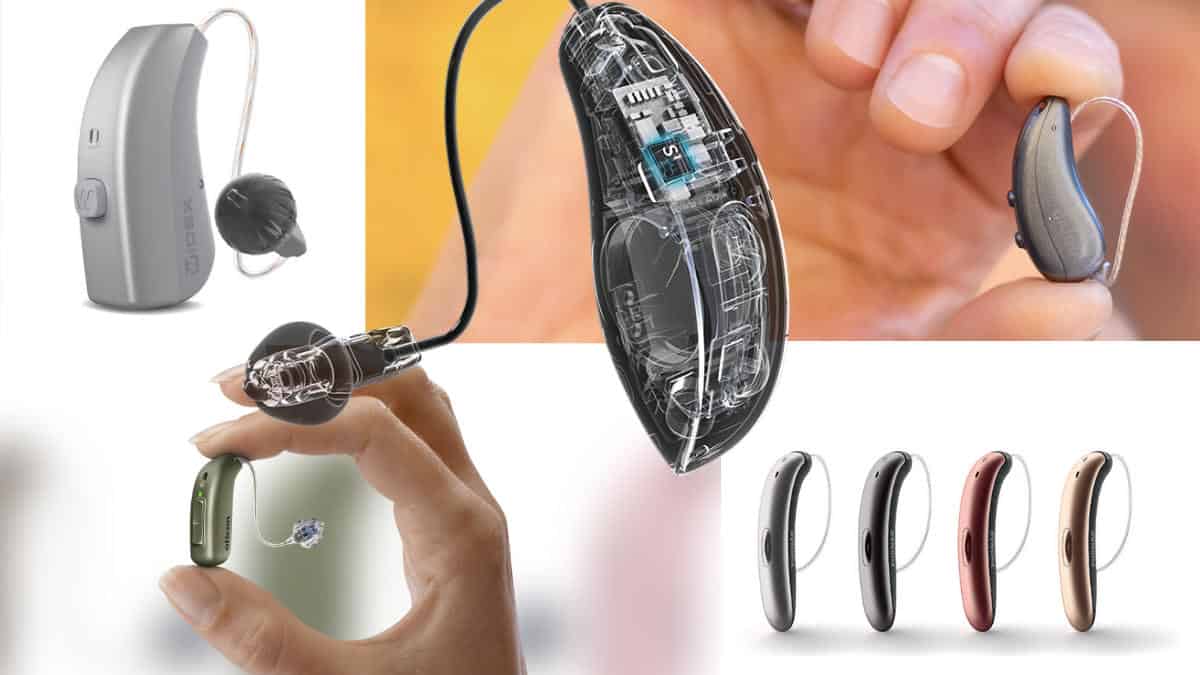
A randomized clinical trial published May 15 in JAMA Otolaryngology-Head & Neck Surgery suggests that hearing aid users with mild-to-moderate hearing loss may get better real-world results when devices are fitted by audiologists using best practices—but the study also found generally positive outcomes for over-the-counter (OTC) hearing aids. The study was recently selected by JAMA Network as JAMA Otolaryngology’s Editor’s Choice clinical trial of the year for 2025.
Since the ’s hearing aid category took effect in October 2022, adults 18 and older with perceived mild-to-moderate hearing loss have been able to buy OTC hearing aids online or in stores without a prescription, medical exam, or fitting by a licensed professional. The new JAMA study posed a practical question for consumers and clinicians: Do higher levels of professional service and more expensive hearing aid technology lead to better outcomes?
Three Hearing Aid Service Models, Two Technology Levels
Researchers from the University of Iowa and Vanderbilt University Medical Center enrolled a total of 245 adults ages 55 to 85 with bilateral sensorineural hearing loss and no previous hearing aid experience. Participants were randomly assigned to one of six groups combining three service models and two technology levels.
The three care models were:
- Prescriptive hearing aids fit with best practices: An audiologist-led hearing aid model using best practice procedures;
- A hybrid “OTC+” model: Audiologists provided limited assistance with preset-based OTC-style hearing aids; and
- Self-Directed OTC: A do-it-yourself OTC model in which participants selected and used preset-based devices on their own.


The study used two behind-the-ear hearing aid models from the same manufacturer: a high-end model priced at about $4,400 per pair and a lower-end model priced at about $1,100 per pair. For the aids, the same brand was used to simulate an OTC hearing aid experience rather than a specific commercially available OTC product. Participants used these devices programmed with four preselected amplification settings; those in the self-directed OTC group chose among the presets using a tablet kiosk, while the OTC+ group received limited audiologist support for testing, preset, and dome selection, basic counseling, and short follow-up visits.
The main outcome was the Glasgow Hearing Aid Benefit Profile (GHABP), administered through ecological momentary assessment (EMA)—a smartphone-based method that asks users about their hearing experiences in real-life situations rather than relying only on memory after the fact, which is thought to provide more reliable outcome measures. EMAs were taken before fitting and again during the seventh week after intervention.
Prescription Hearing Aids Fit Using Best Practices Better than OTC, but OTC Still Beneficial
The audiologist-fit group performed best. After adjustment for preintervention scores, participants in the audiologist service model had significantly higher global benefit scores than those in either OTC group. The difference was 0.33 points compared with OTC+ and 0.32 points compared with OTC on a 1-to-5 scale—just above the GHABP’s predefined threshold for a meaningful difference. Researchers also reported that participants in the audiologist-fit group were more likely to report wearing their hearing aids more consistently.
However, the OTC results should not be interpreted as a failure. The OTC hybrid and OTC groups still had average global scores close to 4 out of 5, which the authors characterized as generally positive. In other words, OTC-style care was effective for many participants, even if it did not match the outcomes achieved by comprehensive audiology care.
One surprising finding was that limited professional assistance in the OTC+ model did not significantly improve outcomes over the self-directed OTC model. The authors suggested that brief support may not be enough when users run into issues such as feedback, poor physical fit, or limited preset flexibility. They noted that optimal outcomes may require more in-depth tools and services, including probe-microphone (real-ear) verification and greater ability to fine-tune devices through professional fitting software.
Study co-author Todd Ricketts, PhD, told HearingTracker, "As we consider continued barriers to adoption, I still don’t think we have a clear enough understanding of potential hearing aid users’ beliefs and needs regarding hearing healthcare support. Dr. Wu, myself, and our colleagues are currently continuing our work in this area with the goal of following the potential hearing aid user’s journey so we may be able to better understand their beliefs and needs.”
:format(webp))
No Measurable Difference in Hearing Aid Tech Levels
As in previous studies, the researchers found no significant advantage of high-end hearing aids over lower-end devices of the same generation. Across the trial’s outcome measures, technology level did not significantly affect results. The authors cautioned that this does not mean hearing aid technology is unimportant; rather, many lower-end devices now include features that were once considered advanced, and the study did not compare older technologies with newer ones.
These findings also align with earlier work by the late Dr. Robyn Cox and her colleagues. In a blinded crossover trial, they found that adults with mild-to-moderate hearing loss who wore basic- and premium-level hearing aids from two major manufacturers showed no statistically significant advantage in patient-reported everyday listening with premium-feature devices. Cox et al. emphasized that all hearing aids were helpful, but the more expensive technology level did not reliably translate into better perceived real-world benefit. However, it should also be recognized that there is an ongoing debate in hearing healthcare about the sensitivity of outcome measures relative to patients’ experience with hearing aids.
“I have long thought that hearing aid technology level may not be the right question clinically,” says Dr. Ricketts. “I really do believe that it is more about assessing an individual’s listening needs and matching them to appropriate technologies that address those needs (i.e., targeted technologies rather than more is better). Of course, this is also an area where more research is needed to test this hypothesis.”
Take-Away: Some OTC Hearing Aids May Help, but Pro Support Gives You Better Odds for Success
For audiologists, the findings reinforce the value of best-practice care—particularly individualized fitting, real-ear verification, counseling, orientation, and follow-up. For consumers, the message is that some hearing aids may provide meaningful benefit for adults with mild-to-moderate hearing loss, but those who want the best odds of success may still be better off turning to comprehensive professional testing, fitting, and follow-up.

The authors noted several limitations to the study. For example, they used only one simulated preset-based approach, so results may not apply to any specific or all OTC hearing aids, especially newer self-fitting models that use an app-based hearing test or more personalized algorithms. Participants were also older adults who were randomly assigned to OTC-style care, which may differ from real-world OTC buyers, who may be younger or have milder hearing difficulties.
Overall, the trial suggests that hearing care value may depend less on buying the most expensive device and more on receiving the right level of support, fitting precision, and follow-up.
The study authors were Yu-Hsiang Wu, MD, PhD, Elizabeth Stangl, , and Jacob Oleson, PhD, from the University of Iowa, and Todd Ricketts, PhD, and Kjersten Branscome, AuD, from Vanderbilt University.
Original article citation: Wu Y, Stangl E, Branscome K, Oleson J, Ricketts T. Hearing aid service models, technology, and patient outcomes: A randomized clinical trial. JAMA Otolaryngol Head Neck Surg. 2025;151(7):684–692. doi:10.1001/jamaoto.2025.1008
Karl Strom
Editor in ChiefKarl Strom is the editor-in-chief of HearingTracker. He was a founding editor of The Hearing Review and has covered the hearing aid industry for over 30 years.