Oticon Zeal Launch: NXT Design to “Change the Game” for Invisible, Rechargeable Hearing Aids
Oticon positions Zeal as a new class of hearing aid—pairing invisibility with same-day fitting flexibility, rechargeability, durability, and modern Bluetooth connectivity.)
Featured Products
Compare allHearing aid glossary
Looking that up…
Terms are matched automatically. A definition may not fit every context.
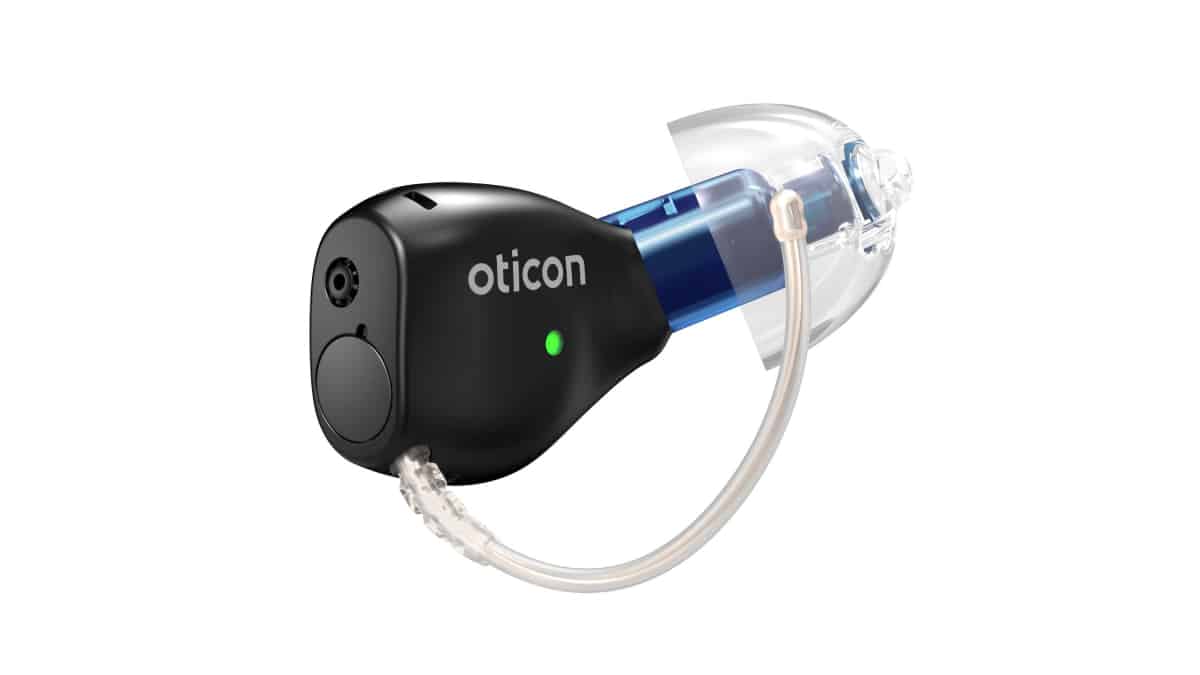
A new, tiny, -powered, Bluetooth-enabled in-ear hearing aid that checks nearly all boxes—Oticon Zeal—was unveiled in Phoenix (Jan 23-25) to about 700 audiologists and hearing aid specialists. Zeal looks like an instant-fit completely-in-canal () device at first glance, although it has a modular body and an “overgrown” antenna that wraps around the concha. But Oticon, throughout the weekend, was making a clear statement: this is not a nostalgic return to CICs and “small for small’s sake”; it’s a declaration that a tiny invisible hearing aid no longer must act like one.
It’s a big ambition for a tiny device, and it aligned neatly with the conference’s theme: “Changing the game.” In his opening keynote, Demant President & CEO Søren Nielsen told the audience that “changing the game is not just about being better, it’s about imagining a whole new set of rules and a whole new playing field.”


Oticon Global Brand President Ole Asboe Jørgensen, who, like Nielsen, is a seasoned industry veteran involved in launching highly successful products over the past two decades—including Oticon Opn and the -powered Oticon More— told me, “Opn and More were game-changers for us. But I think Zeal is bigger; the technology, the value to consumers, all the innovation that went into this. It’s bigger.”
:format(webp))
“We are driven by a singular purpose: life-changing hearing health,” Oticon U.S. President Ty Lee told attendees, referring to Oticon’s innovation “combined with your passion and care for patients in your clinics.”
Changing the rules for “invisible” in-ear solutions
Historically, / devices have forced tradeoffs—runtime, gain/feedback margins, comfort/occlusion, moisture durability, and wireless/app reliability—because miniaturization and ear canal physics largely dictate the features and performance offered.
As Oticon VP of Marketing Lisbeth Meng Collignon stated during her presentation: “So far, a patient coming into your clinic would have to make either a compromise on discreteness or functionality… As of now, with Zeal, this compromise no longer exists.”
With some radical design changes, Zeal intends to “change the game” by delivering, in one ultra-compact device:
- Near-invisible discretion comparable to a , aimed directly at stigma and first-time-user hesitation—particularly attractive for younger, active, and working-age users
- Instant-fit capability using the same domes used currently in Oticon Intent, plus a path to custom earmolds if needed
- Always-on and sound processing based on the company’s Sirius chip—the same one that drives Intent—which has at its core Oticon's BrainHearing technology
- Rechargeability rated “up to 20 hours” with typical streaming and a compact charger that holds up to 3 full charges
- Modern Bluetooth connectivity for both iOS and Android, including Google Fast Pair, plus Zeal can give you access to right now—with no “pending firmware update” needed
- Durability via a first-of-its-kind manufacturing approach for hearing aids that fully encapsulates electronics in protective resin, reducing risks from moisture, debris, and mechanical stress
You can find my initial overview of Zeal’s core attributes in an earlier article about its October 2025 launch at the annual German EUHA Congress. My colleague Matthew Allsop also details Zeal in his video below, describing it as “the perfect middle ground between a receiver-in-canal and a custom in-the-ear hearing aid.”
But the “Changing the Game” event in Phoenix revealed what matters most to clinicians: How Oticon claims it solved the old problems to arrive at what it calls “the world’s most discreet, complete hearing aid”—and what that means for hearing aid users.
The “NXT” claim: Why Oticon insists this isn’t just another CIC
In the conference’s core audiology session, Oticon VP of Audiology (U.S.) Virginia Ramachandran, , PhD, framed Zeal as a form factor shift: “Oticon Zeal is a new category of hearing aids that we refer to as NXT… we’ve never really had a category for a flexible-fit style before… something that has everything in the ear, but can have that same flexibility as a receiver-in-ear () device.”
Oticon’s Global VP of Audiology Thomas Behrens, MSc, underscored this point: yes, there have been non-custom in-ear solutions before, but to combine that flexibility with a full modern feature set required “completely reimagining our approach to hearing aid design, including an entirely new manufacturing process.”
That “reimagining” is the engineering story of Zeal—and it’s also the reason Oticon is trying to distance the product from the mental category many clinicians default to when they hear “tiny in-canal”: a smaller solution with smaller expectations.
:format(webp))
Micro-Encapsulation: Why Zeal can be rechargeable, durable, and wireless
If Zeal succeeds, it may be because Oticon treated manufacturing as the foundation—not an afterthought. Behrens used an analogy that stuck because it explains both durability and space efficiency: amber. He showed a slide of how ancient resin hardens around an object (as demonstrated in Jurassic Park) so “there are no hollow spaces” and the object is sealed and shielded from all elements. He then connected that directly to Zeal hearing aids: “The components are completely covered by the hardened encapsulation material, and all spaces inside the device are filled. As a result, the components are fixed and protected in a specific location.”
The clinical relevance isn’t just “it’s tougher.” It’s also about repeatability: in traditional custom hearing aids, component placement varies with canal shape and the rack inside the device; with Zeal, Behrens says there is “no variance,” and Oticon can place everything in “the most optimal way.” It also provides for a larger, completely sealed lithium-ion rechargeable battery.
When I asked Demant CEO Søren Nielsen what really stood out for him in Zeal, he was quick to mention this first: “We are typically talking about innovation in the area of signal processing… but encapsulation is a big thing for hearing aids. It has been super difficult and has taken numerous iterations to get it right.”
Jørgensen made the same point from a product-positioning lens: to avoid the hassles of fully custom impressions, turnaround, and “no same day fittings,” Oticon needed a standardized solution that was still smaller than what the industry often calls “instant fit.” His explanation for how they got there: pack electronics “completely, compactly around the battery,” then encapsulate the entire system in a protective material—a technology he compares to what’s used in other industries like pacemakers and spacecraft.
:format(webp))
AI-Driven but with rechargeability
“ in a tiny device” only matters if power—and the acoustics that go with it—hold up in the real world. In presentations in Phoenix, Oticon argued that Zeal’s encapsulation is more than a durability story; it’s the enabling step that lets them pack enough battery and electronics into a -sized device without sacrificing modern processing. Dr. Ramachandran linked rechargeability directly to the new baseline expectation: it’s what allows “all day, always on, AI signal processing.”
Zeal is powered by the same -driven chip as Oticon Intent, but it features a single-microphone design that doesn’t rely on traditional dual-mic beamforming. Instead, it starts with the natural pinna effect for spatial cues and then leverages its always-on noise reduction as the primary speech-in-noise engine. Behrens explained that the DNN is trained on millions of noisy speech samples to “clean up” speech, and that the newer DNN 2.0 was trained with more diverse real-world samples and much finer analysis (256 channels vs 24), allowing Oticon to be “more assertive” with noise reduction—up to about 12 in complex environments while keeping the sound more natural. To quantify Zeal’s single-mic performance, Ramachandran pointed to output enhancement measurements showing about 4.8 dB improvement at default settings and up to ~6 dB at maximum—importantly measured against an open unaided ear (so the pinna advantage is effectively canceled out).
Behrens acknowledged that while AI uses a lot of power, Oticon has addressed this by carefully training the DNN and building a platform “purpose-built for specific speech in background sound challenges…without consuming excess power.” He described the lithium-ion “312 plus” battery as essentially a 312 that is “a little bit thicker and therefore can provide more power,” and Ramachandran said Zeal delivers “up to 20 hours of battery life with typical streaming.” The charging technology also enables quick power-ups, providing 4 hours of use with just 15 minutes of charging or 8 hours with 30 minutes.
Behrens added that the battery should support “around 2000 charging cycles… well over 5 years” of service, thanks to a smart charger that optimizes charging. He noted the case can hold enough power for at least three full charges on the go.
:format(webp))
Bluetooth LE Audio, Fast Pair, and Auracast
Bluetooth audio streaming is rare in a -like form factor. During the presentations, Oticon did showcase connectivity—not so much as bragging rights, but because clinics often pay a “smartphone support tax.”
Dr. Ramachandran said it plainly: “As an audiologist, becoming an expert in smartphone menus is not what I signed up for, but connectivity has become incredibly important to patients…They fully expect it to be available in any device that they have on or in their ears… [but] it only works if the usability is good—and it cannot create barriers for the audiologic care needed to support patients.”
Oticon works closely with Bluetooth SIG and major consumer electronics manufacturers to improve the connectivity experience for hearing aid users. Heidi Gade, Senior Project Manager for connectivity at Oticon A/S, described the goal as “seamless, reliable connections without compromising audiology.” Google’s Fast Pair is designed to instantly pair with Android phones and devices without having to rummage through the patient’s phone. For patients with older phones and tablets, Oticon offers the Easy LE Adapter that provides an elegant USB plug-in path to streaming.
:format(webp))
Auracast was positioned as the next practical leap: broadcast audio in public spaces and shared environments. Gade explained the model as transmitter/assistant/receiver—and the key usability bridge is the Oticon Companion app, which can function as the Assistant even on phones that don’t natively support , including older Android devices and iPhones.
:format(webp))
Zeal’s unique wrap-around antenna isn’t cosmetic; it’s an overgrown 3-in-1 cord that leverages in-ear physics and the body’s conductive properties. It also serves as both a retention arm and an extraction cord. After about a day of use, the flexible antenna molds naturally to the user’s ear, ensuring a secure fit. Finally, it serves as a Bluetooth antenna, enabling direct streaming, hands-free calls, and compatibility with the Oticon Companion app for on-the-fly adjustments of volume, treble, bass, and program settings.
Behrens explained the engineering behind the design: Oticon designed the stiffness and bend to maintain skin contact because “when you have at least 50% of the length of the antenna touching the skin, then you have much better antenna range and stable connection.” He noted it can be replaced if needed, although “our standard is not to have to do that.”
:format(webp))
Fitting candidacy of Zeal
For clinicians, the first question for small is often candidacy, which is often determined by fit inside the ear canal. Oticon’s conservative fit expectation: “a good fit in two out of three people” with a dome, according to Behrens.
Zeal offers about 40 of gain, compared to 41 dB for the Oticon Intent microRITE. That translates to a fitting range of around 55-65 with the instant-fit domes and pushing up to 75 dB HL with micromolds. In practical terms, Zeal’s instant-fit dome fittings can accommodate roughly moderate to moderately severe losses, while custom earmolds could extend fittings into the low end of severe, depending on hearing loss configuration and other factors.
Behrens said that “fit” was defined across multiple criteria, including comfort/retention, microphone exposure, and proper antenna seating. In terms of “how invisible” Zeal is, he described a visibility assessment relative to the tragus from a “plus or minus 30 degree” viewing angle: Zeal was “not visible in nearly three-quarters” overall, and “either not visible or slightly visible in 94%” of ears where there was a good fit.
:format(webp))
More options for workflow: Bringing “RIC-like” flexibility to in-ear fittings
Zeal also holds the promise for improving practice workflow. Ramachandran called out what many clinics experience: custom-only create barriers to demos and same-day movement. With Zeal, she said, “you can fit the same day with a dome… or you can start with the dome and move to a custom mold. Or you can just do a custom mold to start with. The choice is yours.”
Behrens added that Zeal is compatible with “the same domes that you use for Intent, so you don’t have to worry about stocking anything new.” For cases where you want a more controlled acoustic fit, Oticon described Zeal-specific “micro molds” in multiple materials.
The point is not that custom is obsolete; it’s that Zeal lets the provider and patient decide when custom is necessary, rather than forcing it at the outset.
Market context: Adoption, stigma, and a slower 2025
U.S. hearing aid sales have been slower than normal. Oticon U.S. General Manager and VP Adam Fitzsimmons said industry growth typically ranges from 3% to 6%, but in 2025, it has been flat or slightly negative, depending on the segment. In my interview, Nielsen called the U.S. “more subdued or below normal,” attributing softness to broader political and economic uncertainty that can lead consumers to postpone purchase decisions.
That’s why Fitzsimmons positioned Zeal and the NXT form factor as an adoption lever—not just a niche-style. He pointed to long-term progress—the U.S. hearing aid adoption rate has nearly doubled since the early 1990s and is now up to 39%—but he emphasized the core challenge remains: fewer than 2 in 5 people who could benefit from hearing aids use them. His view is that stigma remains a large barrier, and that, especially for new users, clinicians have to “meet people where they are”—often warranting a discreet or invisible solution.
:format(webp))
In that context, Zeal becomes part of a bigger ambition: not simply “Oticon trying to take a bigger piece of the pie,” but “trying to make a bigger kind of pie,” by offering something hesitant patients might finally want to use.
Will Zeal “change the game”?
The Zeal launch event in Phoenix offered much more for attending hearing care professionals, including presentations on counseling by Jessica DeFauw, marketing materials for Zeal by Lisbeth Meng Collignon, a perspective on hearing loss by Matt Hay, and an informative and entertaining roundtable featuring three hearing care providers who have been fitting Zeal in their practices.
In many ways, Zeal is essentially an attempt to rewrite the old in-the-canal equation:
- Start with the form factor many patients ask for: discreet, single-piece, almost invisible
- Remove the custom bottleneck when you don’t need it: dome-first, same-day, with micro-molds as an option
- Retain what modern patients expect: processing, rechargeability, and dependable connectivity
- Make the canal environment less punishing: encapsulation designed to reduce moisture and mechanical stress risks
- Lower the clinic’s connectivity burden: Fast Pair, options, and access via the Companion app
Whether Zeal's NXT design ultimately changes the category will depend on what clinicians see in the field: candidacy boundaries, comfort and occlusion management, feedback, streaming quality, repair rates, and returns. Our independent HearAdvisor lab hasn’t yet had the opportunity to test Zeal, but we hope to report on it in the near future.
The Phoenix event made one thing clear, however: Oticon is no longer satisfied with “small ” meaning “small expectations.” If Zeal performs the way Oticon believes it will, “changing the game” won’t just be a conference theme—it will become a real, practical answer for patients who still walk into clinics asking the same question: “Do you have a hearing aid that nobody will see?”
Karl Strom
Editor in ChiefKarl Strom is the editor-in-chief of HearingTracker. He was a founding editor of The Hearing Review and has covered the hearing aid industry for over 30 years.