TriHear ClearTV Series Designed to Simplify TV Streaming for Hearing Aids
TriHear’s ClearTV Series adds a built-in display and protocol-specific models for Bluetooth and ASHA hearing aids, aiming to make TV streaming easier and less dependent on proprietary accessories.)
Hearing aid glossary
Looking that up…
Terms are matched automatically. A definition may not fit every context.
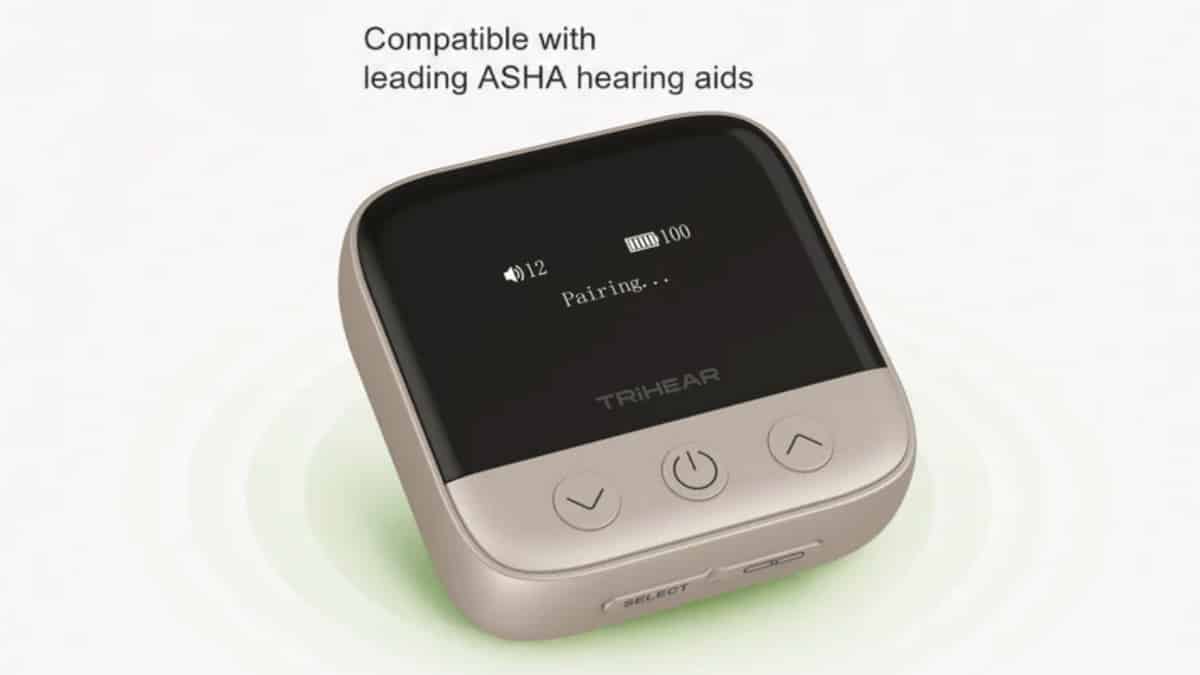
TriHear, based in Hong Kong, is positioning its new ClearTV Series as a simpler alternative to traditional, proprietary hearing aid TV streamers, with a focus on reducing app dependence and making device status easier for users to understand.
In a June 4 blog post, the company argues that many hearing technology accessories have become more complicated than they need to be, often requiring users to download an app, create an account, interpret LED indicators, or consult a manual before they can begin listening. TriHear says the ClearTV Series was designed around a different idea: making TV listening feel more like turning on a television and less like configuring a piece of software.
The TV streaming device features a built-in high-contrast display that shows real-time operating information directly on the device. Instead of relying only on flashing colored lights, the screen reportedly indicates pairing status, connection status, volume level, input source, and battery status. For older adults—or anyone who has struggled to decode what a blinking blue or amber light means—this type of plain-language feedback can make setup and troubleshooting less bewildering.


TriHear offers two versions of the product:
- TriHear ClearTV Bluetooth TV Streamer, priced at $99, is described as compatible with selected Bluetooth-enabled Phonak and Unitron hearing aids.
- TriHear ClearTV ASHA TV Streamer, priced at $119, is intended for -enabled hearing aids from brands such as Oticon, Signia, ReSound, Widex, Starkey, Philips, and others.
TriHear says the Bluetooth model can support up to two pairs of hearing aids, while the ASHA model supports one pair.
:format(webp))
For consumers, the practical goal is straightforward: stream TV audio directly to compatible hearing aids without turning up the television volume for everyone else in the room. This can be especially helpful for people who understand speech reasonably well in quiet but struggle with TV dialogue because of background music, fast speech, poor TV speakers, or distance from the screen.
For hearing care professionals, the more interesting point may be the user-interface design. TV streamers are not new, and most major hearing aid manufacturers already offer proprietary accessories. However, many of these products still depend on brand-specific systems and companion apps, and their status lights can be confusing for users, says TriHear. The company is emphasizing ease of use as much as wireless performance, arguing that assistive listening devices should communicate clearly with users rather than requiring them to interpret technical signals.
The ClearTV Series also includes a rechargeable design. According to TriHear, both models provide up to 12 hours of typical use, charge in about 2 hours, and offer a wireless range of up to 20 meters. The devices can connect to a television using optical or 3.5 mm audio input, and TriHear includes both cables in the box.
Compatibility is Key
Compatibility remains the key caveat. (Audio Streaming for Hearing Aids) is a Bluetooth Low Energy-based approach used for direct streaming between compatible Android devices and hearing aids. Google notes that ASHA uses Bluetooth Low Energy connection-oriented channels and buffering to support hearing aid audio streaming, but compatibility can vary across hearing aid models, phones, firmware versions, and implementations. TriHear similarly cautions that Bluetooth and hearing aid compatibility may vary by device model, firmware version, and manufacturer specifications.

For consumers, that means you should not assume ClearTV will automatically work with every hearing aid simply because the hearing aid has Bluetooth. Buyers should check the exact hearing aid model, firmware, and TriHear compatibility guidance before purchase. Audiologists may also want to verify compatibility before recommending the device, particularly for patients who are less comfortable troubleshooting wireless accessories.
TriHear lists general brand and protocol compatibility on its ClearTV product pages, but does not appear to offer a detailed model-by-model compatibility database. For consumers, that means it would be wise to confirm the exact hearing aid model before purchasing.
Additionally, TriHear does not describe the ClearTV Bluetooth model as an Auracast transmitter. Instead, it appears to use conventional Bluetooth LE streaming for compatible Phonak and Unitron hearing aids, while the separate model is intended for ASHA-enabled hearing aids from other brands. Consumers with -enabled hearing aids should verify compatibility before assuming ClearTV will work for their hearing aids.
However, by adding a screen, reducing reliance on smartphone setup, and offering protocol-specific models that work across multiple hearing aid brands, TriHear is pointing toward a broader idea: a more universal TV listening system rather than the proprietary, brand-specific streamers that have traditionally dominated this category. Compatibility still needs to be verified by hearing aid model, but the goal is clear—make TV streaming easier to understand, easier to set up, and less dependent on staying within one manufacturer’s ecosystem.
Karl Strom
Editor in ChiefKarl Strom is the editor-in-chief of HearingTracker. He was a founding editor of The Hearing Review and has covered the hearing aid industry for over 30 years.