The Best Alternatives to CapTel for Better Call Clarity
Compare CaptionCall, ClearCaptions, and InnoCaption to find a captioned phone or app that fits the way you make calls.
Hearing aid glossary
Looking that up…
Terms are matched automatically. A definition may not fit every context.
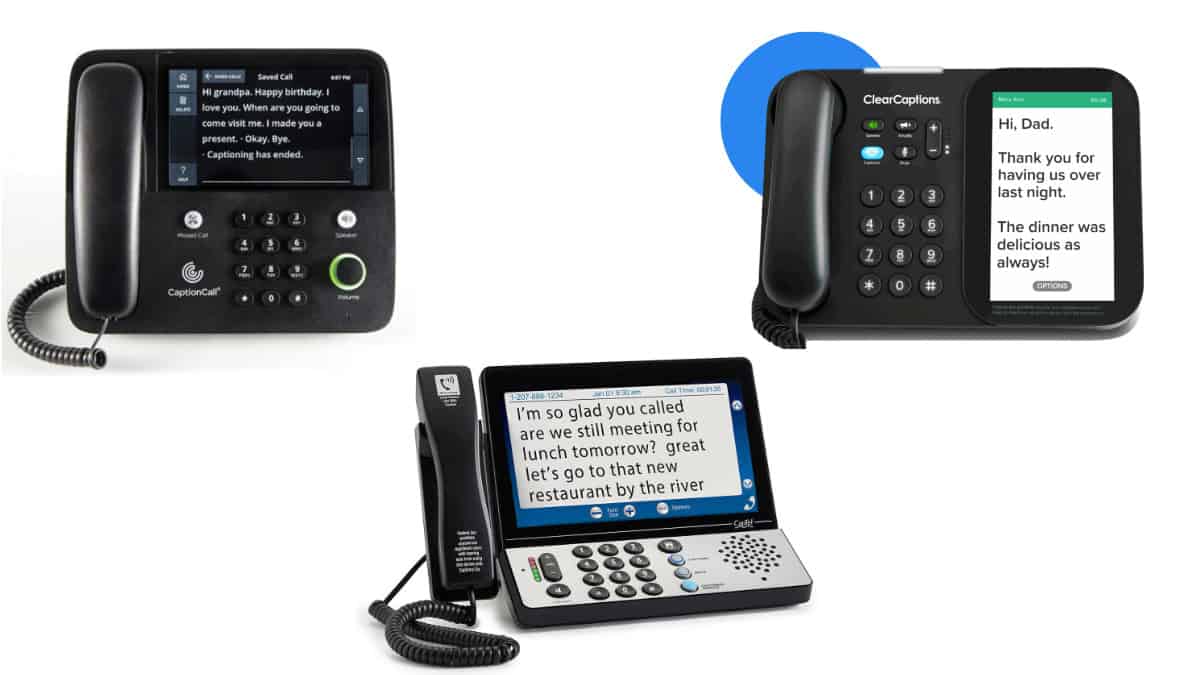
For years, CapTel captioned telephones have been a familiar fixture in the homes of individuals experiencing significant hearing loss. However, assistive communication technology has evolved rapidly. If you are noticing lagging text, difficulty navigating your captioned phone, or simply want sharper screen layouts and modern app integration, it might be time to look at what else the market has to offer.
Today, several advanced IP-CTS (Internet Protocol Captioned Telephone Service) providers serve as excellent CapTel alternatives, offering modern hardware and clear, near-real-time text transcription. Because these services are recognized as a fundamental accessibility right under the Americans with Disabilities Act, the top alternatives are federally funded and available at no cost to eligible users.


Below, I review the top-rated captioning platforms to help you find the best device for your home and lifestyle.
Why Look for a CapTel Alternative?
While CapTel devices are highly reliable, many users seek alternatives to access updated features that fit a modern lifestyle:
- High-Resolution Touchscreens: Newer devices offer sharper text contrast and more intuitive menus, making them easier to read and operate.
- Advanced Mobile Apps: Modern alternatives provide robust smartphone applications that mirror your home phone experience seamlessly when you leave the house.
- Acoustic Engineering: Updated hardware is specifically designed to prevent whistling and feedback when used in tandem with modern, high-powered hearing aids.
The Top-Rated CapTel Alternatives
When evaluating the market for a replacement phone, three primary federally supported services stand out for their clarity, technology, and customer support.
1) CaptionCall by Sorenson
CaptionCall is widely regarded as the premium alternative to legacy captioning systems. Backed by Sorenson’s decades of audio and accessibility heritage, CaptionCall devices are highly praised for their large, elegant touchscreens and crystal-clear text display.
- Hardware: Features a modern, low-profile design with an adjustable stand, a high-fidelity speakerphone, and text sizing that can be customized with a single tap.
- Mobile App: The CaptionCall mobile app is exceptionally stable, allowing you to take your real-time captions on the go via cellular networks or Wi-Fi.
- In-Person Setup Option: CaptionCall sets the industry standard with its “Red Carpet Service,” sending a local specialist directly to your home to install the phone, configure your internet connection, and walk you through how to use it.
:format(webp))
2) ClearCaptions
ClearCaptions is another strong contender in the CTS space, focusing heavily on high-visibility displays and straightforward usability. Their home phone combines touchscreen convenience with large, easy-to-see physical buttons, making it a favorite for individuals who experience visual limitations alongside hearing loss. They provide robust remote support and home shipping options to get you connected quickly.
:format(webp))
3) InnoCaption
If you want to bypass a traditional desktop landline phone entirely, InnoCaption is an excellent mobile-first alternative. Operating strictly as an app for smartphones and tablets, InnoCaption allows users to choose between Automated Speech Recognition (ASR) and live, human stenographers in real-time. It is a fantastic option for active individuals who do most of their communicating on a cell phone.
Direct Comparison: CapTel vs. CaptionCall
Feature | Legacy CapTel Devices | CaptionCall by Sorenson |
|---|---|---|
Display Style | Traditional widescreen displays (some models retain physical keypads). | Large, high-resolution modern touchscreen interface. |
Setup Process | Often relies on self-installation or guided customer service. | White-glove, in-home installation via local "Red Carpet" specialists. |
Mobile Integration | Mobile apps available with standard layouts. | High-performance mobile app highly optimized for cellular data. |
Cost to Eligible Users | Provided at no cost via federal TRS funding. | Provided at no cost via federal TRS funding. |
How to Switch to a No-Cost Alternative
Because captioned telephone services are federally regulated, switching from CapTel to an alternative like CaptionCall is simple. The service is administered by the Federal Communications Commission (FCC) and paid for through the Telecommunications Relay Service (TRS) Fund.

To qualify for a no-cost CaptionCall device, you simply need to meet the standard two-part eligibility requirement:
- You must have a medically recognized hearing loss.
- You must certify that your hearing loss necessitates the use of captions to understand speech and communicate effectively over the phone.
If your current setup isn't delivering the absolute clarity you need to stay connected with family, friends, and doctors, exploring an alternative can dramatically lower the daily frustration of phone conversations.
:format(webp))
CaptionCall is a leading provider of Internet Protocol Captioned Telephone Service (IP CTS). The service is designed for individuals with hearing loss and who need captions to use the phone effectively. CaptionCall allows eligible participants to simultaneously listen to their caller and read real-time captions of the conversation on a large, high-resolution screen at no cost because it is a federally funded program.
- High-Resolution Touchscreen
- Custom Audio Tailoring
- Hearing Aid Compatibility
- Speakerphone & Voicemail
More information
READ OUR FULL CAPTIONCALL REVIEW. See deeper technical specifications, lab-test results, and clinical pros and cons from the HearingTracker team.
UPGRADE TO A NO-COST CAPTIONCALL PHONE. Go directly to Sorenson’s portal to check your medical eligibility and request your professional, in-home installation.
Acknowledgement
This article is sponsored by CaptionCall. The content, perspectives, and recommendations were written by the author to provide practical guidance for people with hearing loss, caregivers, and their families.


CaptionCall by Sorenson is a program of the FCC and is provided at no cost to eligible users via the TRS Fund. Captions are generated by Automated Speech Recognition (ASR) and/or a live Captioning Agent (CA). All calls are strictly confidential and are never recorded. Eligibility requires a medically recognized hearing loss that necessitates the use of captions to use the phone effectively. No financial incentives, gift cards, or rewards are provided for registration. Captioning services are intended as a complementary technology to be used in conjunction with a user’s standard clinical hearing care.
Tony Schwartz
ContributorTony Schwartz is a marketing and sales leader with 15 years of experience spanning eCommerce, B2B, direct to consumer, and mass media industries. He represents HearingTracker, HearAdvisor, and Audiologists.org as clients.