Fortell AI Hearing Aids vs. Yeasound RIC800
Check out our comparison of the Fortell AI Hearing Aids vs Yeasound RIC800. Listen to audio samples and see how the two hearing aids differ in terms of sound performance, features, accessories, and more.
Product Overview
Expert Ratings
Compare comprehensive test results and expert opinions.
HearingTracker Score
Fortell delivers the best background-noise performance we've seen, but its aggressive processing, lack of Android connectivity, and limited in-person clinic network are important tradeoffs.
Read full reviewIt's streams to both both iPhone and Android, and scored in the top 5% of all OTC hearing aids tested by the independent HearAdvisor Lab.
Read full reviewHearAdvisor SoundScore
Fortell AI Hearing Aids achieved a SoundScore of 6.0/5 and a SoundGrade of A in HearAdvisor lab testing. The Prescription Hearing Aid category average SoundScore was 4.19/5.
Yeasound RIC800 achieved a SoundScore of 4.7/5 and a SoundGrade of A in HearAdvisor lab testing. It ranked #2 of 65 OTC Hearing Aid devices tested. The OTC Hearing Aid category average SoundScore was 3.68/5.
Build Quality
Fortell AI Hearing Aids feel well built, though their IP54 rating offers less water and debris resistance than many prescription hearing aids, which commonly carry a higher IP68 rating. As with any hearing aid, regular cleaning and proper care will help keep them performing well over time.
Yeasound RIC800 have an ingress protection rating of IPX8. They appear well-built and approach the feel of a prescription hearing aid.
Battery
Fortell states that its hearing aids last around 24 hours per charge in the default All-day AI mode, so they should easily last a full day even if you rely heavily on the more processing-intensive “All voices” or “Front voices” programs.
RIC800 last up to 31 hours per charge and take around 3 hours to recharge. You can expect shorter battery life while streaming, although the batteries should still last all day.
Bluetooth
While Fortell AI Hearing Aids support hands-free calling and audio streaming on iOS devices, they currently do not support Android, and the company has not announced a timeline for Android compatibility.
RIC800 offer wireless control and streaming with Bluetooth. While we could not test this on Android, functionality was fairly good on iOS with a few noted drawbacks.
App Features
The Fortell app offers useful controls for volume, a 3-band EQ, and several AI listening modes. While I found it easy to use and sufficiently flexible, it is more limited than many competing apps, with no tinnitus features, health tracking, or other extras.
RIC800 offer fairly good sound customization for a preset-based OTC hearing aid. I liked the addition of a 3-band equalizer and access to controls over noise reduction and microphone settings.
Comfort
I found Fortell AI Hearing Aids comfortable and similar in fit to other prescription receiver-in-canal hearing aids. Although the body is slightly larger than many competing devices, it should fit comfortably behind most ears without interfering with glasses or causing retention issues. Your provider can help you fine-tune your fit in office.
I found RIC800 very comfortable thanks to their small design and lightweight.
Design
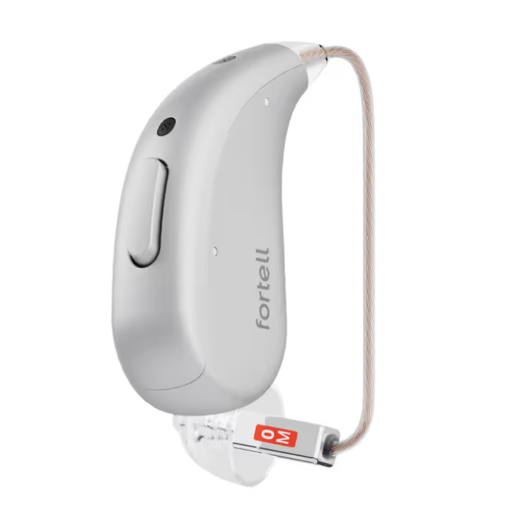
Fortell AI Hearing Aids use a familiar receiver-in-canal design with a slightly larger body than many other "micro" prescription devices. However, they remain fairly discreet behind the ear. Several colors are currently available with more to come later in 2026.
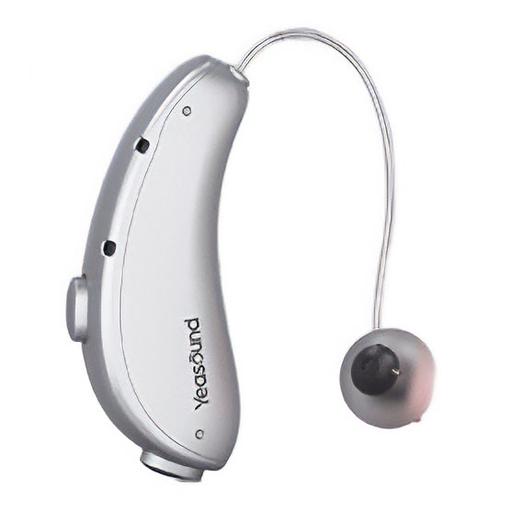
Yeasound RIC800 look like modern receiver-in-canal hearing aids and could easily be mistaken for prescription devices.
Value
Fortell AI Hearing Aids has a value score of 3.2/5 based on lab performance and public display price.
Yeasound RIC800 has a value score of 4.6/5 based on lab performance and public display price.
Handling
I found Fortell AI Hearing Aids easy to use and comparable to other receiver-in-canal devices. The app, charging case, and physical buttons all worked well, making day-to-day handling straightforward and giving me easy access to the controls I needed.
RIC800 were easy to use and get in my ears, though you may need some practice if you have not worn receiver-in-canal devices before.
Pro Support
Fortell AI Hearing Aids are professionally fit and supported, but access is currently more limited than with major prescription hearing aid brands. In-person care is available in only a handful of major metropolitan areas, though additional clinics are planned. Fortell also offers fully remote care across 30 states, which expands access considerably for those comfortable with telehealth.
Yeasound offers remote assistance from their technical support team. To our knowledge, they are not offering audiologic support from licensed providers at this time.
Lab Recordings
Listen to direct output recordings from our acoustic test lab.
HearingTracker partners with HearAdvisor to provide recordings and performance data from an acoustic laboratory that follows standard scientific procedures. All hearing aids are fitted and performance-tested for mild sloping to moderate hearing loss. All audio samples cutoff above 10kHz.
Accessories
Compatible accessories for each hearing aid
Fortell Charging Case+1
Portable charging case with an integrated lithium-ion power bank, rated IP54 and charged over USB-C. Holds 72+ hours of additional listening, roughly three full recharges of a pair, and reaches full charge in 8 hours. Three separate 3-LED arrays report the left aid, the right aid and the case itself; the case button also drives pairing and reset.
Fortell App+1
iPhone companion app for Fortell wearers. Shows connection status and per-device battery, controls volume for both aids together or independently with per-device mute, switches listening modes, enables sleep mode, and provides a three-band equaliser plus a separate one for streamed audio. It is also the channel for messaging the wearer's Fortell audiology team and for remote fitting, both realtime and asynchronous.
Hardware
- Made for iPhone (MFi)
- Made for iPhone (MFi)
- Android (ASHA)
- Bluetooth® Auracast™
- Made for iPhone (MFi)
- Volume Control
- Program control
- Call accept/reject