Oticon Reveal vs. Phonak Virto Infinio

Check out our comparison of the Oticon Reveal vs Phonak Virto Infinio. Listen to audio samples and see how the two hearing aids differ in terms of sound performance, features, accessories, and more.
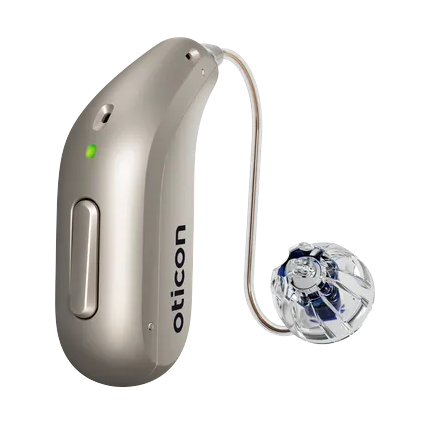
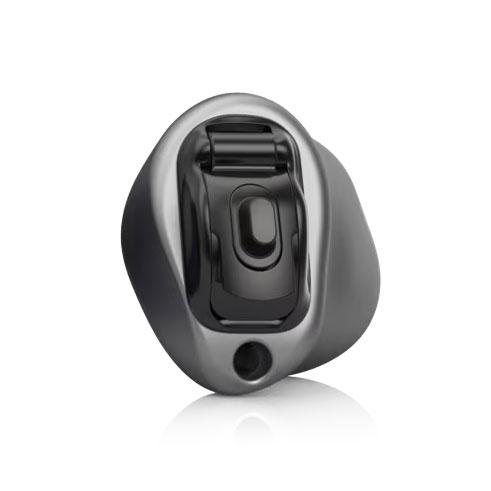
Oticon Reveal 1 miniRITE R
Add Product
Featured Products
Oticon

Reveal 1 miniRITE R

$4,598 per pair
Shop Now
Phonak Virto Infinio Titanium I90
Add Product
Featured Products
$4,598 per pair
Shop Now
Reveal
$4,598 per pair
Shop Now
Virto Infinio
$4,598 per pair
Shop Now

Product Overview

Reveal
Virto Infinio
Form Factor
Form FactorThis type of hearing aid sits behind the ear. A wire runs along the top of the ear and down to a speaker sitting inside the ear canal. An custom-fitted mold may be required.
Form FactorThis type of custom-fitted hearing aid is mostly hidden inside the ear. In people with smaller ear canals this type of hearing aid may not be possible. This type of aid is often fitted without directional microphones or telecoils.
Expert Rating
N/A
N/A
Hearing Loss LevelHearing Loss LevelThis represents HearingTracker's best guess on suitability. Please consult a licensed audiologist to confirm your own candidacy for this device.
MildModerateSevere
MildModerateSevere
Product Features
Hands-freeRechargeableiPhoneTelecoilIP68
Telecoil

Accessories

Compatible accessories for each hearing aid

Reveal
Virto Infinio
Battery Charger

Oticon Charger miniRITE

Contact charger for Oticon Reveal miniRITE R and Oticon CROS RE miniRITE R.

None
CROS System

CROS RE

Rechargeable CROS RE miniRITE R transmitter with Reveal AI Clarifier, contact charging, a lithium-ion battery, and a stated 24-hour operating time.

None
Remote Control

Remote Control 3.0

ConnectClip+3

Transmits audio to your hearing aids from a distance, lets you make hands-free phone calls, and adjusts your hearing aid volume and program settings.

Companion App+2

App that lets you adjust the volume, mute your hearing aids, and change listening programs. Includes streaming EQ and remote care.

MiniControl

Remote Microphone

EduMic+3

Wireless remote microphone and streaming accessory for compatible Oticon hearing aids.

None
TV Streamer

TV Adapter 3.0

Streams TV audio directly to your hearing aids at the volume you choose with an effective range of up to 45 feet.

None

Hardware

Reveal
Virto Infinio
Battery LifeBattery LifeThe maximum operating time the manufacturer states for one charge.
24 hours
No
Bluetooth® AudioBluetooth® AudioThis hearing aid is capable of streaming Bluetooth® audio certain phones and/or devices.
  • Made for iPhone (MFi)
  • Bluetooth® LE Audio
  • Bluetooth® Low Energy
  • Auracast™
No
Charging MethodCharging MethodThe physical method used to transfer power from the charger to the hearing aid.
Contact charging: Contact chargingContact chargingCharges through physical electrical contacts rather than inductive charging.
No
CROS/BiCROS CompatibilityCROS/BiCROS CompatibilityWorks with a compatible contralateral routing of signal device for CROS or BiCROS fittings.
CROS compatibleCROS compatibleCompatible with Oticon CROS or BiCROS fittings.
No
Disposable BatteriesDisposable BatteriesCommon disposable batteries last anywhere from a few days to two weeks or more. For more information Google "how long do hearing aid batteries last" and click on the Hearing Tracker link.
No
10
Fast PairFast PairSupports Google Fast Pair for compatible devices.
Yes
No
Hands-Free CallingHands-Free CallingIt is possible to have a hands-free phone call with this hearing aid. You are not required to hold the phone up to your mouth.
  • Made for iPhone (MFi)
  • Bluetooth® LE Audio
No
IP RatingIP RatingIP Ratings rate sealing effectiveness of hearing aids against intrusion from foreign solid matter (dirt, dust) and moisture.
IP68
No
Near-Field Magnetic Induction (NFMI)Near-Field Magnetic Induction (NFMI)Uses near-field magnetic induction for compatible short-range wireless communication.
NFMINFMINear-Field Magnetic Induction wireless communication.
No
Push ButtonPush ButtonThe hearing aid features a push button which allows toggling across different sound processing programs
Yes
  • Program control
  • Volume Control
Rechargeable BatteriesRechargeable BatteriesCharge your batteries overnight in a docking station and get a full day's use (in most cases) of battery life the following day.
Lithium-ion
No
Tap ControlsTap ControlsThe hearing aid may be controlled by physically tapping it with your fingers.
Yes
No
TelecoilTelecoilThe hearing aid is able to pick up audio from landline telephones or public audio systems without using its acoustic microphones. This minimizes background noise and improves clarity and understanding, even over great distances. At performing arts venues, events, government meetings, etc., look for assistive listening systems (hearing loop, FM, and infrared systems), which must be provided at no cost under the Americans with Disabilities Act (ADA) and other international regulations.
Yes
Yes

Software Features

Reveal
Virto Infinio
Adjustment BandsAdjustment BandsThese are frequency-divided sections that can be adjusted in a hearing aid in order to amplify sounds. Although there are rarely more than 10 frequencies measured in a hearing assessment, having more bands that can be adjusted may allow for improved speech understanding and user comfort.
Fitting Bands: 24Fitting BandsNumber of bands available for fitting adjustments.
20
AI Noise RemovalAI Noise RemovalArtificial Intelligence is utilized to remove or modify background noise from the sound signal to help isolate speech for better speech understanding.
AI Noise Suppression: 12 dB / 6 dBAI Noise SuppressionAI noise suppression with separate difficult- and easy-environment strengths.
No
Audio Stream MixerAudio Stream MixerAllows the user to adjust the volume of the audio stream relative to the microphone input using the push button or volume control on the hearing aid unit.
No
Environmental BalanceEnvironmental BalanceEnvironmental balance is a volume modification capability in Phonak Audéo B-Direct hearing aids that allows clients to adjust the volume of the streamed signal versus the surrounding environmental sounds by the press of the volume control.
Automatic Phone ProgramAutomatic Phone ProgramHearing aids with this feature can detect when a phone is placed near them and automatically switch to a phone program. In this setting, the hearing aids will reduce background noise and increase the volume of the phone.
No
EasyPhoneEasyPhoneAutomatically selects your telephone program when the telephone handset is held close to your ear
Better Ear FocusBetter Ear FocusSome modern hearing aids can share sound from one ear to the other. In some cases the sound from the less noisy side can be shared to the other ear, enabling the listener to hear a cleaner sound in both ears.
Better-Ear PriorityBetter-Ear PrioritySome modern hearing aids can share sound from one ear to the other. In some cases the sound from the less noisy side can be shared to the other ear, enabling the listener to hear a cleaner sound in both ears.
No
DirectionalityDirectionalityDepending on the types and number of microphones a hearing aid has, the hearing aid may be able to boost sounds from specific directions (by reducing sounds from other directions). This can be helpful to focus on a speaker directly in front of the hearing aid user, as well as to give the user information about where different sounds are coming from.
AI Voice ClarifierAI Voice ClarifierAI Voice Clarifier operating-area configurations.3 configurationsAlso covers Spatial Noise CancellationMultiple Directionality OptionsMultiple Directionality OptionsEnables conventional directionality settings in addition to OpenSound Navigator™ transition settings
No
Ear SimulationEar SimulationThe outer ear, or pinna, can have a significant effect on the frequency shape of sound arriving at your inner ear. Some hearing aids mimic the "pinna effect" when producing sound, to deliver more natural sound to the listener.
Virtual Outer Ear: 3 configurationsVirtual Outer EarThree realistic models of the ear pinna to provide better spatial balance.
No
Environment ClassificationEnvironment ClassificationAutomatically detects or classifies the current listening environment.
Environment classifier: 5 configurationsEnvironment classifierAutomatically classifies the listening environment.
No
Environmental AdaptationEnvironmental AdaptationThe hearing aid can detect different acoustical environments, like speech in noise, and adjust the sound of the hearing aid accordingly to drive comfort or speech understanding, etc.
No
AutoSense OS: 6.0AutoSense OSHearing aids with AutoSense OS recognize and automatically adapt to more of your client’s listening situations than ever before. AutoSense OS accurately captures and analyzes the sound environment, then precisely blends feature elements from multiple programs in real time to provide a seamless listening experience.
Extended Dynamic RangeExtended Dynamic RangeExtended dynamic range typically makes louder sound clearer. This may help with the reproduction of loud music or loud speech in a very noisy environment.
Clear DynamicsClear DynamicsClear Dynamics expands the input dynamic range, processing input sounds up to 113 dB SPL, to provide better sound quality without distortion and artifact at loud input levels, while still keeping the sound quality of soft input levels intact. Clear Dynamics has an operating range from 5 to 113 dB SPL. With speech cues preserved at high input levels, users enjoy a better listening experience without distortion even in loud environments. Clear Dynamics is especially valuable for users when listening to music or in conversations in busy, dynamic environments, where peaks can often be louder than the available input dynamic range.
No
Feedback SuppressionFeedback SuppressionIf any sound amplified by the hearing aid escapes the ear canal, it may reach the hearing aid’s own microphone and cause a harsh whistling noise. Some hearing aids are able to recognize when this feedback occurs and reduce or eliminate it.
Reveal Optimizer™Reveal Optimizer™Listed on all four Reveal tiers. The Reveal technical data sheet does not itself define this feature as feedback suppression.
WhistleBlockWhistleBlockWhistleBlock differentiates between naturally occurring feedback-like sounds and true feedback. This means increased audibility and sound quality that is free from annoying feedback.
Fitting BandwidthFitting BandwidthThe bandwidth accessible for gain adjustments during fitting.
10 kHz
No
Fitting FormulasFitting FormulasThe prescriptive fitting formulas supported by the hearing aid.
  • VAC+
  • NAL-NL1
  • NAL-NL2
  • NAL-NL3
  • DSL v5
No
Frequency LoweringFrequency LoweringUnderstanding certain speech sounds is dependent on the high frequency parts of these sounds. For individuals with high frequency hearing loss, this feature can take high frequency speech information and move it to lower frequencies where it will be audible.
Speech Rescue™Speech Rescue™Makes high frequency sounds more audible
SoundRecover2SoundRecover2The new SoundRecover2 algorithm aims to restore the audibility of relevant high frequency sounds while leaving intact the low frequency structures important for good sound quality. The new frequency lowering scheme retains the essence of the original SoundRecover, utilizes an adaptive algorithm and an additional cut-off frequency in order to successfully extend these benefits to those with more extreme severe-to-profound hearing loss.
Handling noise reductionHandling noise reductionReduces noises related to hearing aid movement on the ear and noises related to hands or objects touching the hearing aid while worn.
Wind & Handling Stabilizer 2.0Wind & Handling Stabilizer 2.0Reveal 1 and Reveal 2 wind and handling noise stabilization.Also covers Wind Noise Reduction
No
Listening ProgramsListening ProgramsNumber of manually accessible listening programs (using push button, remote, app, or other switching method)
4
4
New User AdaptationNew User AdaptationProvider may set the hearing aid to gradually get louder over the first few weeks or months of a new hearing aid fitting. This can be convenient for new users who want to experience maximum benefit without making a lot of trips to the provider for tune ups.
Adaptation ManagementAdaptation ManagementAdapts in 3 steps for gradual user acclimatization to a new hearing aid
auto Acclimatizationauto Acclimatizationauto Acclimatization is used to automatically increase the client's amplification, while the client is using the device.
Noise ReductionNoise ReductionThis feature uses modern hearing aids’ processing power to examine the incoming sound signal, determine if noise is present and reduce the volume of the troublesome sound to increase comfort.
No
NoiseBlockNoiseBlockHigh-resolution noise cancellation - NoiseBlock Processing is particularly effective at reducing uncomfortable environmental noises. It can recognize the subtle differences between speech and non-speech sounds, removing noise while maintaining audibility. more
Occlusion ReductionOcclusion ReductionWhen ears are plugged, or occluded, by hearing aids the low frequencies from one’s own voice are amplified and may be uncomfortable. This effect is typically reduced in hearing aids through venting or open-fit models. In some cases the perception of occlusion may also be reduced through software by adjusting the acoustic output of the hearing aid.
No
AOVAOVAcoustically Optimized Venting (AOV) reduces occlusion to the lowest level possible by optimizing the fitting calculation.
Preference AdaptationPreference AdaptationIf a hearing aid user frequently adjusts the volume or program settings of their devices, some hearing aids will recognize when and where these changes are made and begin automatically making these changes in those settings.
No
User Preference TuningUser Preference TuningRemembers adjustments you make with FlexControl and FlexVolume and applies them automatically for a hearing aid more in tune with your preferences.
Processing ChannelsProcessing ChannelsThese are all the frequency-divided sections the hearing aid is able to examine at a single time. The hearing aid uses this information to determine whether the contents of each section are noise, speech, or something else and amplify the sound in each section accordingly.
64
No
Sensor TechnologySensor TechnologyManufacturer-defined processing that uses sensor inputs without asserting particular sensor components.
4D Sensor technology4D Sensor technologyReveal sensor technology available on Reveal 1 and Reveal 2.
No
Soft Speech BoostSoft Speech BoostMore aggressive amplification for softer speech sounds
Soft Speech BoosterSoft Speech BoosterImproves soft speech understanding without turning up the volume.
No
Spatial AwarenessSpatial AwarenessListening to sound through hearing aids is not a natural experience, and your ability to tell where a sound is coming from may be impacted by the way sounds are amplified with hearing aids. Some hearing aids attempt to fix this problem by preserving cues to sound localization like between-ear level differences, etc.
Spatial Sound™: 4 estimatorsSpatial Sound™Improves ability to locate the most interesting sounds.
No
Spatial Noise CancellationSpatial Noise CancellationThis feature recognizes where sounds are coming from and can reduce noise coming from behind or to the side of the listener. This helps the listener focus on the speaker, usually in front of them.
AI Voice ClarifierAI Voice ClarifierAI Voice Clarifier strength.100%Also covers Directionality
No
Streaming Bass BoostStreaming Bass BoostBoosts bass when streaming audio
Power bassPower bassBoosts bass when streaming.
No
Sudden Loud Noise ReductionSudden Loud Noise ReductionThis feature detects loud sounds and reduces their volume to a comfortable level. Though not a replacement for hearing protection, this technology can greatly improve listener comfort.
SuddenSound Stabilizer: 6 ConfigurationsSuddenSound StabilizerSuddenSound Stabilizer monitors the sound environment and instantly adapts amplification to keep both soft and loud sudden sounds available, balanced, and comfortable.
SoundRelaxSoundRelaxSoundRelax cushions otherwise unpleasant impulse sounds without affecting speech clarity or causing unnatural perception of other sounds.
Tinnitus ReliefTinnitus ReliefTinnitus, or ringing in the ears, can be addressed by hearing aids in several different ways, such as introducing a soft therapeutic signal or targeted notched noise.
Tinnitus SoundSupport™Tinnitus SoundSupport™Select from a wide range of customizable tinnitus relief sounds that are dynamic, yet soothing — including broadband sounds (white, pink and red noise) and natural, ocean-like sounds.
Tinnitus BalanceTinnitus BalanceThe Tinnitus Balance noise generator generates a broadband sound for use in tinnitus management therapies.
Unique Amplification StrategyUnique Amplification StrategyHearing aids all process sounds a little bit differently. Sometimes it varies even within one model.
Reveal AI Clarifier™Reveal AI Clarifier™Reveal AI Clarifier technology level.Level 1Reveal Amplifier™Reveal Amplifier™Reveal-generation amplification processing included across all four tiers.Sound EnhancerSound EnhancerDynamic gain primarily for speech, given in complex environments.3 configurations
Speech EnhancerSpeech EnhancerAmplifies the peaks of soft speech to provide clearer speech when you’re in a quiet environment.
Wind Noise ReductionWind Noise ReductionAs wind blows against the microphones of hearing aids, unpleasant noise may be generated. Some hearing aids have the ability to recognize this wind noise and reduce its level. Such reductions may also affect the audibility of desired sounds, like speech.
Wind & Handling Stabilizer 2.0Wind & Handling Stabilizer 2.0Reveal 1 and Reveal 2 wind and handling noise stabilization.Also covers Handling noise reduction
WindBlockWindBlockWindBlock utilizes a wind identification and classification system. The powerful, adaptive algorithm automatically suppresses wind noise. It allows wearers to enjoy the outdoors without compromise.