Oticon Reveal Review: Pricing, Features, and Lab Results
)
)
)
Our expert team selects and tests products rigorously. We may earn commissions if you buy through our links. Here's how we keep reviews independent.
Hearing aid glossary
Looking that up…
Terms are matched automatically. A definition may not fit every context.

Quick Take
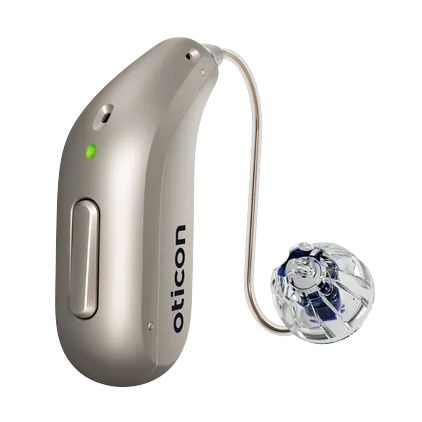
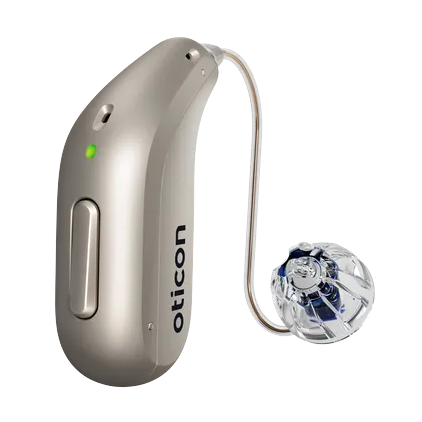
Reveal is Oticon’s latest receiver-in-canal hearing aid: the main body sits behind your ear, with a small speaker in the ear canal. It is built around what Oticon calls a dual sound-processing system. Speech AI follows voices while Context AI preserves surrounding sounds. The aim is to make a conversation easier to follow without losing the background cues that help you feel connected to a restaurant, family gathering, or other busy setting.
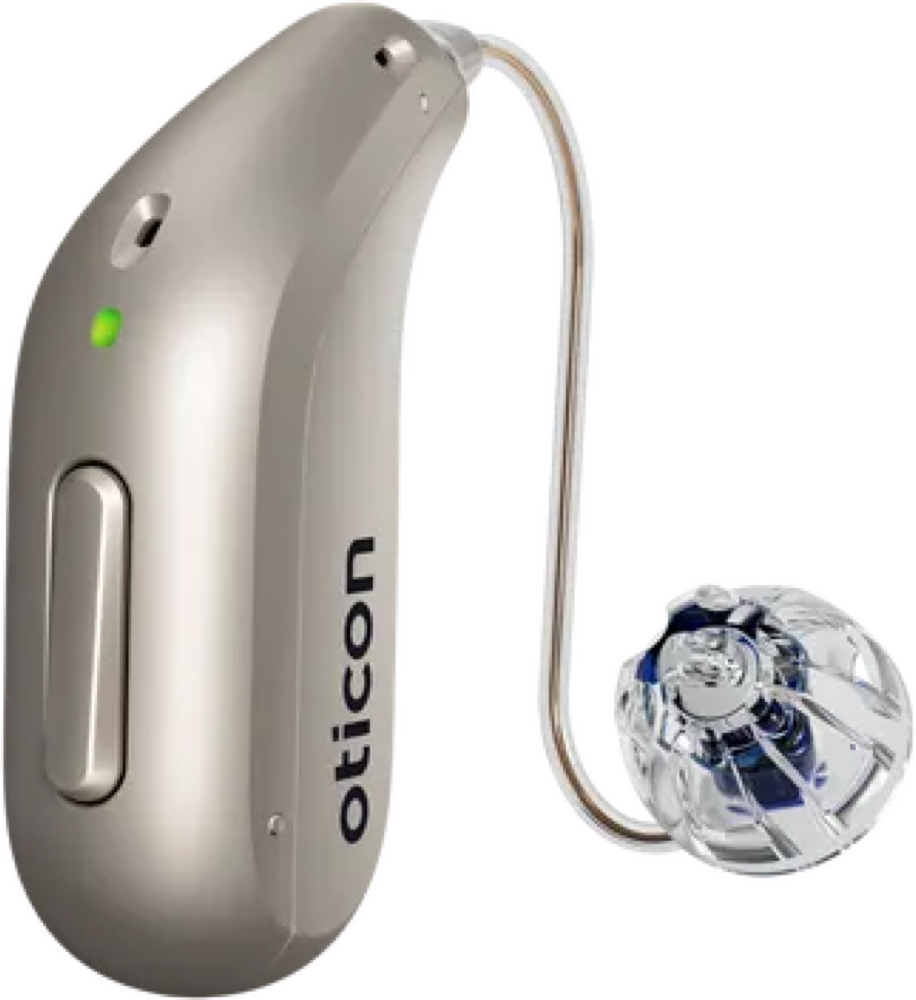
Reveal comes in the rechargeable miniRITE R model at four technology levels, sharing its shell with the earlier Oticon Intent. The Reveal Optimizer is designed to control acoustic feedback—the whistling or screeching hearing aids can sometimes produce. Other updates include wind and handling noise reduction, Bluetooth streaming, and a smaller RE transmitter for single-sided deafness. The lab results below apply to Reveal 1 miniRITE R, the premium level; they are not separate test results for Reveal 2, 3, or 4.
Audiologist Matthew Allsop, who runs one of the UK’s largest independent hearing clinics and works with every major manufacturer’s technology, got an early look at Reveal at Oticon’s UK headquarters and witnessed the UK’s first Reveal fitting. His launch-day video appears above; the sections below combine his overview with the newer testing results.
Compare prices & care
Choose a technology level, then compare sellers and the care included. Prices are per pair.

Best for Clinic Care4.8(658 reviews)
- 600+ locations
- Local care included
- 500+ 5-star reviews
- All major brands
Compare technology level features
What Premium adds over Advanced
- 64 vs 48
- 3 configurations vs 2 configurations
- 3 configurations vs 2 configurations
- 6 Configurations vs 5 Configurations
- 3 configurations vs 2 configurations
- 24 vs 20
Never miss a price drop
Get notified when prices drop for this product
About our testing: This page combines Matthew Allsop’s launch-day overview, Steve Taddei’s early hands-on rating notes for HearingTracker, and standardized HearAdvisor laboratory results. HearingTracker and HearAdvisor are separate companies with overlapping leadership; Steve is also HearAdvisor’s co-founder and lab director. HearAdvisor determines its testing methods and SoundScores independently of manufacturers; HearingTracker is responsible for this page’s editorial conclusions.
What the lab results show
HearAdvisor’s lab tests of Oticon Reveal 1 miniRITE R found strong speech performance in quiet and noisy settings. No whistling or screeching was heard during the lab’s feedback tests.


Achieving those speech results, however, required an ear tip that sealed the ear canal more tightly. A tighter seal can trap low-frequency sound from your own voice, making it sound louder or boomy. This is known as the occlusion effect.
That tighter seal also has advantages. It limits how much outside noise reaches your eardrum without passing through the hearing aid’s sound processing, so noise reduction can be more effective. It also helps retain bass when streaming music and reduces amplified sound leaking back to the microphones, where it can cause whistling.
You do not have to use the same ear tip tested in the lab. Your hearing care provider can choose a dome or custom earmold to suit your ears and hearing loss. A more may make your own voice sound more natural, but it can also mean less effective noise reduction, less bass when streaming, and a greater risk of whistling. The published scores reflect the tested setup, so your results may differ with another earpiece.
Understanding the results
The tests used a standard moderate hearing-loss profile and the everyday automatic program. HearAdvisor measured sound after programming the hearing aids using the manufacturer's default settings (Initial Fit), then again after fine-tuning the hearing aids for a better match to prescriptive amplification targets (Tuned Fit). The lab lists a bass dome for both fit conditions. Results apply to those test configurations; your hearing loss and fitting may differ.
HearAdvisor’s SoundScore measures sound performance and can exceed 5. The separate HearingTracker Score also includes everyday-use ratings and price.
Oticon Reveal 1 miniRITE R
Early hands-on notes
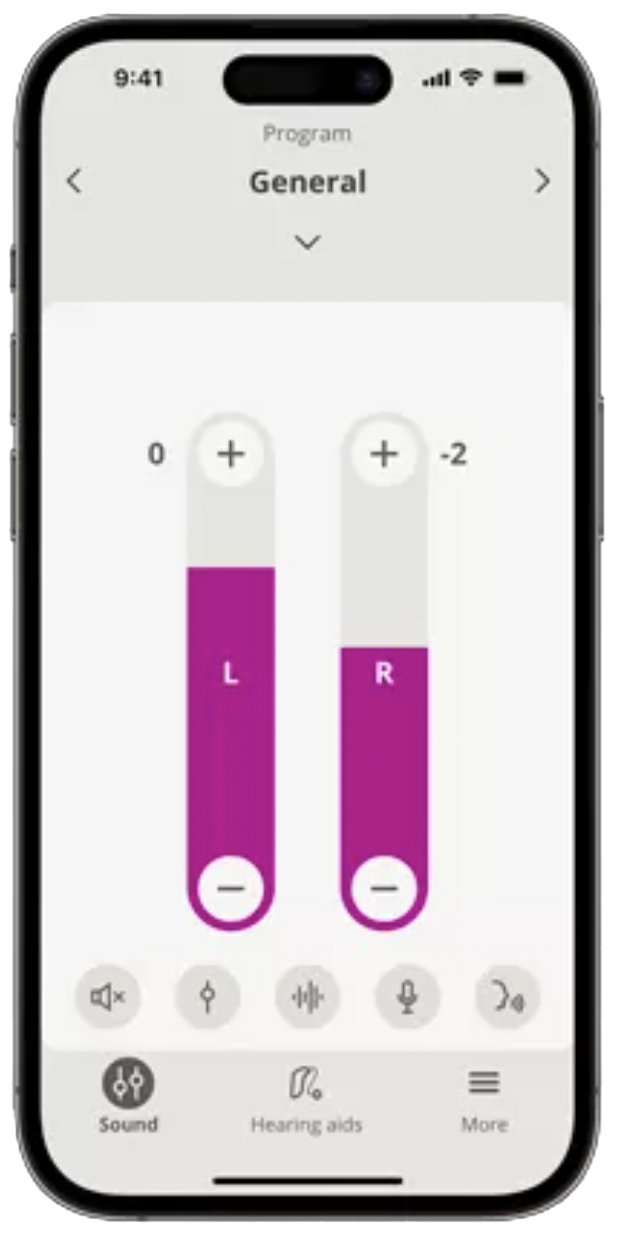
Steve's early hands-on ratings offer a first look at day-to-day use ahead of his full review. He found Reveal comfortable on the ears and easy to adjust with either the button or Oticon Companion app. Bluetooth pairing was straightforward and stable, with good music-streaming and hands-free-call sound quality comparable to other prescription hearing aids.
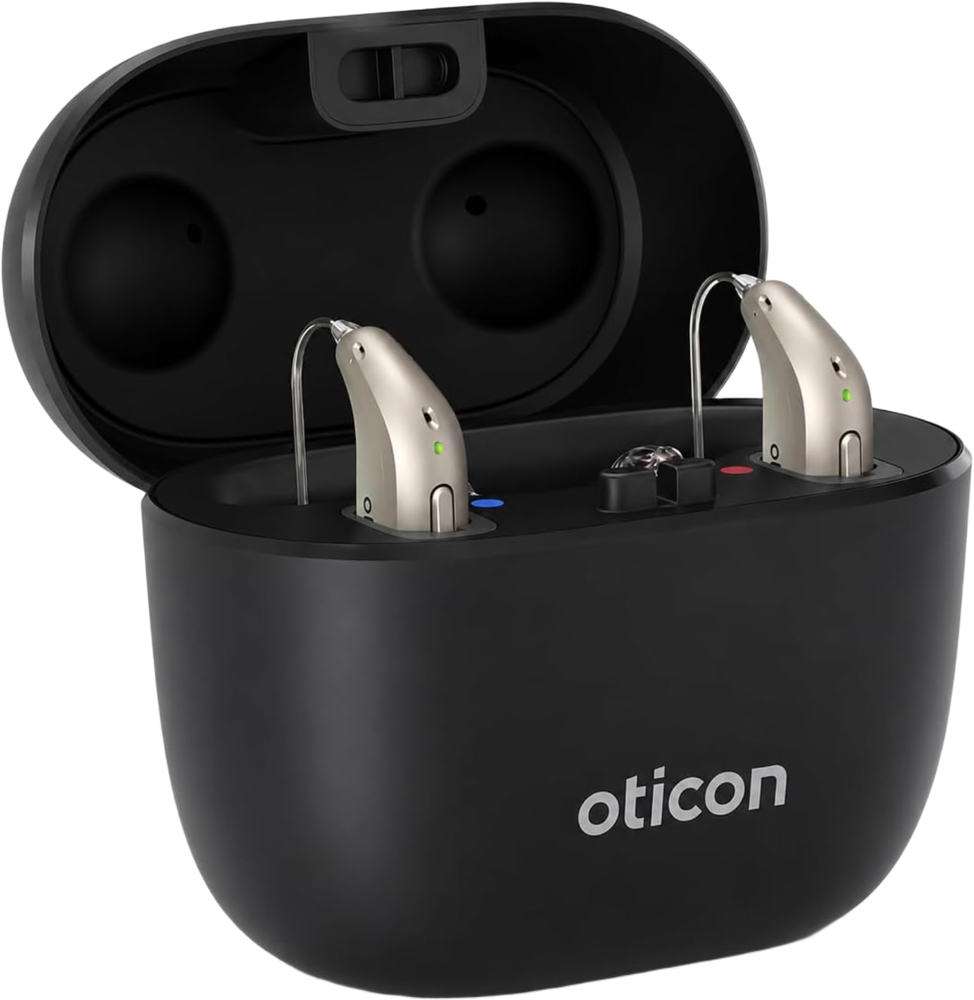
The hearing aids felt well built, but parts of the charger—particularly the lid—felt less robust than expected. The notes also describe Reveal as fairly discreet, though larger than many newer “micro” or “mini” designs.
Speech Clarity Isn’t the Whole Picture
Oticon’s starting point for Reveal is a critique of how the rest of the industry approaches . As Allsop put it, summarizing Oticon’s pitch: “Real life is not a podcast.” You don’t typically hear one isolated voice in silence. You hear a partner, grandchildren, or friends alongside footsteps, traffic, music, plates, and dozens of other background cues that tell your brain where you are and what’s happening around you.
Oticon argues that hearing aids have traditionally treated speech as the only valuable signal and everything else as noise to be suppressed, and that removing too much of the surrounding world can make speech more intelligible while making the listening experience feel less natural. Allsop’s illustration: At an amusement park, you want your family’s voices to be clear, but the Ferris wheel, the popcorn machine, and the surrounding chatter are part of what lets your brain understand the scene. Strip that away and the words might come through, but the experience becomes isolating.
Oticon frames this around a concept it calls the brain library: a set of sound memories the brain uses to recognize an environment, link it to emotion, and decide what deserves attention. The idea behind Reveal is to give the brain enough of that context back without losing speech in the process, which Allsop described as a balance rather than an either-or choice. Turn off noise reduction entirely and speech gets lost in the environment; suppress too much and the experience feels artificial.
Oticon Reveal combines strong lab speech results with comfortable hearing aids and stable Bluetooth. Our reviewer questioned the charger lid’s sturdiness.
Key Features
Expert Review
Dual AI: Speech AI and Context AI
The mechanism behind that balance is what Oticon calls the Clarifier, and what the company describes as the world's first dual AI hearing aid system: two AI algorithms running simultaneously.
- Speech AI searches the environment for voices more accurately than its predecessor.
- Context AI separately processes and preserves environmental sound.
Speech offers three settings to adjust how broadly it picks up voices around you. Front focuses more on speech ahead of you. Wide, the default, broadens that focus to include more voices nearby. Full widens it further for people who find it easier to separate voices from background noise.
That framing sounds close to directional microphone technology, and Allsop said he pushed Oticon on exactly that point: The company maintains that its AI processing works differently from traditional directional microphones.
According to research cited by Oticon, Reveal produces a 60% stronger brain response than Oticon Intent, a figure the company attributes to what it calls the world's best combination of fastest and most precise AI sound processing. That is a manufacturer research finding. HearAdvisor’s new acoustic tests assess sound performance; they do not measure brain responses or verify that percentage.
Wind and Handling Stabilizer 2.0
Both systems need a clean signal to analyze, which is where the updated Wind and Handling Stabilizer comes in. Wind blowing across exposed hearing-aid microphones can interfere with an outdoor conversation. Oticon says the updated version reduces wind and handling noise by up to 40 decibels, 10 decibels more than the previous generation, covering outdoor wind, hair moving across the microphones, and the handling noise created when a hearing aid is touched.
Allsop explained why this feature can matter: “You’ll be surprised how often my patients report outdoor conversations being impossible when they’re outside in the wind.”
:format(webp))
4D Sensor Technology and the Voice Clarifier
Reveal keeps the 4D sensor technology introduced in Oticon Intent, which combines information about the acoustic environment and nearby conversations with data from built-in motion sensors tracking head and body movement.
Oticon describes it this way: if you stand still to talk to one person, the microphones focus more closely in front of you. If you turn your head between people in a group, they pick up voices more broadly. The Voice Clarifier uses the sensor information to adjust how it reduces sound from unwanted directions across 24 frequency channels, updating 500 times per second.
Oticon’s internal research found that 94% of study participants preferred this new technology over Intent’s. Allsop’s caveat: “It’s internal research from a manufacturer, and it is their job to make hearing aids sound great.”
:format(webp))
The Reveal Optimizer
The Reveal Optimizer is Oticon’s updated system for controlling whistling without cutting back on amplification. Allsop explained that simply turning down a hearing aid can stop the whistling but also make speech harder to hear. The aim is to control feedback while preserving the amplification you need.
Oticon claims that the Reveal Optimizer works 30% faster than the previous MoreSound Optimizer, is four times more precise, and allows up to 4 decibels more amplification before feedback starts. In a comparison with what Allsop described as Oticon’s main competitor, Oticon reported up to 25 decibels more amplification and at least 10% higher predicted speech access. As Allsop noted, these were manufacturer lab comparisons; they do not establish how much improvement you would notice in daily use.
He also cautioned: “No feedback management system should replace appropriate acoustic coupling.” In other words, the earpiece still needs to suit your ear and hearing loss; a custom earmold or a different tip may be the better option.
Design and Battery
Reveal launched in a single model, the miniRITE R, using the same external shell as Oticon Intent. Allsop welcomed that choice: the extra technology had not made the hearing aids larger than Intent.
The R stands for rechargeable. Oticon’s Reveal specifications list:
- 15-minute charge: Up to 4 hours of use.
- 1-hour charge: A full day of use.
- Full charge: Up to 24 hours in Oticon’s technical-data test, measured while the hearing aids were idle. Streaming, enabled features, hearing loss, surroundings, and battery age affect actual runtime.
The SmartCharger instructions give a charging time of up to two hours under the recommended temperature conditions.
Two chargers are available, a standard desk charger that needs to stay plugged into a power outlet, and a portable SmartCharger whose fully charged power bank can recharge a pair of hearing aids at least three times away from a power source. Allsop favored the portable charger for the flexibility it offers on long flights or trips without reliable access to power, such as camping.
:format(webp))
Connectivity
Oticon says it has meaningfully improved Reveal's Bluetooth connectivity over Intent, citing a 32% improvement in streaming range and 53% better connection stability. A new Streaming Comfort feature automatically reduces the level of surrounding environmental sound by about 10 decibels during music, podcast, or phone-call streaming, so the streamed audio stays the focus without being overwhelmed by ambient sound.
Reveal supports Made for iPhone, compatible Android devices, Google Fast Pair, Bluetooth , , and , active from launch, which Allsop noted isn't a given across every manufacturer's lineup.
CROS RE for Single-Sided Deafness
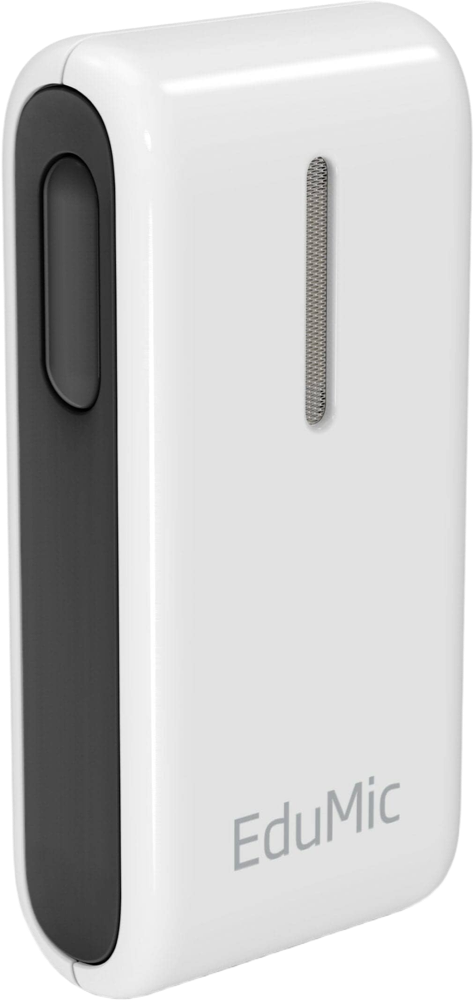
Alongside Reveal, Oticon has introduced a new transmitter, CROS RE, for people with single-sided deafness. Unlike the CROS used with Intent, CROS RE matches Reveal's size and shares its charger, which Allsop said makes the system considerably more convenient for CROS wearers. CROS RE is also backward compatible with Intent, so existing Intent wearers who need a CROS solution can use the new transmitter.
What to Consider When Comparing Reveal
Whether Reveal would be a first hearing aid or an upgrade, its sound processing, everyday features, and limitations offer several points of comparison. Allsop highlighted the following features in his launch-day overview; the lab results and Steve’s early hands-on notes now add evidence about performance and use.
- Changing speakers: Speech ’s Front, Wide, and Full settings vary its forward focus for conversations in restaurants, family gatherings, or meetings.
- A fuller sound scene: Context AI aims to retain surrounding sounds alongside speech, preserving more of a setting’s atmosphere.
- Feedback management: The Reveal Optimizer aims to control whistling while preserving the amplification you need.
- Outdoor use: Wind and Handling Stabilizer 2.0 targets wind, hair, and contact noise at the microphones.
- option: The smaller CROS RE transmitter shares Reveal’s charger and is also compatible with Intent.
- Connectivity: Steve found Bluetooth pairing straightforward and stable. Oticon also claims improvements in range and stability over Intent.
Upgrading from Oticon Intent
Allsop saw useful improvements in Reveal, but did not see an upgrade as necessary for everyone using Intent. The lab results do not establish better performance in every listening situation: Reveal and Intent were tested with different earpieces and programming. Compare Reveal 1 and Intent 1 side by side for their current scores, features, and prices.
What we like
- Lab performance: Strong speech results and no audible whistling in the lab’s feedback tests.
- Comfort and controls: Early rating notes describe comfortable hearing aids and easy button/app adjustments.
- Bluetooth: Stable connections in early use, with support available from launch.
- Adjustable sound processing: Front, Wide, and Full options tailor Speech ’s forward focus while Context AI preserves surrounding sound.
- Familiar size: The same shell as Intent, with updated wind-noise and feedback-management systems.
- option: A smaller, Reveal-matched transmitter and shared charger, with Intent compatibility.
Drawbacks
- Your own voice: Lab results suggest boominess with the tested tips. More open tips involve tradeoffs.
- Charger build: The early rating notes flag parts of the charger, especially the lid, as less robust than expected.
- Size: Larger than many newer “micro” or “mini” hearing aids, despite a fairly discreet appearance.
- Evidence limits: Lab results do not verify Oticon’s brain-response claims or predict exactly what you will hear.
Our Early Verdict
Reveal performed well in the lab’s speech tests and kept whistling under control. Steve found the hearing aids comfortable, the controls easy to use, and Bluetooth stable. The reservations are the potential for boomy own-voice sound with the tested earpieces and the charger’s build, especially its lid.
Your provider can choose a different earpiece, shifting the balance between a natural-sounding voice and the noise-reduction, streaming and feedback benefits of a tighter seal. The lab results do not settle that choice for you.
These are early findings for Reveal 1 miniRITE R. Steve Taddei’s full review is still to come.
Tina Sieber, PhD
Health WriterTina Sieber is a technology journalist with over 10 years of experience and a PhD in Biochemistry. Following an episode of sudden one-sided hearing loss, she was diagnosed with a benign brain tumor in 2018. She has since started writing about hearing loss and reviewing hearing aids for major tech publications.
Matthew Allsop
AudiologistMatthew Allsop is the Video Content Manager at HearingTracker. He has nearly two decades' experience in audiology, and has practiced in both the NHS and the private sector. He is accepting new patients at Harley Street Hearing in London.
Steve Taddei, AuD
Doctor of AudiologySteve Taddei, Au.D., is an audiologist, co-founder and lab director of HearAdvisor, and a hands-on hearing aid and earplug reviewer for HearingTracker. He holds an audio engineering degree from Columbia College Chicago and a doctorate in audiology from Northern Illinois University. He also teaches as an adjunct faculty member at several colleges.