Terms are matched automatically. A definition may not fit every context.
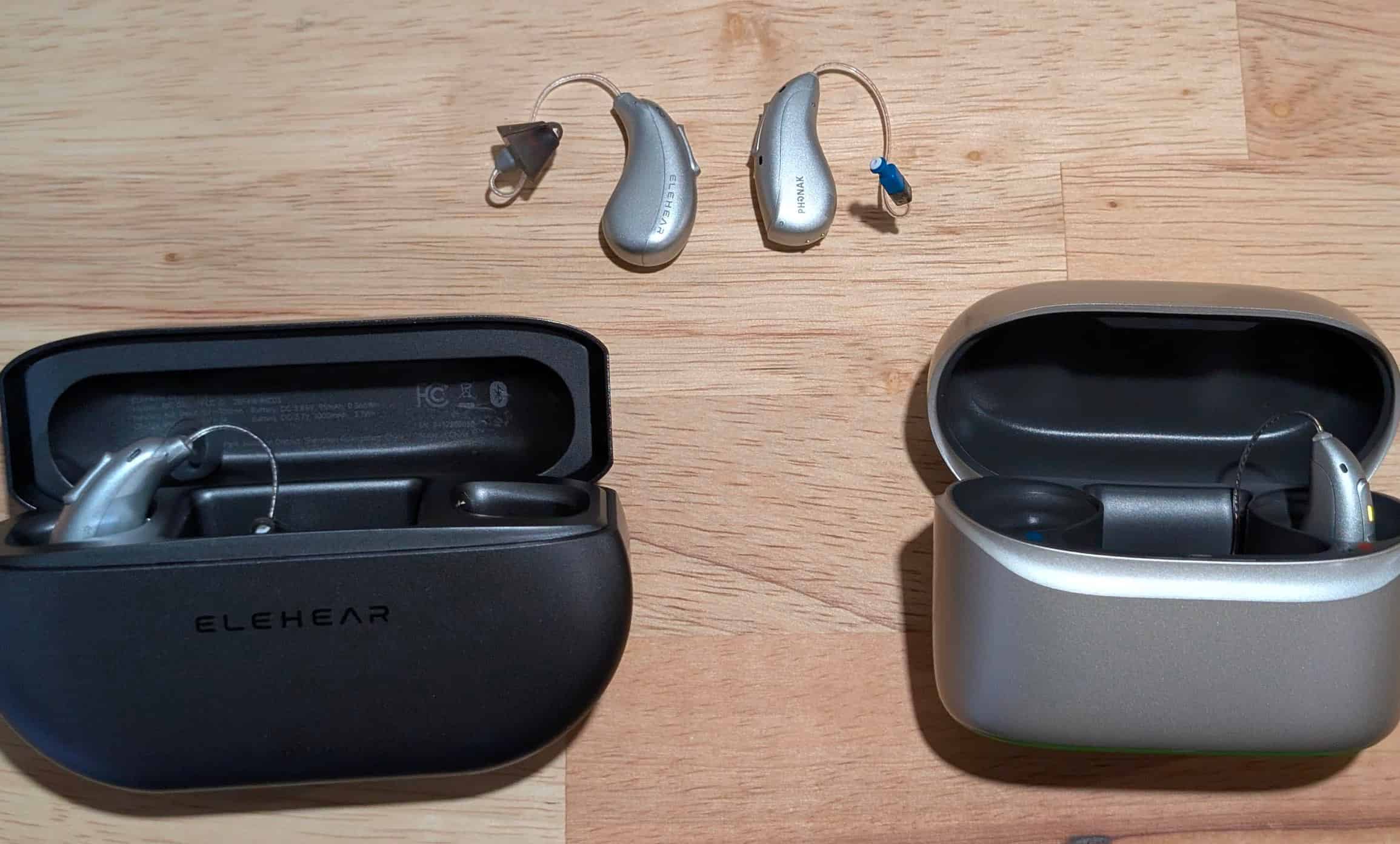
Elehear Beyond (OTC) vs Phonak Sphere (Rx) side by side.
If you’re experiencing hearing loss, hearing aids can make a real difference in your daily life helping you stay more connected with loved ones, think more clearly, and maintain your balance as you age. But with prices that can reach into the thousands, you might be wondering: should I opt for a prescription hearing aid or try a more affordable over-the-counter () option?
To help you make the right choice, we share our advice on what OTC hearing aids are, how they differ from prescription versions, and who might be a good candidate for each.
You can buy them at a big box retailer, such as Best Buy, Walmart, or Costco, or order them online from Amazon. hearing aids are designed to be self-programmed using a smartphone app or online tools. This makes them more accessible and affordable than traditional prescription hearing aids. It also means there is much less personalized support, care, and expertise from an audiologist or hearing aid specialist.
Key features of OTC hearing aids are:
Designed for mild to moderate hearing loss only
Self-adjustable through apps or onboard controls
Available without a prescription or professional fitting
May include Bluetooth connectivity and self-assessment tools
Significantly more affordable than prescription options
Like prescription hearing aids, OTC hearing aids come in a range of form factors, including earbud style, in-the-ear, and behind-the-ear models.
OTC vs. Prescription Hearing Aids: What’s the Difference?
Both types of hearing aids work in essentially the same way. A microphone picks up sound, a processor amplifies it, and a speaker delivers it to your ear. The real differences come down to how you get them, how they’re fitted, and what kind of support you receive.
Here are some things to consider between the two types.
OTC
Prescription
Price
Average: $502 per pair
Range: $20 to $2,000 per pair
Average: $3,432 per pair
Range: $1,000 to $8,500 per pair
Convenience
Available online or at retail stores, no appointment needed.
Require an in-person appointment for a professional fitting and usually 1-3 follow-up appointments for adjustments for your unique needs.
Power
Limited to 111 to 117 dB Sound Pressure Level (SPL), suitable for mild to moderate hearing loss.
110 to 160 dB SPL or more. A range of technology levels can address mild to profound hearing loss.
Testing
and Fitting
Self-fitted with app-based hearing test
Preset-based with 1-4 default programs
In-person hearing test, professional fitting based on an audiogram and ideally with real-ear measurements and other best practices.
Support and
Expertise
Self-guided setup and maintenance with or without remote tech support, depending on manufacturer.
Professionally led remote onboarding, adjustments, and telecare available from some manufacturers.
A licensed professional manages in-person evaluation, fitting, and setup.
Ongoing clinical care, including adjustments, follow-ups, guidance, troubleshooting, and repairs.
Major differences between OTC and prescription hearing aids. Prices from the HearingTracker 2025 consumer survey.
Price and Convenience
hearing aids typically cost around $502, with some models starting as low as $20. You can buy them immediately without scheduling appointments.
Prescription hearing aids average about $3,432 per pair, though prices range from around $2,000 to over $8,500, often depending on the practice/outlet and insurance coverage. They require an in-person visit with a licensed audiologist or hearing aid specialist who will perform a hearing test, fitting, and aftercare.
OTC hearing aids are often confined to basic adjustments like bass, treble, and volume, though some offer advanced options, including language translation (e.g., Elehear Beyond Pro). All are limited in how loud they can go, so they won’t work for people with more than a moderate hearing loss. Some models let you input a professional test () for better personalization or include a hearing test.
Prescription hearing aids are highly customizable and can be fine-tuned by a professional to match your exact hearing profile. They can provide more amplification and are the only option if your hearing loss is severe or profound.
“The biggest difference between and Rx is that OTC is limited in terms of loudness, so they can't really help people with moderately-severe or worse hearing,” said Abram Bailey, , founder of Hearing Tracker.
Testing and Fitting
OTC hearing aids come in two flavors:
“Self-fitting” which requires you to use an app-based hearing test or submit an , or
“Preset-based” which usually rely on 1-4 programs designed to compensate for common hearing loss(es).
Self-fitting OTC aids—particularly when paired with expert online assistance—can be more accurately adjusted to your hearing needs (but also usually more costly).
Prescription hearing aids are programmed via a professional audiogram, which is a detailed hearing test that measures your hearing loss at different frequencies in a soundproof booth. Good hearing providers use best practices to program your hearing aids based on numerous tests and provide follow-up adjustments as needed.
Support and Expertise
OTC hearing aids require some tech savvy since you’ll be pairing them with Bluetooth devices and adjusting settings yourself. Some brands offer remote telecare onboarding and support, which can be helpful but isn’t the same as in-person assistance. All hearing aids break or need service over time (e.g., clogged receivers, etc.). Without a good service component, your OTC hearing aid can be rendered useless in a year or two unless the manufacturer gives you repair options. Shorter lifecycles and poor support could make an OTC hearing aid more expensive than a prescription hearing aid.
Prescription hearing aids include hands-on support from a licensed audiologist or hearing aid specialist who can troubleshoot issues, make adjustments at appointments, and ensure your devices are working optimally.
Are OTC Hearing Aids Any Good?
Now that we’ve established the differences between and prescription hearing aids, you might be wondering how they perform in real-world applications.
“From a sound measurement aspect, there isn’t really much of a performance gap between the best OTC and most professionally fit devices these days, with products like the Elehear Beyond and Yeasound 800 performing close to prescription hearing aids,” Bailey said. “This is backed up by measurements taken in our Hear Advisor lab.”
Recent research shows that self-fitted OTC hearing aids can perform nearly as well as custom-fitted devices. A small 2023 study of 64 adults published in JAMA Otolaryngology-Head & Neck Surgery, found that self-adjusted OTC hearing aids worked just as well as audiologist-fitted devices after six weeks. However, the study participants were all provided with the same OTC hearing aid model (Lexie Lumen).
That said, a 2025 study of 245 adults by the University of Iowa and Vanderbilt University Medical Center found that audiologist-fitted prescription aids resulted in better patient outcomes overall, with users wearing them more frequently and reporting better outcomes.
The better long-term performance of prescription hearing aids may be due to professional follow-up care. Regular device maintenance ensures consistent hardware performance. The provider can also adjust and fine-tune the hearing aids based on patient feedback and after periodically re-testing their hearing.
OTC vs Rx: How They Stack Up in Lab Testing
Hearing Tracker’s real-world lab testing evaluates hearing aids based on a range of benchmarks. The Hearing Tracker (HT) Score incorporates all lab results and hands-on testing, like build quality and Bluetooth connectivity, but also value. The Sound Score focuses on sound-specific performance, which includes Speech in Quiet, Speech in Noise, and Music. Performance is rated on a scale from 0 to 5.
When we compare all and prescription hearing aid models our lab has tested, we see that prescription hearing aids are ahead in all categories, except for music. Since some OTC hearing aids double as earbuds and were originally optimized for streaming audio, like the AirPods Pro 3, this doesn't come as a surprise.
This graph compares the performance of over-the-counter (OTC) and prescription (Rx) hearing aids. It's based on Hearing Tracker and Hear Advisor lab data and includes all devices tested (55 x OTC and 33 x Rx) as of January 2026.
Who Should Consider OTC Hearing Aids?
Despite the availability of hearing aids, consumers have not embraced them. A 2023 ASHA poll found that only 2% of American adults 40 and older with hearing difficulties had purchased OTC hearing aids, and only 4% reported being likely to purchase them in the next year. But OTC hearing aids can be effective for the right candidate.
OTC hearing aids might be right for you if you:
Have mild to moderate hearing loss (not severe)
Don't have other health or hearing-related complications
Feel comfortable using smartphone apps and technology
Are budget-conscious and want to try hearing aids without a major investment
Can manually handle small devices and see tiny controls clearly
Are motivated to take charge of your own hearing care
“If they are capable and motivated, will work for most people as an entry point,” Bailey said. “As their hearing worsens, they would then look to prescription options.”
One word of caution: Although rare, hearing loss can be an indication of an underlying health condition. That's why it's always a good idea to mention your hearing loss to your doctor; they may even refer you to a provider, saving you money on your hearing test. You can also visit the CEDRA website from Northwestern University and Mayo Clinic to see if you have any medical risks.
Audiologist Steve Taddei is wearing the Starkey Edge AI (left) and Phonak Sphere Infinio (right) receiver-in-canal (RIC) prescription hearing aids.
Who Should Stick with Prescription Hearing Aids?
Consider prescription hearing aids if you:
Have a more severe or complex hearing loss
Prefer in-person, hands-on professional support
Need hearing aids fine-tuned for specific situations like challenging work environments
Want maximum customization and ongoing professional care
Have the budget for a higher upfront investment
Aren’t comfortable with technology or self-adjusting devices
“I recommend prescription aids for people who can afford it because the personal care aspect offers a greater chance of success for most users,” Bailey said.
The Bottom Line
hearing aids have made hearing assistance more accessible and affordable for thousands of Americans. The good ones work well for people with mild to moderate hearing loss who are comfortable with technology.
However, prescription hearing aids still offer advantages in customization, professional support, and performance—especially in difficult listening situations. The extra cost primarily covers expert care and personalized fitting. The option of an in-office visit also gives you a better chance for adjusting or repairing the aid should it malfunction.
If you’re unsure about your level of hearing loss, consider getting a professional first. This can help you determine whether you’re a good candidate for OTC devices or would benefit more from prescription hearing aids. Many hearing care providers offer consultations that can guide you toward the best option for your specific needs.
Remember: the best hearing aid is one you’ll actually wear. Whether you choose OTC or prescription, addressing your hearing loss is what matters most for maintaining your quality of life.
The average price for a pair of prescription hearing aids is $3,432, according to Hearing Tracker’s reader survey. But the cost can range from under $1,000 a pair to over $8,500 a pair.
“When you purchase a prescription device, what you’re paying for is the audiologist or hearing instrument specialist’s time and expertise more than anything,” said Abram Bailey, , founder of Hearing Tracker.
The average cost of OTC hearing aids is less than $1,500 but some models can start as low as $200, according to the American Speech-Language-Hearing Association (). Our own survey found that the average cost for hearing aids is around $502 per pair, with the cheapest models costing as little as $20.
The more expensive OTC hearing aids are primarily those that also have a dedicated telecare component. Just as you pay more for individualized fittings and services with prescription devices, the OTC companies that offer telecare onboarding and continuous support are an important value for when your hearing aid inevitably breaks or needs service. This might help the OTC hearing aids last longer as well.
Yes, Costco is the largest hearing aid retailer in the U.S., making up about 16% of the retail market in 2025. Costco’s main advantage is the price point they are able to hit. “The reason Costco is able to charge less is because its volume purchasing power drives down wholesale prices and their shop-in-a-shop model allows them to use a few square feet of space in their Big Box stores. This lowers the overhead required to run a hearing clinic,” Bailey said.
Costco sells four main brands of hearing aids (Rexton Reach, Philips Hearlink, Jabra Enhance Pro 30, and Sennheiser Sonite R). Costco also sells two OTC hearing aids: Apple AirPods Pro 2 / 3 and the Lexie B2 Plus.
Seka Palikuca is a health writer and editor who covers auditory health for Hearing Tracker. She served as an editor at the Chicago Tribune and her byline has appeared in Crain’s Chicago Business, Crain’s New York Business, and Modern Healthcare. She has developed content for physicians, medical students, healthcare leaders, and consumers.
Dr. Bailey is a leading expert on consumer technology in the audiology industry. He is a staunch advocate for patient-centered hearing care and audiological best practices, and welcomes any technological innovation that improves access to quality hearing outcomes. Dr. Bailey holds an Au.D. from Vanderbilt University Medical Center.
Karl Strom is the editor-in-chief of HearingTracker. He was a founding editor of The Hearing Review and has covered the hearing aid industry for over 30 years.
Steve Taddei, Au.D., is an audiologist, co-founder and lab director of HearAdvisor, and a hands-on hearing aid and earplug reviewer for HearingTracker. He holds an audio engineering degree from Columbia College Chicago and a doctorate in audiology from Northern Illinois University. He also teaches as an adjunct faculty member at several colleges.
)
)
)
)


:format(webp))


:format(webp))

:format(webp))

