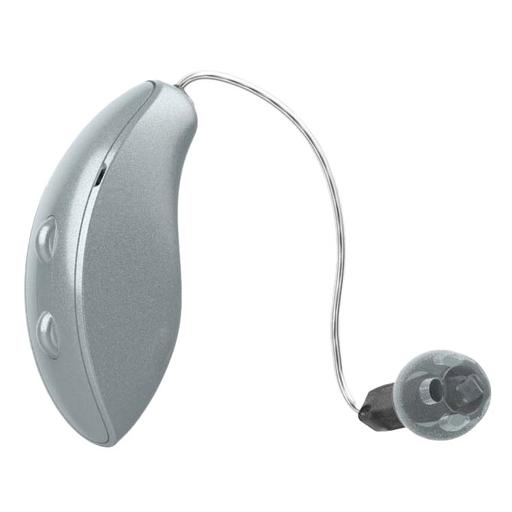

It depends on how much noisy-environment performance matters to you. Omega AI tested at 2.9/5 for speech in noise versus Edge AI's 2.6/5 after professional tuning — a real but modest gain that our hands-on review describes as noticeable but not dramatic.
Starkey Edge AI vs. Starkey Omega AI
Check out our comparison of the Starkey Edge AI vs Starkey Omega AI. Listen to audio samples and see how the two hearing aids differ in terms of sound performance, features, accessories, and more.
Published Updated
Quick Verdict
AI summarizedSummarized with AI assistance from our human-researched product information, in-lab testing, objective sound measurements, and expert ratings.
The real question isn't which Starkey hears better — it's whether Omega AI's modest lab gains in speech clarity justify stepping up from Edge AI, whose value score already lags the site-wide average.
Edge AI
Choose the Starkey Edge AI if you want Starkey's DNN-driven speech-in-noise performance and a fully-loaded app and health-tracking package, but at a lower generation price point than the newest flagship.
Omega AI
Choose the Starkey Omega AI if you want the strongest speech-in-noise and speech-in-quiet lab scores Starkey has produced along with its most refined build and app, and you're fine paying flagship pricing for an incremental gain over Edge AI.
What actually separates them
AI summarizedSpeech-in-noise and speech-in-quiet lab scores
Lab measuredOmega AI tested higher in HearAdvisor's lab after professional tuning (speech in noise 2.9/5 vs. Edge AI's 2.6/5, speech in quiet 4.0/5 vs. 3.8/5), a real but modest edge rather than a dramatic leap.
Music streaming quality
Lab measuredEdge AI measured noticeably better for streaming music in the lab (3.8/5) than Omega AI (3.2/5), so if you stream a lot of audio, Edge AI has the advantage here despite being the older platform.
Price for the pair
PriceOmega AI carries flagship pricing that our review notes runs well into the thousands per pair, and our own hands-on coverage frames the jump over Edge AI as noticeable but not dramatic — a relevant factor since Edge AI's value score (3.1/5) already trails the site-wide average of 3.6.
App polish and build refinements
Hands-on reviewOmega AI scored higher on app features (5.0/5 vs. 4.6/5) and build quality (5.0/5 vs. 4.8/5) in our real-world testing, reflecting Starkey's added wellness tools and a tougher shell coating, though our review also notes the new coating makes buttons slightly harder to press.
Product Overview
Edge AI
Omega AI
Form Factor
Expert Rating
Score
4.3
Score
4.5
User Rating
5.05 reviews
—
Hearing Loss Level
MildModerateSevere
MildModerateSevere
Product Features
Hands-freeRechargeableiPhoneAndroidTelecoilIP68+
Hands-freeRechargeableiPhoneAndroidIP68+
Expert Ratings
Compare comprehensive test results and expert opinions.
Edge AI
Omega AI
HearingTracker Score
Edge AI
4.3ABOVE AVERAGE
Edge AI is equipped with Starkey's all-new G2 Neuro Processor with an integrated neural processing unit that classifies complex soundscapes, enhances speech, and reduces noise in real-time using advanced AI.
Read full reviewOmega AI
4.5EXCELLENT
Starkey Omega AI is a top-tier prescription hearing aid with excellent speech-in-noise performance, a best-in-class app and wellness features, and standout durability and battery life—though its high price and feature-heavy setup won’t suit everyone.
Read full reviewHearAdvisor SoundScore
Edge AI
4.3ABOVE AVERAGE
Starkey Edge AI RIC achieved a SoundScore of 4.3/5 and a SoundGrade of A in HearAdvisor lab testing. It ranked #20 of 39 Prescription Hearing Aid devices tested. The Prescription Hearing Aid category average SoundScore was 4.19/5.
Omega AI
4.5EXCELLENT
Starkey Omega AI achieved a SoundScore of 4.5/5 and a SoundGrade of A in HearAdvisor lab testing. It ranked #13 of 39 Prescription Hearing Aid devices tested. The Prescription Hearing Aid category average SoundScore was 4.19/5.
Build Quality
Edge AI
4.8EXCELLENT
Edge AI have excellent build quality as evidenced by their IP68 ingress rating. However, the portable charging case does not feel as robust compared to other prescription hearing aid brands.
Omega AI
5.0EXCELLENT
Starkey has improved the overall build quality with Omega, as evidenced by the enhanced IP68 ingress rating. The new portable charging case also feels well built.
Battery
Edge AI
4.6EXCELLENT
Edge AI offers an impressive 51 hour battery life on a single charge, with a quick recharge time of just 3.5 hours. Their rechargeable battery outperforms most products available today.
Omega AI
4.6EXCELLENT
Omega AI offers an impressive 51 hour battery life per charge, just like the previous Edge AI model., with a quick 3.5 recharge time.
Bluetooth
Edge AI
5.0EXCELLENT
Edge AI hearing aids are Bluetooth compatible with both iOS and Android devices, allowing for audio streaming and hands-free calling.
Omega AI
5.0EXCELLENT
Omega AI hearing aids are Bluetooth compatible with both iOS and Android devices, allowing for audio streaming and hands-free calling.
App Features
Edge AI
4.6EXCELLENT
The My Starkey app features an updated look and offers useful features like sound customization and health tracking. However, user reviews indicate that connection issues can occur.
Omega AI
5.0EXCELLENT
The new My Starkey app features an updated look and adds additional useful features for sound customization, health tracking, balance, and more.
Comfort
Edge AI
5.0EXCELLENT
Edge AI are capable of excellent comfort which can be personalized by your hearing care provider.
Omega AI
5.0EXCELLENT
Omega AI RIC are capable of excellent comfort which can be personalized by your hearing care provider.
Design
Edge AI
5.0EXCELLENT
I find Edge AI hearing aids similar to their previous generation Genesis, and overall more modern and sleek compared to the previous Evolv AI generation. Starkey also offers various color choices and the fitting can be adjusted to meet your needs and preferences.
Omega AI
5.0EXCELLENT
Omega hearing aids are nearly identical to Starkeys previous Edge AI model. They are sleek, available in various colors, and can be adjusted to meet your needs.
Value
Edge AI
3.3BELOW AVERAGE
Starkey Edge AI RIC has a value score of 3.2/5 based on lab performance and public display price.
Omega AI
3.4BELOW AVERAGE
Starkey Omega AI has a value score of 3.4/5 based on lab performance and public display price.
Handling
Edge AI
4.7EXCELLENT
Edge AI and the associated app are very easy to use, though the receiver-in-ear style may require some initial practice.
Omega AI
4.8EXCELLENT
Omega AI and the associated app are very easy to use, though the receiver-in-ear style may require some initial practice.
Pro Support
Edge AI
5.0EXCELLENT
You should receive quality hearing care and support from your provider. Starkey also offers technical support and provides a Telehear remote services app, connecting your with your provider for remote care.
Omega AI
5.0EXCELLENT
You should receive quality hearing care and support from your provider. Starkey also offers technical support and provides a Telehear remote services app, connecting your with your provider for remote care.
Lab Recordings
Listen to direct output recordings from our acoustic test lab.
Edge AI
Omega AI
Busy Cafe
Hear this scene unaided, for comparison
Edge AI
Omega AI
Quiet Office
Hear this scene unaided, for comparison
Edge AI
Omega AI
Streaming Music
Hear this scene unaided, for comparison
Edge AI
Omega AI
HearingTracker partners with HearAdvisor to provide recordings and performance data from an acoustic laboratory that follows standard scientific procedures. All hearing aids are fitted and performance-tested for mild sloping to moderate hearing loss. All audio samples cutoff above 10kHz.
Accessories
Compatible accessories for each hearing aid
Edge AI
Omega AI
Battery Charger
StarLink Charger 2.0
The StarLink Charger 2.0 is designed to charge non-custom lithium-ion rechargeable hearing aids, such as RIC RT and mRIC R styles. It requires an external power source, such as a wall outlet, for operation as it lacks an on-board battery. With turbo charging, users can get approximately 3 hours of use time from just 10 minutes of charging when the hearing aids' battery is low. Hearing aids are fully charged in 3.5 hours, and LED indicators show the charging status.
StarLink Premium Charger 2.0+1
The StarLink Premium Charger 2.0 offers the same charging capability for non-custom hearing aids like RIC RT and mRIC R but includes an on-board battery. This feature allows charging without being plugged into an external power source. The Premium charger can fully charge hearing aids up to three times on a single charge and offers turbo charging for quick boosts. It fully charges hearing aids in 3.5 hours, and LED indicators provide information about both the hearing aids' and the charger's battery status.
StarLink Charger 2.0 (RIC RT)
StarLink Premium Charger 2.0 (RIC RT)
StarLink Charger 2.0
The StarLink Charger 2.0 is designed to charge non-custom lithium-ion rechargeable hearing aids, such as RIC RT and mRIC R styles. It requires an external power source, such as a wall outlet, for operation as it lacks an on-board battery. With turbo charging, users can get approximately 3 hours of use time from just 10 minutes of charging when the hearing aids' battery is low. Hearing aids are fully charged in 3.5 hours, and LED indicators show the charging status.
StarLink Premium Charger 2.0+1
The StarLink Premium Charger 2.0 offers the same charging capability for non-custom hearing aids like RIC RT and mRIC R but includes an on-board battery. This feature allows charging without being plugged into an external power source. The Premium charger can fully charge hearing aids up to three times on a single charge and offers turbo charging for quick boosts. It fully charges hearing aids in 3.5 hours, and LED indicators provide information about both the hearing aids' and the charger's battery status.
StarLink Charger 2.0 (mRIC R)
StarLink Premium Charger 2.0 (mRIC R)
Remote Control
StarLink Remote Control 2.0
The Starkey StarLink Remote Control 2.0 is designed to control compatible 2.4 GHz hearing aids. Users can adjust volume, switch programs, and activate features like Edge Mode or Comfort Boost.
StarLink Remote Control 2.0
The Starkey StarLink Remote Control 2.0 is designed to control compatible 2.4 GHz hearing aids. Users can adjust volume, switch programs, and activate features like Edge Mode or Comfort Boost.
Smartphone App
My Starkey
Designed with the input of hearing aid wearers, My Starkey pairs with select Starkey hearing aids to help you enjoy greater listening moments, improved well-being, and easier everyday living — all from the palm of your hand.
My Starkey
Designed with the input of hearing aid wearers, My Starkey pairs with select Starkey hearing aids to help you enjoy greater listening moments, improved well-being, and easier everyday living — all from the palm of your hand.
TV Streamer
StarLink Edge TV Streamer
Future-proof and Auracast ready, our Edge TV Streamer is 60% smaller than previous Starkey streamers and uses Bluetooth Low Energy (LE) Audio protocol to stream audio straight from a TV to paired Edge AI hearing aids.
StarLink Edge TV Streamer
Future-proof and Auracast ready, our Edge TV Streamer is 60% smaller than previous Starkey streamers and uses Bluetooth Low Energy (LE) Audio protocol to stream audio straight from a TV to paired Edge AI hearing aids.
Hardware
Edge AI
Omega AI
Accelerometer
Yes
Yes
Bluetooth® Audio
- Bluetooth® Low Energy (LE)
- Bluetooth® Auracast™
- Bluetooth® Low Energy (LE)
- Bluetooth® Auracast™
Gyroscope
Yes
Yes
Hands-Free Calling
- Bluetooth® Low Energy (LE)
- Bluetooth® Low Energy (LE)
IP Rating
IP68+
IP68+
Push Button
- Program control
- Volume Control
- Mute control
- Power on/off
- Accessory volume
- Tinnitus volume
- Edge Mode+
- Manual Alert
- Program control
- Volume Control
- Mute control
- Power on/off
- Accessory volume
- Tinnitus volume
- Edge Mode+
- Manual Alert
Rechargeable Batteries
Lithium-ion
Lithium-ion
Tap Controls
- Play/Pause
- Voice assistant
- Edge Mode+
- Play/Pause
- Voice assistant
- Edge Mode+
Telecoil
Yes
No
Volume Rocker
Yes
Yes
Software Features
Edge AI
Omega AI
Adjustment Bands
24
24
Adjustment Synchronization
Ear-to-Ear Technology
Ear-to-Ear Technology
AI Noise Removal
- Personalization
- User Control
- App Control
- Personalization
- User Control
- App Control
Automatic Phone Program
Autocoil and Autophone
Autocoil and Autophone
Directionality
- Adaptive
- Dynamic
- Directional
Directional ProcessingAdaptiveDynamicDirectionalDNN 360 Directionality
Environmental Adaptation
Sound Manager
Sound Manager
Expansion
4 levels
4 levels
Extended bandwidth
Yes
Yes
Fall Detection
Fall Alert
Fall Alert
Feedback Suppression
Feedback Canceller
Feedback Canceller
Frequency Lowering
Yes
Yes
Listening Programs
4
4
Machine Learning
Yes
Yes
Machine Noise Reduction
E2E Machine Noise Adaptation: Up to 22 dB
E2E Machine Noise Adaptation: Up to 22 dB
New User Adaptation
Yes
Yes
Noise Reduction
Up to 22 dBSpeech in Loud Noise ReductionSpeech in Noise ReductionUp to 22 dB
Up to 22 dBSpeech in Loud Noise ReductionSpeech in Noise ReductionUp to 22 dB
Phone in Stereo
E2E Phone Streaming
E2E Phone Streaming
Power On Delay
Yes
Yes
Processing Channels
64
64
Spatial Noise Cancellation
No
DNN 360 Spatial Awareness
Streaming Bass Boost
Yes
Yes
Sudden Loud Noise Reduction
Transient Noise Reduction: Up to 15 dB
Transient Noise Reduction: Up to 15 dB
Tinnitus Relief
Multiflex Tinnitus Pro
Multiflex Tinnitus Pro
Unique Amplification Strategy
- Consonant Enhancement
- Voice AI
- Consonant Enhancement
- Voice AI
Wind Noise Reduction
Wind Reduction: Up to 35 dB
Wind Reduction: Up to 35 dB
Bottom Line
AI summarizedThe Verdict
Both are Starkey RICs fitted by a hearing professional, and neither is a clear-cut upgrade across the board: Omega AI wins on speech-in-noise and speech-in-quiet lab scores plus app polish and build quality, while Edge AI actually streams music better and represents the less expensive route into Starkey's current AI processing.
Which is right for you?
If your listening challenges center on noisy rooms and group conversations, Omega AI's tuned lab gains (2.9/5 vs. 2.6/5 in noise) and stronger app features make the newer flagship worth considering despite the price step-up. If you're satisfied with strong-but-not-flagship noise performance and want to put money toward more listening programs or accessories instead, Edge AI remains a well-reviewed device in its own right rather than a compromise.
What to ask at your fitting
AI summarizedAsk your provider for a side-by-side demo
Because both are Starkey RICs with identical adjustment-band counts, the real difference is tuned lab performance — have your provider fit both with real-ear measurement so you can compare speech-in-noise before committing to Omega AI's higher price.
Test the physical buttons if you rely on them
Our hands-on review flagged that Omega AI's new waterproof coating makes its buttons feel slightly harder to press than Edge AI's — worth checking during your fitting if you prefer manual controls over the app.
Weigh music streaming against noise performance
If you stream audio often, note that Edge AI scored better for music (3.8/5) while Omega AI scored better for speech in noise (2.9/5) — tell your provider which matters more for your lifestyle.