ELEHEAR Delight Review: Budget OTC Hearing Aid
)
Our expert team selects and tests products rigorously. We may earn commissions if you buy through our links. Here's how we keep reviews independent.
Hearing aid glossary
Looking that up…
Terms are matched automatically. A definition may not fit every context.

Quick Take
The ELEHEAR Delight is one of the more interesting budget over-the-counter (OTC) hearing aids I’ve tried recently. It takes a different approach from ELEHEAR’s two other preset models, instead offering consumers a smaller, earbud-like design that looks more like a modern electronic device and less like a “traditional hearing aid.”
At $419 (currently on sale for $331), Delight is positioned in the lower-cost category, but does not have the hallmarks of a stripped-down product. It includes Bluetooth streaming, hands-free calling, a small rechargeable case, app controls, remote audiology support, and a design that should appeal to people who want something simple, modern, and relatively discreet.
While outperformed by Elehear’s receiver-in-canal () Elehear Beyond Pro ($599) and Beyond ($399) hearing aid models, Elehear Delight may appeal to those wanting an in-ear OTC hearing aid. It achieved high marks in the HearAdvisor lab with an overall SoundScore of 4.3 (out of 5), placing it well above the OTC category average of 3.43. At this writing, it ranks in the top 15% of all currently available OTC hearing aids tested by HearAdvisor and has earned the lab’s Expert Choice Award.
Elehear Delight performed very well for speech in quiet and for music streaming compared to other OTC hearing aids, but was only slightly above average for speech in noise (0.6 percentage points). Feedback handling and own-voice perception were average or slightly below average. When comparing performance to price ($330-$420), we rank Delight among the best “value hearing aids” on the market.
Compare prices & care
Compare sellers and the care included. Prices are per pair.

Direct from Manufacturer
- 45-Day Trial
- Audiologist Support
- Easy Online Purchase
- Pay with HSA/FSA
Never miss a price drop
Get notified when prices drop for this product
:format(webp))
We have been keeping a close eye on ELEHEAR, because they remain one of the few companies consistently offering strong value with reliable devices and respectable audio performance based on our testing in the sub-$700 price range. The question is whether Delight continues that trend.
Sound Performance of Elehear Delight
As noted above, in HearAdvisor’s lab testing, Elehear Delight performed well above the OTC category average overall. Its strongest area was speech understanding in quiet, where it showed a clear advantage over many budget-tier devices. For everyday conversations at home, at work, or in calmer listening environments, that is a significant strength.


Here are the test results for Elehear Delight across HearAdvisor’s five sound quality metrics, with comparisons (in parentheses) to all and prescription hearing aids tested to date:
SOUNDGRADE: A | AVERAGE (+/- ALL AIDS) |
|---|---|
Speech in Quiet | 4.1 (+1.0) |
Speech in Noise | 1.8 (+0.3) |
Own Voice | 2.9 (+0.4) |
Feedback Handling | 4.2 (-0.3) |
Music Steaming | 3.1 (-0.3) |

Keep in mind that HearAdvisor concentrates its testing on what we believe are some of the “best” and “most popular” hearing aids available. As you can see from the table above, the HearAdvisor test scores for Elehear Delight are essentially as good as—and in many cases better than—the average for ALL 100+ hearing aids we’ve tested, which includes almost all of the best prescription hearing aids in the world. The overall weighted SoundScore of 4.3 (out of 5) for Delight places it in the top 15% among currently available hearing aids and in the top 21% of all hearing aids tested in the lab to date.
Along with hearing in quiet, music streaming was also a standout compared to other OTC hearing aids—although we’ll caution that you shouldn’t expect (and won’t get) the same sound quality as high-quality headphones (e.g., Apple AirPods Pro). However, for users who want their hearing aids to double as earbuds for music, podcasts, videos, or phone audio, Delight delivers a better streaming experience than I would typically expect at this price point, and it is closer in quality to prescription hearing aids in this area.
:format(webp))
Performance in background noise was better than average, though this is not where I would expect Delight to compete with more advanced or premium devices. It should provide some help in moderately noisy environments, but users who spend a lot of time in restaurants, group gatherings, or other challenging listening situations may still want to look at options with more advanced noise management.
Feedback handling was the main area that stood out as less impressive. It was slightly below the average in lab testing, so users who are prone to whistling or instability may need to spend extra time finding the right ear tips, insertion depth, and volume settings.


HearAdvisor strives to present an apples-to-apples comparison for hearing aids by using standardized tests and test protocols for a specific type of mild-to-moderate hearing loss. Your individual results could vary substantially depending on your hearing loss, earmold/dome, hearing aid settings, and other factors.
You can listen to HearAdvisor lab sound samples of Elehear Delight in different listening situations (e.g., cafe, office, music streaming) at the bottom of this page. For best results, please use high-quality headphones or earbuds.
Of course, acoustic performance isn’t the only thing that determines satisfaction with hearing aids; factors like build quality, battery life, comfort, app features, Bluetooth functionality, pro support, etc., also make a big difference in the wearer’s experience. You can find ratings for these at the top of the page.
Taking everything into account (including the above SoundScore), Elehear Delight earned an overall HearingTracker score of 4.4/5—tying for the second-highest score we’ve recorded for an hearing aid. While Sennheiser All-Day Clear currently holds the top numerical score (4.5/5), differences of just a few tenths of a point should not be overinterpreted. Individual users may place more weight on different factors—such as comfort, battery life, app usability, streaming, or performance in noise—so the “best” device may vary depending on a person’s needs and priorities.
:format(webp))
Real-life User Review of ELEHEAR Delight
At HearingTracker, we’re always looking for different angles and perspectives on products. We asked ELEHEAR to send our guest reviewer, David Cochran, a set of Delight hearing aids, then asked David to give us his unvarnished opinion of them as a person with moderate hearing loss who has tried a wide variety of and prescription hearing aids from many different brands.
Here’s what David had to say:

My first impression of the hearing aids was that they looked high-end for an hearing aid. They are about half the price of some higher-end OTC competitors. They're beautifully packaged, with all the accessories you need to comfortably fit them to your ear size.
My first attempt to connect them to my Bluetooth was another story—tricky! I had to delete everything I had in Bluetooth to make a connection. After wearing them for a few hours, I must say they were quite comfortable. Sound was good in quiet environments. Speech is pretty clear.
The app was a little tricky to use sometimes. I found that adjustments sounded harsh, depending on the environments you are in. The amplification was a little unnatural to me. The adjustments I made in the software did not always translate into the proper settings in the hearing aids. At times, I had sudden dropouts during calls and streaming music.
Here is where I ran into some problems with sound quality: in noisy environments, the sound was terrible! No matter what adjustments I made, the sound seemed distorted. In terms of battery life, it was good for all-day wear. That's a good thing for an in-ear hearing aid. And you also have extra power in your charger case.
Overall, I found that Elehear Delight was limited in customization. But for the price point, it's not that bad of a hearing aid. If you are on a limited budget, this little hearing aid would be a good entry-level option for consumers.
:format(webp))
Unboxing and Design of ELEHEAR Delight
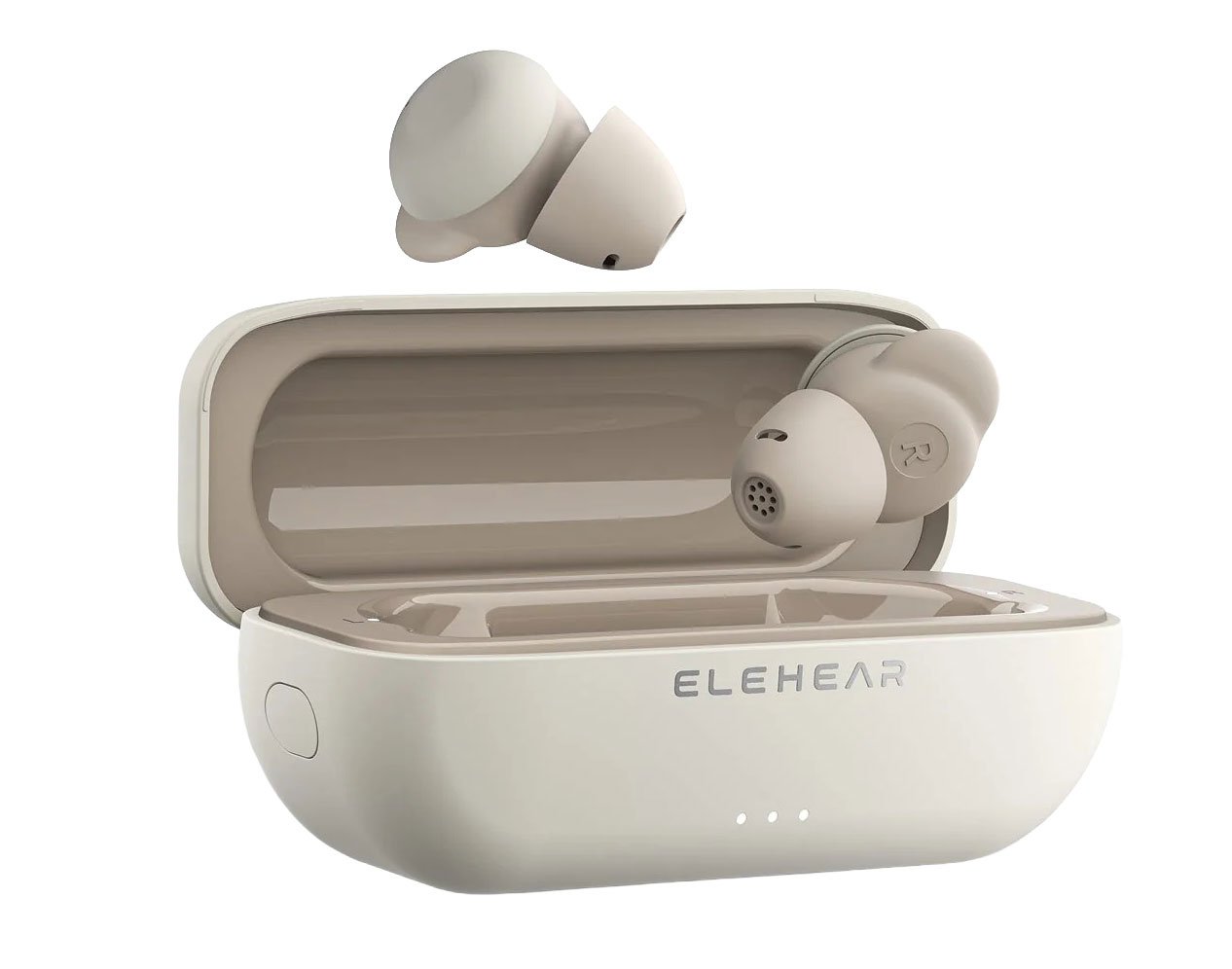
Inside the box, you will find the Delight hearing aids and their portable charging case. The case is compact, feels well built, and easily fits in a pocket. Battery life is rated at around 13.5 hours per charge, and the case provides two additional charges. Realistically, this is something you could throw in your pocket for a weekend trip without having to worry too much about power.


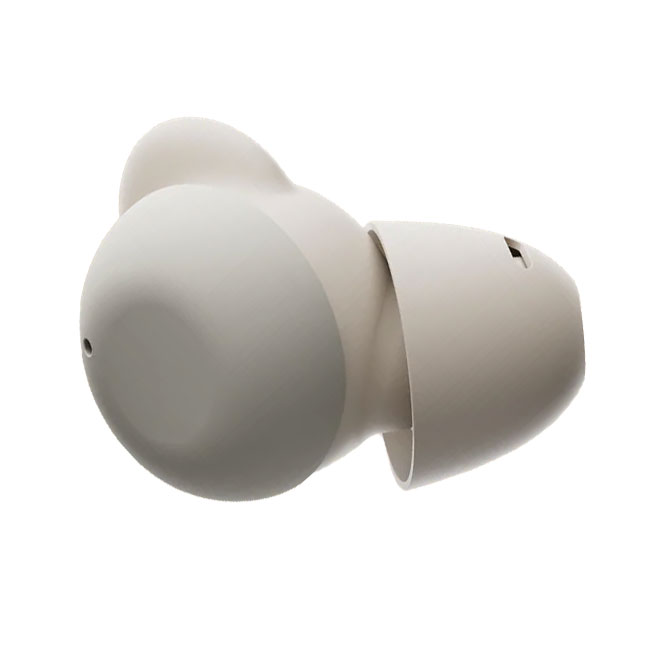
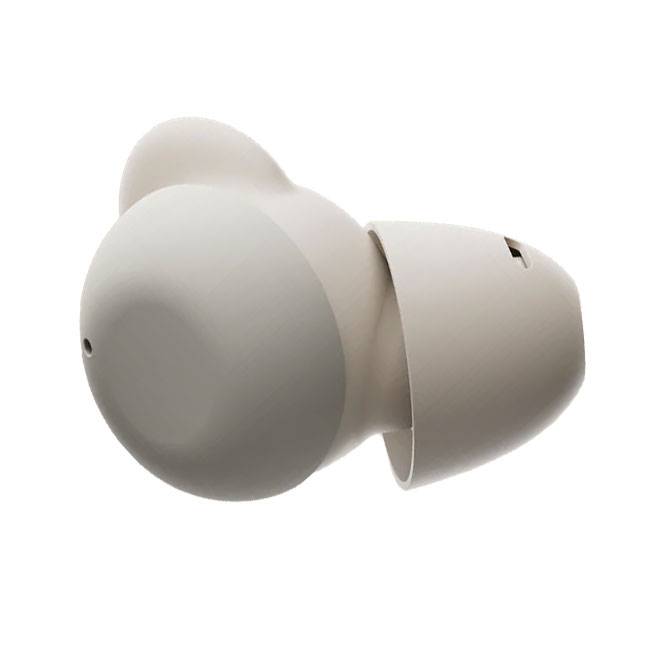
In terms of size, Delight is fairly compact. Compared with Apple AirPods Pro and ELEHEAR’s Beyond Pro, the devices are small and have a familiar earbud-style design. You will also notice small ear wings, which are an interesting design choice. These help with retention and also give you something to grip when inserting or removing the devices.
ELEHEAR provides multiple ear tip and ear wing sizes so you can customize the fit to your ears. The box also includes a cleaning tool and USB cable, though no wall adapter is included.
:format(webp))
Build quality is better than I expected for the price. The devices have an IP67 rating, which gives them good protection against moisture and dust for everyday use. I also like the unique rubber flange pull-tab, and the portable charging case feels sleek and robust.
Comfort and Fit
I found Delight fairly comfortable, with good ear retention. The earbud-style shape and ear wings helped the devices stay in place well during normal use.

As with any in-ear hearing aid, fit matters. I would strongly recommend trying the different included ear tips to find the best balance of comfort, retention, feedback control, and hearing benefit. The right tip can make a big difference with a device like this.
Own-voice comfort was also better than average in lab testing, which is encouraging for an in-ear design. Some users may still notice a plugged-up feeling depending on the dome they use, but Delight appears to manage this reasonably well.
App and Controls
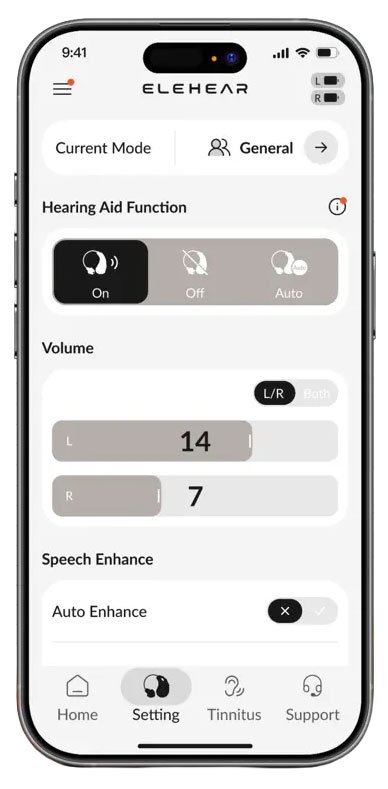
Delight supports Bluetooth app control on both Apple and Android devices. Overall, the ELEHEAR app offers many features without feeling overly complicated.
The main settings screen lets you control volume and tone, which are at the core of the sound customization experience. You will also find different listening modes—though in my experience, the default automatic mode works well for most situations. The same is true for noise control; the adaptive settings struck the best balance. Lower settings introduced some hiss, while higher settings became a bit aggressive and produced noticeable swishing artifacts.
:format(webp))
:format(webp))
At this time, Delight is preset-based, so it is not the same as a fully customized prescription fitting that is tuned for your unique hearing loss. However, ELEHEAR offers greater personalization through its ElePro feature and Audiologist Plan program, which can help users achieve a more tailored setup than many basic devices provide.
There are some clear advantages here. ElePro helps reduce the guesswork of self-fitting. Even small recommendations, such as which ear tip to use, can make a meaningful difference in the overall experience. But there are also limitations. ElePro and ELEHEAR’s Audiologist Plan are still remote care, and communication happens through the app. In my case, there was also email correspondence. That is not the same as in-person care.
The app also supports features like mode switching, battery monitoring, firmware updates, -driven language translation, and tinnitus-masking sounds. Not every user will need all of these, but the overall app experience is stronger than I would expect in this price range.
There is also a remote sound capture feature that turns your phone into a . That feature is useful in theory, but in my testing, the latency, or delay, was significant enough that it was not practical for most real-world uses. For example, I measured a delay of almost half a second. That makes it very difficult to use this feature to hear someone across the room or to stream sound from a television.
Along with the app, Delight also features touch controls. A quick double-tap on the outer faceplate lowers the volume, while a long press increases it. In theory, that is simple, but in practice, I ran into some issues.


One thing to note is that the hearing aids are ear-specific, so users should ensure the left and right devices are oriented properly. If your hearing is fairly symmetrical, which is common, you will likely want the left and right hearing aids linked, which the app allows you to do.
However, using the touch controls actually splits that link and adjusts the volume only on the side you tapped. There are situations where independent controls can be useful, but for me, and I suspect for many users, this ended up feeling a bit clunky.
Bluetooth and Streaming
Bluetooth performance was very good in my use. Delight is compatible with both iOS and Android devices and supports audio streaming and hands-free calling.
I did not run into connection issues during testing. Overall, I found both the app and Bluetooth connection stable, which is important for a product that leans heavily into app control and streaming.
Battery Life and Charging
Battery life is acceptable, but not a major strength. ELEHEAR reports up to 13.5 hours per charge, which is on the lower end compared with some other hearing aids. Heavy Bluetooth streaming will likely reduce runtime further.
The charging case helps offset that limitation by providing up to two additional full charges. The case itself is compact and well built, and the hearing aids can be recharged in about 1.5 hours from a fully depleted battery.
How Co ELEHEAR Delight and Beyond Pro Compare?
As noted above, Delight’s results across HearAdvisor’s five sound-quality metrics were solid. Overall, we saw respectable speech performance, particularly in quieter environments, and Delight ultimately received an A SoundGrade.
This raises the question of how ELEHEAR Delight compares with ELEHEAR’s receiver-in-canal () hearing aid, Beyond Pro. Beyond Pro performs better in more challenging listening environments, likely due to its larger body size, which enables more advanced microphone configurations and overall processing. That said, speech performance was more comparable in quieter listening situations.
There was also an important nuance related to ElePro and the Audiologist Plan. The recommended settings for a common age-related mild-to-moderate hearing loss provided significantly less amplification, or gain, than industry standards would recommend. This resulted in lower speech clarity and lower overall speech performance.
Why would ELEHEAR do that? It appears to be intentional and follows a common practice in hearing healthcare: starting with lower gain, or “training wheels,” to prioritize comfort and allow for acclimatization. Once a user becomes accustomed to those settings, the volume can be increased incrementally to provide more speech benefit—if the user recognizes that this will benefit them.
The key difference is that, with traditional care, there is built-in follow-up. With ElePro, that follow-up is up to the user. These lower starting settings can leave meaningful performance improvements on the table. Unless users actively adjust or revisit their settings, they may never reach the full benefit.
Final Verdict
The ELEHEAR Delight is a strong value option for budget-conscious buyers who want a modern, earbud-style hearing aid with good app support, stable Bluetooth, and better-than-expected streaming quality.

Its biggest strengths are speech clarity in quieter environments, music streaming, comfort, and ease of use. Its main limitations are battery life, feedback handling, and more modest performance in the presence of complex background noise.
In my testing, I noticed some rough edges, including slightly delayed app connections and the touch-control quirks discussed earlier. However, these need to be viewed in the context of a sub-$400 hearing aid.
At around $300-$400, Delight is one of the more affordable hearing aid options currently available. For comparison, ELEHEAR Beyond Pro is closer to $599, and many other OTC hearing aids are still priced near $1,000.
Delight performs best in quieter environments, where it delivers relatively clean high-frequency amplification. In other words, it can provide improved clarity. While other devices may perform better in noise, Delight offers good value for the price.
Another advantage is the earbud-style design, which feels current. The feature set is also surprisingly robust, including app controls, wireless audio, tinnitus maskers, and more. ELEHEAR has clearly invested in the app experience, and it shows.
There are also some potential downsides to consider. While Delight’s performance in noise is not poor, it does lag behind some competitors, including ELEHEAR’s own Beyond Pro. Battery life is also shorter, at 13.5 hours per charge, and likely less in real-world use. For some users, Delight may fall short of true full-day wear.
While I think the ElePro and Audiologist Plan route is beneficial, it highlights an important shortcoming of nearly all OTC hearing aids: When settings prioritize listening comfort over speech clarity, the burden falls on the user to troubleshoot and find the best balance between comfort and speech performance. Without professional guidance and proper testing, it can become a bit of a guessing game, and the device might not perform to its full potential.
It is worth mentioning that users can take OTC hearing aids to a local provider and have them fit using more traditional audiological practices. The difficulty may be finding a practice in your area that is willing to fit an OTC hearing aid. If you have tried that and had success, it would be interesting to hear how it worked for you.
One of the strongest use cases for ELEHEAR Delight is as a situational device, as noted by the company’s president, David Hogan, in an article about the product’s launch at CES 2026. "For example, if you wear a traditional model most of the time, Delight can step in when you’re active—or when you simply want something more discreet,” he said. Whether Delight becomes someone’s primary hearing solution or a secondary pair for gyms, golf, fishing, and other situations, it’s clearly aimed at a realistic adoption model: helping people hear better when they need it most.
Bottom line: For someone looking for an affordable OTC hearing aid that feels closer to consumer earbuds than a traditional hearing aid, Delight is a compelling option. For users who need the strongest possible performance in noise or highly customized amplification, I would still consider more advanced alternatives.
What I Liked About ELEHEAR Delight
- Strong value for the price. For a sub-$400 price, ELEHEAR Delight is one of the better, more affordable hearing aids currently available, especially compared with many OTC devices that still sit near the $1,000 mark.
- Solid overall performance. Delight earned a HearingTracker score of 4.3 out of 5, placing it in the upper tier of OTC hearing aids tested by HearingTracker and HearAdvisor.
- Good speech clarity in quieter environments. HearAdvisor testing showed respectable speech performance, particularly in easier listening situations. Delight received an A SoundGrade in the lab.
- Modern earbud-style design. The compact, earbud-like form factor feels current and less “medical” than many traditional hearing aid designs.
- Pocket-sized charging case. The portable USB-C charging case is compact, well-built, and provides two additional charges for on-the-go use.
- Robust app experience. The ELEHEAR app offers a strong mix of controls without feeling overly complicated, including volume, tone, listening modes, noise control, and many advanced features.
- Useful tinnitus masking options. The Serene tinnitus masker allows users to layer and mix environmental sounds.
- ElePro helps reduce self-fitting guesswork. ELEHEAR’s ElePro feature allows users to take a hearing test or upload an and receive recommended settings from remote providers.
Drawbacks
- Performance in noise trails some competitors. While Delight performed well overall, it did not match ELEHEAR Beyond Pro in more challenging listening environments, likely due in part to Beyond Pro’s larger body size, microphone configuration, and processing capabilities.
- Battery life may not be enough for all-day use. Battery life is rated at about 13.5 hours per charge, and real-world use may be shorter, especially with streaming or heavier app use.
- Touch controls can be clunky. Adjusting volume on one hearing aid can split the left/right volume link, changing only the side that was tapped.
- Noise control can introduce artifacts. Adaptive noise control worked best in testing, but lower settings introduced some hiss, while higher settings became more aggressive and produced noticeable swishing artifacts.
- ElePro settings may prioritize comfort over clarity. ELEHEAR’s recommended ElePro settings for a common mild-to-moderate age-related hearing loss provided less amplification than industry standards typically recommend—which isn’t uncommon but still prioritizes comfort over performance.
- Remote mic is innovative but still needs work. The app’s remote sound capture feature can turn the phone into a , but I measured nearly a half-second of latency, making it impractical for many real-world uses.
Alternatives to ELEHEAR Delight
Based on HearAdvisor testing, ELEHEAR Beyond Pro ($599) and Beyond ($399) receiver-in-canal hearing aids outperform Delight ($331-$419), and Beyond Pro is a much stronger choice for hearing in noise and overall sound quality. For earbud-type devices, the Apple AirPod Pro 2 and Pro 3, when used with their self-fitting Hearing Aid Feature mode, are also good options at about $250. Likewise, another hearing aid to consider is Cearvol Wave ($399), an -driven device that also earned a 4.3/5 rating. All of these earned an A SoundScore from the independent HearAdvisor lab.


The YeaSound RIC 800 ($659) and the Lexie B3 ($999) and B2 Plus ($899), Powered by Bose, are also strong competitors, albeit with significantly higher price tags. However, these hearing aids are receiver-in-canal () like Beyond Pro, meaning they are slightly more visible, as the main body sits behind the ear and transmits sound to a receiver (speaker) in the ear canal via a thin, nearly transparent wire.
Steve Taddei, AuD
Doctor of AudiologySteve Taddei, Au.D., is an audiologist, co-founder and lab director of HearAdvisor, and a hands-on hearing aid and earplug reviewer for HearingTracker. He holds an audio engineering degree from Columbia College Chicago and a doctorate in audiology from Northern Illinois University. He also teaches as an adjunct faculty member at several colleges.