Sennheiser All-Day Clear OTC Hörgerät: Im Labor und im Alltag getestet
)
Unser Expertenteam wählt Produkte sorgfältig aus und testet sie gründlich. Wenn Sie über unsere Links kaufen, erhalten wir möglicherweise eine Provision. So halten wir unsere Bewertungen unabhängig.

Kurze Einschätzung
Sennheiser All-Day Clear ist derzeit unser bestbewertetes OTC-Hörgerät mit einem Gesamt-HearingTracker Score von 4.6 von 5. In meinen Praxistests fand ich es komfortabel genug für das Tragen den ganzen Tag über, mit zuverlässigem Bluetooth, einfacher Handhabung und guter Klangqualität im Alltag.
Die Laborergebnisse fielen gemischter aus. HearAdvisor maß eine gute Gesamtleistung, doch die Ergebnisse bei Störgeräuschen waren schwächer als bei vielen vergleichbaren Rezept-Modellen. Es gibt einige weitere Kompromisse, die Sie beachten sollten: Die Bedienelemente sind eingeschränkt und das Ladegerät ist relativ einfach, obwohl Sennheiser bis zu 24 Stunden Akkulaufzeit pro Ladung angibt.
All-Day Clear kostet $999.95 pro Paar vor Sonderaktionen. Ich würde es wegen seines Komforts, seiner Konnektivität und seiner starken Gesamtleistung in die engere Wahl nehmen, allerdings sollten Sie zu diesem Preis möglicherweise auch Rezept-Hörgeräte der Einstiegsklasse in Betracht ziehen.
Preise & Betreuung vergleichen
Vergleichen Sie Anbieter und enthaltene Betreuung. Die Preise gelten pro Paar.

Vertrauenswürdige Marke
- Direkter OTC-Kauf für Verbraucher
- Selbstanpassung über die mobile App
- Optionale professionelle Behandlung in der Klinik
- Bluetooth-Streaming und Freisprechanrufe
Keine Preissenkung verpassen
Benachrichtigung bei Preissenkung für dieses Produkt
Was ist Sennheiser All-Day Clear?
Wenn Sie Audiophiler, Audioingenieur oder Musiker sind, kennen Sie wahrscheinlich die Marke Sennheiser, die traditionell für ihr Sortiment an Audiogeräten bekannt ist. Aber wann haben sie begonnen, Hörgeräte herzustellen?


Im Jahr 2022 übernahm Sonova – der weltweit größte Hörgerätehersteller, der auch Phonak- und Unitron-Hörgeräte herstellt – die Verbrauchersparte von Sennheiser. Betrachten Sie es als eine natürliche Verbindung zwischen der Welt der Hörgeräte und der Unterhaltungselektronik, um bessere sprachverstärkende Ohrhörer und Hörgeräte zu entwickeln.
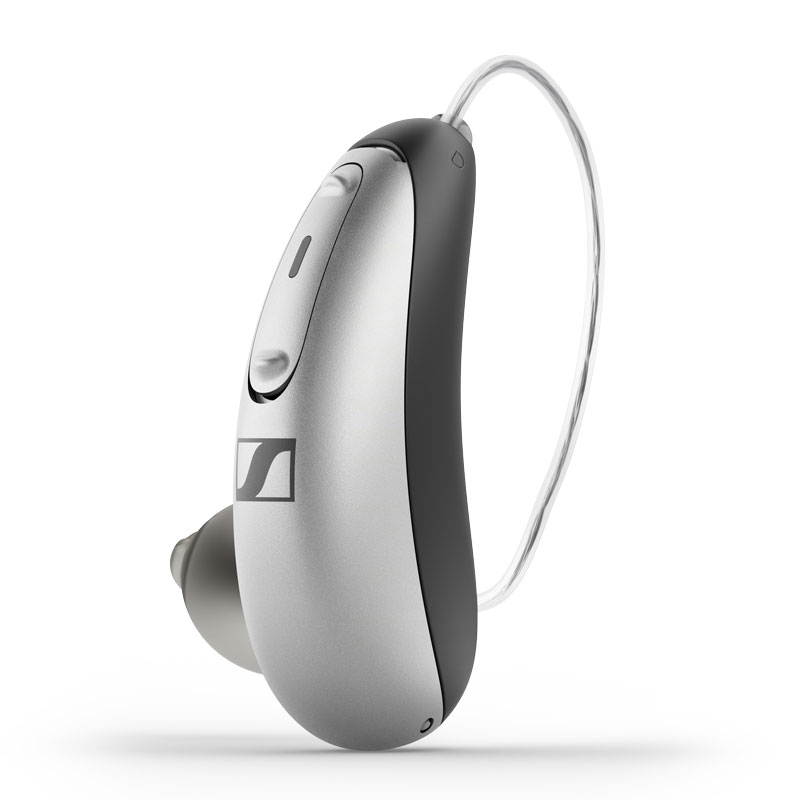
All-Day Clear ist ein von Sonova entwickeltes und von Sonova hergestelltes Receiver-in-Canal-Hörgerät (RIC), das einen kleinen Lautsprecher in Ihrem Ohr platziert, der über ein kunststoffummanteltes Kabel mit einem hinter Ihrem Ohr sitzenden Gerät zur Audioverarbeitung und -verstärkung verbunden ist. Übrigens ist dies weltweit die beliebteste Bauform von Hörgeräten und macht rund 70% des Gesamtmarkts aus.
:format(webp))
Wo Sie Sennheiser All-Day Clear kaufen können
All-Day Clear kann direkt über die Sennheiser-Website oder bei großen Einzelhändlern wie Best Buy, Amazon, Walmart und Target erworben werden. Sie sind außerdem über Sonovas AudioNova Hörkliniknetzwerk sowie über die Website von United Healthcare für einige seiner Mitglieder erhältlich. Vergleichen Sie unbedingt die Angebote, da die Preise zwischen den Websites variieren können.
Die hier besprochenen Preise und Verkäufer gelten für die Vereinigten Staaten. Wenn Sie aus dem UK, Kanada oder Australien einkaufen, schließen die Bedingungen des U.S.-Shops von Sennheiser Bestellungen aus, die außerhalb der Vereinigten Staaten in Rechnung gestellt oder dorthin versandt werden. Prüfen Sie vor dem Import eines Paars die lokale Verfügbarkeit, den App-Zugang und den Support bei Sennheiser.
Für wen es geeignet ist
Dies ist ein OTC-Hörgerät, das heißt, es ist für Personen mit höchstens geringgradigem bis mittelgradigem Hörverlust vorgesehen. Wenn Sie nicht sicher sind, welchen Grad an Hörverlust Sie haben, empfehlen wir dringend, einen Hörakustiker für eine umfassende Höruntersuchung und ein Audiogramm aufzusuchen oder zumindest einen guten Online-Hörtest zu machen, um eine Einschätzung Ihres Hörverlustgrads zu erhalten. Sennheiser bietet auch einen eigenen 3-Minuten-Hörtest an.
:format(webp))
Wichtige All-Day Clear Produktspezifikationen:
- Bluetooth-Konnektivität: Unterstützt Audio-Streaming, Freisprechen und aktive Verbindungen mit bis zu zwei Geräten.
- Wiederaufladbarer Akku: Bis zu 24 Stunden Akkulaufzeit pro Ladung, abhängig von Streaming, Nutzung, Akkualter und anderen Faktoren.
- Selbstanpassung und Bedienelemente: Passen Sie Ihr Hören über die mit iOS und Android kompatible All-Day Clear App an, mit integrierten Drucktasten für schnelle Anpassungen.
- Hörprogramme: Enthält die Modi Conversation in Quiet und Conversation in Noise mit Richtmikrofonen zur Unterstützung in lauten Umgebungen. Die aktuelle App von Sennheiser führt außerdem ein Live Music Programm auf.
- Staub- und Wasserbeständigkeit: IP68-zertifiziert zum Schutz vor Staub und Wasser.
- Keine T-Spule oder Auracast: Unterstützt keine T-Spule (T-Spule) oder Auracast-Konnektivität.
:format(webp))
Auspacken und Details zu Sennheiser All-Day Clear
Nachdem wir einen kurzen Überblick über die Technik gegeben haben, sehen wir uns nun an, was sich in der Verpackung befindet, und gehen dann darauf ein, wie die Nutzung von Sennheiser All-Day Clear ist.
Im Inneren finden Sie das Ladeetui mit Ihrem Paar All-Day Clear Hörgeräten bereits darin. Sie werden mit einem mittelgroßen belüfteten Schirmchen geliefert, und Sie erhalten einige zusätzliche Größenoptionen für Ihre Ohren, um Komfort und Halt auszubalancieren.
Auf der Rückseite jedes Geräts befindet sich ein Wippschalter, und diese Hörgeräte kommunizieren drahtlos – daher gilt jede Anpassung, die Sie an einem Hörgerät vornehmen, für beide (eine praktische Funktion, die nicht bei allen OTC-Geräten verfügbar ist).
Im unteren Fach der Verpackung finden Sie ein Benutzerhandbuch und einen QR-Code zum Herunterladen der All-Day Clear App. Außerdem erhalten Sie ein Micro-USB-Kabel und ein Netzteil.
Sie finden außerdem einige Wartungswerkzeuge, einschließlich Ohrenschmalzfilter. Wenn Sie noch nie zuvor Ohrenschmalzfilter gewechselt haben, kann das etwas einschüchternd wirken, aber es ist tatsächlich ziemlich einfach. Entfernen Sie zunächst das Schirmchen. Am Ende des Receivers sehen Sie einen kleinen weißen Filter: Das ist der Ohrenschmalzfilter, der verhindert, dass Ablagerungen den Lautsprecher verstopfen. Verwenden Sie das Werkzeug, um den alten herauszuziehen, drehen Sie es um und drücken Sie den neuen hinein.
Sie müssen dies nicht oft tun, aber wenn Ihre Hörgeräte plötzlich schwach klingen oder nicht mehr funktionieren, ist dies eines der ersten Dinge, die Sie prüfen sollten, bevor Sie annehmen, dass etwas ernsthaft nicht stimmt. Sie erhalten außerdem ein kleines Reinigungswerkzeug und einige zusätzliche Schirmchengrößen, um einen guten Sitz und Komfort zu gewährleisten.
Das Ladeetui für Sennheiser All-Day Clear ist solide, aber nicht taschengroß und wirkt aus einigen wichtigen Gründen etwas überholt. Erstens besitzt es keinen internen Akku, sodass Sie Ihre Hörgeräte unterwegs nicht aufladen können; das Etui muss zum Laden der Geräte angeschlossen sein. Sennheiser verkauft nun einen optionalen All-Day Clear Power Pack für $149.95, der an der Unterseite des Ladeetuis befestigt wird und 2-3 vollständige Ladungen für die Hörgeräte bietet. Aber ehrlich gesagt ist dies etwas, das viele OTC-Hörgeräte bereits in ihre Ladeetui-Designs integrieren.
Zweitens verwendet es Micro-USB. Sennheiser legt das Kabel bei, was gut ist; wenn Sie es jedoch auf Reisen vergessen, besteht eine gute Chance, dass Sie kein Ersatzkabel herumliegen haben. Schließlich erfordert das Einsetzen der Hörgeräte in das Ladegerät etwas mehr Aufwand, als es sollte. Anstelle einer praktischen magnetischen Verriegelung fühlt es sich sehr mechanisch an, und das Einsetzen und Herausnehmen der Hörgeräte kann schwieriger sein – keine große Sache, aber wenn Fingerfertigkeit oder Handkraft ein Anliegen sind, sollten Sie dies im Hinterkopf behalten.
Sennheiser gibt die Akkulaufzeit jetzt mit bis zu 24 Stunden mit einer einzigen Ladung an, abhängig von der Nutzung, statt der in früheren Materialien genannten 20 Stunden. Eine vollständige Aufladung kann bis zu 3 Stunden dauern. Wie mein Kollege Matthew Allsop gezeigt hat, kann der Akkustatus in der All-Day Clear App überprüft werden, und die Kontrollleuchten der Hörgeräte zeigen während des Ladevorgangs im Ladegerät den ungefähren Ladezustand an: blinkendes Rot bei unter 10%, Orange bei 11-80% und Grün bei 81-99%; bei vollständiger Ladung leuchtet die Anzeige dauerhaft grün.
:format(webp))
Drahtlose Funktionen von Sennheiser All-Day Clear
Sennheiser All-Day Clear OTC-Hörgeräte sind selbstanpassende Hörgeräte, worauf wir gleich noch zurückkommen werden, aber die wichtigste Erkenntnis ist, dass Sie die All-Day Clear App für Einrichtung und Anpassung verwenden müssen.
Und ehrlich gesagt ist das eine gute Sache. Sobald Sie die Geräte mit Ihrem iOS- oder Android-Gerät verbinden, schalten Sie Bluetooth-Streaming und Klangpersonalisierung frei. Die Kopplung war in meinen Tests unkompliziert. Die App ist mit Bluetooth-fähigen Smartphones und Tablets kompatibel, auf denen mindestens iOS 14 oder Android 8.0 läuft (beachten Sie, dass die App auf Tablets funktioniert, aber nicht dafür optimiert ist).
Nachdem Sie die Geräte mit Ihrem Smartphone oder Tablet gekoppelt haben, durchlaufen Sie etwas namens „My Sound Profile.“ Dies ist der Einrichtungsprozess von Sennheiser, bei dem Sie ein Sprachbeispiel anhören und einige einfache Entscheidungen zu Lautstärke und Klarheit treffen. Dadurch wird der Klang anhand Ihrer Sprachpräferenzen angepasst; Ihre Hörschwellen werden nicht gemessen und Sie können kein Audiogramm eingeben. Ich fand die Bedienelemente eingeschränkt, daher würde ich die Testphase nutzen, um zu prüfen, wie gut die verfügbaren Anpassungen Ihren Hörbedürfnissen entsprechen.
Zurück zur app-basierten Einrichtung: Sobald Sie Ihr Klangprofil abgeschlossen haben, finden Sie Standardbedienelemente wie Lautstärke- und Programmauswahl. Es gibt einen zusätzlichen Bereich „Fine Tune“ mit einem 3-Band-EQ für weitere Anpassungen. Außerdem sehen Sie einen Schalter für Wind Noise Reduction; allerdings muss ich ehrlich sein: Bei der Nutzung bemerkte ich keinen großen Unterschied. Fairerweise war Windgeräusch während meiner Tests ohnehin kein großes Problem.
:format(webp))
Die Klangmodi werden oben auf dem Klangsteuerungsbildschirm der App aufgeführt. Sie können auch die Lautstärke ändern und, wie erwähnt, das Programm Wind Noise Reduction aktivieren. Wie Matthew jedoch angemerkt hat, kehren die Hörgeräte nach einem Neustart zu ihren Standardeinstellungen zurück.
Eine kleine Frustration bei der App ist ihr Umgang mit der Konnektivität. Jedes Mal, wenn ich sie schloss und erneut öffnete, mussten sich meine Hörgeräte wieder verbinden. Und selbst wenn ich die App geöffnet ließ (z. B. länger als etwa eine Minute), lief bei All-Day Clear die Zeit ab und die Verbindung wurde automatisch getrennt.
Dies geschieht wahrscheinlich, um die Akkulaufzeit zu schonen, bedeutet aber, dass Sie jedes Mal ein oder zwei Sekunden warten, wenn Sie eine Anpassung vornehmen möchten. Es ist kein Ausschlusskriterium, aber ähnlich wie der Kommentar zum Einsetzen und Herausnehmen aus dem Ladegerät im letzten Abschnitt ist es ein weiterer Punkt, an dem die Benutzerfreundlichkeit meiner Meinung nach verbessert werden könnte.
Sennheiser All-Day Clear ist so konzipiert, dass es vollautomatisch arbeitet und sich an unterschiedliche Klangumgebungen anpasst, sobald Sie ihnen begegnen. Wie bereits erwähnt, verfügen sie neben der App auch über integrierte Drucktasten zum Ein- und Ausschalten, zur Lautstärkeanpassung, zur Auswahl des Klangmodus und zum Annehmen oder Ablehnen von Telefonanrufen. Anders als einige der fortschrittlichen Rezept-Hörgeräte von Sonova verfügt dieses Gerät über keine Tippsteuerung.
Wie Sennheiser All-Day Clear im HearAdvisor-Labor abschnitt
All-Day Clear erzielte seine stärksten Laborergebnisse bei der Sprachverständlichkeit in Ruhe, beim Musikstreaming und bei der Kontrolle von Rückkopplungen – dem Pfeifen, das Hörgeräte manchmal erzeugen können. Sprache in Ruhe und die Streamingqualität lagen deutlich über den unten gezeigten OTC-Durchschnittswerten, und die Rückkoppllungsbehandlung war bei beiden getesteten Anpassungen ausgezeichnet.
Lärm war der schwächere Punkt. Die Werte für Sprache im Lärm lagen nur leicht über dem OTC-Durchschnitt, daher verdienen belebte Restaurants und Gruppengespräche während Ihres Testzeitraums besondere Aufmerksamkeit. Die weiteren Lautstärke- und Drei-Band-EQ-Anpassungen des Labors erzielten sehr ähnliche Ergebnisse wie die Ersteinrichtung, ohne die gemessenen Werte zu verbessern.
Insgesamt erhält All-Day Clear einen HearAdvisor SoundScore von 4.4 von 5, einen A SoundGrade und einen 2026 Expert Choice Award. Sein Gesamtlaborwert platziert es unter den besten 10 % der von HearAdvisor getesteten OTC-Hörgeräte, einschließlich älterer Modelle.
Über unsere Tests: Diese Bewertung kombiniert eine Praxisbewertung für HearingTracker mit standardisierten Labortests von HearAdvisor. Die Unternehmen sind getrennt, haben jedoch teilweise dieselbe Führungsebene, und Autor Steve Taddei ist außerdem Mitgründer und Laborleiter von HearAdvisor. HearAdvisor legt seine Testmethoden und SoundScores unabhängig von Herstellern fest; HearingTracker ist für die redaktionellen Schlussfolgerungen dieser Bewertung verantwortlich.
Die Ergebnisse verstehen
HearAdvisor verwendet einen standardisierten, abfallenden mittelgradigen Hörverlust und einen akustischen KEMAR-Manikin. Die Verwendung desselben Hörverlustprofils und kontrollierter Klangumgebungen ermöglicht Vergleiche zwischen OTC- und Rezept-Geräten. Für All-Day Clear verwendeten beide Anpassungen ein geschlossenes Schirmchen mit Belüftungsbohrung, einen Standard-Receiver und das Programm Automatic. Initial Fit umfasste bereits die Lautstärke- und Klarheitsanpassung der App; Tuned Fit nutzte Labormessungen, um weitere Lautstärke- und Drei-Band-EQ-Anpassungen in Richtung der verordneten Verstärkungsziele vorzunehmen. Die Werte beschreiben diese getesteten Einstellungen und sind kein garantiertes individuelles Ergebnis. Die OTC-Durchschnittswerte umfassen ältere getestete Modelle.
Sennheiser All-Day Clear
Weiter unten auf dieser Seite können Sie die Aufnahmen von HearAdvisor mit All-Day Clear anhören – in Tests für Sprache in Ruhe, Sprache im Lärm und Musikstreaming. Verwenden Sie Kopfhörer, um den Klang der verfügbaren Aufnahmen zu vergleichen. Diese Beispiele zeigen die Verarbeitung der Hörgeräte am Labor-Manikin; sie können nicht genau vorhersagen, was Sie mit Ihrem eigenen Hörverlust und Ihrer Anpassung hören werden. Die HearAdvisor All-Day Clear review enthält ebenfalls detaillierte Ergebnisse und Aufnahmen.
Der HearingTracker Score
Der HearingTracker Score geht über die reine Klangqualität hinaus und berücksichtigt auch Preis-Leistungs-Verhältnis sowie Alltagsfaktoren wie Akkulaufzeit, Tragekomfort, Bluetooth-Konnektivität und Design. Die untenstehende Bewertungstabelle fasst diese Faktoren zusammen; meine Erfahrungen mit Komfort, Bedienelementen und Laden helfen zu erklären, was die Zahlen im täglichen Gebrauch bedeuten.
Eine starke OTC-Wahl, wenn Sie Wert auf komfortables Tragen den ganzen Tag über, klare Sprache in ruhiger Umgebung sowie zuverlässiges Bluetooth-Streaming und Freisprechgespräche legen. Mit $999.95 pro Paar vor Sonderaktionen sind die eingeschränkten Anpassungsoptionen, das einfache Ladegerät und die schwächere Leistung an lauten Orten die Hauptgründe, Alternativen zu vergleichen.
Wichtige Merkmale
Expertenbewertung
Ich fand All-Day Clear auch bei längerem Tragen bequem, ohne Probleme mit dem Halt, und seine Bluetooth-Verbindung war einfach und stabil. Die Hörgeräte wirkten in meinen Händen außerdem hochwertig verarbeitet. Das sind wesentliche Stärken bei einem Gerät, das Sie täglich tragen und handhaben.
Das mitgelieferte Ladegerät ist der Kompromiss: Es benötigt eine Steckdose und war beim Einsetzen und Herausnehmen umständlich. Die App bietet nützliche Bedienelemente für Lautstärke, Programme und Drei-Band-EQ, es fehlen ihr jedoch Extras, die in einigen Konkurrenz-Apps vorhanden sind, etwa Bedienelemente für Richtmikrofone und Gesundheits-Tracking. Ich finde, dass All-Day Clear ein sehr gutes Preis-Leistungs-Verhältnis für Personen bietet, denen Komfort und Konnektivität wichtig sind, obwohl etwa $1000 pro Paar eine beträchtliche Investition darstellen. Wenn Sie mehr Anpassungsflexibilität oder ein Ladegerät mit integriertem Akku benötigen, sollten Sie diese Kompromisse vor dem Kauf abwägen.
:format(webp))
Testzeitraum, Garantie und Zubehör
Bei Käufen im US-Store von Sennheiser erlaubt die Rückgaberichtlinie die Rückgabe berechtigter Hörgeräte innerhalb von 45 Tagen nach Lieferung. Bewahren Sie die Originalverpackung und das Zubehör auf und veranlassen Sie die Rückgabe innerhalb dieses Zeitraums. Wenn Sie woanders kaufen, prüfen Sie die Richtlinie dieses Händlers.
All-Day Clear ist nach IP68 für Widerstandsfähigkeit gegen Staub und Wasser zertifiziert (dennoch empfehlen wir, sie aus dem Wasser herauszuhalten). Sie werden mit einer standardmäßigen eingeschränkten 1-Jahres-Garantie geliefert. Beim Bezahlen werden Ihnen außerdem erweiterte Garantien für 1, 2 und 3 Jahre für etwa $27, $54 bzw. $82 angeboten. Wenn Sie die Option „No Extended Coverage“ auswählen, wird die standardmäßige eingeschränkte 1-Jahres-Garantie, die mit den Hörgeräten geliefert wird, nicht entfernt. (Einzelheiten zum Versicherungsschutz finden Sie in den Garantieinformationen.)
Das wichtigste All-Day Clear Zubehör von Sennheiser ist der TV Connector, der separat für $349.95 verkauft wird. Er streamt TV- oder Stereo-Audio direkt an die Hörgeräte und umfasst den TV Connector, ein Micro USB-Kabel, einen Netzstecker, ein optisches/TOSLINK-Audiokabel und ein analoges 3.5-mm-Audiokabel. Weitere Ersatzteile umfassen Ersatz-Ohrstöpsel und Ohrenschmalzfilter, die in der Regel für $15.95 gelistet sind.
:format(webp))
Abschließendes Urteil
Für mich ist der Reiz von All-Day Clear unkompliziert: Es klingt gut, fühlt sich bequem an und macht alltägliches Streaming und Telefonieren einfach. Ich würde es in die engere Wahl nehmen, wenn das Ihre Prioritäten sind und Sie sich damit wohlfühlen, Hörgeräte in einer App einzurichten.
Das einfache Ladegerät und die begrenzten Anpassungsoptionen bremsen es aus, und Gespräche in lauter Umgebung sind ein schwächerer Einsatzbereich. Bei etwa $1000 pro Paar würde ich diese Kompromisse gegenüber Rezept-Einstiegsoptionen abwägen. Hier sind meine wichtigsten Vor- und Nachteile:
Vorteile
- Starke Leistung: All-Day Clear erhielt von HearAdvisor einen A SoundGrade, der eine insgesamt starke objektive Klangqualität widerspiegelt. Und in meinen eigenen Praxistests würde ich sagen, dass sich das bestätigt. Diese OTC-Hörgeräte klingen gut, obwohl laute Umgebungen weiterhin eine Einschränkung darstellen. Ihr Gesamtwert bei HearingTracker gehört zu den höchsten unter bewerteten OTC-Hörgeräten.
- Komfort und Handhabung: Ich konnte sie über lange Zeiträume bequem tragen, ohne Probleme mit dem Halt. Tasten am Gerät und App-Bedienelemente bieten praktische Möglichkeiten für alltägliche Anpassungen.
- Moderne Funktionen: Aus Funktionssicht erfüllt All-Day Clear viele Anforderungen. Sie erhalten einen wiederaufladbaren Akku für den ganzen Tag, App-Steuerung, Bluetooth-Streaming und mehr. Frühere Angebote um $799 verbesserten das Preis-Leistungs-Verhältnis; der aktuelle Herstellerpreis beträgt vor Aktionen $999.95.
Negative
- Einfache Personalisierung: Das Onboarding „My Sound Profile“ ist … in Ordnung. Im Vergleich zu einigen anderen OTC-Optionen wirkt es jedoch etwas eingeschränkt. Sie wählen Sprachpräferenzen aus; die App misst keine Hörschwellen und akzeptiert kein Audiogramm. Nutzen Sie den Testzeitraum, um zu prüfen, ob Ihnen diese Bedienelemente in Ihren Alltagssituationen genügend Klarheit bieten.
- Einfaches Ladeetui. Das Ladeetui wirkt nicht mehr zeitgemäß. Es gibt keinen standardmäßigen internen Akku zum Laden unterwegs, die Hörgeräte werden mechanisch eingerastet, und sie verwenden Micro-USB. Außerdem ist es größer als viele andere Ladegeräte. Insgesamt könnte das Design des Ladegeräts eine Aktualisierung gebrauchen.
- Preis. Bei etwa $800 bis $1000 ist dies weiterhin eine bedeutende Investition. Das bedeutet nicht, dass das Preis-Leistungs-Verhältnis schlecht ist, aber aufgrund meiner klinischen Erfahrung kann ich Ihnen sagen, dass dieser Preisbereich für viele Menschen weiterhin eine Hürde darstellt. Wie ich in vielen meiner Videos erwähnt habe, bieten einige Kliniken Rezept-Hörgeräte in diesem Preisbereich an.
Aktualisierungen der Bewertung
13 September 2026 — Bewertungskorrektur. Der HearingTracker Score beträgt 4.6/5, verglichen mit den zuvor hier angegebenen 4.5/5. Der HearAdvisor SoundScore beträgt 4.4/5; der frühere Quick Take nannte 4.2/5, während im Laborabschnitt bereits 4.4/5 angegeben waren. Diese Bewertung verwendet nun durchgehend die aktuellen Bewertungen. Die Bewertung von HearingTracker umfasst neben der Klangqualität im Labor auch Preis und Alltagstauglichkeit; siehe wie wir Hörgeräte testen und bewerten. Diese Korrekturen berichten keine neuen Praxis- oder Labortests.
Steve Taddei, AuD
Doktor der AudiologieSteve Taddei, Au.D., ist Audiologe, Mitbegründer und Laborleiter von HearAdvisor sowie praktischer Tester von Hörgerät und Ohrstöpseln für HearingTracker. Er hat einen Abschluss in Audiotechnik vom Columbia College Chicago und einen Doktortitel in Audiologie von der Northern Illinois University. Außerdem unterrichtet er als nebenberufliches Fakultätsmitglied an mehreren Hochschulen.