Best Value Prescription Hearing Aids for 2026
Using HearAdvisor sound lab and real-life data, we compared price, performance, and features to find the best bang for your buck in 2026.Our expert team selects and tests products rigorously. We may earn commissions if you buy through our links. Here's how we keep reviews independent.
)
The Signia Active Pro IX offers the functionality of a high-performance hearing aid in a sleek, earbud-like design, making it ideal for those who value both modern aesthetics and advanced hearing enhancement. Lab tests showed strong performance in speech clarity and music streaming, though its instant-fit design has some limitations, such as reduced feedback handling and lack of custom-fit personalization.
- Flagship performance for less
- Highest overall value score
- Top-tier lab sound ranks
- All-day battery + IP68
)
)
Oticon Intent is a top-tier flagship with excellent lab-verified speech performance, strong streaming and connectivity, and smart features like 4D sensors and fast charging, though its slightly bulkier fit, simpler button controls, and the still early LE Audio and Auracast rollout may be drawbacks for some users.
Hearing aid glossary
Looking that up…
Terms are matched automatically. A definition may not fit every context.
What’s the best choice in terms of value (i.e., best performance relative to price) when buying a prescription hearing aid from a private hearing care practice? Our data-driven results might surprise you.
At HearingTracker, we’ve tested all the major hearing aid brands, including about 35 prescription hearing aid models in our independent HearAdvisor acoustic lab. Finding the best value in prescription hearing aids means assessing their acoustic performance and overall attributes against their cost.


We've analyzed our database of traditional prescription hearing aids using several metrics to identify the top value-based performers. Our value ratings consider both quality and hearing aid features (sound performance, build quality, battery life, Bluetooth connectivity, app features, professional support, comfort, etc.) relative to the average price reported to HearingTracker from actual hearing care offices.
While many of our "value winners” are current-generation products, in these ratings, an older, lower-priced hearing aid that delivers exceptional performance can score higher in value than a newer, more expensive, state-of-the-art flagship model—even if the latter is a better performer. So, this list is all about value: lab and real-life performance and features divided by price.
The table below summarizes the scores and our rankings of the top 10 hearing aid models that stood out for value. "T" stands for "tied with.”
Top-10 Value Rankings | SoundScore | HT Score | Hearing in Noise | Price |
|---|---|---|---|---|
| 2-T (4.6) | 1-T (4.5) | 3-T (2.80) | $3,199 |
| 2-T (4.6) | 1-T (4.5) | 1 (3.60) | $4,398 |
3-T) Oticon Intent | 1 (4.7) | 3-T (4.4) | 2 (3.40) | $4,898 |
3-T) Widex Moment Sheer† | 9-T (4.3) | 3-T (4.4) | 6-T (2.60) | $4,598 |
3-T) Signia Styletto C&G IX | 2-T (4.6) | 3-T (4.4) | 10-T (2.50) | $4,398 |
3-T) Widex Moment SmartRIC† | 12 (4.2) | 3-T (4.4) | 12 (2.25) | $4,598 |
| 9-T (4.3) | 3-T (4.3) | 14 (2.05) | $4,398 |
| 2-T (4.6) | 3-T (4.4) | 6-T (2.60) | $4,898 |
| 6-T (4.5) | 3-T (4.4) | 10-T (2.50) | $5,396 |
| 9-T (4.3) | 3-T (4.4) | 9 (2.55) | $4,798 |

The prescription hearing aid rankings and scores reflect:
SoundScore: HearAdvisor's overall weighted score for acoustic performance in: Speech in quiet and Speech in noise, Feedback, Own-voice perception (occlusion), and Streamed audio quality.
HT (Overall) Score: HearingTracker's overall weighted score for build quality, battery life, Bluetooth, app features, comfort, design, and handling, in addition to the above HearAdvisor SoundScore.
Hearing in Noise: HearAdvisor's hearing-in-noise test results, which we've included in the table because it is the most important attribute people look for in hearing aids.1
Price: We calculated prices using aggregated pricing data shared by partner providers and dispensing clinics.
As we'll remind you later in this article, the actual benefit you get from your hearing aid is largely determined by your individual hearing care provider.2 We'll address this in more detail later.
But with all service-provider factors equal, here are the top 5 prescription hearing aids, ranked by value.
Signia Active Pro IX — $3,199
Normalized Value: 5.00 | Sound: 4.6 | Build: 4.9 | Battery: 4.4 | App: 5.0
Key Rx stats: HearingTracker and HearAdvisor ranks Signia Active Pro IX #1 for Value | HearAdvisor ranks Active Pro IX #2 for SoundScore | #3 for Hearing in Noise
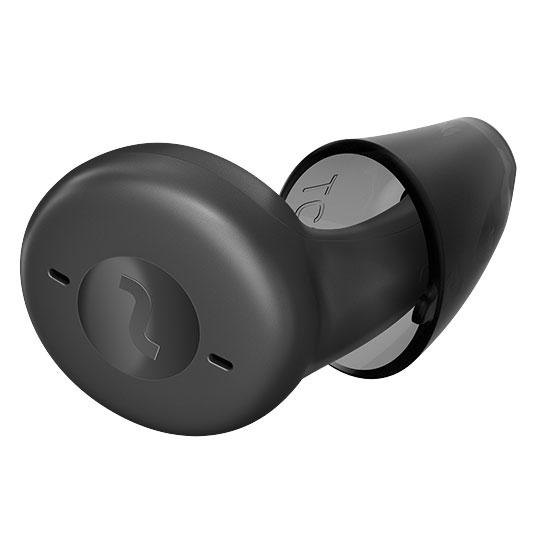
The Signia Active Pro IX offers the functionality of a high-performance hearing aid in a sleek, earbud-like design, making it ideal for those who value both modern aesthetics and advanced hearing enhancement. Lab tests showed strong performance in speech clarity and music streaming, though its instant-fit design has some limitations, such as reduced feedback handling and lack of custom-fit personalization.
Key Features
Expert Review


We'll just say it: It’s somewhat surprising that Signia Active Pro IX—an instant-fit in-the-ear () prescriptive hearing aid—came in first place on our list. We certainly wouldn't argue about the IX technology (which is excellent); however, the earbud-type form factor won't be appealing to everyone. In the end, the Signia Active Pro IX takes the top spot by offering flagship-level performance at $1,200 less than most competitors. Its earbud-style design sets it apart from traditional behind-the-ear () and receiver-in-canal () hearing aids, which sit behind the ear and use acoustic tubing or a thin wire connected to a speaker to transmit sound into the ear canal, respectively. Yet, it doesn't sacrifice sound quality—achieving a SoundGrade of A and ranking in the top 10% of all tested devices at the HearAdvisor lab.
The Active Pro IX has an IP68 rating for excellent dust and moisture resistance, an all-day rechargeable battery (up to 29 hours, even with 5 hours of streaming), and Signia's excellent app includes features like directional focus control and mask mode for clearer speech. Priced at $3,199, it's the clear value leader among premium prescription devices—if you’re okay with an earbud-style design and some of the own-voice (occlusion) issues that can come with this type of device. And, if you’re not, Signia’s Styletto Charge&Go IX and BCT IX also made our top-10 "best value" list.
Phonak Infinio (Ultra) Sphere — $4,398
Normalized Value: 4.73 | Sound: 4.6 | Build: 5.0 | Battery: 4.6 | App: 5.0
Key Rx stats: HearAdvisor ranks Sphere #1 for hearing in noise | Tied for #2 (with 3 others) for SoundScore | Ranks #2 for overall HearingTracker Score
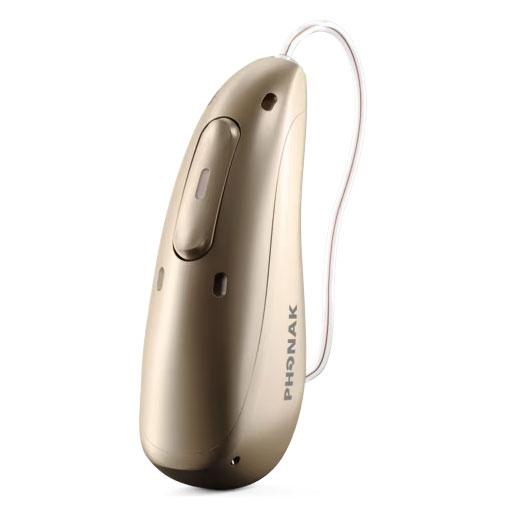
Phonak’s Infinio Sphere delivers genuinely standout speech clarity in loud, noisy places thanks to its DEEPSONIC “Sphere mode,” but you’ll trade some discretion and may wrestle with fit or Bluetooth pairing to get that top-tier performance.
Key Features
Expert Review

This was not a surprise, as many dispensing professionals view Phonak Infinio Sphere as the best hearing aid for hearing in noise. And with good reason: HearAdvisor found that Sphere's speech-in-noise performance measured 2.14 points above average—the highest among our top-5. Sphere and its recently updated version, Ultra Sphere, are Phonak's latest flagship receiver-in-canal () models, featuring the -powered Sphere mode for denoising and enhanced speech clarity. It achieved a SoundGrade of A and ranks in the top 5% for overall performance of all devices tested.
Build quality is exceptional with an IP68 rating and a robust portable charging case. Battery life reaches 18 hours per charge under normal use, although the older Sphere mode reduces this to around 5-7 hours. However, with the new "Ultra" firmware update, it's now improved to 10-11 hours (and reportedly 52 hours if you don't use the Sphere mode or stream Bluetooth audio). The MyPhonak app offers comprehensive control, including health and fitness tracking.
Oticon Intent — $4,898
Normalized Value: 4.59 | Sound: 4.7 | Build: 5.0 | Battery: 4.2
Key Rx stats: HearAdvisor ranks Intent #1 in SoundScore | #2 for hearing in noise | Tied for #3 (with 7 others) in overall HearingTracker Score
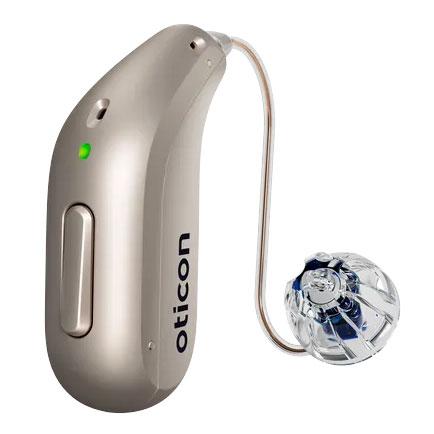
Oticon Intent is a top-tier flagship with excellent lab-verified speech performance, strong streaming and connectivity, and smart features like 4D sensors and fast charging, though its slightly bulkier fit, simpler button controls, and the still early LE Audio and Auracast rollout may be drawbacks for some users.
Key Features
Expert Review


Oticon Intent earns the highest Soundscore among our top 5 at 4.7, achieving a HearAdvisor SoundGrade of A and ranking in the top 5% of both prescription devices and all devices tested. It features Oticon's 4D Sensor technology that detects head movement and listening intent to automatically adjust settings.
With an IP68 rating, 20-hour battery life (an improvement over the previous-generation Real), and stable Bluetooth streaming, the Intent delivers on build and connectivity. The Companion app, while not as feature-rich as some competitors, includes Hearing Fitness tracking for users who want to monitor their progress. At $4,898, it's the priciest on our top-5 list, but the sound performance justifies the premium for many users.
Widex Moment — $4,598
Normalized Value: 4.59 | Sound: 4.3 | Build: 5.0 | Battery: 4.5
Key Rx stats: HearAdvisor ranks Moment Sheer and SmartRIC #3 in SoundScore | Tied for #3 (with 7 others) in overall HearingTracker Score | #6 and #12 respectively for hearing in noise
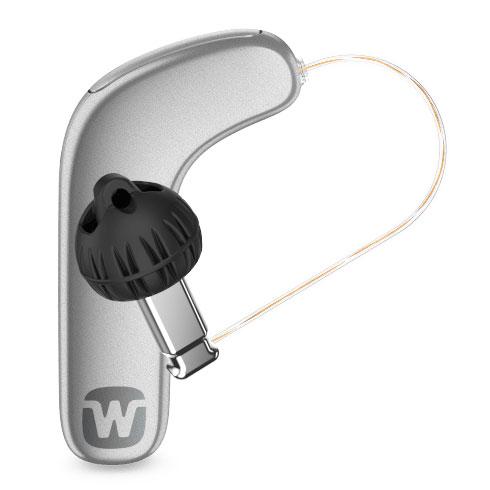
The Widex MOMENT is a flagship hearing aid line known for its superior sound quality and advanced AI-driven personalization features, including ZeroDelay™ and PureSound™ technologies that offer natural sound processing. Suitable for a wide range of hearing losses, these hearing aids are available in various styles, including rechargeable options, and are highly rated for music streaming and listening in noisy environments.
Ideal for
Key Features
Expert Review

Widex Moment stands out with its ZeroDelay technology, which virtually eliminates the processing delay that can make voices sound artificial. In the HearAdvisor lab, it achieved a SoundGrade of A and ranks in the top 20% of all devices tested.
Moment offers an impressive 29-hour rechargeable battery life—the longest among our top 5—with IP68 protection and a robust charging case. The Widex app is particularly notable for its multi-band equalizer and dedicated tinnitus features that can be customized with your hearing care provider. Released in 2022, it's the oldest model on this list but remains competitive thanks to Widex's focus on natural sound quality. Because of its "less is more" audio processing philosophy, Widex is often favored among audiophiles.
Signia Styletto C&G IX — $4,398
Normalized Value: 4.59 | Sound: 4.6 | Build: 5.0 | Battery: 4.0
Key Rx stats: HearAdvisor ranks Signia Styletto Charge&Go IX tied for #2 in SoundScore | Tied for #3 (with 7 others) in overall HearingTracker Score | #10 for hearing in noise
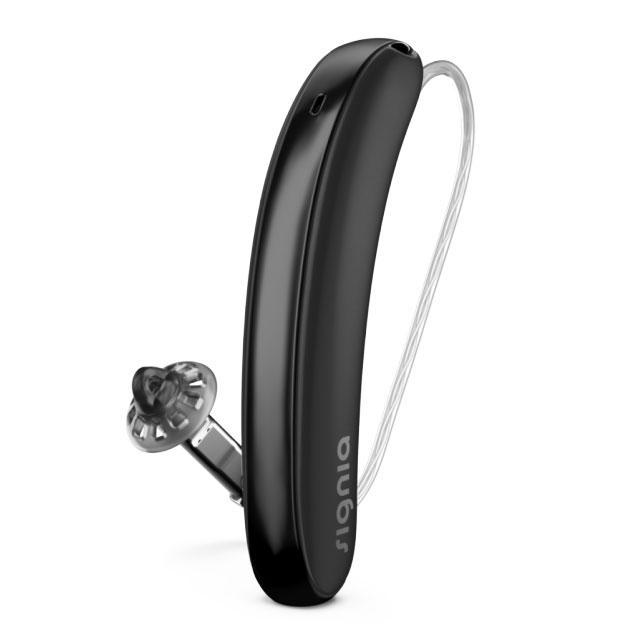
The Signia Styletto IX is a cutting-edge, slimline receiver-in-canal (RIC) hearing aid launched in March 2024, featuring the advanced "Integrated Xperience" platform. Priced between $4,000 and $6,000, it offers enhanced speech-in-noise processing, Bluetooth LE audio streaming, and a rechargeable battery with up to 20 hours of life, making it a stylish and high-performance option for those with mild-to-severe hearing loss.
Key Features
Expert Review


Signia Styletto C&G IX combines premium performance with a distinctive, slim, modern design that appeals to style-conscious users. It achieved a SoundGrade of A and ranks in the top 10% of all devices tested.
Like its sibling, the Active Pro IX, the Styletto features IP68 protection and Signia's excellent app with directional focus control and mask mode. Battery life reaches 20 hours per charge—sufficient for all-day use, though slightly behind some competitors. The ergonomic design makes it exceptionally comfortable for extended wear. At $4,398, it matches the Phonak Sphere Infinio on price while offering a unique aesthetic.
And, if you prefer a more conventional form factor, the Pure Charge&Go IX BCT came in a close #9 on our value comparisons. This means you really can't go wrong with the Signia IX family when shopping for a great value hearing aid at the prices listed here.
Our Bottom-Line Results
Our data points to Signia Active Pro IX delivering the best value among premium prescription hearing aids, offering flagship performance at a $1,200+ discount compared to traditional behind-the-ear models. For users who prefer a conventional form factor, the Phonak Sphere Infinio offers cutting-edge features and the best speech-in-noise performance you can buy, while the Oticon Intent leads on pure sound quality and is very close to Sphere for the title of "Best Hearing in Noise.” The Widex Moment remains a strong choice for those prioritizing natural sound and battery life, and the Signia Styletto appeals to users who want premium performance in a sleek package.
How Did We Pick the "Best Value" Hearing Aids?
To find the hearing aids with the best value, we used composite scores from HearAdvisor's SoundScores for acoustic performance and the HearingTracker Score for other factors like battery life, design quality, comfort, etc. We then divided this by the cost (per pair) of the hearing aids, and "normalized" the scoring, with the top device getting a "5" (perfect score). We excluded all and Costco hearing aids from this article because they are not typically found in private practices and are much lower in price. HearAdvisor has dedicated a page that includes a link to a detailed white paper on how we test hearing aids.

You can find and filter all the prescription and hearing aids we've tested (95 at the time of this publication) in the HearAdvisor SoundGrade Leaderboard.
:format(webp))
Some Caveats about the Rankings
In hearing aid research, the "value” of hearing aids has typically been defined as the actual hearing benefit (i.e., points of hearing aid improvement over the unaided condition) divided by the overall price. In audiology research, that means benefit is usually measured using a standardized validation test method. For example, a 2004 study used a version of the Hearing Handicap Inventory for the Elderly () survey to show that consumer benefit, satisfaction, and overall value are intrinsically linked.3 Another study in 2017 used the Profile of Hearing Aid Benefit (PHAB) and other tests to show that paying a higher price did not necessarily yield better objective outcomes, although price and the provider influenced how the user perceived value and satisfaction.4
In our rankings, we utilized data from HearAdvisor lab testing and HearingTracker scores—both of which are largely dependent on the device technology. Clearly, technology makes a big difference, but the role of the hearing care provider in real-life benefit largely determines the success of the fitting—and the satisfaction you'll get from it.


1) Why didn’t we include Costco in our rankings? Offering flagship hearing aid technology fitted by licensed professionals at prices starting at around $1,500, Costco’s hearing aids would dominate any top-10 list for value. For many people, Costco's hearing aids are a great value; however, particularly for people with more severe or complex hearing losses (or who just want more personalized care and services), there can be some significant downsides to getting a Costco hearing aid, which we address on our Costco hearing aid page.
2) What’s the REAL price you’re going to pay? Obviously, price plays a huge role in determining the rankings above, and, as with any medical device, costs will vary by provider. We’ve reported average prices for what dispensing professionals have reported charging for the respective hearing aids. But costs vary widely depending on the office type, region, your hearing loss, and the services required. If you’re paying less or more than what’s being reported above, the value you receive should move up or down accordingly.
3) Are best practices included in the hearing aid price? The HearAdvisor lab tests hearing aids using both an “Initial” first-fit (i.e., basic audiometric programming without adjustments) and Tuned (i.e., audiologist-optimized using best practices) condition. The latter can make all the difference in your ACTUAL hearing aid benefit—and is probably more important than any tech or performance ratings we can assess in a lab. In other words, the skill and care of your hearing care provider and their use of best practices are crucial factors in the actual value of any prescription hearing aid.
4) Lower-cost, lower-tech levels, and older models can give you great value! HearAdvisor lab testing focuses mostly on premium-level hearing aid models. This is so we can obtain an apples-to-apples assessment of how each hearing aid manufacturer’s “best technologies” stack up against one another. Most major hearing aid brands offer 2-4 technology levels, giving you more options at different price points. And while new models arrive every 1-2 years, the changes aren’t always game-changing—meaning older models are often the real bargains. That’s why HearingTracker is a proponent of mid-level and economy tiers, along with proven previous-gen picks like Widex Moment, Phonak Lumity, and Oticon More (all top-10 value picks, as shown above).
5) Small differences in HearAdvisor and HearingTracker scores probably aren’t crucial. Although we’ve ranked the best hearing aids above based on rigorous testing, in reality, that might mean one hearing aid that scored a few decimal points higher on a test might rank higher but have little or no noticeable difference in real-life performance. All the products mentioned in this article should be good choices in terms of value—IF they’re appropriate for your hearing loss, cost “in the ballpark” of the price listed, and are fitted by a good professional who observes best practices.
Hot Tip: Look at "New Older" Models and Lower-Tech Tiers for Value
As noted above, hearing aid manufacturers introduce new models every one or two years, and "older-generation” hearing aids—even if they lack some advanced features—generally drop significantly in price and can become great bargains. If you're seeking the very best value—but not necessarily the most advanced tech with all the bells and whistles—you might consider either Costco or an older and/or lower-tech model.
From our analysis, Widex Moment, Phonak Lumity, Oticon Real and More, Starkey Edge AI and Evolv AI, and ReSound Nexia and Omnia hearing aids may give you exceptional value if they cost less than the prices listed in the above table. Many private-practice offices will offer previous-gen hearing aids they might view as "Costco-killers": excellent, tried-and-true hearing aids priced reasonably close to Costco's $1,500 to $1,700 range.
Also, don't forget about hearing aids. If you take a hearing test and find that you have a typical, mild-to-moderate, gently sloping hearing loss and you're comfortable with smartphone apps and the idea of self-managing your hearing loss, you may want to look into a quality over-the-counter (OTC) hearing aid, which generally range from $700 to $1,500.
As noted above, the skill and use of best practices by the audiologist or hearing aid specialist will be a major deciding factor in the amount of real benefit and resulting value and satisfaction you receive. Any “final value calculations” should take this into account.
References
- Manchaiah V, Picou EM, Bailey A, Rodrigo H. Consumer ratings of the most desirable hearing aid attributes. J Amer Acad Audiol. 2021:32(8):537-546.
- Kochkin S, Beck DL, Christensen LA, et al. MarkeTrak VIII: The impact of the hearing healthcare professional on hearing aid user success. Hearing Review. 2010 Apr;17(4):12-34.
- Kochkin S. MarkeTrak VI: On the issue of value: Hearing aid benefit, price, satisfaction, and repurchase rates. Hearing Review. 2003;10(2):12-26.
- Humes LE, Rogers SE, Quigley TM, et al. The effects of service-delivery model and purchase price on hearing aid outcomes in older adults: A randomized double-blind placebo-controlled clinical trial. Am Jour Audiol. 2017 Mar 1;26(1):53-79.
)
Karl Strom
Editor in ChiefKarl Strom is the editor-in-chief of HearingTracker. He was a founding editor of The Hearing Review and has covered the hearing aid industry for over 30 years.
)
Abram Bailey, AuD
Founder and PresidentDr. Bailey is a leading expert on consumer technology in the audiology industry. He is a staunch advocate for patient-centered hearing care and audiological best practices, and welcomes any technological innovation that improves access to quality hearing outcomes. Dr. Bailey holds an Au.D. from Vanderbilt University Medical Center.