ShokzHear OpenHear: Non-Surgical Bone Conduction Hearing Aids
Who can use the wraparound hearing aid, which models stream calls, and how the fit compares with ADHEAR and Baha.
Our expert team selects and tests products rigorously. We may earn commissions if you buy through our links. Here's how we keep reviews independent.
Hearing aid glossary
Looking that up…
Terms are matched automatically. A definition may not fit every context.
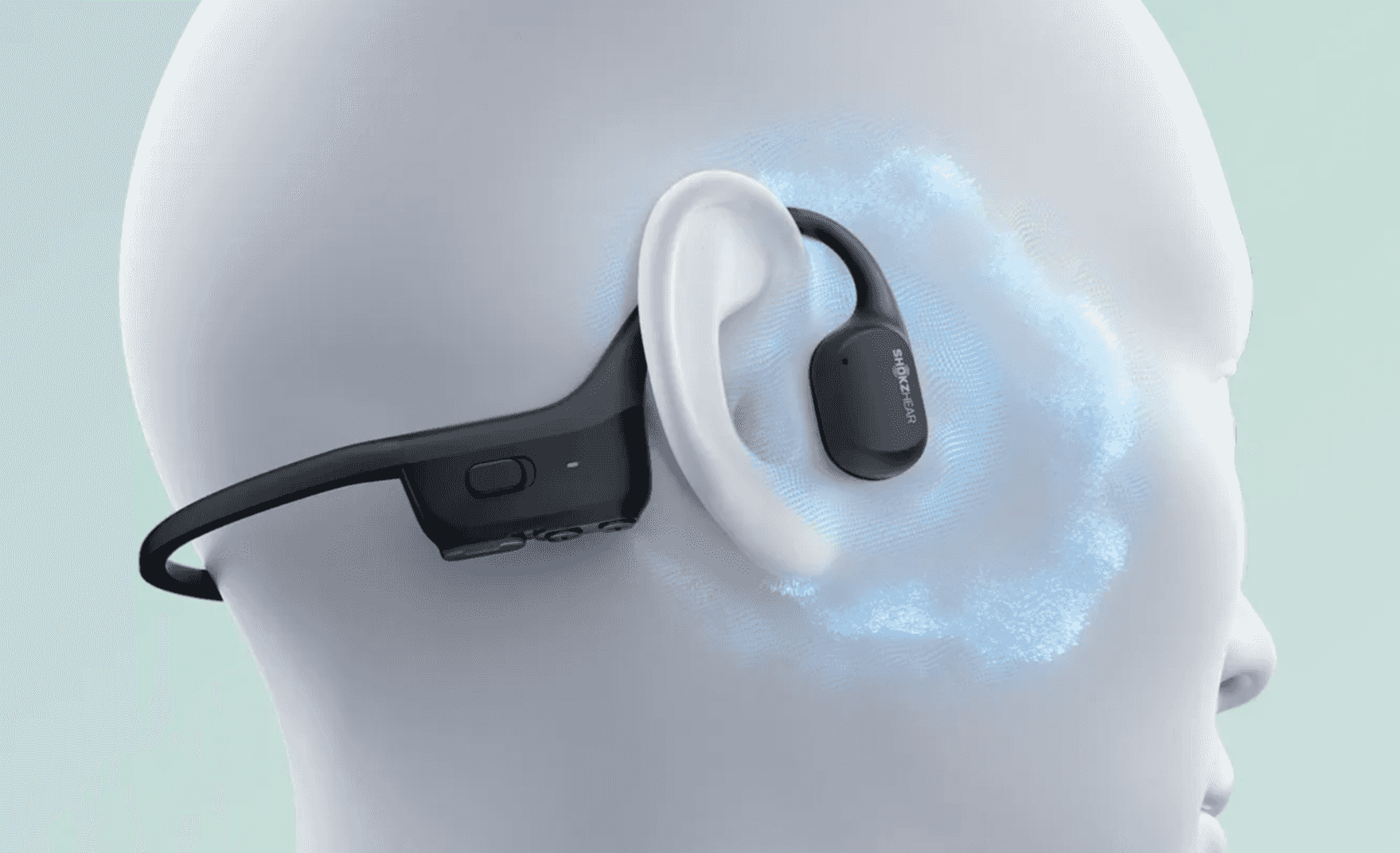
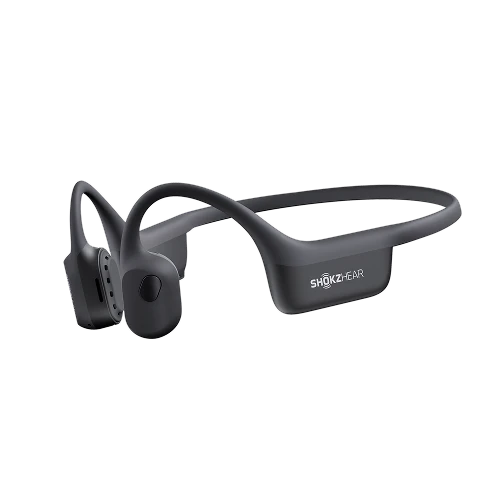
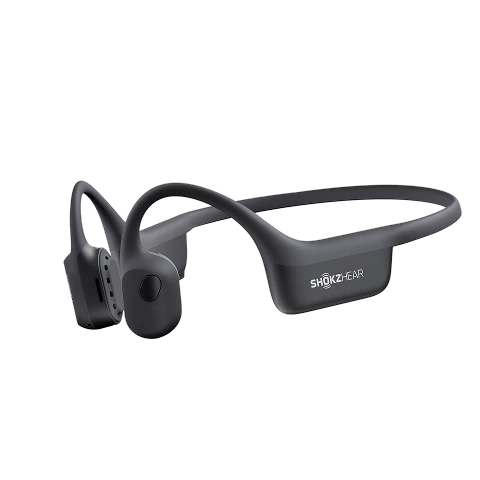
ShokzHear OpenHear is a prescription hearing aid that looks like a pair of Shokz headphones. Its four microphones pick up nearby voices. Two pads rest just in front of your ears and send the sound through bone, leaving your ear canals open. At your fitting, a hearing care professional can adjust the amplification for each ear.
Shokz, the headphone company affiliated with ShokzHear, announced a November 20, 2026 U.S. launch for the BM420 through participating hearing centers, clinics and hospitals. The BM420 also earned a CES 2027 Accessibility & Longevity honor, as Hearing Health & Technology Matters reported.
The U.S. announcement didn’t include a suggested retail price, but like other prescription hearing aids, the price will likely vary by clinic and region. You can use ShokzHear’s clinic locator to find a fitting, though at present, it seems that no clinics are shown on the U.S. map.
Who can use OpenHear?
On your , I’d look first at the bone-conduction thresholds. They show the softest sounds you can hear when vibrations reach your inner ear through bone. OpenHear sends sound along that same route. It can bypass a problem in the outer or middle ear, but your inner ear still needs to detect the vibrations.


The FDA clearance covers people older than six with conductive hearing loss or mixed loss, which combines a conductive problem with inner-ear hearing loss. It also covers adults 18 and older with sensorineural hearing loss. In both groups, the average bone-conduction threshold at 500, 1,000, 2,000 and 4,000 Hz must be 60 or better. Here, “better” means you can detect a softer sound. The thresholds measured through headphones may be considerably higher, particularly if you have conductive loss.
How OpenHear is fitted
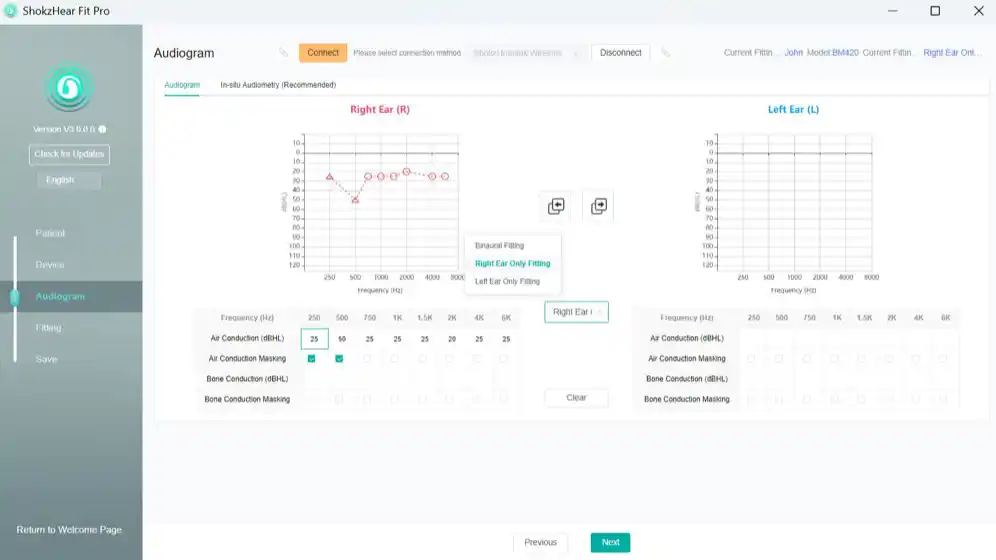
OpenHear is sold exclusively through local clinics and is not available online. At your hearing aid fitting, a hearing professional enters your into ShokzHear Fit Pro, setting the amplification for each side and checking your hearing thresholds with the band in place. While each ear can be controlled independently, keep in mind that bone conduction typically sends sounds to both ears, especially for lower tones.
How does it compare with ADHEAR and Baha?
The OpenHear band wraps behind your head and holds a vibrating pad against the skin in front of each ear. Both pads come off with the band, and no surgery is needed. If you wear glasses, bring them to the fitting so you can feel how the band and frames sit together.

MED-EL ADHEAR also avoids surgery. Its processor clicks onto a small adhesive adapter on the skin behind the ear. The adhesive holds it in place without the pressure of a band. For conductive hearing loss, ADHEAR requires better bone-conduction thresholds than OpenHear does.
Cochlear’s Baha Start lets children and adults wear the 7 sound processor without surgery. A flexible headband (SoundBand) or a curved support that wraps behind the head (SoundArc) holds the processor against the skin behind your ear. The vibrations pass through the skin to the bone. When you take off the band or arc, the whole system comes off.
With Baha Connect, a surgeon places a small titanium implant in the bone behind your ear. A short connector called an abutment extends through the skin. The same Baha 7 processor clips onto it and sends vibrations directly to the implant. You can take the processor off at night while the implant stays in place. The implanted option is -cleared for ages 5 and older. If you’re considering surgery, ask your audiologist about trying the Baha 7 on a band first.
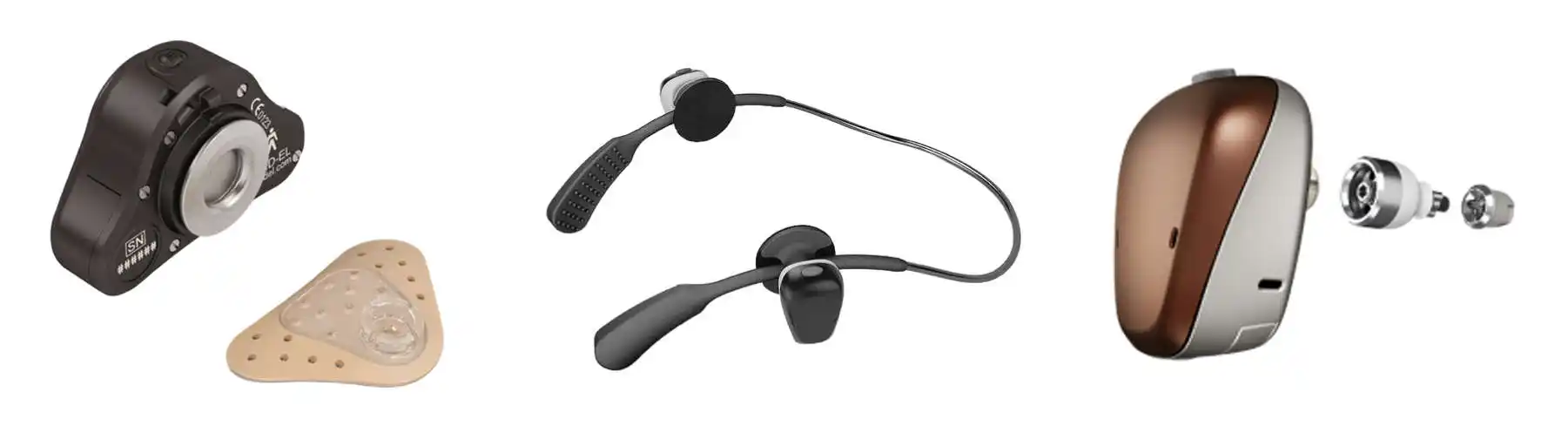
The fitting limits below let you compare the bone-conduction thresholds on your with the U.S. criteria for each device. The output figures come from bench tests with a loud sound playing into the microphones. How much vibration reaches your inner ear also depends on how the device attaches to your head.
U.S. fitting limits and measured output
Device | Average bone-conduction threshold | Output at 90 dB SPL input |
|---|---|---|
ShokzHear OpenHear BM420 | 60 dB HL or better at 0.5, 1, 2 and 4 kHz. Conductive or mixed loss over age 6, or sensorineural loss at age 18 or older. | 125 dB peak, 115 dB high-frequency average (BM420 series). |
MED-EL ADHEAR | 25 dB HL or better at 0.5, 1, 2 and 3 kHz. Conductive loss at any age. | |
Cochlear Baha Start (no surgery) | 55 dB HL or better at 0.5, 1, 2 and 3 kHz. Conductive or mixed loss at any age. | 121 dB peak, 113 dB high-frequency average. |
Cochlear Baha Connect (bone-anchored implant) | 55 dB HL or better at 0.5, 1, 2 and 3 kHz. Conductive or mixed loss at age 5 or older. | 121 dB peak, 113 dB high-frequency average. |
BM400, BM410 or BM420?
Both the BM410 and BM420 stream calls and music from a phone. Only the BM420 has Focus Front. A clinician can set up one program to pick up sound from all around you and a second to favor voices in front of you. You switch between them with a button. All three models have four hearing-aid microphones, according to ShokzHear’s comparison.


OpenHear model differences
Model | Hearing features | Bluetooth audio |
|---|---|---|
BM400 | One fitted program | No audio streaming |
BM410 | One fitted program, plus suppression of sudden sounds | Music and hands-free calls |
BM420 | Two switchable programs, including Focus Front, plus suppression of sudden sounds | Music and hands-free calls |
Shokz says in its radio certification filing that the BM400 has a Bluetooth radio, but its software disables audio playback. A resistor is the only electronic component Shokz identifies as different across the three models. The MN at the end of a model number means the Medium band, which is 18 mm shorter in circumference than the Large.
ShokzHear’s technical sheet lists a weight of 35 grams and an IP54 rating for splash resistance. The company measured 14 hours on one charge with hearing assistance running. That test doesn’t tell us how long the battery lasts on a day with calls and music. The user manual gives about 90 minutes for a full USB-C charge.
What do we know about hearing performance?
The clinical study described in Shokz’s submission to the U.S. Food and Drug Administration (FDA) enrolled 111 people, and 109 finished it. Researchers tested hearing without the aid and again with it on after about two weeks of use. They measured how softly participants could hear tones and recognize speech. A separate test counted how many one-syllable words they could recognize at a set volume in a quiet room.
Conductive or mixed hearing loss. With the aid on, participants could hear tones about 20 softer and recognize speech at levels about 18 dB lower, on average. Of the 61 people in this group, 59 could hear tones more than 10 dB softer, and 60 improved their word recognition score by at least 20%.

Sensorineural hearing loss. Participants could hear tones about 14 softer and recognize speech at levels about 9 dB lower, on average. Of the 50 people in this group, 46 could hear tones more than 10 dB softer, and 45 improved their word recognition score by at least 20%.
About three in four participants said they were satisfied with the sound quality. Shokz identified the BM100 as the model representing the family in its filing and gave no separate results for the BM420. The study leaves open how the BM420 compares with ADHEAR or and how well Focus Front picks out one voice in a noisy room.
Why there’s no HearingTracker score. The lab procedure we use for hearing aids measures sound delivered into the ear canal. OpenHear delivers vibration through contact with the head. We don’t currently have a test procedure for bone conduction hearing aids, so I don’t expect a lab score for OpenHear. This first look draws on the fitting guide, product specifications and regulatory filings. I founded HearingTracker and co-founded HearAdvisor, the separate lab we work with.
At a fitting, I’d ask to try the same conversation twice on the BM420, once in the all-around program and once in Focus Front. Have the person across from you keep talking while someone else speaks off to one side. With Focus Front on, is the person across from you easier to follow? Listen for how much you can still hear from the side, too.
Abram Bailey, AuD
Founder and PresidentDr. Bailey is a leading expert on consumer technology in the audiology industry. He is a staunch advocate for patient-centered hearing care and audiological best practices, and welcomes any technological innovation that improves access to quality hearing outcomes. Dr. Bailey holds an Au.D. from Vanderbilt University Medical Center.