Signia is one of the largest hearing aid brands in the world. Signia hearing aids are manufactured by WS Audiology (WSA), the same parent company that also manufactures Widex, Rexton (e.g., offered at Costco), and some Miracle Ear hearing aids. Additionally, the WSA group is home to HearUSA and HearCANADA, TruHearing, and hear.com—all places where you can buy Signia and other WSA hearing aids. Signia got its start from Siemens Hearing Instruments, a pioneer in hearing aid development. Siemens spun off many of its business units, including its hearing aid division, which was purchased by Sivantos in 2015 and merged into WSA in 2019.
Product Review
Signia Motion Charge&Go IX: A Power BTE with Few Compromises
)
)
Our expert team selects and tests products rigorously. We may earn commissions if you buy through our links. Here's how we keep reviews independent.
Hearing aid glossary
Looking that up…
Terms are matched automatically. A definition may not fit every context.
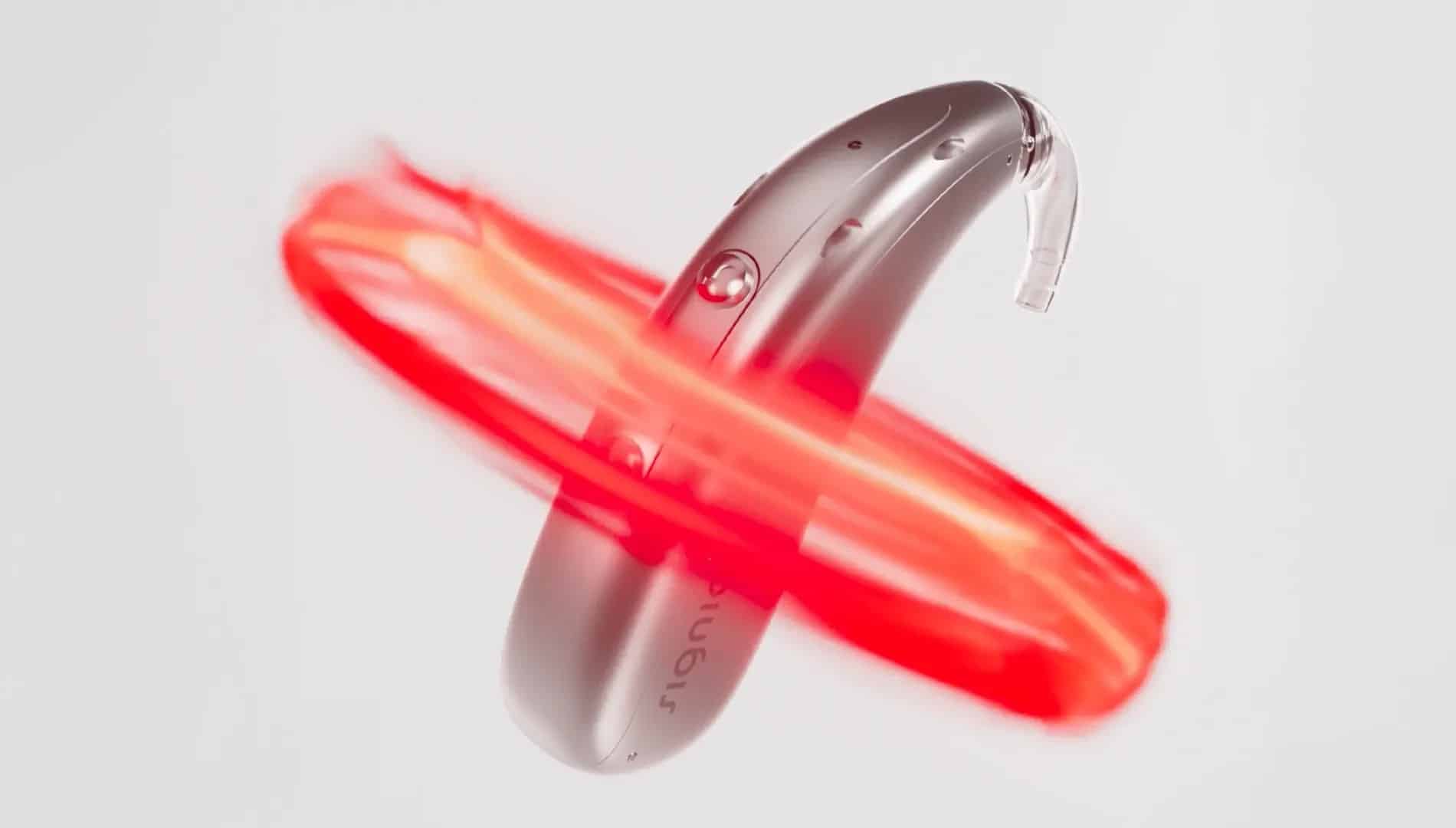
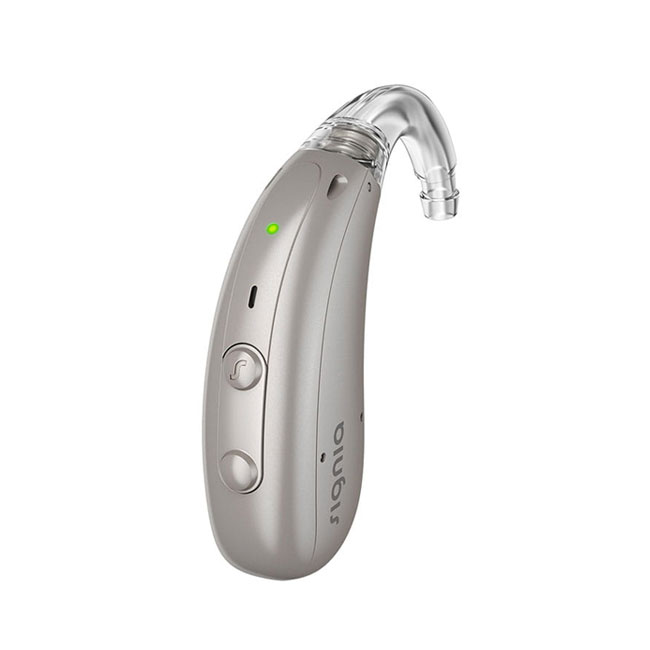
Signia’s Motion Charge&Go IX line is a family of rechargeable behind-the-ear () hearing aids built on the company’s Integrated Xperience (IX) platform. Launced in September 2025, the lineup is offered in three power classes—M, P, and SP—to span fittings from mild-moderate all the way to severe and profound losses.
Boiled down to its fundamentals, the “IX” platform is about doing a better job in dynamic, multi-talker situations (think group conversations where speakers change quickly) via Signia’s RealTime Conversation Enhancement approach. This aims to detect who is speaking, where they are, and then keep speech more consistently audible as your attention shifts and the listening environment changes (e.g., picture yourself talking with your friends in a restaurant lobby, then being seated at a table, all the while having a conversation).
In addition to the three different power models, Motion C&G IX comes in three performance levels (7IX, 5IX, and 3IX) and an array of colors to match your hair / skin tones or personal preference.
:format(webp))
Motion Charge&Go IX models
You can think of the Motion C&G IX family as three “power steps”:


M IX is the typical, compact, “moderate-power” class in the line and supports multiple coupling styles (earhook or thin-tube fittings).
P IX is the "power" class that increases available gain/output for listeners who need greater amplification and headroom, while still supporting thin-tube options for appropriate fittings.
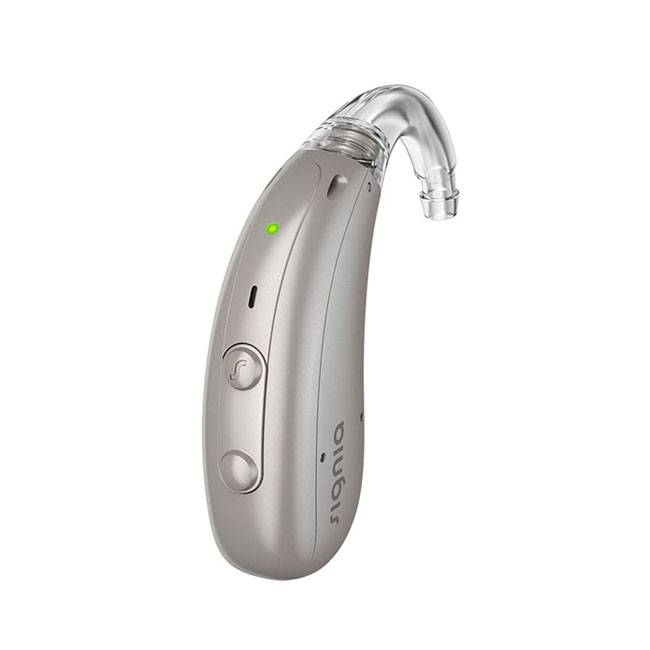
SP IX is the top-end “super-power” version—earhook-only—built for severe-to-profound losses where output and feedback stability matter most.
Models | Hearing Losses | Max Gain/Peak Output* | Coupling options | Battery life** | Streaming + Telecoil |
|---|---|---|---|---|---|
Motion C&G M IX | Mild to mod-severe | 60 dB / 133 dB SPL | Earhook or ThinTube | 35 / 30 hrs | |
Motion C&G P IX | Mod-severe to severe+ | 77 dB / 135 dB SPL | Earhook or ThinTube | 35 / 30 hrs | |
Motion C&G SP IX | Severe and Profound | 82 dB / 140 dB SPL | Earhook (SP class) | 73 / 65 hrs |
Specifications at a glance of the Signia Motion C&G IX line. *With earhook. **Battery life reported by Signia in two conditions: as "up to" with no audio streaming or 5 hours of streaming.
All three models are rechargeable, offer wireless audio streaming, can be controlled via an onboard rocker switch and app, and have a (t-coil) that connects with public induction loop systems. It is " ready,” meaning it requires a firmware update from the company before it will be fully usable with this Auracast broadcasts.
All models can accommodate a CROS (contralateral routing of signals) solution for people with single-sided deafness or unilateral hearing loss.
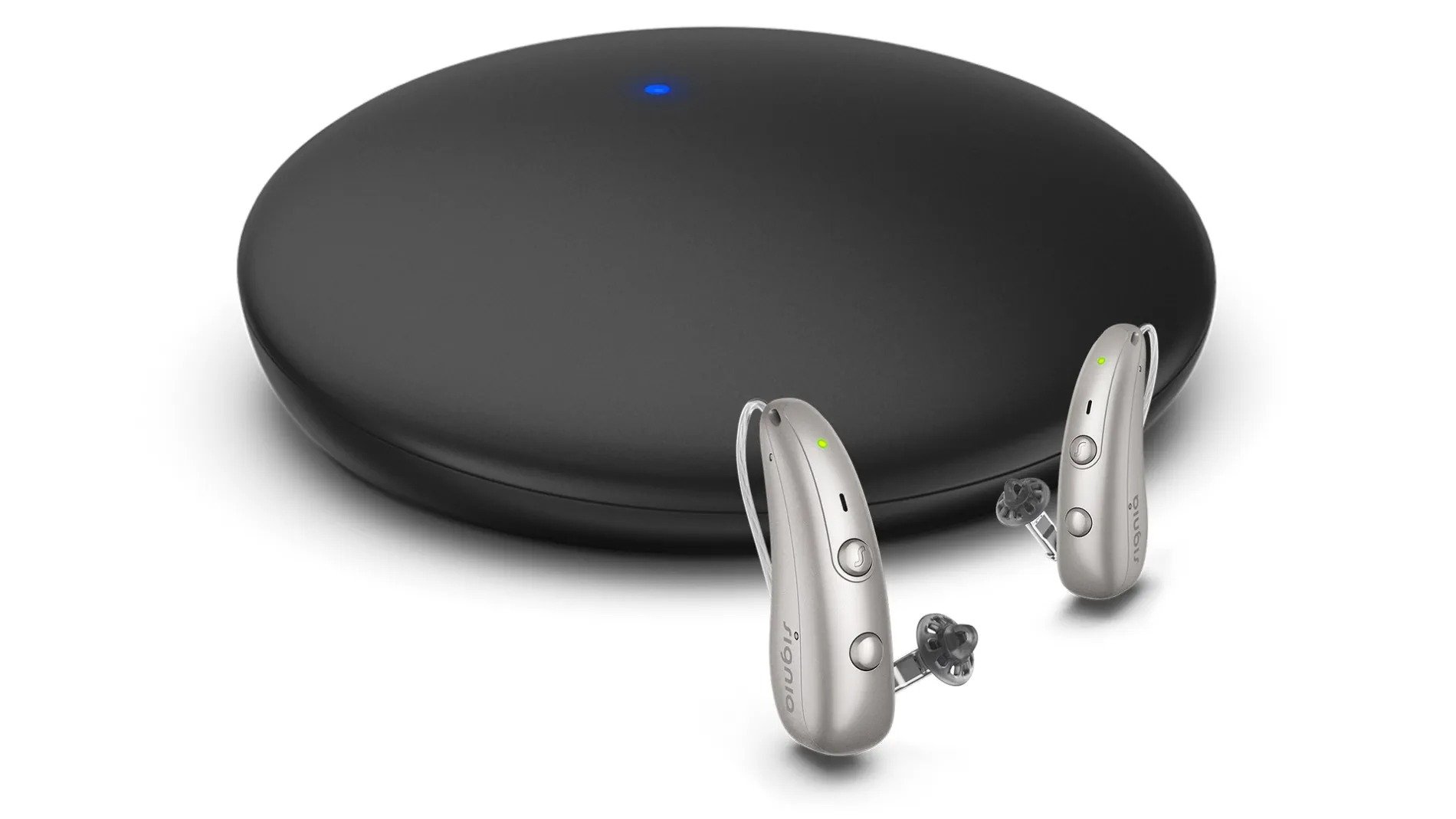
The two smaller Motion C&G M IX and P IX models have a battery life of up to 35 hours (or 30 hours with 5 hours of streaming), and in a pinch, a half-hour of charging gives them another 5 hours. The larger super-power (SP) model provides a battery life of up to 73 hours (or 65 hours with 5 hours of streaming; a half-hour quick charge gives them up to 8 hours of use. Charger options include a Desktop Charger, a Dry&Clean Charger (dries and sanitizes) for the P and SP (not M) models, and a Multi Charger compatible with all three models.
In the U.S., the Signia C&G Motion line is offered in three tech tiers: 7IX (Premium), 5IX (Advanced), and 3IX (Standard). In general, as you move up or down the tiers, the features and price of the aids increase or decrease. The 7IX and 5IX generally provide more processing resources and “stronger” versions of certain conversation, comfort, and personalization features, as well as a greater number of programming channels.
Below is a table that summarizes the key features in each of the three technology levels, and we'll explain each feature in more detail below:
Motion C&G IX model/feature | Motion 7IX | Motion 5IX | Motion 3IX |
|---|---|---|---|
RealTime Conversation Enhancement* | |||
Number of Dynamic Focus Streams | 3 | 1 | |
Conversation Dynamics Analyzer | |||
Conversation Booster* | |||
Augmented Focus | |||
Binaural/Adaptive/Auto Directionality | |||
Speech Focus/Spatial Speech Focus* | |||
Own Voice Processing (OVP 2.0) | |||
Comfort listening systems (echo, impact noises, wind noise, feedback)* | |||
Extended bandwidth (up to 12 kHz) |
Key distinguishing processing features for Signia C&G Motion IX tech levels. *Feature increases in strength or options in higher levels.
Key features of Motion C&G IX tech tiers explained
We’ll just say it: There is a lot of complexity in Signia IX processing and how it’s layered into each tech tier of the Motion C&G IX. From the table above, we think it's fair to say that the most important features are available at all Motion IX levels. As long as you have a good hearing care professional who uses real-ear measurements and best practices, you should be happy with a level IX3 device.
However, you will be missing out on some advanced features that are reserved for tech levels IX5 and IX7 (or in varying degrees)—particularly those useful for hearing in noise. Here is a brief explanation of each feature so you can make a more educated decision based on what's important to you.
- RealTime Conversation Enhancement helps wearers stay engaged in noisy group conversations by tracking conversation partners and enhancing their speech as the interaction changes. (7IX/5IX/3IX, but stronger in higher levels.)
- Conversation Dynamics Analyzer factors into the processing things like conversation turn-taking, locations of pure noise without speech, and background noise levels. (7IX only.)
- Conversation Booster enhances individual speakers’ voices. (All IX levels, but progressively stronger in 5IX and 7IX.)
- Augmented Focus is designed to separate and “focus” sound (typically speech) from surrounding sound to create stronger contrast while still preserving environmental awareness. (All IX levels.)
- Dynamic Focus Streams (speech streams tracked independently) are provide for areas of “focus” with “surrounding” streams that are meant to keep speech clearer without making the world feel unnaturally muted. (7IX features three streams and 5IX one stream.)
- Directionality is multifaceted in Motion C&G IX, including a set of features intended to improve signal-to-noise ratio () in challenging places: directionality, plus adaptive and automatic directionality that can shape microphone patterns in multiple channels as listening scenes change.(All IX levels.)
- Speech Focus (IX7 & IX5) and Spatial Speech Focus (IX7 only) variably enhance the directionality by steering the directional mics toward the dominant speech source.
- Own Voice Processing (OVP) 2.0 uses real-time recognition of the wearer’s voice to keep it sounding more natural and comfortable. (All IX levels.)
- Comfort listening systems such as echo/reverb management (IX7), smoothing of annoying impact noises (all IX levels), and wind-noise reduction (all IX levels). These don’t replace a good fitting, but they often matter for day-to-day wearability—especially for power fittings where feedback control and comfort can be more challenging.
- Extended bandwidth to 12 kHz available bandwidth for enhanced processing of high-frequency speech and environmental sounds, although most speech and music signals are below 8 kHz. (IX7 only.)
:format(webp))
Wireless Connectivity with Motion C&G IX
Motion Charge&Go IX supports direct audio streaming to Apple iPhone/iPad via Made for iPhone () and to compatible Android devices using or Bluetooth , depending on the phone.
Hands-free calling is supported when connected via MFi or LE Audio—meaning most iPhones and some newer Android phones—with the caller's voice streamed to the hearing aids and the hearing aid microphones picking up the wearer’s voice for the outgoing call. Call handling can also be done via buttons on the hearing aids (answer/end/ignore).
Because compatibility varies widely by brand/model (and by OS/firmware), it’s definitely worth checking Signia’s device Compatibility page and asking your hearing care provider before you buy.
For public venues that use , Motion Charge&Go IX includes an integrated . And if you want streaming or remote-mic capability from devices that don’t support hearing aid streaming standards, Signia supports accessories like StreamLine Mic and TV Sound (details below). As noted above, these hearing aids are also "-ready,” pending a firmware update.
The versatile Signia App
The Signia app (iOS and Android) is the main day-to-day control center for Motion Charge&Go IX. Beyond basic setup and pairing, it functions as a full-featured remote control: you can change programs, adjust overall volume, fine-tune left/right balance, and manage the level of streamed audio. It also surfaces useful “at-a-glance” information—battery status and connection state—so you can troubleshoot quickly without guessing.
:format(webp))
One of the most-used tools is Directional Hearing, which lets you actively steer where the hearing aids are “listening” when you want more control than the automatic system provides (e.g., restaurants, meetings, or riding in a car). In practical terms, this is the app feature that often convinces even less tech-savvy users to keep the app installed, because it unlocks control that isn’t available from the on-device rocker switch alone.
Built into the app is Signia Assistant, an -powered “smart guide” that uses a simple chat interface to help users make in-the-moment sound adjustments. It was built to learn your preferences over time and recommend changes that feel personalized, particularly in challenging environments. Importantly, the adjustments made through Signia Assistant typically apply to your everyday (“universal”) program and remain in place until you revise them, reset them, or your provider updates settings during a fitting session.
The app also supports TeleCare/Remote Assistance features, which can extend professional care beyond in-office appointments (assuming your clinic offers remote services). This can include virtual appointments (often with video) where the provider can make real-time adjustments and push changes directly to your hearing aids.
The platform includes multiple tinnitus-relief sounds, including ocean-wave style signals and static therapy signals, with different channel/preset counts by tech level. Signia also features an industry-unique notch-based approach and a tinnitus management workflow (availability can depend on model/level and fitting considerations).
Finally, the My WellBeing feature is Signia’s wellness dashboard in the app, using the hearing aids’ built-in motion sensors to track things like steps/activity level, wear time, and an estimate of social interaction (conversation time).
Accessories compatible with Motion Charge&Go IX
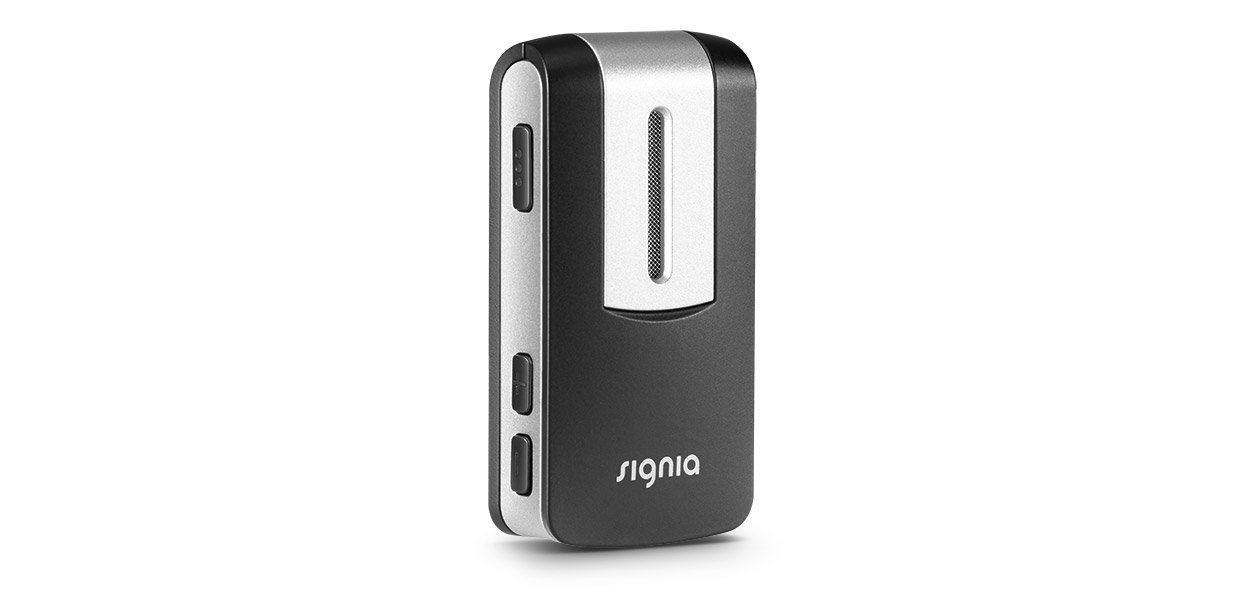
There are several handy accessories for the Motion C&G IX, including the StreamLine Mic, TV Sound streamer, and the miniPocket iremote control option. For more information, please see the "Accessories" section below.
What we like about Signia Motion C&G IX
- Exceptional power option (including a true super-power rechargeable ) for people with moderately severe to profound hearing loss, plus gives you a range of coupling options (not just earhooks).
- Direct Bluetooth streaming for most iOS and many newer Android (phone-dependent), plus integrated for looped venues.
- RealTime Conversation Enhancement and speech-in-noise system is aimed at real-world conversation in noise, with diverse “conversation management” components.
- Long battery life for power aids: up to 35 or 73 hours (depending on model) with half-hour quick charge options that can give you an extra 6 or 8 hours of use in a pinch.
- Robust build—IP68-rated for maximum durability against moisture and dust/dirt.
- Strong accessory ecosystem (TV streaming, remote mic, remote control, multiple charger styles).
Limitations
- Lacks a true portable charger/carrying case, a feature of many other rechargeable hearing aids; considering the long battery life, it's not a deal-breaker, but it would be nice to have.
- Feature availability and “strength” can vary by technology level (7IX vs 5IX vs 3IX), and some details vary by model class.
Final Verdict
Most HearingTracker reviews feature data from the independent HearAdvisor lab. However, the lab is currently focused on and set up to compare hearing aids designed for mild-to-moderate hearing loss, not power aids for severe-to-profound hearing loss. Therefore, we don't have acoustic data or sound samples to compare for this class of hearing aid.
What we can say is Signia Motion Charge&Go IX looks, on paper, like a thoughtfully tiered power family from a world-leader in hearing aid technology. It appears to be a good option for people with more severe hearing losses who want modern rechargeability, direct streaming options, and a without stepping down in core platform features. Additionally, Signia has a long-standing reputation in power fittings—and the published specs (gain/output, battery life, connectivity, etc.) suggest that the Motion C&G IX line should be a serious contender for anyone considering a hearing aid in this category.
Alternatives to Signia Motion C&G IX
What other choices might you consider when shopping around for a power hearing aid? Here are three possibilities:
ReSound Enzo IA power BTE was launched one month before Motion C&G IX in August 2025, and is reportedly the smallest rechargeable super-power BTE hearing aid. It combines cutting-edge -driven speech-in-noise processing and beamforming tech, next-gen connectivity, and up to 28 hours of battery life in a surprisingly sleek, traditional behind-the-ear (BTE) form factor. Like the Motion C&G IX, it has lots of control options via ReSound’s exceptional SmartSound 3D app, includes a and Bluetooth with (ready now), and beamforming microphones.
Phonak Naída Lumity is the latest family of power behind-the-ear () hearing aids from Phonak, introduced in August 2023. Naída L runs on Phonak’s previous-generation Lumity technology platform, which has since been superseded by Infinio for most non-Naída models. Naída L-PR is a rechargeable BTE, and Naída L-UP is an ultra-power device with a disposable size 675 battery designed particularly for people with severe to profound hearing loss. The rechargeable Naída L-PR comes with a motion sensor and tap controls, while the battery-powered Naída L-UP model does not; however, the L-UP comes with a telecoil.
Starkey Evolv AI Power Plus, introduced in 2021, remains a good choice for combining substantial power with superior -driven, real-time noise reduction, offering both rechargeable and disposable battery models. Like some of the brands noted as alternatives, Starkey’s Omega AI and Edge AI hearing aids also “push the boundaries” in fitting into the severe+ hearing loss category.
Oticon Xceed, launched in August 2019, is powered by the company’s Velox S platform with BrainHearing technology, which powered its successful Opn S hearing aid (Oticon Intent is the current flagship). Although older tech than the above models, Oticon has historically been known for its advanced power BTEs, and Xceed remains one of the world’s most powerful hearing aids, with 146 and 87 full-on gain.
Karl Strom
Editor in ChiefKarl Strom is the editor-in-chief of HearingTracker. He was a founding editor of The Hearing Review and has covered the hearing aid industry for over 30 years.
Abram Bailey, AuD
Founder and PresidentDr. Bailey is a leading expert on consumer technology in the audiology industry. He is a staunch advocate for patient-centered hearing care and audiological best practices, and welcomes any technological innovation that improves access to quality hearing outcomes. Dr. Bailey holds an Au.D. from Vanderbilt University Medical Center.