Rexton Hearing Aids: Models and Pricing at Costco, HearUSA, and Other Retailers
Costco carries three Rexton Reach styles. Here’s how they differ and where to find Rexton’s custom and higher-power hearing aids.
Hearing aid glossary
Looking that up…
Terms are matched automatically. A definition may not fit every context.
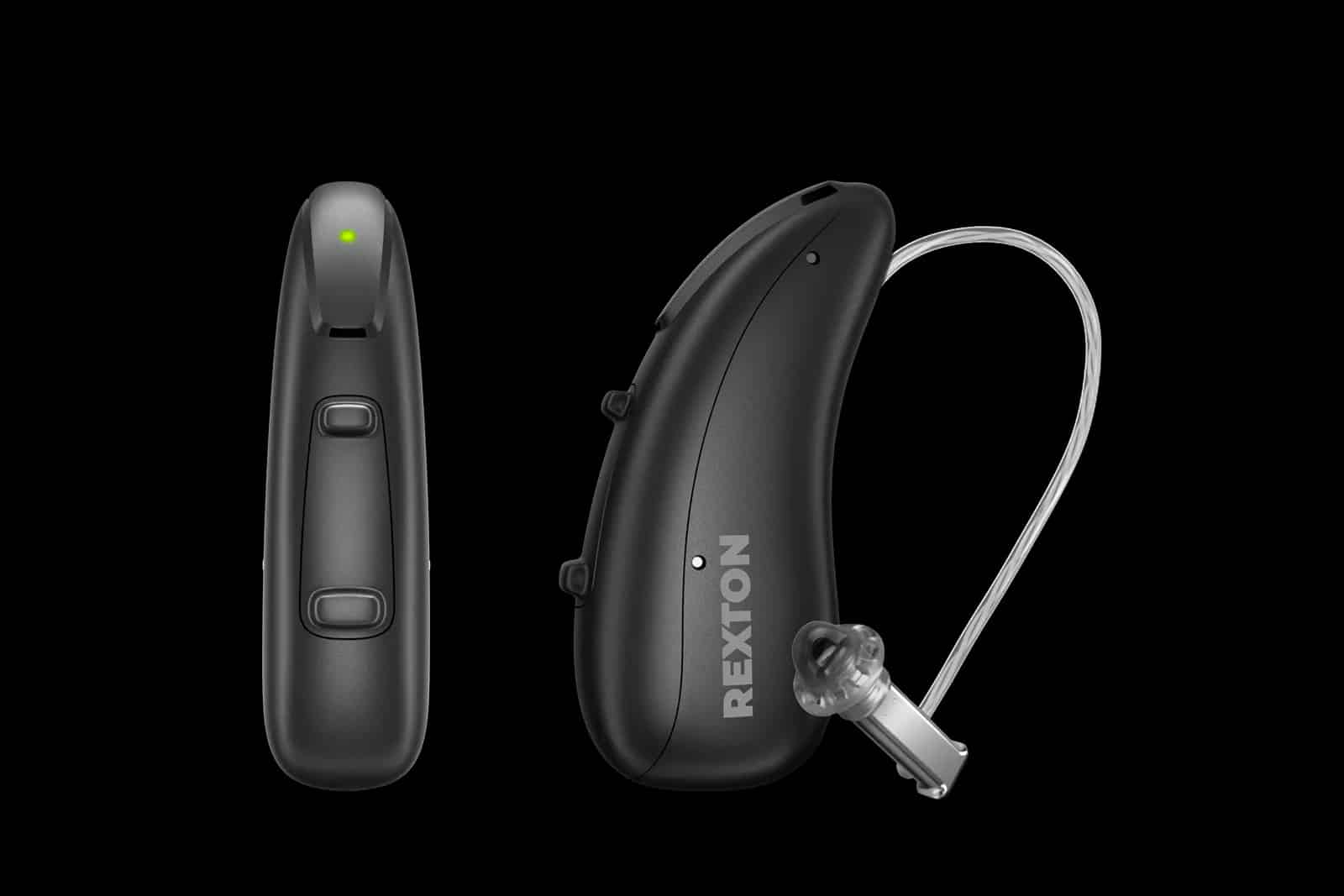
WS Audiology, the company behind Signia and Widex, makes Rexton hearing aids. At Costco, a pair of Reach R Plus hearing aids starts at $1,599.99, including a travel charger. If you prefer a hearing aid that sits entirely in your ear, or you need a sturdier behind-the-ear style, Rexton has options for both.
The selection changes with the retailer. HearUSA also offers custom-fit and replaceable-battery options, so it’s worth asking for the full model name when comparing quotes.
Which Rexton hearing aids does Costco carry?
Rexton’s Costco lineup includes the Reach R Plus, Reach B-Li Rugged, and Reach inoX- Li. All three have rechargeable batteries. Two can stream phone calls. The smallest trades streaming for a fit entirely inside your ear.


Model | How it fits | Phone audio | Battery per charge |
|---|---|---|---|
Reach R Plus | Behind the ear, with a speaker in the canal | Bluetooth Classic for calls and music | Up to 54 hours, or 36 with 5 hours of streaming |
Reach B-Li Rugged | Behind the ear, with a tube to the ear | Streaming from compatible iPhones and Android phones | Up to 36 hours, or 32 with 5 hours of streaming |
Reach inoX-CIC Li | Completely in the ear canal | App controls only. No streamed audio or calls. | Up to 28 hours |
Reach R Plus
The R Plus (pictured above) sits behind your ear. A thin wire connects the part behind your ear to a small speaker, called a receiver, in your ear canal. That’s where the term receiver-in-canal () comes from. It uses Bluetooth Classic, the same kind of connection many wireless headsets use. You can take calls hands-free on a compatible phone or join a meeting on your computer.

For a conversation around a table, Rexton’s Multi-Voice Focus follows changes in who’s speaking and where their voice is coming from. There’s also a telecoil that picks up a venue’s sound system directly in places with a .
Costco’s advertised price covers two R Plus hearing aids and a travel charger that holds three additional charges. Prices vary by state. Costco lists the price for this particular package, so ask your local hearing aid center for a quote on the Rugged or the inoX.
You may see the R Plus called Reach R-Li T on paperwork. The “BC” identifies the Bluetooth Classic version. Our Reach R Plus guide covers pairing and what wearers have reported about calls, streaming, and conversation in noise.
Reach B-Li Rugged
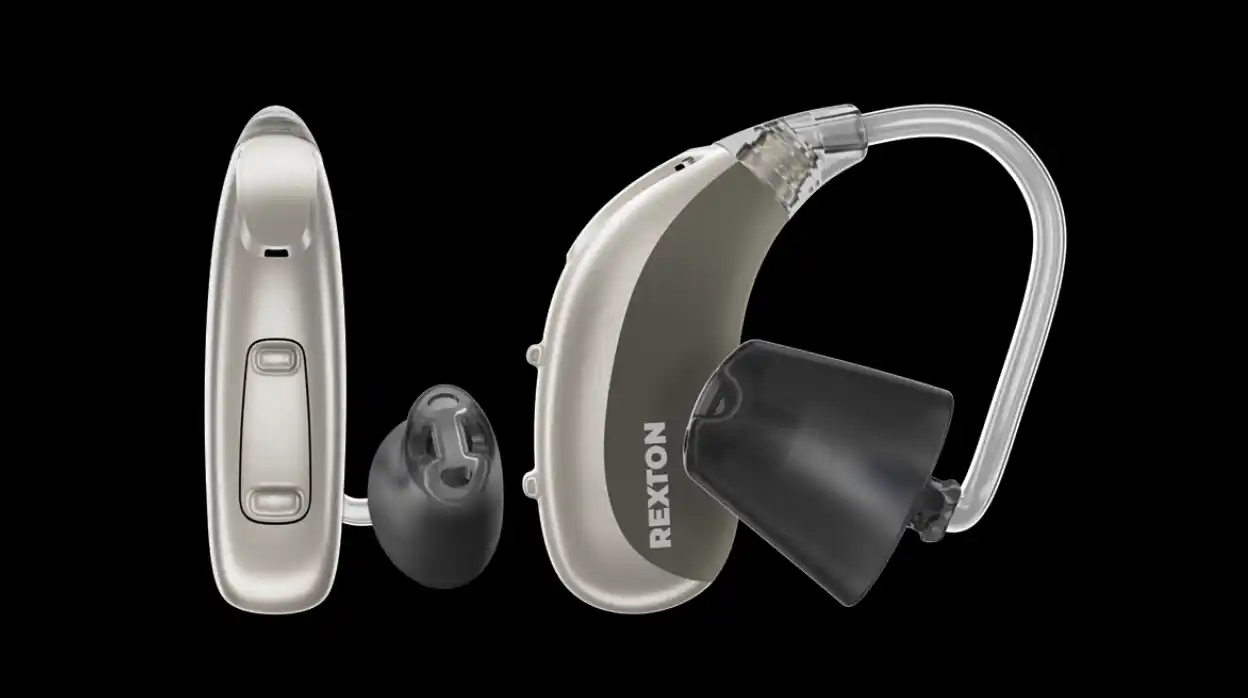
If sweat, rain, or handling small controls is a concern, look at the Rugged. Its speaker sits in a reinforced case behind your ear and sends sound through a tube. A rocker switch on the case lets you adjust the hearing aids by touch. Like the R Plus, the Rugged has Multi-Voice Focus and a .
The Rugged streams calls and music from compatible iPhones and Android phones. Hands-free calling depends on the phone. With an Android phone that uses the older hearing aid streaming standard (), you hear the caller through the aids and speak into your phone’s microphone. The Rugged comes with a tabletop charger.
Reach inoX-CIC Li
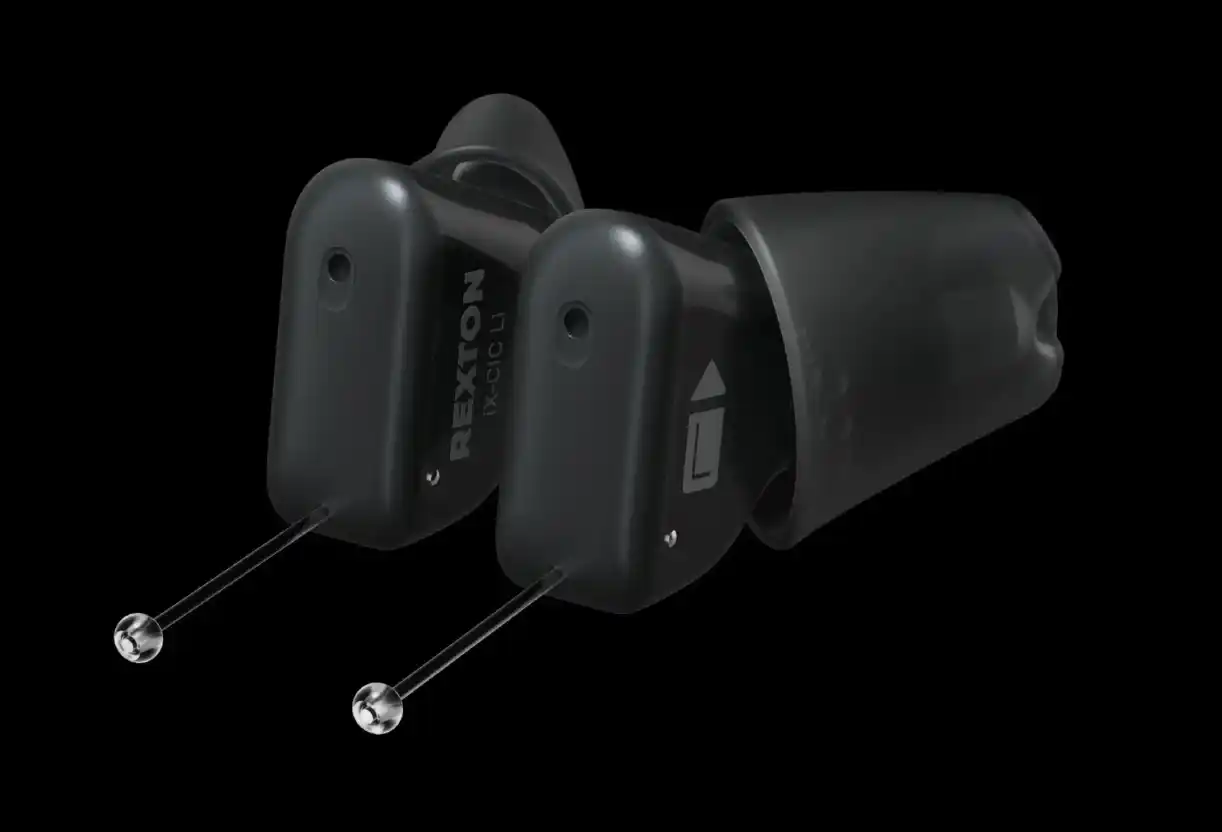
The inoX fits completely in the canal (). Like the Signia Silk IX, it uses soft sleeves that come in several sizes. Your fitter can try different sleeves at the appointment, without waiting for a shell to be made from an impression of your ear.


You can adjust the volume and switch listening programs from the Rexton app. The inoX doesn’t stream phone calls or music. If you have trouble handling small objects, try taking the aids out of your ears and placing them in the charging case before you decide.
Does Costco still sell the original Reach R-Li T?
The Reach R Plus took the place of the original Reach R-Li T as Costco’s featured . Rexton now keeps the earlier R-Li T, BiCore, and M-Core manuals in its Costco legacy support library. If you already wear the original, our review of the Reach R-Li T80 covers that model’s listening tests and phone compatibility. HearAdvisor hasn’t lab-tested the R Plus.

Which Rexton models can you get outside Costco?
Rexton’s wider US range includes custom hearing aids and models for people who need more amplification. HearUSA quotes $1,000 to $5,000 for Rexton hearing aids, but its pricing FAQ doesn’t specify whether that’s for one aid or a pair. Ask the clinic for a pair price and the exact technology level.

Rexton previously told HearingTracker that HearUSA “is mostly focused on the Essential technology levels with the Rexton brand.” HearUSA’s price-match program applies to eligible offers. When comparing quotes, check whether both include the same follow-up care.
Reach Custom and higher-power Reach models
If the stock sleeves on an instant-fit hearing aid don’t sit comfortably in your ear, a Reach Custom -Li gives you another way to wear a small rechargeable aid. Its shell is made to fit your ear canal. Rexton rates it for up to 35 hours per charge. HearUSA features this model in its guide to small ear canals. Rexton’s US range also includes custom styles with replaceable batteries, including larger in-the-canal and in-the-ear models with a .
For people who need more power, the Reach B-Li P and Reach B-Li HP are rechargeable behind-the-ear aids. Rexton rates the P for up to 35 hours and the HP for up to 73 hours, each including five hours of streaming. Your helps your fitter decide which has enough power for you. Ask which one the clinic can order. WS Audiology introduced the two power models and the Custom CIC-Li in April 2026.
BiCore models at HearUSA
HearUSA still offers BiCore demos. The rechargeable R-Li and R-Li T look similar. The T model adds a and can run up to 39 hours per charge, compared with up to 28 for the R-Li, according to Rexton’s BiCore specifications. When we asked why, Rexton told us the two models use different power management circuits. BiCore processes speech and surrounding sounds separately so you can listen to a conversation while staying aware of what’s happening nearby.
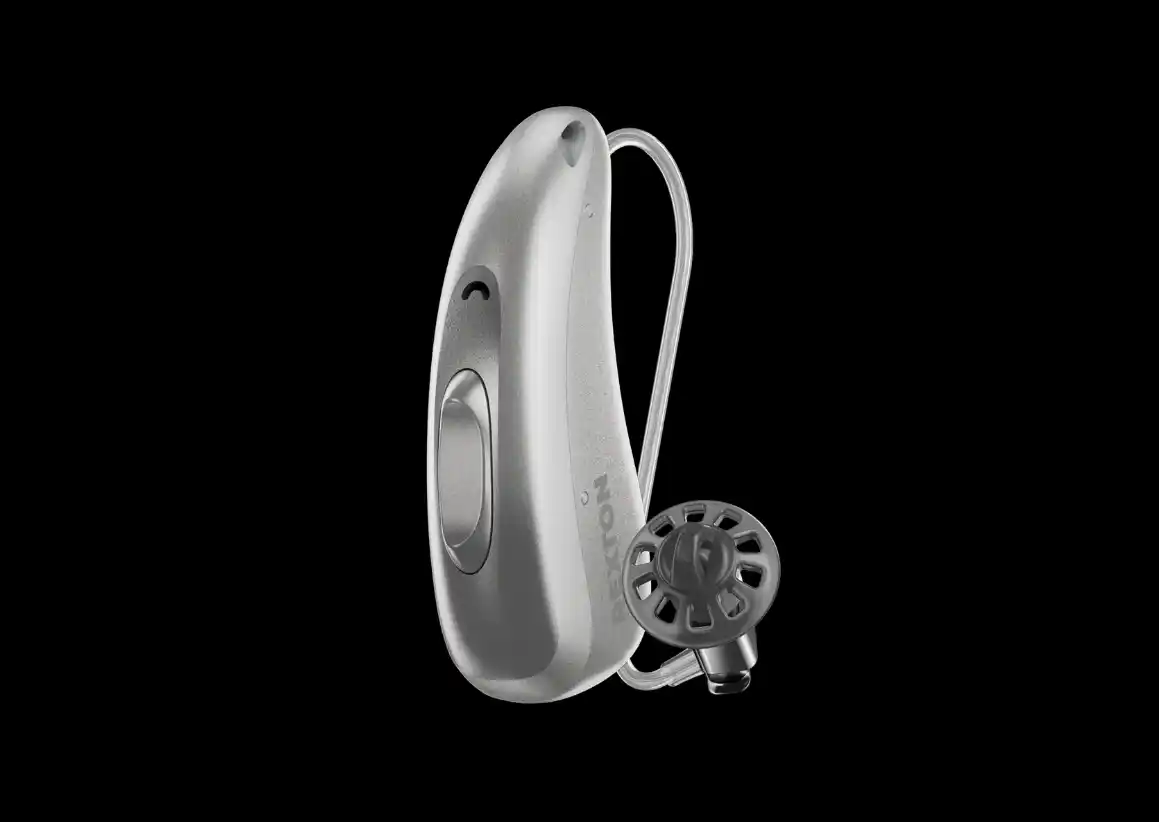
If you’d rather carry spare batteries than a charger, the BiCore R 312 uses a replaceable size 312 battery. A matching CROS transmitter can send sound from the side where you hear poorly to the ear that hears better.
HearUSA also lists the BiCore Slim , a slender behind-the-ear rechargeable rated for up to 20 hours, and the BiCore Custom Li, an individually fitted rechargeable rated for up to 24 hours.


The earlier BiCore B-Li M Rugged still appears outside Costco. For example, Minnesota’s 2026 hearing aid contract lists both the BiCore and Reach versions of the Rugged, as well as the original Reach R-Li T in technology levels 40 and 60. If you’re comparing a provider’s quote with Costco’s, check the family name as well as the word “Rugged.”
MotionCore models at HearUSA
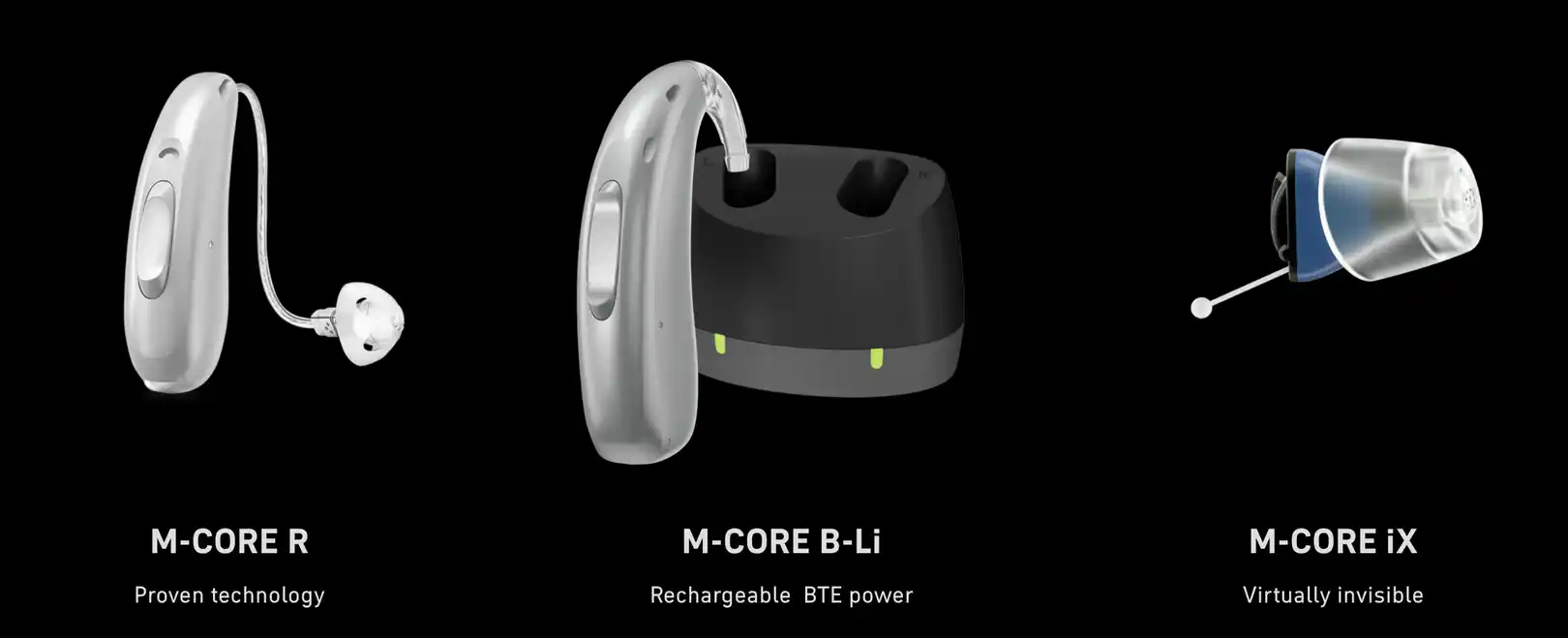
HearUSA also invites shoppers to try four MotionCore (M-Core) styles. The M-Core SR is a slim behind-the-ear model, the M-Core R is rechargeable, and the M-Core B-Li is available in higher-power configurations. HearUSA quotes up to 61 hours per charge for the high-power B-Li. If you’re considering a small in-ear aid, the M-Core iX uses a replaceable size 10 battery, while Costco’s Reach inoX recharges in its case. Both let you change settings with the app. For streaming calls or music, look at the R Plus or a compatible BiCore .
The Rexton hearing aid app
The Rexton app lets you change volume and switch between programs your hearing care professional has set up. What else you can do depends on the model. For example, Reach R Plus and Reach B-Li Rugged support Rexton Assist, which asks questions about what you’re hearing and uses your answers to suggest sound adjustments. The inoX offers app controls even though it can’t stream audio.
Controls Rexton Reach hearing aids: volume, programs, tone, microphone direction and tinnitus sounds.
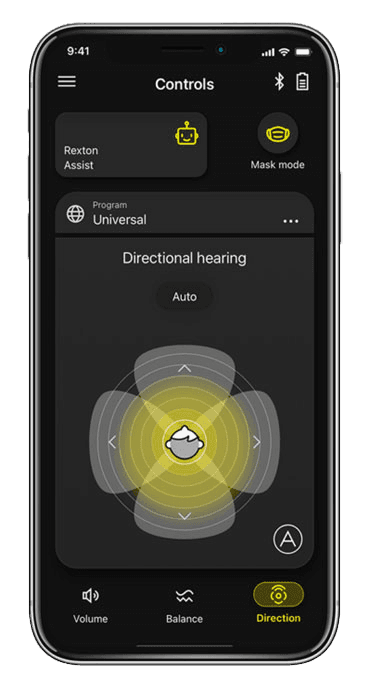
- Adjust the volume
- Switch listening programs
- Get remote support

You can download the app from Google Play or the Apple App Store. Before a fitting, check Rexton’s device compatibility guide for your phone and hearing aid. Bring your phone along and try an incoming call, an outgoing call, and a piece of music you know. If a caller has trouble hearing you, your fitter can check which microphone is picking up your voice.
Rexton hearing aid accessories
A portable charger can keep your Rexton hearing aids going on a weekend away. Other accessories let you listen to the TV at your own volume, hear someone across the table more clearly, or adjust your hearing aids without reaching for your phone.
Chargers
If you’ll be away from an outlet, check which charger comes with your hearing aids. Costco’s R Plus travel case can recharge the pair three times from its own battery. The inoX has a pocket-sized charging case of its own, while the Reach Rugged comes with a plug-in charger. The cases are shaped for different hearing aids, so check your exact model before ordering a spare.
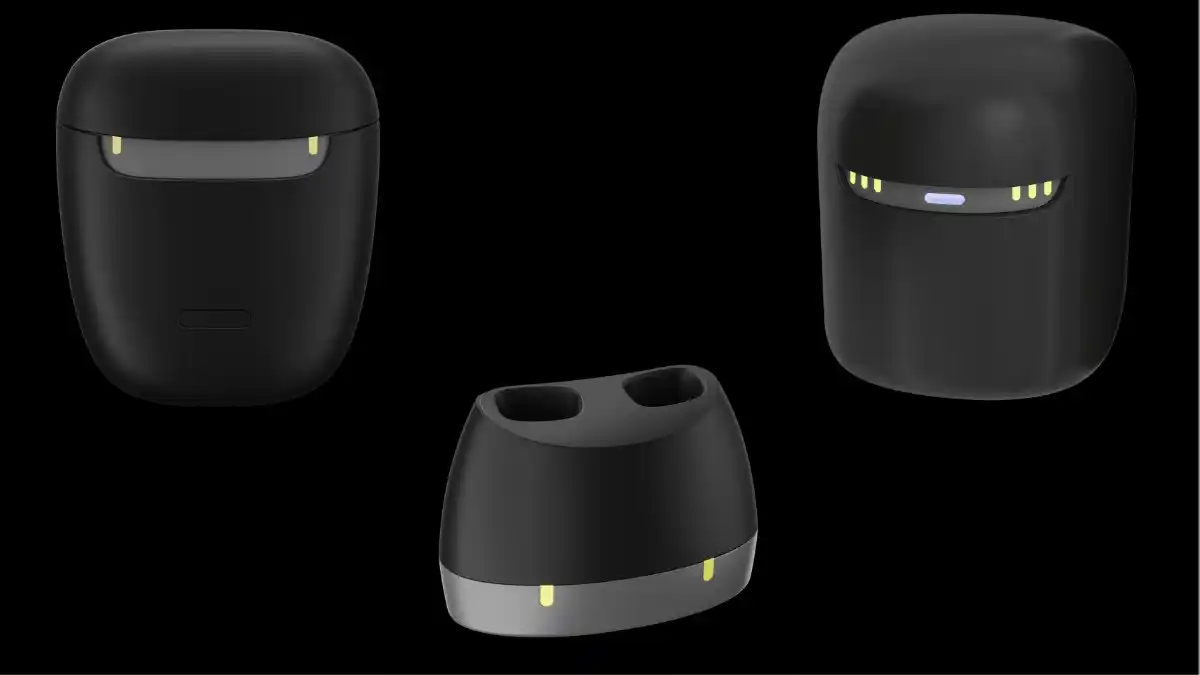
For the rechargeable BiCore models, Rexton lists charging stations and travel options by model. Some Charging+ stations can also dry the hearing aids and clean them with ultraviolet light.
Listening to the TV
With a compatible Rexton aid, TV Sound sends the television audio straight to your ears. You can set your listening volume independently of someone sharing the room with you. If you already have the older Smart Transmitter 2.4, ask your fitter whether it pairs with the aids you’re buying before replacing it.


Rexton TV Sound
Send TV audio wirelessly to compatible Rexton hearing aids.
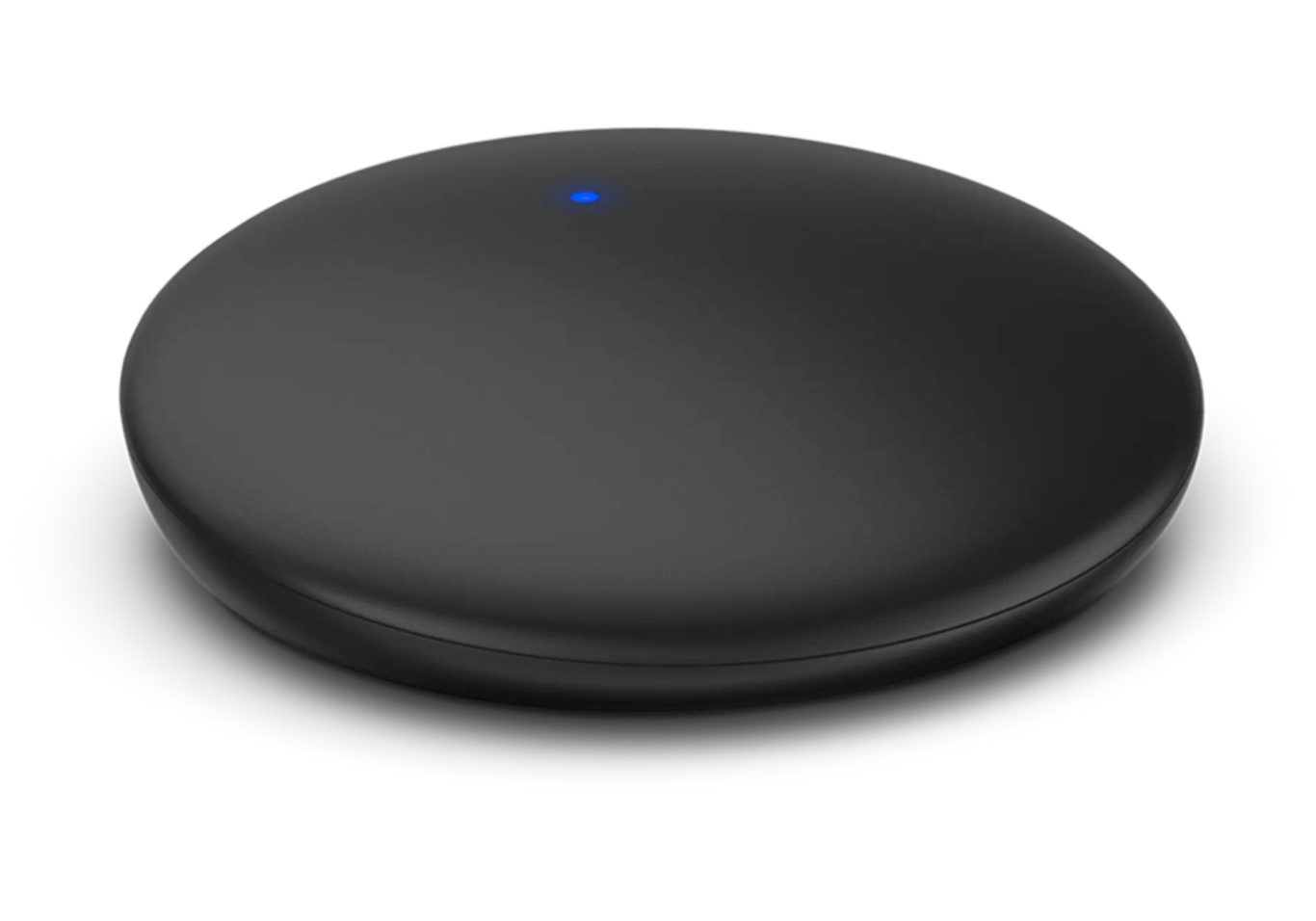
- TV audio streaming
- Optical audio input
- Analog audio input
Remote microphone and volume control
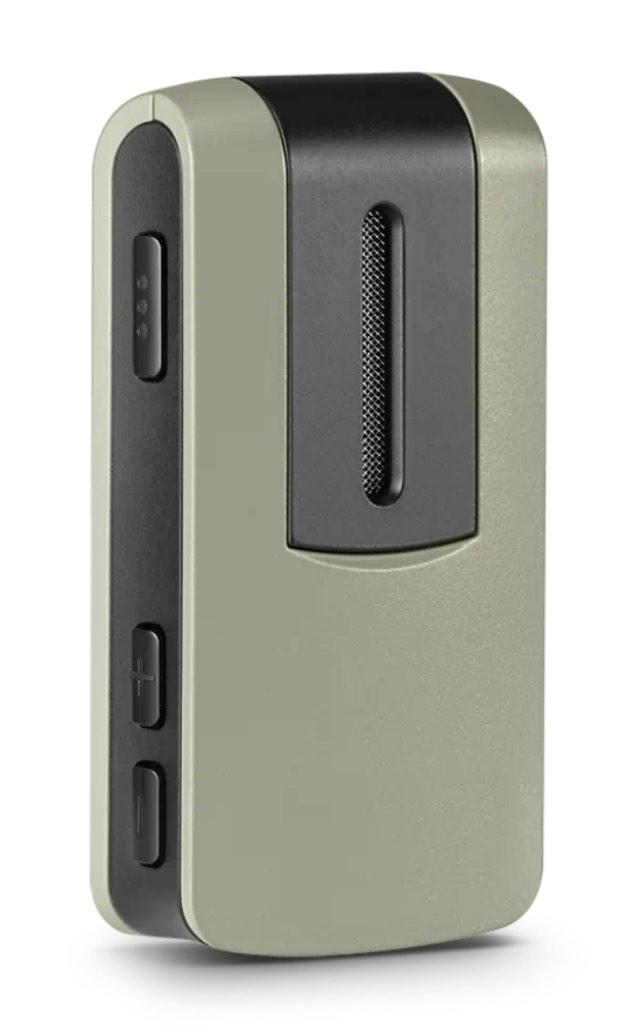
A Smart Mic clips to a companion’s clothing and sends their voice to compatible hearing aids, which can help when you’re sitting across a long table. The Smart Key is a small remote for adjusting volume and switching programs if you prefer physical buttons to an app. Rexton’s accessory guides explain how to pair and use each device.
Smart Mic
This compact remote microphone is compatible with Rexton Reach, Bicore, Rugged, and M-Core Li hearing aids, offering hands-free phone calls and live conversation streaming directly to your hearing aids. It doubles as a remote control for adjusting settings and can function as a conference microphone for clearer group discussions. It also streams audio from Bluetooth-enabled devices, allowing you to listen to music in stereo quality.
Who makes Rexton hearing aids?
Rexton dates back to 1955. Today it belongs to WS Audiology, the group formed when Sivantos and Widex merged in 2019. If the BiCore Slim reminds you of the Signia Styletto AX, there’s a family connection. Both brands belong to WS Audiology.

Rexton also figures in the history of the receiver-in-canal design. A US patent filed in 1995 and granted in 1997 describes connecting a behind-the-ear processor to a small speaker inside the ear canal with a wire. The patent names Siemens Hearing Instruments as the original assignee and describes a prototype built with a Rexton hearing aid.
Tina Sieber, PhD
Health WriterTina Sieber is a technology journalist with over 10 years of experience and a PhD in Biochemistry. Following an episode of sudden one-sided hearing loss, she was diagnosed with a benign brain tumor in 2018. She has since started writing about hearing loss and reviewing hearing aids for major tech publications.