Fatigue and Hearing Loss: How OTC Hearing Aids Can Help
Untreated hearing loss can make everyday conversations feel mentally exhausting. Learn how listening fatigue develops—and why OTC hearing aids like the Yeasound RIC800 may help adults with mild-to-moderate hearing loss hear more clearly with less strain.)
Featured Products
Compare allHearing aid glossary
Looking that up…
Terms are matched automatically. A definition may not fit every context.
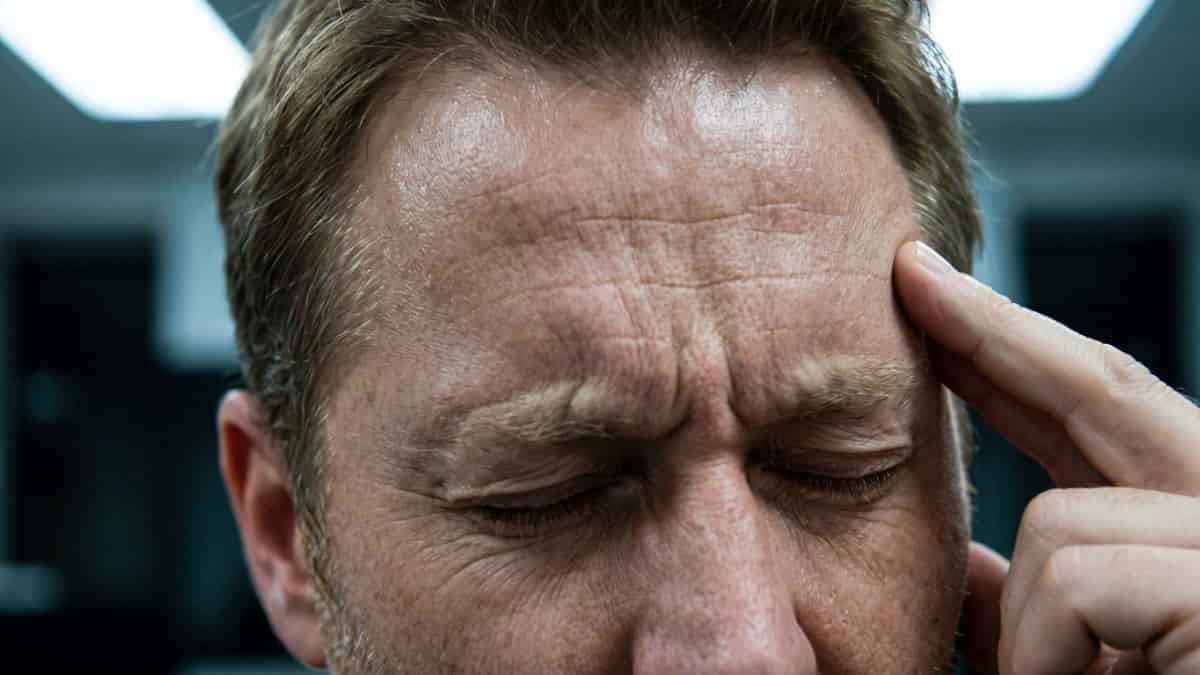
My aunt—who was a fiercely independent woman who had severe hearing loss, obtained her master’s degree at 72, and lived to the ripe age of 103—told me she often disengaged from conversation at family gatherings, not because she couldn’t hear, but because listening took so much mental effort. Although she believed that her circa-1990s hearing aids did an “okay job” (I’ve always suspected they were poorly fitted), she felt wiped out after a few hours of overlapping conversation in heavy background noise, with lots of laughter, loud children, and music.
The obvious problem with hearing loss is that it reduces audibility and speech understanding. But too often hearing loss is framed as a problem of volume: voices sound softer; people on television mumble or are indistinct; restaurants are too noisy.
Yet, for many adults, including those with mild to moderate hearing loss, it’s not simply the words they miss; it’s speech clarity and how hard they have to work to keep up.
That extra work has a name: listening effort. And when that effort builds over the course of a day, it can lead to listening fatigue—mental tiredness, strain, or depletion that can linger long after the conversation ends.1-5
This is one of the hidden burdens of untreated hearing loss. A person may still be able to hear speech—even in relative quiet—but not clearly enough for easy understanding. Consonants may blur. Voices can blend into background noise. Group conversations might require constant concentration. Instead of listening naturally, the brain must fill in the blanks using context, memory, visual cues, and guesswork.1-3
Over time, that can be exhausting. In this article sponsored by Yeasound, we’ll look at the science and what we know about “listening fatigue” or “auditory fatigue,” and how over-the-counter (OTC) hearing aids might be a good way to combat it for some people.
Listening Effort vs. Listening Fatigue
Researchers define listening effort as the mental work required to understand speech, especially when the speech signal is unclear or the environment is challenging. Listening fatigue is the tiredness that can result when that effort is sustained over time.2,3
:format(webp))
A group of researchers have developed what’s called the Framework for Understanding Effortful Listening (FUEL).2 It describes listening as a task largely shaped by:
- The demands of the situation;
- The listener’s motivation, and
- The cognitive energy available at that moment.
A conversation in a quiet kitchen during the morning may feel easy. However, that same conversation in a busy restaurant, medical office, or family gathering in late afternoon may require far more concentration.
That’s why people with hearing loss can seem fine in some situations but disengaged or distant in others. They may “get by” one-on-one, then feel wiped out after a dinner, meeting, worship service, or social event. The problem is not a lack of interest or attention; it’s that listening has become more mentally demanding, and their energy reserves have dwindled.
Even Mild Hearing Loss Can Cause Fatigue
It’s obvious why a severe hearing loss, like my aunt’s, can pose serious communication challenges in many situations: hours-long conversations become a tiring Wheel of Fortune game where you are constantly filling in the blanks in real time—sapping your mental energy.
However, even mild hearing loss can reduce access to important speech cues, especially high-frequency consonants such as /s/, /f/, /th/, /sh/, /k/, and /t/. These sounds—which are generally the first to go in the most common type of hearing loss (sensorineural)—are vital for separating one word from another (e.g., see / she / fee / tea / key). When a word is missed or distorted, the listener has to work harder to draw on context and infer meaning.
That extra work may not be obvious to friends or family. Someone with hearing loss may smile, nod, and follow along as best they can. But internally, their brain can be working overtime: watching lips, tracking context, guessing missed words, and deciding whether to ask for repetition.
:format(webp))
A 2017 Ear & Hearing study5 found that adults with hearing loss reported high levels of listening-related effort and fatigue in everyday life. Other research has shown that people with hearing loss often describe fatigue as a daily-life burden that can affect emotional well-being, social activity, and the ability to manage ordinary demands.6 A paper in a top medical journal, JAMA Otolaryngology, looked at a very large population and found that adults aged 40 and older with hearing loss were nearly twice as likely to report feeling fatigued nearly every day compared with adults with normal hearing.7
Additionally, anxiety tied to mishearing or missing important context can sap confidence and allow doubt and stress to creep in. This can lead to sitting out a conversation or giving the appearance of being uninterested. Poor hearing and listening fatigue can create a negative cycle. Communication becomes tiring, so the person participates less. With less participation, confidence may decline. Social connections may narrow. And, as conversation becomes something to endure rather than enjoy, the person may withdraw even more.
:format(webp))
How Hearing Aids Can Help Lighten the Load
Hearing aids do not make every listening situation effortless. Background noise, distance, reverberation, fast talkers, and group conversations can remain challenging. But hearing aids can improve access to speech cues, help speech stand out over background noise, and reduce the amount of information the brain has to reconstruct.
Some fairly strong research supports this. For example, a 2013 study found that sustained speech-processing demands can lead to mental fatigue in adults with hearing loss.8 Importantly, the study also found that clinically fitted hearing aids reduced listening effort and susceptibility to mental fatigue during sustained speech-processing tasks.
More recent research has explored the real-world effects of hearing devices. A 2021 longitudinal study found that hearing aid fitting led to a significant reduction in listening-related fatigue and an increase in social activity.9
Although these studies involved prescription hearing aids rather than aids, the key point they suggest is that audibility matters: getting most or all of those high-frequency consonant sounds doesn’t necessarily cure fatigue, but it can help reduce the mental strain of trying to understand conversation, particularly in challenging listening situations.
Where OTC Hearing Aids Fit In
For adults (ages 18 and older) with perceived mild-to-moderate hearing loss, a good first step can be a high-quality over-the-counter hearing aid. OTC hearing aids can be purchased without a prescription or professional consultation. 10
However, OTC hearing aids are not the right choice for everyone. People with hearing loss beyond a moderate level, and those with sudden hearing changes or other medical conditions, should seek medical or professional hearing care. And HearingTracker always recommends getting your hearing tested by an audiologist or hearing aid specialist; this remains the “gold standard” for establishing your hearing health baseline.
But the median cost of a prescription hearing aid from a traditional clinic without insurance is $5,000 per pair.11 Prescription aids may also require several office visits for optimal adjustment and counseling in their use. Not everyone has a $5,000 hearing problem or thinks their hearing loss has progressed enough to require professional attention. For adults who have put off getting help because of cost, convenience, access, or uncertainty, a high-quality OTC hearing aid may offer a practical first-step toward better hearing.
Why the Yeasound RIC800 May Help
The Yeasound RIC800 is a rechargeable receiver-in-canal () OTC hearing aid designed for adults with perceived mild-to-moderate hearing loss. Available for around $600 per pair, these hearing aids offer a surprisingly advanced feature set, including -based noise reduction, real-time sound scene analysis, an automatic adaptive program, app control for iOS and Android, Bluetooth audio streaming, and up to 31 hours of rechargeable battery life.
:format(webp))
HearingTracker’s review of the RIC800 describes it as a straightforward, easy-to-use that has high value with a design that feels closer to a traditional hearing aid. In independent HearAdvisor lab testing, the RIC800 earned an “A” SoundGrade, with strong performance in speech in quiet, speech in noise, feedback handling, and music streaming quality.
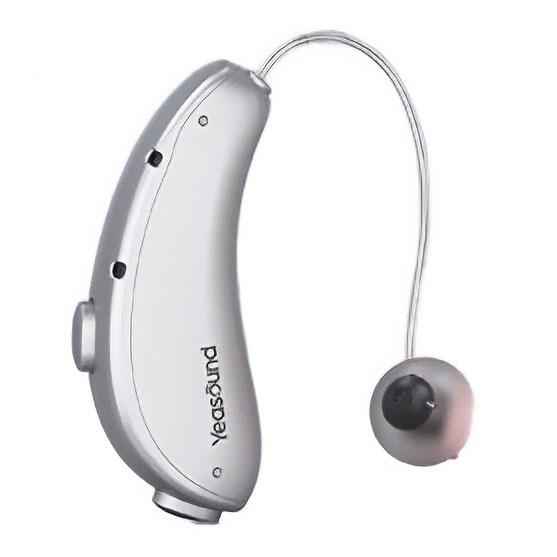
The Yeasound RIC800 is a rechargeable OTC hearing aid priced at just $549 a pair. It's streams to both both iPhone and Android, and scored in the top 5% of all OTC hearing aids tested by the independent HearAdvisor Lab.
Key Features
Expert Review
Here is part of the HearAdvisor summary:
HearAdvisor review of Yeasound RIC800The Yeasound RIC800 is a mid-priced OTC hearing aid available for $659 that earns an A grade with a SoundScore of 4.46/5 in our lab testing. This behind-the-ear device ranks #1 among 61 OTC hearing aids tested, representing the top performer in its category. In our testing, the RIC800 demonstrates strong speech clarity in quiet environments, scoring 4.1/5—a full 1.45 points above the OTC category average of 2.65. Speech in noise performance is more mixed at 2.1/5 in absolute terms, though this still places it 0.90 points above the category average of 1.20. Where this device truly excels is music streaming, achieving a strong 4.3/5 score that's 2.43 points above the category average—making it one of the better choices for users who frequently stream audio content.
The device includes features that many consumers now expect from a high-end prescription hearing aid, including Made for iPhone and Android support, Bluetooth streaming and Auracast, ultra-low-latency for better sound quality, directional microphones, IPx8 water resistance, noise removal, environmental adaptation, tinnitus relief, and onboard controls in addition to the app. It comes with US-based online support, a 100-day free trial, and refunds are reportedly processed within 48 hours after receiving the product.
But it's important to recognize its limitations, too. The RIC800 is essentially a preset-based device, meaning its amplification is not fully customized to an the way a prescription hearing aid can be. For those with more complex hearing losses, professional care may still be the better route.
:format(webp))
However, Yeasound does offer good online support, and remote fine-tuning services can help users address their specific needs. For the right adult user—someone with mild hearing loss who wants a quality, discreet -style device with rechargeable batteries, Bluetooth streaming, app control, and a sub-$600 price tag—the Yeasound RIC800 is a solid hearing aid option.
OTC Hearing Aids: A Practical First Step Toward Easier Listening
The hidden fatigue of untreated hearing loss can build slowly. You may still be able to follow conversations, but only by concentrating hard. Over time, that extra effort can make restaurants, family gatherings, phone calls, and group activities feel more tiring than enjoyable.
Hearing health is not just about making sounds louder. It is about making speech clearer, reducing listening effort and mental strain, and helping you stay connected to the people and activities that matter most.
For adults with perceived mild-to-moderate hearing loss, an OTC hearing aid such as the Yeasound RIC800 may be a practical first step. By improving access to speech—especially in everyday listening situations—it should help make conversations feel less effortful and social time feel more enjoyable.
The goal is not always perfect hearing; it is easier listening, less daily strain, and more energy for the moments in life you do not want to miss.
References
- Cardano L. Listening fatigue: Why hearing loss can be so tiring—and what to do about it. May 28, 2026. Available at: https://www.hearingtracker.com/resources/listening-fatigue-why-effort-in-listening-can-leave-you-exhausted
- Pichora-Fuller MK, Kramer SE, Eckert MA, et al. Hearing Impairment and Cognitive Energy: The Framework for Understanding Effortful Listening (FUEL). Ear Hear. 2016;37, 5S-27S. https://doi.org/10.1097/AUD.0000000000000312
- McGarrigle R, Munro KJ, Dawes P, et al. Listening effort and fatigue: what exactly are we measuring? A British Society of Audiology Cognition in Hearing Special Interest Group ‘white paper’. Intl J Audiol. 2014 Jul;53(7):433-40. doi: 10.3109/14992027.2014.890296. Epub 2014 Mar 27. PMID: 24673660.
- Bess FH, Hornsby BWY. Commentary: Listening can be exhausting–fatigue in children and adults with hearing loss. Ear Hear. 2014 Nov-Dec;35(6):592-9. doi: 10.1097/AUD.0000000000000099.
- Alhanbali S, Dawes P, Lloyd S, Munro KJ. Self-reported listening-related effort and fatigue in hearing-impaired adults. Ear Hear. 2017;Jan/Feb;38(1):e39-e48. doi: 10.1097/AUD.0000000000000361.
- Holman JA, Drummond A, Hughes SE, Naylor G. Hearing impairment and daily-life fatigue: a qualitative study. Intl J Audiol. 2019 Jul;58(7):408-416. doi: 10.1080/14992027.2019.1597284. Epub 2019 Apr 28. PMID: 31032678; PMCID: PMC6567543.
- Davis H, Schlundt D, Bonnet K, Camarata S, Bess FH, Hornsby BWY. Understanding listening-related fatigue: Perspectives of adults with hearing loss. Intl J Audiol. 2021 Jun;60(6):458-468. doi: 10.1080/14992027.2020.1834631.
- Hornsby BWY. The effects of hearing aid use on listening effort and mental fatigue associated with sustained speech processing demands. Ear Hear. 2013 Sep;34(5):523-34. doi: 10.1097/AUD.0b013e31828003d8.
- Holman JA, Drummond A, Naylor G. Hearing aids reduce daily-life fatigue and increase social activity: A longitudinal study. Trends in Hear. 2021. November 8, 2021. https://doi.org/10.1177/23312165211052786
- NIDCD. Hearing Aids: Styles/Types & How They Work. Oct 11, 2022.
- Bailey A. How much do hearing aids cost in 2026? Jan 11, 2026.
Acknowledgement
This article was sponsored by Yeasound. The content was written by HearingTracker to help consumers better understand listening fatigue, untreated hearing loss, and how hearing aids such as the Yeasound RIC800 may fit into the broader range of hearing care options.
Karl Strom
Editor in ChiefKarl Strom is the editor-in-chief of HearingTracker. He was a founding editor of The Hearing Review and has covered the hearing aid industry for over 30 years.