GN's New Minnesota Hub: What It Means for U.S. Hearing Care
GN leaders explain why they doubled down on Minnesota, how the new Shakopee facility will reshape hearing aid manufacturing and logistics, and what audiologists and patients can expect from U.S.-based production and advanced automation.)
Featured Products
Compare allHearing aid glossary
Looking that up…
Terms are matched automatically. A definition may not fit every context.
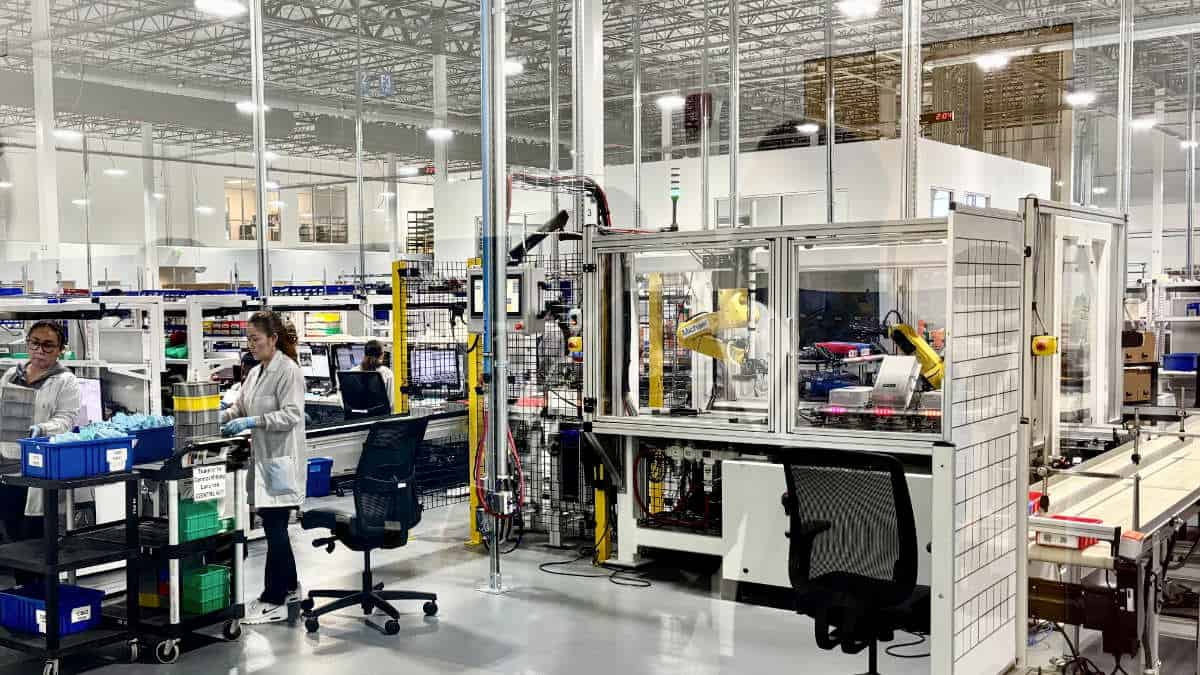
Last week, HearingTracker attended the grand opening and toured the production floor of GN’s new North American headquarters in Shakopee, Minnesota: a 218,000+ square-foot former Shutterfly facility that’s been transformed into a combined hearing aid manufacturing plant and high-volume distribution hub for ReSound, Beltone, Jabra Enhance, and eventually SteelSeries. GN's goal: Create a global template for automated hearing aid production, faster logistics, and tighter collaboration between front-office teams and the factory floor.
Walking through the new plant and offices, my mind flashed back to the 2001 grand opening of ReSound's headquarters in Bloomington, about 15 miles up the road—a large building that nevertheless could fit into the new plant's warehouse. It's hard not to see how quickly the hearing industry is advancing—and why investments like this are a hallmark of a more mature, strategically minded hearing care market.


In this follow-up Q&A, HearingTracker asks Michael Walther, Head of GN Regional Operations North America, and ReSound US President Mikkel Knudsen to go deeper on what this “Center of Excellence” really means for hearing care professionals and patients.
HearingTracker: Why is this new GN plant so important? What strategic factors influenced GN to invest in a new, large US-based manufacturing facility, and how does this align with your long-term global production strategy for ReSound, Beltone, and Jabra Hearing?
Michael Walther: GN made a major strategic investment in this facility, transforming it over 18 months from a former Shutterfly warehouse into one of the company’s most important global innovation, manufacturing, and distribution centers. From an operational standpoint, the GN North American headquarters will serve as a regional center of excellence, serving all GN brands from the company’s three divisions: Hearing, Enterprise, and Gaming.
:format(webp))
What’s really unique about this facility is that it is built for both medical device manufacturing, repair, and distribution [for GN hearing aids]…and as a distribution hub for all other GN products, including Jabra and SteelSeries, sold in North America.
This new facility was necessary because we simply outgrew, both physically and technologically, the Bloomington, Minnesota facility that we had been operating in since 2001.
We took a long look at different locations, but it made the most sense to stay in Minnesota. The state offers a strong talent pool in med‑tech manufacturing and engineering, which is critical. We already have a deeply experienced workforce in hearing manufacturing, so relocating would risk creating a significant knowledge gap and disrupting established expertise.

We also benefit from a highly reliable logistics infrastructure, with UPS and FedEx serving numerous Fortune 500 companies, ensuring consistent, efficient distribution and supply chain operations.
While customer access can be achieved from virtually anywhere, remaining in Minnesota allows us to maintain strong relationships and continuity with our existing U.S. partners.
Mikkel Knudsen: This facility also houses the U.S. headquarters for ReSound and Jabra Enhance hearing aids, which also had been operating out of Bloomington. This includes sales, customer service, product management and marketing.
:format(webp))
We’ve had strong, sustained growth in GN’s hearing business, and capacity constraints and technology limitations at the previous site were limiting future growth and our ability to implement improved processes that benefit our customers.
Our commitment to stay in Minnesota is a long-term strategic move driven primarily by a desire to stay close to U.S. hearing care professionals, which really helps us foster enhanced product innovation and better, quicker service.
HT: Did the new U.S. tariffs influence GN’s decision-making on the plant?
Walther: While the new facility does give us operational flexibility, its creation is not a short-term reaction to any specific tariff change.
HT: What immediate effects will the relocation of manufacturing have on audiologists, hearing aid specialists, and consumers? What changes will they see, and how might U.S.-based production impact turnaround times, especially for custom products, repairs, and remakes—one of the biggest operational pain points for audiologists and consumers across all manufacturers?
Knudsen: The facility is purpose-built for medical device manufacturing for all GN hearing aid brands, which will ultimately allow us to produce and service hearing aids more efficiently and consistently than ever before…including custom orders.
Integrating all brands into this single regional Center of Excellence enables us to leverage economies of scale, driving greater efficiency and productivity in day‑to‑day activities. This in turn should allow us to deliver more consistent quality and faster, more predictable shipping as the site is scaled up as a distribution hub for all of North America.
Part of the GN advantage is that we can leverage strengths from our other divisions. For instance, the scaled operations that are needed to deliver the volume of Jabra and SteelSeries products will drive improvements in shipping. In fact, with the ability to soon deliver 8 million packages a year from this facility—which is almost twice the volume of the entire U.S. hearing aid industry—our hearing care customers will benefit from these advanced logistics, resulting in timely, accurate orders.
And with all our teams…operations, product quality, customer service, sales…all under the same roof, we keep, better communication and faster closed-loop response from the field to our teams. No other hearing manufacturer operates in a full-service facility in the U.S. like this.
For hearing care professionals, the 150-seat event center and state-of-the-art audiology suite will be central to education and engagement efforts, hosting more onsite customer visits, trainings and events.
HT: It appears that the facility will ultimately handle production for multiple brands. If so, how are production lines separated or integrated to maintain quality and consistency across such different product categories?
Walther: Currently, the facility is dedicated to hearing aid manufacturing and repair only. We have a completely reimagined production floor that allows for the latest technological and automation improvements, while providing an improved space for custom production.
The warehouse and distribution center will not only include hearing aids, but starting in 2026 will also serve all GN brands including Jabra office products and SteelSeries gaming products. Using the latest in automation and tracking, warehouse operation teams can handle multiple product categories efficiently while preserving the right storage, handling, and traceability standards for each.
HT: How much of GN’s output do you expect to shift to the Shakopee facility in the next 3-5 years?
Walther: From a hearing aid standpoint, Shakopee, like Bloomington before it, will remain the key North American manufacturing, repair, and distribution hub for all GN hearing aids, complementing the work that occurs in other GN facilities around the world, including China.
The biggest change will be in the warehousing and distribution of the other GN product brands, such as Jabra and SteelSeries. That work is all being consolidated in Shakopee from other locations. By the end of 2026, we anticipate shipping more than 8 million products out of this facility, nearly quadrupling the number of shipments we currently manage.
Ultimately, we will also do some light manufacturing and packaging, as well as repairs, for the Jabra and SteelSeries products.
HT: One of the most unique aspects of the new facility is the amount of automation being used for both manufacturing and warehousing/distribution. What new manufacturing technologies, automation tools, or quality-control systems are being introduced that distinguish this facility from GN’s existing global sites?
Walther: Shakopee is designed as GN’s innovation site for med-tech automation and advanced operations. The in-house Engineering Automation Lab concepts, tests, and validates new automation solutions specifically for hearing and med-tech.
:format(webp))
We’ve already begun automating repair processes for hearing aids using proprietary robotic arms (named Michael and Sam, as shown in the photo at the top of the page) designed to precisely handle delicate hearing aids, capture patient-specific programming settings, and restore those settings before returning them to the customer. This process now ensures accuracy and efficiency, helping us repair products more quickly and with an even greater degree of quality.
It’s important to note that we will only use automation to enable continuous, safe handling and internal movement, reducing manual touchpoints that could be a source of errors. This frees people up to perform more challenging tasks that need human skill.
HT: Do you think the new manufacturing facility will affect how your US/global engineers and clinicians interact with future product designs, feature sets, or fitting workflows?
Knudsen: That is one of the most exciting strategic benefits of the facility. With teams of clinical, research, product, sales, marketing, and manufacturing experts all together, we can accelerate the feedback loop from hearing care professionals to the right people who can make improvements.
This means engineers and clinicians can see issues and opportunities in real-world production and returns much faster…and we can test new product designs, accessories, packaging, and logistics processes in one integrated environment before scaling them.
HT: Are other products besides hearing aids being manufactured in Shakopee? Do you think consolidating medical-grade hearing, consumer audio, and gaming under one roof might influence innovation across these categories?
Knudsen: Currently, only GN hearing aids are manufactured and repaired in Shakopee. The other brands use the warehouse/distribution capabilities. Eventually, we will do some light manufacturing of the other products in this facility.
But the concept of sharing technologies is spot on, and one of GN’s greatest strengths. We do have a unified global Research and Development approach—one in which dedicated R&D is done across divisions and applied specifically for the products being made, whether that is a hearing aid or a professional headset.
We’ve already seen some great innovation come from that shared view. For instance, SteelSeries and Jabra benefit from the Hearing Division’s long legacy of expertise in miniaturization and power efficiency.
In turn, our hearing aids benefit from GN’s work with wireless consumer electronics, like Jabra headsets. We can invest in advanced testing procedures, including the use of a premium Faraday cage that gives our hearing aids a head start in the latest connectivity like Bluetooth Low Energy Audio and …which we know are very important to hearing aid wearers.
Editor's note: Thanks to Rich Fischer, Director of Public Relations at GN, for inviting HearingTracker to the Shakopee grand opening and helping facilitate this interview.
Karl Strom
Editor in ChiefKarl Strom is the editor-in-chief of HearingTracker. He was a founding editor of The Hearing Review and has covered the hearing aid industry for over 30 years.