Medicare Hearing Aid Coverage Gets Another Push from a New Leader
Rep. Mike Thompson will carry forward legislation to add hearing, dental, and vision benefits, following years of unsuccessful efforts.
Hearing aid glossary
Looking that up…
Terms are matched automatically. A definition may not fit every context.
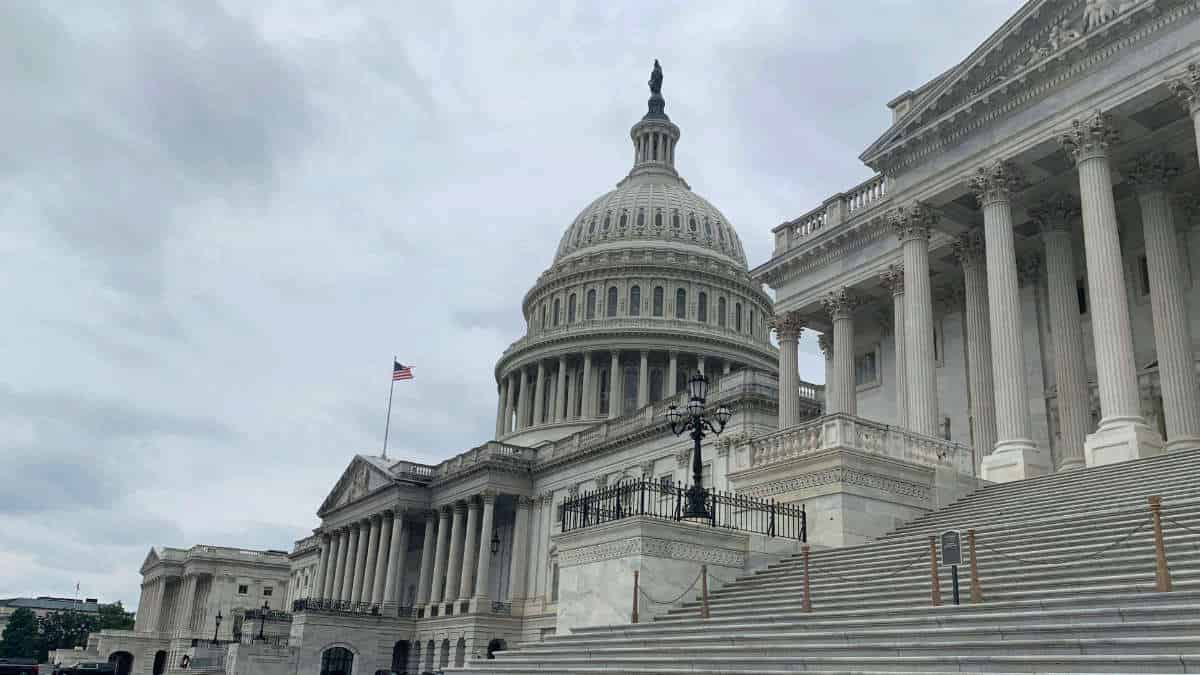
Rep. Mike Thompson (D-CA) will take over a longstanding effort to expand Medicare coverage to include hearing aids and other hearing, dental, and vision services, according to an October 19 announcement from Rep. Lloyd Doggett (D-TX). Since its creation in 1965, Medicare has expressly excluded coverage for hearing aids and examinations for fitting them—a gap the proposed legislation hopes to close.
Doggett, the ranking member of the House Ways and Means Health Subcommittee, is preparing to retire and has tapped Thompson to champion his Medicare Dental, Vision, and Hearing Benefit Act in the next Congress, which begins in January 2027. The announcement represents a leadership transition for an existing legislative effort. Doggett introduced the current version, H.R. 2045, in March 2025.
U.S. Representative Lloyd Doggett (D-TX, in a press release)We seek to assure more comprehensive health coverage for the more than 66 million seniors and disabled individuals who rely on Medicare. Though so important to overall health, Medicare coverage continues to be very limited for dental, vision, and hearing services. This expanded care could help prevent cognitive impairment and dementia, worsened chronic disease, and imbalance leading to falls with deadly consequences. This is an essential step to fulfilling the original promise of Medicare—to assure dignity and health for all. I’m pleased to work with Rep. Thompson, who has supported this bill for many years, to ensure this important legislation is carried forward.


“I’ve always believed that expanding older Americans’ access to these kinds of healthcare just makes sense,” Thompson said in the announcement.
What would change for hearing care?
The proposal would remove Medicare’s statutory exclusion of hearing aids and examinations for fitting them, while adding coverage for routine hearing exams and other necessary hearing services under Part B.
Under the current bill’s language, Medicare would generally pay 80% of the approved payment amount for covered hearing aids and hearing care services. Hearing aid coverage would ordinarily be limited to one device per ear every 4 years. The legislation would allow federal officials to establish additional coverage criteria or waive replacement-frequency limits when appropriate. Hearing aids would be classified as durable medical equipment.
The broader legislation also would expand coverage for dental care, including dentures, and vision services such as refractive eye exams and eyeglasses.

Currently, Original Medicare does not cover hearing aids or exams for fitting them, although Part B covers qualifying diagnostic hearing and balance exams ordered by a physician or other healthcare provider to determine whether medical treatment is needed. Certain diagnostic hearing services are also covered without a referral once every 12 months. Some Medicare Advantage plans offer additional hearing benefits, with coverage varying by plan.
A Valiant Cause, A Difficult Path
For those who have worked in hearing healthcare for a while, the upcoming bill should sound familiar. The announcement continues a legislative debate that has spanned multiple Congresses.
In December 2019, the House passed the Elijah E. Cummings Lower Drug Costs Now Act, H.R. 3, which included Medicare hearing services and hearing aids for people with severe-to-profound hearing loss. Hearing Review examined those provisions in a February 2020 article. That broader package never became law.
In July 2021, Doggett also introduced the Medicare Dental, Vision, and Hearing Benefit Act (H.R. 4311) backed at introduction by 76 House members. It remained at the committee stage. Another version (H.R. 33) introduced in January 2023 likewise ended that Congress without advancing beyond committee referrals.
The current H.R. 2045 also remains at the referral stage, with its latest listed action occurring on March 11, 2025.
History suggests the bill faces another uphill battle. Expanding benefits would require lawmakers to resolve spending and financing questions and secure sufficient political support. However, the next Congress’s composition and priorities remain unsettled, making any firm prediction of failure premature.
For Medicare beneficiaries, the announcement signals continued advocacy for expanded coverage, but it does not change their existing hearing benefits. Meanwhile, hearing loss remains a widespread chronic health condition that can significantly impact communication, physical and mental status, and quality of life.
According to Thompson, the Medicare Dental, Vision, and Hearing Benefit Act is endorsed by Center for Medicare Advocacy, Community Catalyst, Public Citizen, Social Security Works, Center for Health and Democracy, MoveOn.org, Families USA, CareQuest Center for Oral Health, Justice in Aging, People’s Action, Medicare Rights Center and Advocates for Community Health.
Karl Strom
Editor in ChiefKarl Strom is the editor-in-chief of HearingTracker. He was a founding editor of The Hearing Review and has covered the hearing aid industry for over 30 years.