Midlife Hearing Loss and Dementia: Genes and Hearing Aid Use May Make a Difference
Researchers found that even mild hearing loss in midlife was associated with measurable brain changes and higher dementia risk—particularly among people with the APOE ε4 gene.)
Featured Products
Compare allHearing aid glossary
Looking that up…
Terms are matched automatically. A definition may not fit every context.
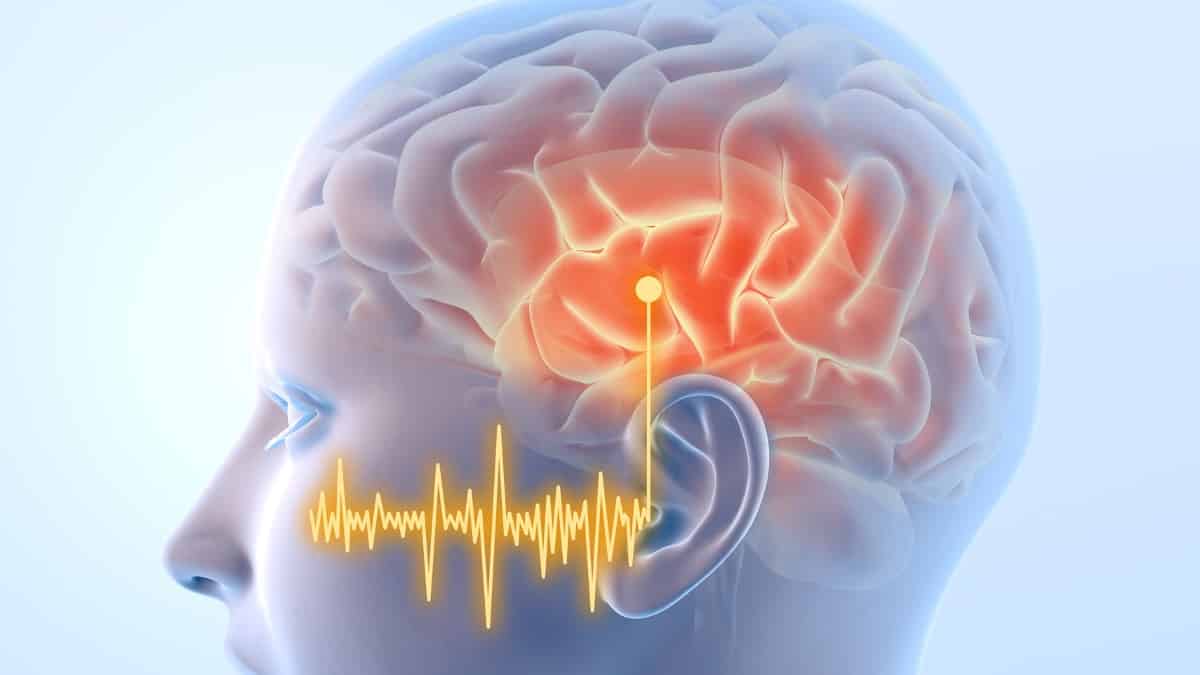
A new study published in the November 5 edition of JAMA Network Open adds to growing evidence that untreated hearing loss in midlife may have far-reaching consequences for brain health. Researchers from the long-running Framingham Heart Study (FHS) found that people with even mild hearing loss showed measurable differences in brain structure, faster cognitive decline, and a greater risk of developing dementia—especially those who carry the APOE ε4 gene variant linked to Alzheimer’s disease. The authors state that “objective hearing loss of more than a slight degree was associated with a 70% or greater increase in the risk of dementia, in accordance with prior studies that also considered hearing loss as a risk factor for developing dementia.”
Kolo, Lu, Beiser, et. alThese results suggest a role for audiometric testing to complement self-reports since hearing loss of less than moderate severity was also associated with adverse changes on brain MRI, poorer cognition, and increased dementia risk, and hearing aid use may, as our data suggest, mitigate these adverse effects.
Study Methods
The researchers led by Francis Kolo, PhD, examined two large samples of adults from the Framingham Offspring cohort. The first group, consisting of 1,656 participants with a mean age of about 58 years, underwent detailed hearing tests, brain scans, and neuropsychological evaluations. The second group, including 935 participants aged 60 and older at the start, was followed for approximately 15 years to track who later developed dementia.
Hearing ability was measured using standard audiometric testing, averaging the quietest tones each participant could hear at four key frequencies (0.5, 1, 2, and 4 kHz) in their better ear. The researchers classified hearing as normal (<16 ), slight (16–25 ), mild (26-39 dB), or moderate and greater (≥40 dB). They then looked at how these levels of hearing related to differences in brain volume, white-matter integrity, cognitive performance, and the eventual risk of dementia.
Brain and Cognitive Findings
Participants with mild or greater hearing loss had smaller total brain volumes on MRI scans compared to those with normal or near-normal hearing. These individuals also showed greater accumulation of white-matter hyperintensities—small lesions associated with vascular damage and brain aging. Over time, they performed worse on tests of executive function, such as the Trail Making Test, which measures mental flexibility and processing speed.
Importantly, these associations persisted even after accounting for common vascular risk factors like blood pressure, diabetes, and smoking. The results suggest that hearing loss may reflect or even contribute to neurobiological changes that accelerate cognitive decline.
Hearing Evaluations Are a Valuable Component in Dementia Risk Screening
The longitudinal portion of the study provided some of its most striking findings. Over roughly 15 years of follow-up, people with any degree of hearing loss had a 71% higher risk of developing dementia compared to those with normal hearing. The relationship was especially pronounced among individuals who carried the APOE ε4 allele—a genetic variant known to increase vulnerability to Alzheimer’s disease. In that subgroup, hearing loss more than doubled the dementia risk, with hazard ratios approaching 2.9.


Hearing-aid use appeared to mitigate some of this risk. Among participants with hearing loss, those who used hearing aids showed a smaller and statistically nonsignificant increase in dementia incidence, whereas non-users faced a significantly higher hazard ratio. Although observational and self-reported, this finding echoes results from other recent research, like the ACHIEVE study, suggesting that timely intervention with amplification may offer cognitive protection.
When hearing-loss data were added to traditional dementia-risk models—including age, sex, education, and APOE ε4 status—the model’s ability to predict who would develop dementia improved modestly but meaningfully. The authors argue that hearing assessment should be considered a valuable component of dementia-risk screening.
More Evidence for Early Hearing Care Intervention
These new findings support other recent studies that indicate hearing loss is more than a sensory issue; it’s also a brain-health issue. It supports the idea that earlier detection and treatment of even mild hearing loss not only improve communication but also help preserve cognitive function and brain structure.
The observed gene-environment interaction is especially significant. APOE ε4 carriers already have reduced neuronal resilience, and hearing loss may create additional cognitive load or social isolation that further stresses neural networks. While hearing aids cannot change a person’s genetics, they can help maintain sensory input and reduce the mental effort required for listening, which may explain their apparent protective effect.
From a public health standpoint, the results underscore the importance of midlife hearing screenings and education. Many adults dismiss slight hearing difficulties as “normal aging,” yet this study suggests that even “slight” loss (e.g., above 15 ) was linked to measurable brain differences and elevated dementia risk.
Mounting Evidence to Suggest Hearing Health is Linked to Brain Health
The new Framingham analysis adds powerful evidence linking hearing health to brain health. Adults with even mild hearing loss had smaller brain volumes, greater white-matter damage, faster cognitive decline, and a significantly higher risk of dementia—especially if they carried the APOE ε4 gene variant. Hearing aid use appeared to reduce that risk, suggesting that early intervention could make a difference.
The research reinforces an evolving message: protecting your hearing may also protect your cognitive status. Encouraging routine hearing screening, timely amplification, and consistent hearing aid use could prove to be a significant step toward preserving both communication ability and long-term cognitive vitality.
Study Limitations
As with all observational research, causation cannot be definitively established. It’s possible that hearing loss and cognitive decline share underlying causes, such as vascular changes or systemic inflammation, rather than one directly causing the other. The Framingham Offspring cohort also lacks ethnic diversity — participants were almost entirely non-Hispanic White — so results may not apply to all populations. Hearing was measured at only one time point, meaning the effects of progression or duration of hearing loss could not be assessed. Finally, hearing aid use was self-reported and not objectively verified, so the apparent protective trend should be interpreted cautiously.
Despite these caveats, the may be one of the most comprehensive to date, combining audiometric, neuroimaging, cognitive, and longitudinal dementia data in a single well-characterized community cohort.
Original study citation: Kolo FB, Lu S, Beiser AS, et al. Hearing Loss, Brain Structure, Cognition, and Dementia Risk in the Framingham Heart Study. JAMA Netw Open. 2025;8(11):e2539209. doi:10.1001/jamanetworkopen.2025.39209
Karl Strom
Editor in ChiefKarl Strom is the editor-in-chief of HearingTracker. He was a founding editor of The Hearing Review and has covered the hearing aid industry for over 30 years.