Samsung Galaxy Buds Gain FDA-Cleared OTC Hearing Aid Feature
Samsung’s FDA-cleared Galaxy Buds hearing aid feature brings self-fitting OTC amplification to Android users, following Apple’s AirPods hearing health push.)
Featured Products
Compare allHearing aid glossary
Looking that up…
Terms are matched automatically. A definition may not fit every context.
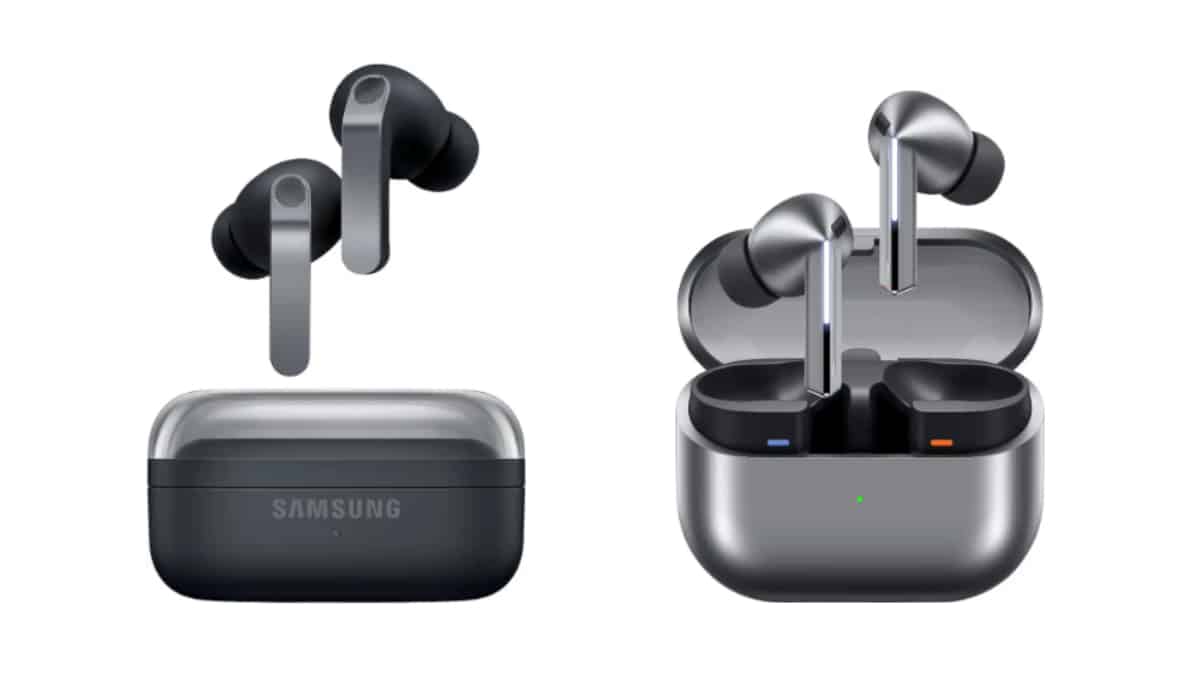
Samsung is moving more directly into hearing healthcare, announcing that its Galaxy Buds Hearing Aid feature has received clearance from the U.S. Food and Drug Administration (). The software will allow compatible Galaxy Buds earbuds to function as self-fitting over-the-counter (OTC) hearing aids for adults with perceived mild-to-moderate hearing loss.
Samsung says the Hearing Aid and Hearing Test features will begin rolling out in the fourth quarter of 2026 for Galaxy Buds3 Pro and Galaxy Buds4 Pro in the United States and other approved markets. Full functionality will require a compatible Galaxy device running One UI 8 or later, and availability may vary depending on the market, Buds model, and paired device.
Samsung’s entrance into FDA-cleared hearing aids represents another significant crossover between mainstream consumer electronics and hearing healthcare. It follows Apple’s introduction of FDA-authorized hearing aid functionality for AirPods Pro 2 in 2024 and its continuation in AirPods Pro 3.
Hearing test and personalized amplification built into Galaxy Buds
Samsung’s hearing solution consists of two related components: a Hearing Test and a Hearing Aid feature, both integrated into the Galaxy Buds app settings rather than requiring users to download a separate hearing aid app.


According to Samsung, users can perform a self-administered hearing test in approximately 5 minutes. The test uses pure-tone audiometry to evaluate each ear independently and produces an . Samsung reports its Hearing Test feature is registered as Software as a Medical Device (SaMD) and provides results comparable in accuracy to a professional hearing evaluation.
:format(webp))
The software categorizes hearing results as normal, mild, moderate, severe, or profound hearing loss. However, the Hearing Aid feature itself is intended only for adults ages 18 and older with perceived mild-to-moderate hearing loss.
Once a hearing profile has been established, the earbuds adjust amplification to compensate for the frequencies where the user has reduced hearing sensitivity. Samsung says this can help make higher-frequency sounds, softer speech, and more distant voices easier to hear.
The system also incorporates noise reduction and directional beamforming designed to emphasize sounds coming from in front of the listener while reducing competing background noise.
Perhaps most noteworthy for audiologists, Samsung says the hearing aid fitting uses , the well-established hearing aid prescription developed by Australia’s National Acoustic Laboratories. NAL-NL2 is the world’s most widely used hearing aid fitting prescription, designed to maximize speech intelligibility while maintaining comfortable overall loudness.

That makes Samsung’s approach considerably more sophisticated than the simple amplification or “hear-through” modes that have long been offered by consumer earbuds.
Samsung has been working on hearing amplification for years
The move isn’t surprising, nor is it new territory for Samsung. The company introduced a Personal Sound Amplification Product () function for Galaxy Buds+ in 2020 and subsequently participated in clinical research evaluating the technology.
For the new system, Samsung says it worked with the NAL and Samsung Medical Center, with clinical validation studies conducted at Vanderbilt University Medical Center, San Jose State University, and the University of Memphis.
Samsung is also incorporating hearing information into its broader health ecosystem. Hearing test results and information about the user’s noise exposure can be viewed through Samsung Health alongside other wellness data.
Hon Pak, Samsung Senior VP and Head of the Digital Health Team for the Mobile eXperience (MX) BusinessHearing health is a vital component of our overall well-being, profoundly impacting how we communicate, connect with loved ones, and engage with the world. With the latest clearance from the FDA, we are expanding access to hearing support and making proactive care effortless by integrating the Hearing Test and Hearing Aid functionality directly into the Galaxy Buds.
Following the path opened by Apple AirPods
Samsung’s announcement inevitably invites comparisons with Apple.
In September 2024, the authorized Apple’s Hearing Aid Feature for compatible AirPods Pro, calling it the first hearing aid software device. Apple’s system similarly allows adults with perceived mild-to-moderate hearing loss to configure their earbuds using a self-fitting approach without assistance from a hearing professional.
HearingTracker and the independent HearAdvisor lab covered Apple’s hearing health push extensively, including detailed testing and setup guides for both AirPods Pro 2 and AirPods Pro 3. Our testing, along with other research, has demonstrated that these consumer earbuds can provide meaningful amplification rather than simply serving as rudimentary .


HearingTracker’s review of AirPods Pro 3 found that the earbuds could become surprisingly competitive with dedicated hearing aids when appropriately configured. Performance improved substantially when settings were optimized for the listener’s hearing loss, although background noise, usability, earbud fit, and other factors remain important considerations.
AirPods Pro 2 similarly demonstrated respectable performance for mild-to-moderate hearing loss, although HearingTracker found that their limited battery life and earbud-style design made them better suited to some users and listening situations than others.
What peer-reviewed research says
Peer-reviewed studies of Apple’s AirPods Pro have found that the earbuds can provide helpful amplification and, in some laboratory conditions, speech-understanding performance approaching conventional hearing aids—although results vary by study and newer research suggests Apple’s Hearing Aid Feature may provide less gain than standard fitting targets.
In an NAL study in 2022, AirPods Pro with Apple’s Headphone Accommodations provided a 5.4 signal-to-noise advantage and improved laboratory speech intelligibility among adults who reported difficulty hearing in noise. A 2022 iScience study involving adults with mild-to-moderate sensorineural hearing loss found that AirPods Pro met most relevant electroacoustic standards and, in several test conditions, produced speech-recognition results comparable to conventional hearing aids.
More recently, a 2026 study in the American Journal of Audiology evaluated the -authorized Hearing Aid Feature on AirPods Pro 2 in 25 adults with self-perceived mild-to-moderate hearing loss. The researchers found very high usability and satisfaction, but objective testing showed only a small, non-significant speech-in-noise benefit and real-ear measurements generally fell below fitting targets. This means that AirPods may be highly accessible and appealing while not necessarily matching the amplification provided by a well-fitted conventional hearing aid.
The bottom line is that the evidence suggests Apple AirPods Pro—offered at about $250—are a relatively good value for people with milder hearing losses who are looking for an OTC solution. Samsung now effectively brings a similar concept to the enormous Android/Galaxy ecosystem.
:format(webp))
Implications for OTC hearing aids and hearing healthcare
The larger significance may extend beyond the Samsung versus Apple universe.
When the ’s OTC hearing aid category took effect in 2022, much of the attention centered on whether new hearing aid manufacturers and retailers would enter the market. Apple—and now Samsung—suggest another possibility: hearing aids may increasingly become a feature that people with popular-selling consumer electronics already own.
This could have several consequences. For dedicated hearing aid manufacturers, competition may intensify at the lower end of the OTC price spectrum. Consumers who already own lower-cost $200-$300 earbuds may have less incentive to purchase a separate pair of OTC hearing aids if their earbuds can provide adequate amplification for restaurants, meetings, television viewing, or other situations where they struggle. This means that those OTC hearing aids in the $300-$1000+ price segment may need to have more compelling features for consumer uptake.

At the same time, devices from Apple and Samsung could dramatically increase awareness of hearing loss. Millions of consumers who might have never scheduled a hearing evaluation may be prompted to take a hearing test simply because one appears on their phone, discovering (or confirming) they have a hearing loss.
For hearing care professionals, that could be a good thing. The commercial perils feared with the advent of the hearing aid category, at least for now, have not materialized; it appears that consumers have not flocked away from professionally fitted prescription hearing aids. Samsung Buds Pro may instead create a much larger group of people (Android users) who become aware of their hearing status and eventually seek professional guidance when an earbud solution isn’t enough.
Increasingly, consumers recognize that hearing loss is a chronic medical condition with potential serious mental and physical consequences for certain at-risk populations. Traditional prescription hearing aids still offer important advantages—including all-day wear, greater fitting flexibility, sophisticated acoustic options, professional verification and validation, and solutions for more significant or complicated hearing losses. And Samsung itself emphasizes that its OTC feature is not intended to replace professional diagnosis or treatment.
Finally, wearing earbuds during a conversation is viewed as rude and socially unacceptable by some. As these devices become more ingrained in our culture, these attitudes may change; however, for now, it's one of the larger barriers to using earbuds as hearing aids.
But the boundary between “hearing aid” and “consumer earbud” is becoming less distinct.
Apple demonstrated that a mass-market audio company could turn an existing consumer device into an -authorized OTC hearing aid largely through software. It’s possible that Samsung’s entry suggests this has started a broader trend.
For hearing healthcare, that could ultimately prove more consequential than any single pair of earbuds.
Karl Strom
Editor in ChiefKarl Strom is the editor-in-chief of HearingTracker. He was a founding editor of The Hearing Review and has covered the hearing aid industry for over 30 years.