WHO Adds Hearing Aids to Dementia Prevention Guidance
The new World Health Organization's guidelines conditionally recommend hearing aids for adults with hearing loss as part of the strategies to reduce cognitive decline and dementia risk.)
Featured Products
Compare allHearing aid glossary
Looking that up…
Terms are matched automatically. A definition may not fit every context.
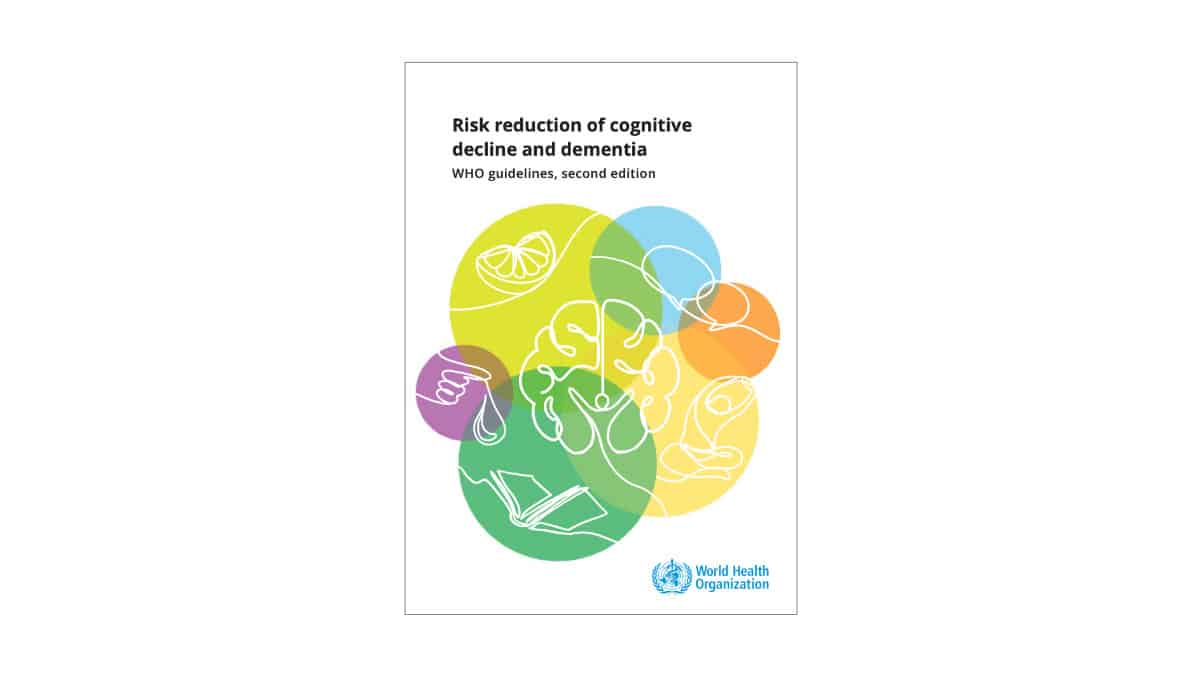
The World Health Organization (WHO) has for the first time included hearing aids among its recommended strategies for reducing the risk of cognitive decline and dementia, marking a notable shift from its previous guidance.
Published on July 15, the second edition of WHO’s Risk Reduction of Cognitive Decline and Dementia guidelines (PDF available here, see pgs. 60-63) states that hearing aids “may be offered to adults with hearing loss” to reduce the risk of cognitive decline and/or dementia. The recommendation is classified as conditional, with the certainty of evidence rated low.
WHO acknowledges the evidence base is growing for hearing aids
The recommendation represents an important change from WHO’s original 2019 dementia risk-reduction guidelines. Although hearing loss was considered at that time, WHO made no recommendation on hearing aids for dementia prevention because there was insufficient evidence. The organization says the evidence base has grown considerably since those first guidelines were published.
Risk Reduction of Cognitive Decline and Dementia: WHO guidelines, 2nd ed., p 61...Given the potential benefits (which probably outweigh the harms), and the global burden of unaddressed hearing loss and its association with dementia risk, the GDG made a conditional recommendation that hearing aids may be offered to adults with hearing loss to reduce the risk of cognitive decline and/or dementia. Additionally, given the widespread impact of hearing loss, the GDG added a reference to existing WHO technical guidance for timely identification and management of hearing loss.


Evidence reviewed for the new guidelines includes observational research suggesting that hearing aid use may be associated with a reduced risk of dementia and mild cognitive impairment among adults with normal cognition.1-5 However, WHO emphasizes that the evidence remains uncertain, which is why the recommendation is conditional rather than strong (as for physical activity and tobacco cessation).
WHO also makes an important distinction: hearing aids should be used to address hearing loss, not solely for the purpose of preventing dementia. In other words, the new guidance does not establish that hearing aids prevent dementia, but recognizes hearing care as a potentially valuable part of a broader risk-reduction strategy.
WHO found insufficient evidence for the use of other hearing interventions, such as cochlear implants.
Hearing health joins broader prevention efforts
The hearing aid recommendation is part of a broader update reflecting growing evidence that dementia risk can be influenced by modifiable factors. WHO says up to 45% of dementia risk may be attributable to potentially modifiable factors and recommends strategies including physical activity, smoking cessation, reduced alcohol consumption, a healthy diet, social and cognitive engagement, management of hypertension, diabetes and high cholesterol, and reduced exposure to air pollution.

For hearing healthcare, the change is significant. While WHO stops significantly short of saying hearing aids have been proven to prevent dementia, its new guidance does recognize the treatment of hearing loss as a potential component of dementia risk reduction—something the organization concluded it could not recommend when its first guidelines were issued in 2019.
References
- Haile LM, Kamenov K, Briant PS, Orji AU, Steinmetz JD, Abdoli A, et al. Hearing loss prevalence and years lived with disability, 1990-2019: Findings from the Global Burden of Disease Study 2019. Lancet. 2021;397(10278):996-1009.
- WHO. World report on hearing. Geneva: 2021.
- Griffiths TD, Lad M, Kumar S, Holmes E, McMurray B, Maguire EA et al. How can hearing loss cause dementia? Neuron. 2020;108(3):401-412.
- Yeo BSY, Song H, Toh EMS, Ng LS, Ho CSH, Ho R et al. Association of hearing aids and cochlear implants with cognitive decline and dementia: a systematic review and meta-analysis. JAMA Neurol. 2023;80(2):134-141.
- Yang Z, Ni J, Teng Y, Su M, Wei M, Li T et al. Effect of hearing aids on cognitive functions in middle-aged and older adults with hearing loss: a systematic review and meta-analysis. Front Aging Neurosci. 2022;14:1017882.
Karl Strom
Editor in ChiefKarl Strom is the editor-in-chief of HearingTracker. He was a founding editor of The Hearing Review and has covered the hearing aid industry for over 30 years.