


Your own voice sounds different, tinny, or boomy at first
Resources
Getting Used to Hearing Aids: What to Expect as a First-Time Wearer
Hearing aids can sound strange at first, and that's normal
Published on Sep 2, 2026
Hearing aid glossary
Looking that up…
Terms are matched automatically. A definition may not fit every context.
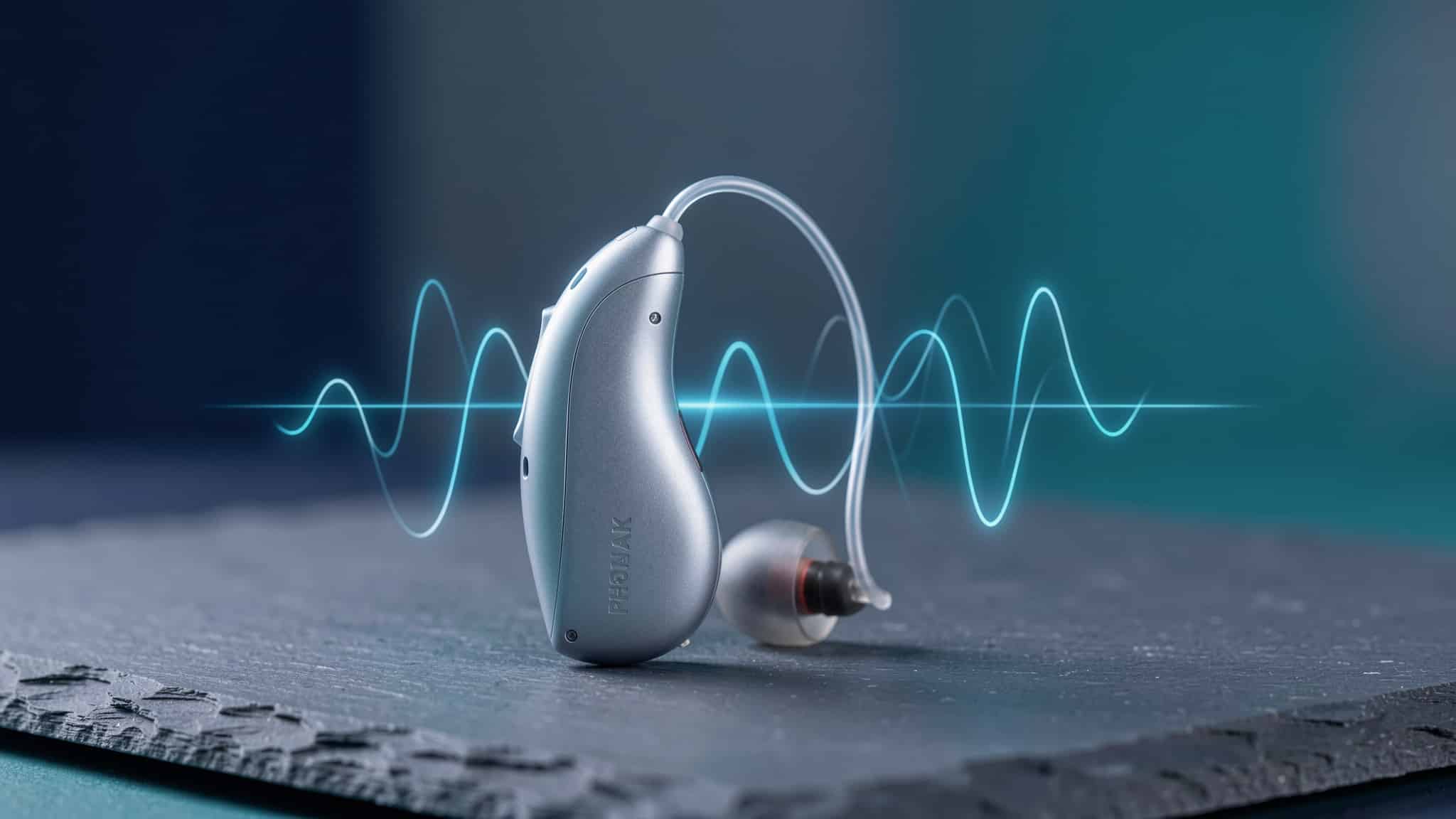
It can take several weeks to adjust to hearing aids, and it’s much more involved than adjusting to new glasses. New hearing aid users adapt in multiple layers: physical comfort, your own voice, environmental sounds, sound quality, and establishing a daily hearing aid routine.
As an audiologist, I’ve helped many hearing aid users through this process, and I’m excited to address common questions and offer tips to help you get started.
Tips for Adjusting to Hearing Aids Successfully
If I could give a first-time hearing aid wearer just a few pieces of advice, they would be these:
- Wear your hearing aids consistently. The more they become part of your normal routine, the less unusual they will feel.
- Give unfamiliar sounds a little time. The birds, footsteps, keyboard clicks, and other sounds that seem incredibly noticeable on day one probably won’t command nearly as much of your attention a few weeks from now.
- Don’t judge your hearing aids by one noisy restaurant. Background noise is challenging even for people with normal hearing, and hearing aids cannot completely eliminate it.
- Tell your audiologist if your own voice or the overall sound quality is really bothersome. Different is normal initially. Miserable isn’t the goal.
- Make sure they’re physically comfortable. Pain and persistent irritation aren’t part of the adjustment process.
- Have realistic expectations. Hearing aids can dramatically improve access to speech, but they don’t restore normal hearing.
- Go back for follow-up adjustments. Your experiences outside the clinic help your audiologist fine-tune your hearing aids for your actual life.
Most importantly, don’t expect yourself to love everything about your hearing aids on day one. Your auditory world may suddenly seem busier, brighter, and much more detailed than it did before. Give yourself some time to become familiar with it—but also remember that getting used to hearing aids should be a partnership between you and your audiologist. If something isn’t working, tell us. There’s often something we can do about it.
How long does it take to get used to hearing aids?
Have you ever stayed overnight in an unfamiliar house? The initial adjustment period with new hearing aids has some similarities. You’re trying to fall asleep in this unfamiliar environment, and then all of a sudden the HVAC system kicks on. It stands out because you’re not used to that sound. But then after a few days those sounds are familiar, and your brain learns not to pay so much attention to them. Think of the first few days with hearing aids a bit like your ears have checked into an unfamiliar hotel.
Research suggests about two-thirds of new users report becoming accustomed to their hearing aids within approximately two months. Adjusting to hearing aids happens gradually. This is a process when wearing the devices starts feeling normal and comfortable, everyday sounds no longer attract as much attention, the sound quality becomes familiar and comfortable, and maintenance feels more routine.
The Hearing Aid Adjustment Timeline
What tends to change, week by week, as new sounds and your own voice become familiar.
Days 1–3
Everything stands out
- Birds, footsteps, and keyboard clicks grab your attention
- Your own voice sounds tinny, boomy, or unfamiliar
- You notice the device physically in or behind your ear
Week 1
Newness starts to fade
- Repetitive sounds start to lose their grip on your attention
- The physical fit feels less foreign
- Restaurants and group settings are still tiring
Weeks 2–4
Sound quality normalizes
- Your own voice starts sounding like you again
- Environmental sounds recede into the background
- Insertion, cleaning, and charging feel more routine
~2 months
Adjustment feels complete
- About two-thirds of new users report feeling accustomed
- Maintenance and daily wear feel automatic
Time alone isn’t the answer. Proper programming, consistent use, counseling and follow-up adjustments are also important.
What will hearing aids sound like at first?
The most notable change for most people initially is the amount of ambient sound that they pick up. Common sounds that new hearing aid users report include:
- Birds
- Footsteps
- Keyboard clicks
- Turn signals
- Running water
- Dishes and silverware
- Paper rustling
- Hair brushing against hearing-aid microphones
And while these sounds may be suddenly very noticeable, this is typically not the result of overamplification. High frequency hearing loss is the most common type of hearing loss, and when we amplify high frequency sounds, speech will sound more clear, but soft, high-frequency ambient sounds will also become more audible.
Over time, the brain becomes better at treating many of these sounds as ordinary background information rather than something requiring attention.
:format(webp))
Why does my own voice sound strange?
The wearer's own voice sounding unusual is one of the most common complaints I hear from first-time hearing aid users.
So why is that? Think about hearing someone's voice over a phone call and then meeting them in person for the first time. You immediately recognize the voice, but it doesn't sound quite the way you expected. Neither version is necessarily wrong, you're simply hearing parts of the voice that weren't available to you before.
While not a perfect analogy, you might notice that your voice sounds louder, tinny, boomy, and different than what your voice used to sound like. The reason the voice sounds so different is the combination of hearing your own voice through bone conduction, some potential occlusion due to the dome tip or earmold, and then the amplified sound through the hearing aid. Most new hearing aid wearers can adjust to the way their voice sounds and over time don’t notice it anymore. .
If your own voice remains bothersome during the initial adjustment period, your audiologist can also make adjustments to lessen the discomfort. So don’t give up if this is something you’re struggling with.
:format(webp))
How many hours per day should I wear hearing aids?
Research shows that wearing hearing aids for 8 hours per day or more is ideal for long-term hearing aid success. I recommend that patients wear them for most waking hours whenever possible, as consistent use is associated with better long-term hearing aid success. Additionally, wearing hearing aids regularly gives you more real-world experience to identify what is and what isn’t working.
Should I gradually increase my wear time?
Wear schedule can be individual. Some people are comfortable wearing their hearing aids throughout the day immediately, while others may find that easing into full-day wear makes for a more comfortable experience. As long as the hearing aids are comfortable, all-day wear is ideal. Taking an occasional break to let your ears rest or because the sound feels overwhelming is perfectly reasonable, especially during those first few days.
However, I don’t recommend only wearing your hearing aids when you think you “need” them. If you put them in only when you go to a restaurant, party, or other difficult listening environment, you’re jumping straight into some of the most challenging situations for hearing aid users. Instead, start by wearing them during your normal daily routine, and then when you find yourself in those more challenging situations, you’ll already be used to some of the hearing aid processing.
Where should I wear my hearing aids when I’m first adjusting?
Your own home is actually one of the best places to start. Have a conversation with your spouse or family member, watch television, go for a walk, or wear your hearing aids while doing things around the house. These familiar situations give you an opportunity to experience amplified sound without also trying to navigate a particularly difficult listening environment.
:format(webp))
As you become more comfortable, start introducing more challenging situations like restaurants, group conversations, meetings, social events, and busy stores.
And remember that even excellent hearing aids don’t eliminate background noise. A busy restaurant may still be difficult, particularly if the person you’re trying to hear is several feet away. Your goal shouldn’t necessarily be to hear every word perfectly in every situation. Instead, pay attention to whether communication is easier with your hearing aids than without them.
Does your brain need to “relearn” how to hear?
No, your brain doesn't need to "relearn" how to hear, but it does need time to adjust. If you've been trying to adapt to your hearing aids for weeks and they still don't sound right, the issue might sit outside your brain.
A lot of the adjustment that happens during the first few weeks is simply becoming accustomed to hearing sounds differently. Sounds that initially caught your attention start fading into the background. The sound quality of your hearing aids becomes familiar. You also become better at using your hearing aids and develop strategies for handling difficult listening situations.
What we don’t have strong evidence for is the idea that wearing hearing aids creates a large “training effect” where speech understanding automatically gets substantially better after a certain number of weeks or months. Most of the improvement in speech audibility happens when properly programmed hearing aids give you access to sounds you weren’t hearing before.
:format(webp))
That distinction is important because sometimes hearing aid users are told that they simply need to give their brain more time when something isn’t working well. Adjustment is real, but if speech continues to sound unclear, everything is uncomfortably loud, or you’re struggling in situations where you expected to hear better, it may be time for an adjustment rather than more patience.
Does the severity of hearing loss affect hearing aid adjustment?
You might assume that the worse someone’s hearing loss is, the harder it will be for them to adjust to hearing aids. In practice, it isn’t quite that simple.
Someone with a mild hearing loss can sometimes have a surprisingly noticeable adjustment period. They may already hear quite a bit without hearing aids, so the addition of amplified environmental sounds can really stand out. They may also notice less of a dramatic difference between wearing and not wearing their hearing aids, particularly in quiet environments.
Someone with a moderate hearing loss, on the other hand, may immediately notice that conversations are easier and appreciate the benefit of amplification.
With severe or profound hearing loss, hearing aids can make a tremendous difference in audibility, but there is another important consideration: making speech louder doesn’t necessarily make it perfectly clear. When there is significant damage within the auditory system, hearing aids can restore access to sounds, but they cannot restore normal hearing. This is why realistic expectations are particularly important for someone with a more significant hearing loss.
How long you’ve had hearing loss matters, too
The degree of hearing loss is only one piece of the puzzle. How long you’ve been living with that hearing loss may also influence your experience.
Hearing loss typically develops gradually. You probably didn’t wake up one morning and suddenly stop hearing birds, footsteps, or the high-frequency consonants in speech. Those sounds disappeared little by little, and your brain gradually became accustomed to your new version of “normal.”
Then you put on hearing aids and many of those sounds come back all at once.
This is one reason I encourage people not to wait until their hearing loss becomes severe before considering hearing aids. The goal isn’t simply to make sounds louder. It’s to maintain access to the sounds and speech information that you use in everyday life and preserve those connections.
Is it harder to adjust to hearing aids when you’re older?
Age alone doesn’t determine whether someone will be successful with hearing aids. I’ve worked with older adults who adapt to their hearing aids very quickly and younger adults who need considerably more time. While we can generalize the adjustment experience, it is ultimately an individual process.
There are, however, some age-related factors that can make hearing aid use more challenging. Vision and dexterity can affect how easily someone can insert a hearing aid, change a dome or filter, or clean the device. Comfort with technology can influence how someone feels about using a smartphone app or Bluetooth features. Cognitive changes can also make learning a new routine more difficult for some people.
:format(webp))
Fortunately, hearing aids have also become easier to use in many ways. Rechargeable batteries eliminate the need to handle tiny disposable batteries, automatic programs reduce the amount of manual adjustment needed, and an audiologist can often simplify controls for someone who doesn’t want to manage a lot of technology or use a Smartphone app.
The important thing is to match the hearing aid and the fitting process to the individual rather than assuming someone will struggle simply because of their age.
How can I make hearing aids more physically comfortable?
Hearing aids should not hurt. You may initially notice that something is sitting in or behind your ear, but persistent soreness, pressure, or pain is not something you should simply try to get used to.
For receiver-in-canal () hearing aids, which are one of the most common hearing aid styles today, small changes can make a big difference in comfort. The receiver wire needs to be the appropriate length, and the dome needs to fit comfortably inside the ear canal. If the receiver keeps working its way out of the ear, a small retention wire—sometimes called a sport lock—can help keep it securely in place.
If something feels uncomfortable, tell your audiologist. Sometimes, a very small change, like using a different dome size or style, fixes the issue. Additionally, custom-made earmolds may also be an option that can solve both physical and acoustic issues.
What about itchy ears?
Mild itching is another complaint I hear from some first-time hearing aid users. Your ear canal may simply be getting accustomed to having a dome or earmold sitting inside it, particularly if you already tend to have dry skin.
This often improves as you get used to wearing your hearing aids. If dry skin seems to be contributing, ask your audiologist or physician whether it is appropriate to use a small amount of mineral oil in the ear canal before bed once or twice per week.This wouldn’t be an option for someone with an active perforation or other concern, but a modest amount of mineral oil can help make hearing aid wearing more comfortable for some wearers.
Persistent itching is a different story. If your ear is painful, red, draining, or extremely itchy, take the hearing aid out and have your ear evaluated. Sometimes changing the size or material of the dome is enough to solve the problem, but an ear infection or skin condition should not be mistaken for normal hearing aid adjustment.
Can you sleep with hearing aids?
For most people, I recommend taking hearing aids out before going to sleep. This gives your ears a break from having something in the ear canal, allows any accumulated moisture to dry, and gives rechargeable hearing aids an opportunity to charge overnight.
There also isn’t a good reason to sleep in hearing aids simply because you’re trying to adjust to them faster. Wearing your hearing aids consistently during your waking hours gives you plenty of exposure to amplified sound.
:format(webp))
There are exceptions. Someone with severe or profound hearing loss may depend on hearing to detect important sounds overnight, such as a baby crying, a medical-device alarm, smoke or carbon-monoxide alarms, or another safety signal.
In those situations, talk with your audiologist about the best solution. Depending on your hearing loss and your specific needs, there may also be alerting devices that use vibration, flashing lights, or other signals so that you don’t have to depend exclusively on your hearing aids while you sleep.
Don’t Wait Until Your Next Appointment If Something Isn’t Right
One of the biggest mistakes I see new hearing aid users make is waiting too long to tell their audiologist that something isn’t working.
Follow-up adjustments are a normal part of getting hearing aids. Your first fitting gives us an excellent starting point, but your experiences in the real world provide information that we can’t get entirely from testing in the office.
:format(webp))
Normal adjustment
Everyday sounds like footsteps, keyboard clicks, or paper rustling seem unusually noticeable
You’re aware of something sitting in or behind your ear
Mild itching, especially if you already have dry skin
Restaurants and other noisy places are still hard to hear in
Your surroundings feel busier or more detailed than expected
Insertion, cleaning, and charging still feel like a new routine
Call your audiologist
Your own voice is still intolerable after several weeks
Everything sounds uncomfortably loud
Pain or persistent irritation that doesn’t ease up
Ear is red, painful, draining, or extremely itchy
Speech isn’t clear, even in quiet settings
Frequent feedback or whistling
Hearing aids keep working their way out of your ears
You’re avoiding wearing them because you don’t like how they sound
Call your audiologist if your hearing aids are painful, your own voice continues to be intolerable, everything seems excessively loud, speech isn’t clear, the hearing aids keep working their way out of your ears, or you’re experiencing frequent feedback or whistling. And definitely speak up if you find yourself avoiding your hearing aids because you don’t like the way they sound.
Sometimes a patient comes back and tells me, “I know I just need to get used to it.” Sometimes that’s true. But sometimes we can make a small adjustment that makes the hearing aids immediately more comfortable. You don’t get extra credit for suffering through a hearing aid fitting that isn’t working for you.
Frequently Asked Questions
Amy Sarow, Au.D.
Director of Consumer Education & AudiologyDr. Amy Sarow is a Doctor of Audiology and nationally recognized hearing health expert. She helps consumers better understand hearing loss, hearing technology, tinnitus, and the role hearing health plays in healthy aging.
As HearingTracker’s Director of Consumer Education & Audiology, Dr. Sarow develops evidence-based, practical resources that empower people to make informed decisions about their hearing care and technology. She is especially passionate about translating complex medical and audiological information into clear, accessible guidance for consumers and their families.
Dr. Sarow serves on the Forbes Health Advisory Board and has been featured as an expert source by NPR, BBC Future, and other media outlets.