EssilorLuxottica Launches Nuance Audio Plus Hearing Glasses
The second generation of Nuance Audio hearing glasses adds improved amplification and speech clarity, longer battery life, physical controls, new frame choices, and hands-free calling and audio streaming for iPhone users.)
Featured Products
Compare allHearing aid glossary
Looking that up…
Terms are matched automatically. A definition may not fit every context.
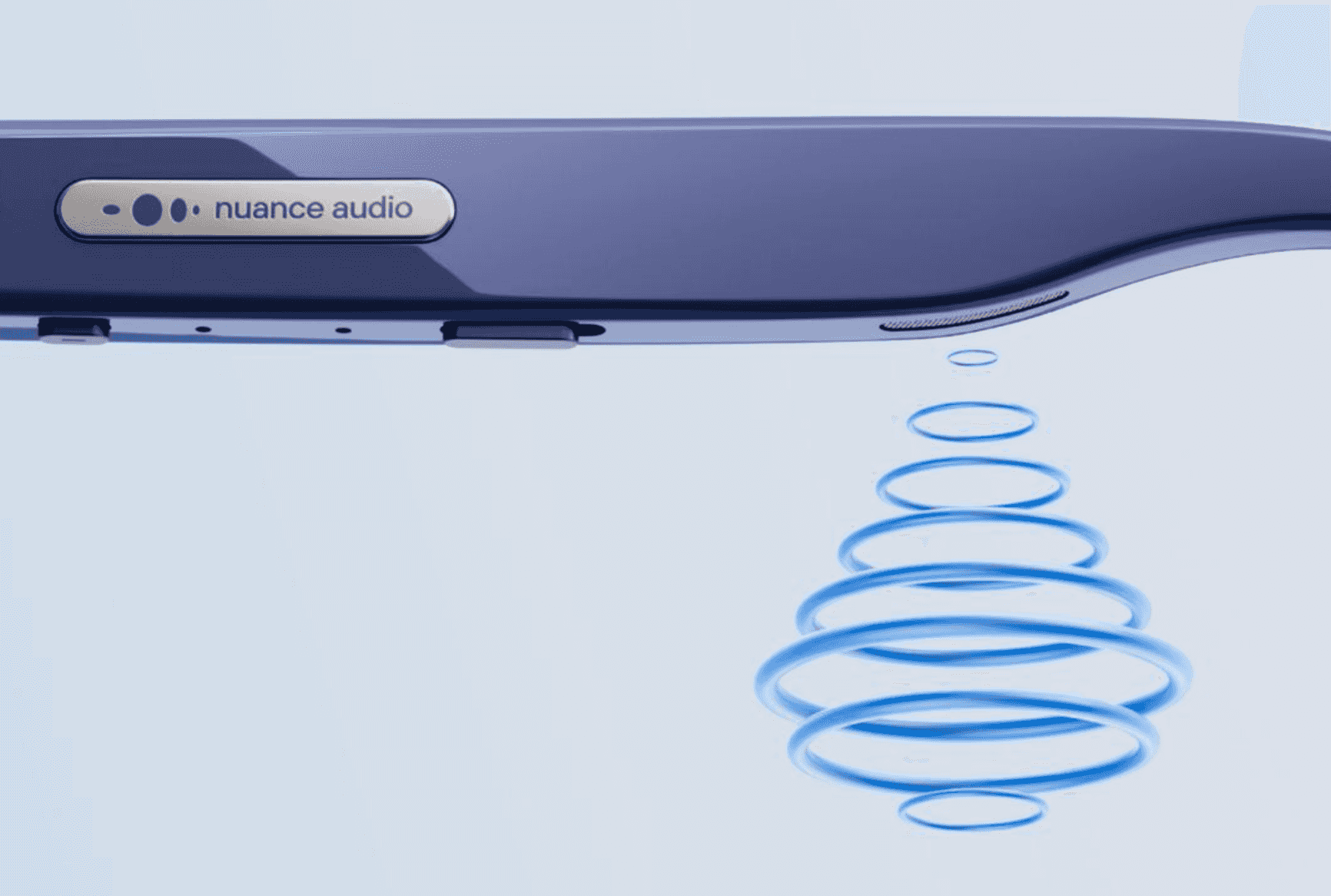
Vision care giant EssilorLuxottica has launched Nuance Audio Plus, the second generation of its over-the-counter hearing glasses for adults with perceived mild-to-moderate hearing loss. The new model combines discreet, open-ear amplification with improved sound performance, longer battery life, hands-free calling for iPhone users, and an expanded selection of frame styles and colors.
Like the first-generation product, Nuance Audio Plus uses open-ear speakers built into the frames’ temples. Because the speakers direct amplified sound toward the ears without blocking the ear canals, users can remain aware of their surroundings, enjoy natural sound, and avoid the plugged-up sensation that can accompany some conventional hearing aids. The new generation uses larger speakers positioned more effectively toward the ear canals, helping to boost low frequencies and improve listening. Nuance says the new enhancements can boost clarity and improve hearing in noise up to 3.5 in noisy environments.
Nuance Audio Plus starts at $829 in the United States, with the final price depending on the selected lenses. The original Nuance Audio Glasses remain available as a lower-priced option starting at $699. Both generations are available through authorized optical and hearing care professionals, while online availability varies by country.
Stefano Genco, Global Head of Nuance AudioThe response to Nuance Audio Glasses has been extremely positive, confirming that consumers are looking for a more natural and desirable way to access hearing support. In just one year, we have expanded to 14 countries and more than 18,000 stores, reaching consumers who are, on average, five years younger than traditional hearing-aid customers, with two out of three having never explored traditional hearing aids. With Nuance Audio Plus, our new product generation, we are taking another important step toward making hearing support a natural part of everyday life.
EssilorLuxottica launched the original Nuance Audio Glasses in the United States in April 2025. They have since ranked among the 10 best-performing OTC hearing aids for speech in noise as tested by HearAdvisor, while also performing well for speech in quiet. The glasses earned a 4.1 (out of 5) SoundScore and an A SoundGrade in 2025 under HearAdvisor’s previous scoring methodology. However, the testing did reveal some limitations, including shorter battery life and feedback handling; the new Nuance Audio Plus extends the expected runtime and adds hands-free calling and audio streaming for compatible iPhones. The HearAdvisor lab hopes to test and report on Nuance Audio Plus performance in the near future.
HearingTracker interviewed EssilorLuxottica Senior Director of Audiology Professional Affairs Douglas Beck, , about three pilot studies evaluating Nuance Audio Glasses. The studies reported improvements in speech-in-noise performance, listening effort and ratings for sound quality. Drs. Beck and EssilorLuxottica R&D Audiology Science Manager Tami Harel-Arbeli have another paper in preparation for publication later this week in HearingTracker.
Our early hands-on look
For a closer look at what’s changed, HearingTracker audiologist Matthew Allsop breaks down the major upgrades in Nuance Audio Plus, including changes to the sound system, battery life, controls, fit, charging, and iPhone connectivity. He also looks at the limitations that remain and who these second-generation hearing glasses are likely to suit.

Hands-free calling, and upgraded hearing and battery performance
EssilorLuxottica says Nuance Audio Plus delivers advances in amplification, speech understanding in noise, and the wearer’s perception of their own voice. The glasses use directional microphones and beamforming to emphasize speech coming from in front of the user while reducing the impact of competing sounds.
Battery life has increased to approximately 10 hours under the company’s average operating conditions. By comparison, the original Nuance Audio Glasses were generally rated for up to about 6-8 hours of use. Nuance has also added a new optional portable charging carrying case that carries up to three full charges; a standard charging pad is provided at no extra cost.
Perhaps the major new addition is hands-free calling and audio streaming. When paired with a compatible iPhone running iOS 16 or later, Nuance Audio Plus supports hands-free calling as well as streaming music, podcasts, videos, and other media through its open-ear speakers. EssilorLuxottica describes this as a category-first feature. The calling and media-streaming functions are currently limited to iPhones and are not supported on Android devices.
New temple controls include a dedicated power switch and volume buttons, letting users make basic adjustments without opening the Nuance Audio app. The original model offered only an on/off button on the frame. Tap controls allow you to adjust program modes, including the Frontal (face-to-face) and All-Around (360° sounds) modes, and answer phone calls.
You can also customize your background noise level with three levels of noise reduction and there are five volume levels.
Three frame styles and five colors
Nuance Audio Plus is offered in three frame designs:
- Square 53
- Panthos 48
- Upturn 52
Color choices include Shiny Black, Shiny Burgundy, Deep Blue, Amber, and Olive Green.
:format(webp))
The company says the expanded assortment includes more sizes, universal fitting options, and adjustable nose pads on certain styles. The frames can accommodate different types of optical lenses, including prescription lenses and Transitions® lenses that darken in response to changing light.
The standard package includes Nuance Audio Plus glasses, a foldable case, a cleaning cloth, a charging pad, and a USB-C charging cable. You can buy a dedicated remote control and the portable charging case separately.
App-based hearing controls
Wearers can make additional adjustments through the Nuance Audio App. The app provides two primary microphone modes:
- Frontal mode focuses amplification on someone speaking in front of the wearer.
- All-Around mode picks up and amplifies sounds from multiple directions.
Users can select from four preset amplification profiles—A, B, C, and D—intended to address different patterns and degrees of perceived hearing difficulty. They can also choose among three levels of background-noise reduction and adjust amplification volume on a scale from 1 to 5.
The app is designed to let consumers set up and manage the glasses themselves, although Nuance Audio Plus is also being distributed through optical and hearing care professionals who can help with product selection, fitting, and lenses.
Hearing assistance that looks like eyewear
Nuance Audio Plus is intended for people at different points in their hearing journey. This includes those who have begun noticing that conversations require more effort, particularly in noisy settings, as well as people who recognize that they have hearing loss but do not want to wear a conventional hearing aid. The company says that two-thirds of its Nuance customers had never previously explored traditional hearing aids and that buyers are, on average, five years younger than conventional hearing-aid users.
Nuance Audio glasses are -cleared for adults with perceived mild-to-moderate hearing loss. They combine vision correction and sound amplification in one device but do not include a hearing test or individualized professional programming comparable to the fitting process for prescription hearing aids.
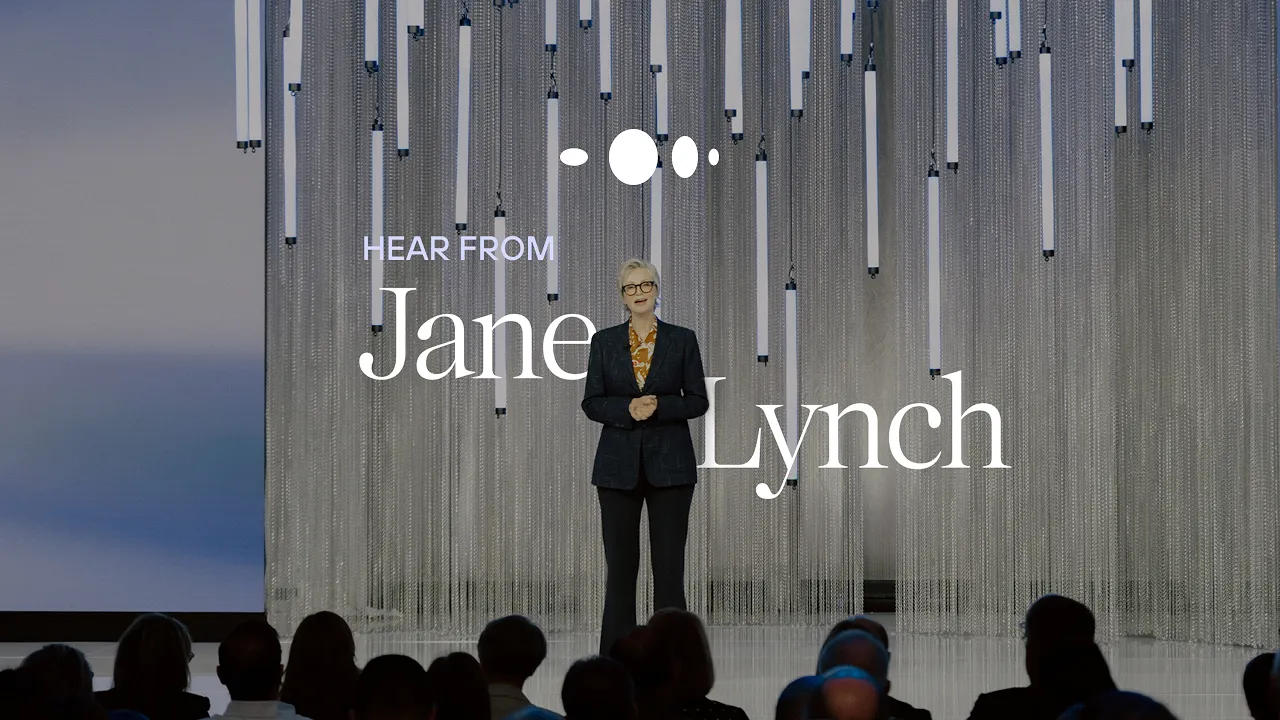
The first-generation product was also named among TIME’s Best Inventions. Emmy Award-winning actor and comedian Jane Lynch has been among the product’s most visible users and advocates.
According to the World Health Organization, approximately 1.6 billion people worldwide have some degree of hearing loss, including an estimated 1.25 billion with mild-to-moderate impairment. Despite the size of that population, nearly 90% have not adopted a hearing solution.
With the original Nuance Audio Glasses remaining in the lineup, the company is positioning the $699 model as its more affordable entry point and the $829 Nuance Audio Plus as the upgraded option for consumers seeking longer battery life, physical controls, additional frame choices, improved audio performance, and iPhone calling.
For more information, please visit the Nuance Audio website.
Editor’s note: An earlier version of this article incorrectly stated that Nuance Audio Plus supported hands-free iPhone calling but not audio streaming for music, podcasts, and other media. The glasses support both calling and media streaming with compatible iPhones. The article has been corrected.
Karl Strom
Editor in ChiefKarl Strom is the editor-in-chief of HearingTracker. He was a founding editor of The Hearing Review and has covered the hearing aid industry for over 30 years.