OTC Hearing Aids and Nuance Audio Glasses: Innovation & Outcomes 2026
OTC hearing aids have rapidly expanded consumer options, with recent data showing that many users are first-time purchasers who often seek professional support. Here is a review of the evolving OTC market and recent clinical findings on Nuance Audio Glasses.

Featured Products
Compare allHearing aid glossary
Looking that up…
Terms are matched automatically. A definition may not fit every context.
Over-the-counter () hearing aids were approved by the Food and Drug Administration () on October 17, 2022. Two primary reasons the FDA approved OTC hearing aids were to make hearing aids more affordable/less expensive and to make these products more accessible.1 The FDA approved OTC hearing devices for adults with perceived mild-to-moderate hearing loss and for whom there were no medical contraindications.2
OTC hearing aids quickly settled into online and retail locations across the United States. However, since 2022, some OTC manufacturers exited the market, some joined forces, some relabeled their products, and many creative OTC products entered the market.
Hearing and Listening Demographics
The demographics of the hearing healthcare marketplace remain staggering. Based on a population of some 342 million people in the USA,3 estimates indicate 73 million people have hearing loss4 and an additional 26 million Americans have no audiometric hearing loss but have hearing difficulty and speech-in-noise () complaints.5 SIN complaints are common and may be referred to as “sub-clinical,” “central,” or “auditory processing” issues.
This would suggest that approximately 100 million people in the United States have hearing and/or listening problems. That’s almost 1 in 3 people. In a recent study, Humes6 reported 85-90% of those with mild-to-moderate hearing loss have an unmet need for hearing healthcare, resulting in approximately 58-60 million people who may be candidates.
Why Hearing Screenings Cannot Replace Audiometric Comprehensive Evaluations
Harel-Arbeli & Beck7 recommended audiometric comprehensive evaluations (ACE) by a licensed hearing care provider for individuals concerned about their own or a loved one’s hearing health. The authors stated hearing health is crucial for numerous life metrics, including but not confined to:
- Hearing
- Listening
- Communication
- Hearing in noise
- Tinnitus management
- Balance
- Cognitive function
- Mental health
- Personal and social relationships
- Social engagement
- Independence and aging in place
- Financial stability
- Quality of life
Despite more than half a century of professional recommendations for ACE, most people with hearing and listening difficulties do not seek a diagnosis or treatment. Tired, old, and misleading explanations and statements, such as “Your hearing is normal for your age” (to be clear, there is no “normal hearing loss” any more than there is “normal loss of eyesight”), “I hear what I want to hear,” and “People mumble,” are signs and symptoms of high-frequency hearing loss, which is most often not diagnosed or treated.
Contrary to some beliefs, hearing screenings are not the answer. Beck8 addressed significant problems with hearing screenings in a recent article for titled “Hearing Screenings: An Incomplete Peek at a Complex Problem.” Briefly, hearing screenings cannot detect typical, early manifestations of sensorineural hearing loss (). Assessments that can detect these anomalies include extended high-frequency assessment,9,10 speech in noise assessment,11, otoacoustic emissions (), and more—and none of these are included in hearing screenings.
Further, most people who fail hearing screenings simply do not follow up with a licensed hearing care professional.8
The Professional Dilemma: Meeting Patients Where They Are
The choice hearing care professionals face is whether we should provide assistance (diagnosis and treatment) only to those who obtain comprehensive audiometric evaluations, or whether we should also assist the 58-60 million who have mild-to-moderate hearing loss and an unmet need for hearing healthcare.
Shouldn’t we meet patients where they are? The authors believe we must.
Selected OTC Hearing Aid Literature Review
The Hearing Aid feature for Apple AirPods Pro 2 was released in October 2024. It includes software the FDA authorized as an OTC hearing aid, built into the AirPods form factor. Apple has not released specific sales information for its products. However, Google’s Gemini (July 23, 2026) reports industry analyst estimates (not exact figures published by Apple) indicate 150-200 million AirPods Pro 2 units and millions of Pro 3 units (with OTC features) have been sold. From the release of AirPods in 2016 through May 28, 2026, Google’s Gemini AI reports a cumulative total of some 725 million AirPods sold. This number is four times greater than the 180 million hearing aids sold globally during the same period.
The success and lessons of AirPods underscore that hundreds of millions of people have purchased non-prescription hearing devices. People buy AirPods for different reasons: streaming music and phone calls, noise reduction, increased loudness, and, for some, to work as hearing aids. Apparently, hundreds of millions of people wear hearing products daily, usually only for a few hours. People wear them selectively—where, when, and if they choose.
Jilla & Jorgensen12 report that 70% of OTC hearing aid buyers were first-time purchasers. Conversely, 58% of prescription hearing aid buyers were first-time purchasers. They report traditional/prescription hearing aid owners are generally older, White, college-educated, and retired, with higher incomes than OTC owners.
Although OTC hearing aids represent a “Do-It-Yourself” () approach to hearing care, Picou13 found that about 80% of OTC hearing aid owners received some form of professional support. Those who did receive professional care were more likely to be satisfied with their hearing aids than those who did not—and reported satisfaction levels comparable to prescription hearing aid users. As such, professional support remains an important factor in OTC success.
Dobyan & Powers14 report prescription hearing aid users wear their hearing aids 9.4 hours daily, and OTC users wear theirs 6.8 hours. Dobyan & Kihm15 report most OTC owners (67%) purchase online or in-person from a retailer or pharmacy, yet almost a third (31%) buy their OTC product from a clinic or hearing center.
In a 2025 HearingTracker survey, Bailey16 reports that the average price of hearing aids has been reduced by 42% since 2018 due to OTC, insurance, and the Costco effect. These factors have reshaped the U.S. hearing aid market. Specifically, based on 1,100+ purchasers, the average price paid per pair of hearing aids was $2,694, a significant decrease from $4,672 in 2018. Bailey reports the average price for OTC hearing aids was $500 per pair, while prescription hearing aids averaged $3,400 per pair. Regarding Costco, he reports the average purchase price per pair was $1,674.
Nuance Audio Glasses
Harel-Arbeli & Beck7 reported significant improvements in speech understanding in noise and reduced listening effort with Nuance Audio Glasses. The authors concluded Nuance Audio Glasses provide meaningful communication benefits for adults with perceived mild-to-moderate hearing difficulties. Self-reported outcome measures showed positive user experiences and improved communication.
In a National Acoustic Laboratories (NAL) clinical investigation, Turnbull et al.17 reported that Nuance Audio Glasses provide measurable improvement in speech understanding in noise, strong user preference, and positive self-reported communication outcomes. The authors reported that Nuance Audio Glasses are a practical, accessible solution for adults seeking enhanced communication in challenging acoustic environments.
Folkeard et al.18 at Canada’s National Centre for Audiology reported on 21 adult participants with mild-to-moderate sensorineural hearing loss. Among those, aided speech recognition with Nuance was significantly better than unaided. Listening effort in noise was significantly reduced with Nuance Audio Glasses as compared to unaided. Real-ear measures showed the device provided gain from 750-6,000 Hz, and measured Speech Intelligibility Index scores were significantly better in aided versus unaided conditions. The researchers concluded Nuance Audio Glasses provide improved access to speech, leading to significantly better speech recognition and reduced listening effort in noise.
Albera et al.19 reported 32 adults (average age of 74 years) fitted with Nuance Audio Glasses experienced significant sound-field threshold improvements from 4000-6000 Hz (approximately 10-11 ). They also benefited from improved Speech Reception Thresholds () of 7 dB with 50% intelligibility criteria and 6 dB with 100% intelligibility. The authors state Nuance Audio Glasses provide clinically relevant improvements in pure-tone and speech thresholds while addressing common barriers to prescription hearing aids (i.e., stigma). They concluded that Nuance Audio Glasses may offer a user-friendly amplification option that combines comfort, discretion, and effective sound amplification.
2026: Nuance Audio Plus
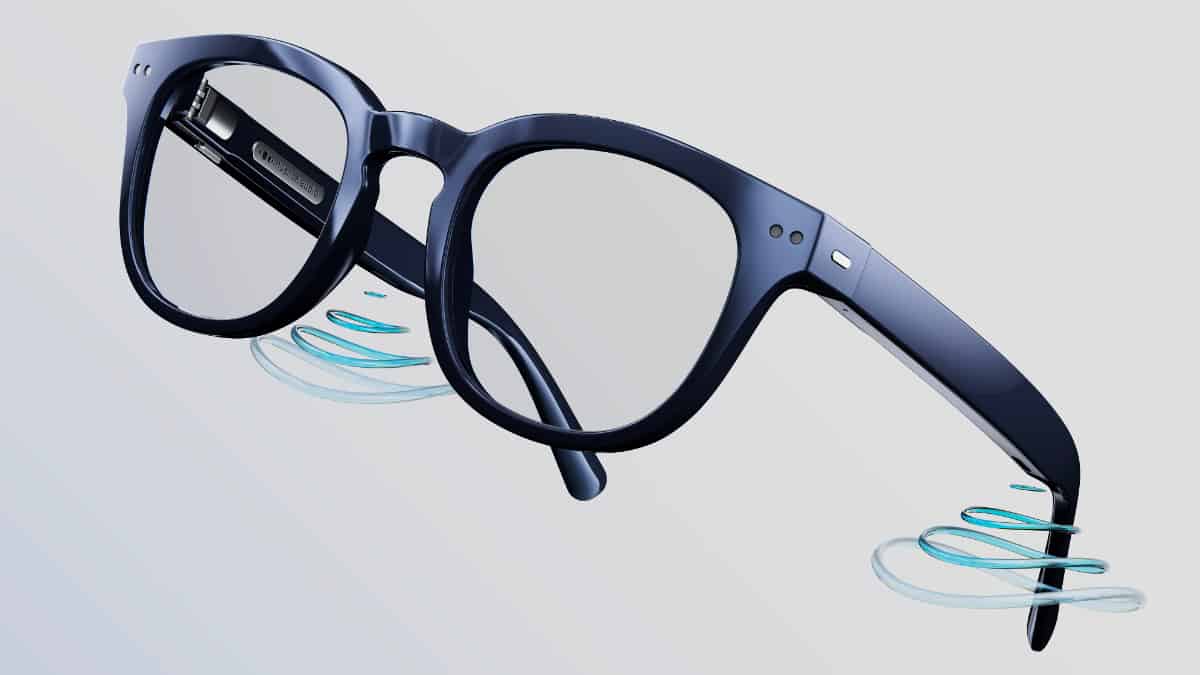
Nuance Audio Plus incorporates several enhancements designed to further improve the user’s experience. These enhancements include increased amplification capability, on-the-frame Bluetooth and volume controls, smartphone streaming ability, extended battery performance, and more.
:format(webp))
The open-ear design lets users stay connected to environmental sounds while benefiting from amplified speech, helping support communication in challenging listening environments. These enhancements are intended to provide a more natural listening experience while maintaining the comfort and cosmetic appeal of the Nuance platform.
Nuance Audio Plus combines enhanced amplification and other functional improvements with an open-ear design. These new hearing glasses help support speech understanding while maintaining awareness of environmental sounds. This approach may be particularly appealing to adults who experience communication difficulties in challenging listening environments but are not interested in traditional hearing aid form factors.
Nuance Audio Plus builds on the concept of providing hearing and listening support for appropriate candidates via a familiar consumer product that can be used selectively as the situation dictates.
:format(webp))
The Evolving Role of OTC Hearing Aids
In the four years since the approved hearing aids (2022) for appropriate individuals, many OTC products have been introduced, renamed, rebranded, modified, and some have been withdrawn.
Among the apparent reasons the FDA approved OTC hearing aids were improved access to amplification and affordability. Many OTC hearing aids successfully address these two factors.
Nuance Audio Glasses and Nuance Audio Plus may help reduce stigma-related barriers associated with traditional hearing aid form factors by embedding the beamforming OTC hearing technology within eyeglass frames to improve the ability to understand speech in challenging situations, reduce listening effort, and offer surprisingly good and outcomes.
Although we recommend comprehensive audiometric evaluations (including extra high-frequency assessment, assessment, and listening and communication assessments) by a licensed hearing care professional as being in the best interest of the patient/consumer, only a minority of people with hearing and listening problems seek professional management. Nuance products offer significant hearing and listening solutions for appropriate candidates.
Authors’ Note: Please note that the reported outcomes should be interpreted within the context of the specific devices, fitting approaches, outcome measures, and listening conditions assessed. Comparisons between Nuance products and prescription hearing aids should not be interpreted as broadly representative of all products or real-world listening situations but should be recognized as representative of the protocols and products evaluated and reported.
References
- US Government Accountability Office (GAO). Over-the-Counter Hearing Aids: Information on the New Medical Device Category. GAO-24-106854. Q&A Report to Congressional Requester: May 7, 2024.
- US Food and Drug Administration (). OTC Hearing Aids: What You Should Know. May 3, 2023.
- US Census. U.S. and World Population Clock. Accessed Mar 31, 2026.
- Haile LM, Orji AU, Reavis KM, et al. GBD 2019 USA Hearing Loss Collaborators. Hearing Loss Prevalence, Years Lived with Disability, and Hearing Aid Use in the United States From 1990 to 2019: Findings from the Global Burden of Disease Study. Ear Hear. 2024 Jan-Feb 01;45(1):257-267. doi: 10.1097/AUD.0000000000001420.
- Beck DL, Danhauer JL. Amplification for adults with hearing difficulty, speech in noise problems—and normal thresholds. J Otolaryngol Res. 2019;11(1):84-88. DOI: 10.15406/joentr.2019.11.00414.
- Humes LE. U.S. Population data on self-reported trouble hearing and hearing-aid use in adults: National Health Interview Survey, 2007-2018. Trends in Hearing. 2023;27. doi:10.1177/23312165231160967
- Harel-Arbeli T, Beck DL. An over-the-counter (OTC) hearing aid option for people with self-perceived mild-to-moderate hearing loss: Nuance Audio Glasses. J Otolaryngol ENT Res. 2025;17(1):9-14. DOI: 10.15406/joentr.2025.17.00558
- Beck DL (2025): Hearing screenings: An incomplete peek at a complex problem. Leader Live: Nov 8, 2025.
- Beck DL, Fling M, Darrow, KN. (2026): Why Extended High-Frequency (EHF) Hearing Assessments Are Necessary. HearingTracker: Jan 6, 2026.
- Motlagh Zadeh L, Silbert NH, Sternasty K, Swanepoel DW, Hunter LL, Moore DR. Extended high-frequency hearing enhances speech perception in noise. PNAS. 2019;116(47):23753-23759. doi:10.1073/pnas.1903315116
- Beck DL, Benitez L. A two-minute speech-in-noise test: Protocol and pilot data. Audiology Today. 2019 [May/June]. 31(3).
- Jilla AM, Jorgensen L. Hearing aid adoption in the OTC hearing aid era: Market trends and consumer insights from MarkeTrak 2025. Sem in Hear. 2025;46(3):184-195.
- Picou EM. Are hearing aid benefit and satisfaction rates higher for traditional or over-the-counter hearing aids? Sem Hear. 2025;46(3):196-208.
- Dobyan B, Powers TA. MarkeTrak 2025: Hearing care in the era of OTCs and wearables. Hearing Review. 2025;32(4):8-14.
- Dobyan B, Kihm J. MarkeTrak 2025: Consumer Perspectives on Hearing Health in an Evolving Market. Seminars in Hearing. 2025;46(3):178-183.
- Bailey A. How much do hearing aids cost in 2026? HearingTracker. Updated July 31, 2026.
- Turnbull B, Meija J, Hou S, Packer S, Cuccato G, Harel T, Beck DL. Clinical performance of Nuance Audio Glasses on adults with perceived mild to moderate hearing difficulties. J Otolaryngology-ENT Res. 2026;18(1):5-8.
- Folkeard P, Sung Y-Y, Harel-Arbeli T, Cuccato G, Scollie S. Performance measures of the Nuance Audio Glasses: behavioral outcomes and real ear measures. Front Audiol Otol. 2026;4:1822238.
- Albera A, Boldreghini M, Girotto L, et al. (2026). A novel approach to hearing amplification: audiometric outcomes from Nuance Audio over-the-counter hearing aid glasses. Acta Otorhinolaryngol Ital. 46:220-227.
Douglas L. Beck
Contributing WriterDouglas L. Beck, AuD, is Adjunct Clinical Professor of Communication Disorders & Sciences at State University of New York at Buffalo and Senior Director of Audiology Professional Affairs at Nuance Audio / EssilorLuxottica.
Tami Harel-Arbeli, PhD
Contributing WriterTami Harel-Arbeli, PhD, is an audiologist, gerontologist, and the R&D Audiology Science & Validation Manager at Nuance Audio / EssilorLuxottica.