ReSound Sensia Launch: AI That Follows the Voice You Want to Hear
GN has launched a new premium hearing aid platform that automates DNN noise reduction, pairing it with precise environmental classification and 4-microphone beamforming to emphasize the conversation a wearer is facing—not simply the loudest voice in the room.)
Featured Products
Compare allHearing aid glossary
Looking that up…
Terms are matched automatically. A definition may not fit every context.
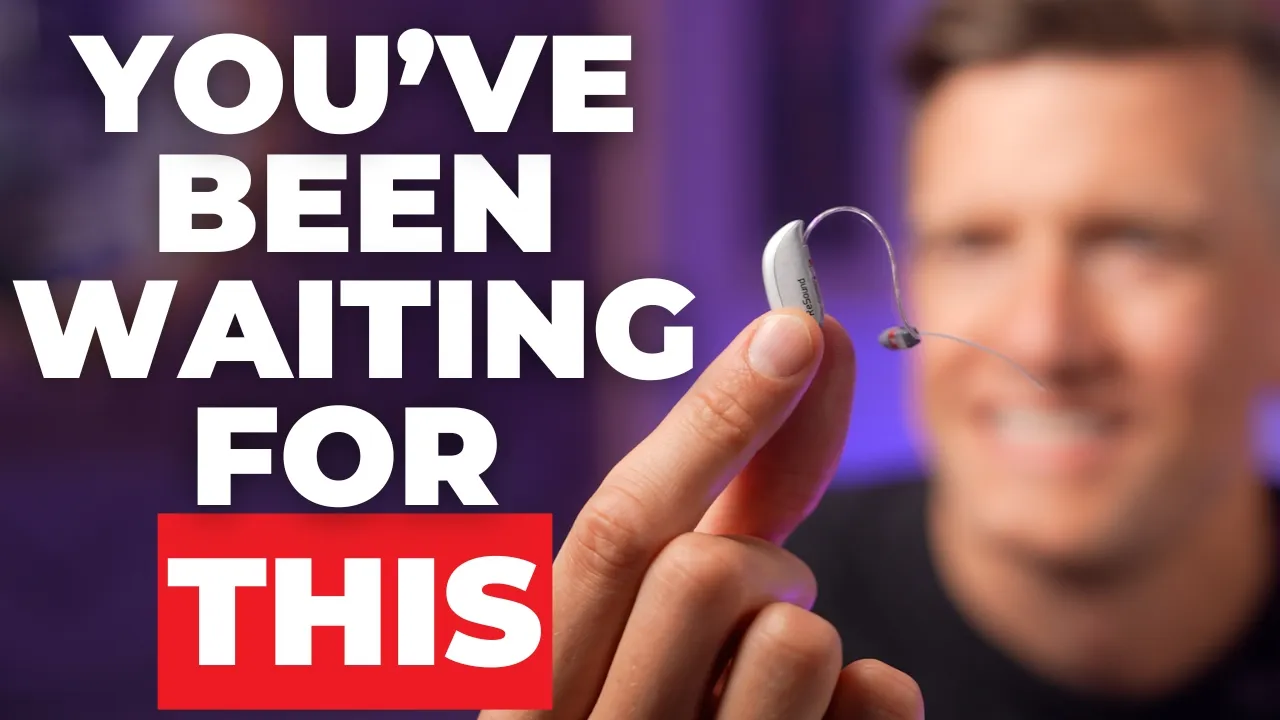
The deep neural networks () increasingly found in the world’s best hearing aids provide impressive speech-in-noise enhancement. But they are not mind-readers.
GN Hearing has unveiled ReSound Sensia, a new premium hearing aid family designed to address one of the main shortcomings of today’s -powered hearing aids: emphasizing the wrong voice or even interpreting background music as the sound the wearer wants to hear. Sensia also adds its new automatic processing without sacrificing the very small size and 24-hour battery life of its predecessor, ReSound Vivia.
Presented to hearing healthcare media during an August 4-5 event at GN headquarters in Ballerup, Denmark, Sensia combines a trio of technologies into a new automatic sound-processing system called Intelligent All-Around:
- AcoustIQ, which classifies the sound environment and determines which features to engage
- A 4-microphone beamformer that gives preference to speech in the direction the wearer is facing
- DNN denoising that reduces competing speech and other distractions around the intended talker


GN says this technology combination can “lift” the conversation a wearer is trying to follow rather than simply locking onto the loudest or most prominent voice in the room.
The launch includes receiver-in-ear () and custom in-ear models, connectivity, updated fitting software, and new options for Cochlear Nucleus users. Sensia will be available in the United States, Germany, and Austria beginning August 20, with more markets to follow. The corresponding Beltone family is called Beltone Illuminate.
HearingTracker and our partner lab HearAdvisor have not yet formally evaluated Sensia, but we hope to test it soon.
:format(webp))
What makes Sensia different from Vivia?
GN Hearing President Peter Justesen described Sensia as a major premium introduction, but stressed that novelty alone is not the objective. “Innovation for us is not just something we do for the sake of innovation,” he said. “We do innovation very intentionally because we want to help people with the needs they have.”
ReSound Vivia, introduced in early 2025, brought a dedicated processor to what was the smallest rechargeable microRIE on the market. Its strongest DNN-based noise reduction, however, had to be activated through a dedicated hearing-in-noise program.

Sensia’s key advance is making that processing automatic. At the premium Sensia 9 level, the hearing aids can recognize a challenging speech-in-noise environment and automatically combine the with the beamformer within the main Intelligent All-Around program. The wearer no longer has to stop to select a special program via the hearing aid, smartphone app, or remote control.
GN is also extending DNN denoising to the Level 7 technology tier, though it remains available only through a manually selected hearing-in-noise program.
In an interview with HearingTracker, GN Chief Technology Officer Brian Dam Pedersen called automation the most important technical change from Vivia. “The biggest benefit that people will get from Sensia, especially in the Level 9 version, is that they don’t have to think about the hearing aid in order to get the full benefit,” he said.
:format(webp))
If he’s right, that could be an important practical advantage. I have several hearing aids I use for my mild-to-moderate hearing loss, and while most work very well, I tend to reach for Vivia first because it is so easy to use: you turn it on and it works, with little need to fiddle with buttons or apps. However, I only occasionally go into the app to activate the most aggressive speech-in-noise program.
Sensia uses the same chips and essentially the same as Vivia. GN Chief Audiology Officer Laurel Christensen, PhD, said the innovation lies in how Sensia classifies the environment, combines the DNN with other processing, and decides when to activate it. GN also benefited from anonymized telemetry from more than 250,000 connected users, which showed when Vivia wearers selected its second program and helped identify situations in which users wanted more hearing-in-noise assistance.
Intelligent All-Around: Three technologies working together
Intelligent All-Around is GN’s name for the complete automatic program, while AcoustIQ is the system that analyzes the sound scene and orchestrates the other features.
Katie Ogden, GN’s Head of Product and Partner Marketing and a registered hearing aid dispenser in the UK, described classification as the hearing aid’s “unsung hero” and “the conductor of everything.”
A powerful or beamformer provides limited benefit if the hearing aid fails to recognize when it should be activated. Overly aggressive processing can also reduce awareness, interfere with music, and waste battery power. “AcoustIQ is not just classification,” Ogden explained. “It’s also the part that comes afterward, which is engaging the features.”
Sensia’s automatic program moves among three strategies. In quieter environments, both aids remain largely omnidirectional to preserve spatial cues. As noise increases, Sensia can shift into ReSound’s Better Ear strategy, using asymmetric directionality so one side becomes more directional while the other preserves broader awareness, allowing the brain to process acoustic information naturally.
When Sensia 9 detects sustained speech in front of the wearer in the presence of sufficiently loud noise—the classic “cocktail party” problem—it enters its Intelligence Focus mode, combining the 4-microphone beamformer along with the DNN denoising to emphasize the speech the wearer is facing.
:format(webp))
Importantly, Sensia is deliberately slow to make that strongest transition. AcoustIQ samples the acoustic environment about every 1.5 milliseconds and consolidates information every 3-4 seconds, but it looks for a consistent pattern of conversation before changing modes. Ogden said it can take about a minute before Sensia enters Speech Intelligibility mode and automatically engages denoising.
GN says this prevents frequent jumps between processing modes as sounds briefly change, creating a more stable listening experience.
Directionality and sound classification for hearing in noise
DNN denoising can separate speech from competing sound, but in a room with several talkers it may favor the most prominent voice—even if that person is two tables away from you in a restaurant. Sensia attempts to solve that problem by pairing the DNN with its beamformer, making speech in front of the wearer the primary target.
Sophie Hanson, GN Hearing Senior Director of Product Marketing and Brand, said the approach relies on a natural cue: people generally look toward the person they wish to hear. “It’s about essentially supporting human intention,” she said. “Where you look, that’s where you want to hear.”
Sensia still preserves lower-frequency omnidirectional information outside the forward beam so users retain spatial awareness. As Dam Pedersen explained, GN’s aim is not simply maximizing directionality, but providing better speech understanding while maintaining spatial cues the brain uses naturally.
:format(webp))
Sensia also relies on two different types of noise reduction, depending on the listening situation. Its denoising is designed for very difficult environments where there is a prominent speech signal to preserve while reducing competing sounds.
But in environments dominated mainly by nonspeech noise (e.g., a vacuum cleaner or fan), a speech-trained DNN has less useful information to work with and can introduce unwanted artifacts, which Christensen referred to as DNN “hallucinations.” In these situations, Sensia instead uses ReSound’s established Noise Tracker II noise-reduction system. The automatic program determines which approach is better suited to the sound environment and switches between them as needed.
“We need to apply the legacy noise reduction when there isn’t speech, and the deep neural network when there is,” Christensen said. “Integrating all these things is a harder job than people really understand.”
AcoustIQ, environmental classification, and the music problem
GN argues that the key issue in environmental classification is not only correctly identifying the environment but also activating the right features afterward.
Christensen noted that clinicians have little practical way to verify this in everyday use. “There are too many patients out there with hearing aids that are not engaging the features that are being paid for,” she said.
GN highlighted two separate claims for AcoustIQ based on their research1-3:
- 91% environmental-classification accuracy, based on earlier testing across 10 acoustic environments. Most errors occurred in particularly complex situations where speech was present but not prominent.
- 88% higher classification and feature-engagement accuracy than the closest premium competitor, based on new testing that examined both whether hearing aids correctly identified speech, noise, and speech in noise and whether they subsequently engaged appropriate directionality and noise reduction.
One finding was particularly striking. In one test, a competing premium hearing aid failed to activate either directionality or noise reduction in a noise-only condition with mixer and vacuum-cleaner sounds. GN cites this as an example of why feature engagement matters as much as classification.
Music was another confounding factor. Some competing devices interpreted speech-in-noise scenes with background music as music environments and consequently failed to activate speech-focused processing. One device even classified vacuum-cleaner noise as music.
Sensia deliberately does not automatically classify music. GN says the hearing aid cannot know whether someone at a jazz club wants to hear the band or the person across the table. “Hearing aids can’t read minds,” Dam Pedersen said. Sensia therefore prioritizes speech in its automatic program; users who want to focus on music can manually select a dedicated music program.
GN acknowledges that mixed-purpose situations—such as singing while receiving instruction—remain challenging and may still require manual intervention.
What the early studies show
GN presented both internal and external evidence related to Sensia’s ability to prioritize a forward-facing talker.
In one internal study involving 20 hearing aid users, participants heard speech from the front and equally loud speech from the side. GN reported that Sensia made the frontal talker most audible for 80% of participants, while a comparison hearing aid more often favored the talker at 90 degrees.
Researchers at Hörzentrum Oldenburg subsequently tested a similar scenario. With equally loud talkers, Sensia more consistently favored the person in front. When the side speaker was made louder, Sensia’s performance declined, but the comparison device reportedly emphasized the louder side talker almost 80% of the time.
It should be noted that the endpoint was which talker was most audible (i.e., not a conventional speech-recognition score that shows how many additional words users will understand). Instead, this research supported GN’s intended-speaker argument that the hearing aid is focusing on the speaker of interest.
Battery life, styles, and technology levels
Despite adding automatic denoising, Sensia’s rechargeable microRIE retains essentially the same small size and battery performance as Vivia. GN rates the rechargeable microRIE and / models for at least 24 hours of use, with up to roughly 30 hours depending on usage. Charging options remain broadly similar, although GN is introducing a smaller updated premium portable charger.
:format(webp))
Sensia will be available in rechargeable microRIE, size 312 and 13 , nonwireless , wireless , and rechargeable ITC/ styles, with levels beginning at 4 in some markets.
Sensia 9 microRIE includes the full Intelligent All-Around system with automatic denoising. Sensia 7 brings DNN processing and Clear Focus beamforming to a lower technology tier, but through a manually selected hearing-in-noise program. Custom models use Clear Focus directional processing but do not include DNN denoising at launch.
Auracast: Fully working, not merely “ready”
Sensia retains ReSound’s Bluetooth Low Energy Audio and Auracast capabilities. GN Hearing’s Thomas Olsgaard provided media attendees with a hands-on demonstration of at the Royal Danish Playhouse in Copenhagen, where users can select available broadcasts through the ReSound Smart 3D app.
:format(webp))
GN Hearing Lead Research Scientist Miguel Angel Aranda de Toro, PhD, emphasized that Sensia’s capability is functional at launch rather than dependent on a future firmware update. “I prefer to say we have Auracast fully functional now,” he said. “It’s working.”
At the Playhouse, GN demonstrated direct theatrical sound, enhanced dialogue, and a separate audio-description channel for people who are blind or have low vision.
Aranda de Toro does not expect Auracast to immediately replace existing , but points to advantages including stereo sound, greater bandwidth, simpler installation, selectable audio channels, and broader coverage.
In one GN user study comparing Auracast with a hearing loop, participants gave Auracast an average subjective rating of 8 out of 10 versus 6 out of 10 for the loop. Users described the Auracast signal as fuller, clearer, and more detailed, particularly for music and male voices.
Aranda de Toro sees public assistive listening as only the beginning. Home televisions, transportation, tours, meetings, and other shared-audio experiences could become important applications. “We discovered fire,” he said, “and now we are figuring out what we can use it for.”
At least one model of Sensia also employs a .
Cochlear implant and professional fitting software updates
GN is also introducing ReSound Sensia and ReSound Enzo IA Bimodal, designed to work with Cochlear Nucleus sound processors through the companies’ Smart Hearing Alliance. Enzo IA extends the offering to users who need a super-power hearing aid on the nonimplanted ear.
ReSound Smart Fit 2.4 received a redesigned interface intended to make commonly used controls faster to reach. The software supports GN’s + fitting approach and adds the new NAL-NL3 prescription.
Despite Sensia’s greater automation, clinicians can still fine-tune gain, noise reduction, and other fitting parameters. “They still have the same flexibility that they’ve enjoyed with us previously,” Ogden said.
Why not update Vivia by firmware?
Because Sensia builds on the same chipset as Vivia, including the same , an obvious question is whether it could have been made available to existing Vivia users through a firmware update similar to how Phonak recently allowed previous Infinio users to update to Infinio Ultra.
GN executives say the difference is less about a new DNN than a substantial reworking of how the hearing aids decide when and how to use their available processing. Christensen said Sensia incorporates new steering throughout its automatic program, including lower activation thresholds that bring Better Ear and Speech Intelligibility modes into use more often, as well as revised coordination of the beamformer, DNN denoising, and ReSound’s established noise-reduction system.
“It’s all new steering. It’s not the same steering that Vivia has,” Christensen said. GN also used real-world usage data from Vivia wearers to help determine where those activation thresholds should be set.
Dam Pedersen added that making DNN denoising automatic introduced additional engineering challenges. The hearing aids must determine not only when the listening environment warrants stronger processing but also where the relevant speech is coming from, while managing the DNN’s higher power consumption so the devices can still provide all-day battery life.
GN does not contend that every generational improvement necessarily requires new processing hardware. Dam Pedersen noted that hearing aid manufacturers increasingly build multiple product generations around the same underlying chipsets as software assumes a larger role in performance. However, he said regulatory requirements in some markets can require a device with substantially expanded functionality to be separately named, labeled, and maintained as a different stock-keeping unit.
He also acknowledged a commercial consideration: GN believes the cumulative changes and benefits are substantial enough to warrant positioning Sensia as a brand new product family. The company has provided firmware upgrades to previous hearing aids for features such as connectivity, but chose not to extend Sensia’s new core signal-processing and automatic-steering capabilities retrospectively to Vivia.
Will Sensia make advanced AI feel less complicated?
Sensia’s most consequential advance may not be a new algorithm in isolation. It is the attempt to make several sophisticated systems work together without requiring patients to understand when each should be used.
:format(webp))
The approach still involves tradeoffs. Users need to face the person they want to hear when maximum frontal assistance is required, music remains an intentional program choice, and the system takes time to confirm a difficult sound scene before applying its strongest processing.
But looking toward a communication partner is natural behavior, and GN’s objective is ultimately to make the technology disappear into everyday life. For Hanson, the goal is straightforward: “You put it on, and you just hear.” Ogden expressed the same idea from the clinician’s perspective: “I just want people to put them in and hear well.”
Whether Sensia consistently delivers that experience will depend on real-world clinical outcomes, independent speech-in-noise testing, battery performance, and how reliably its automatic system identifies the situations in which wearers need maximum help. HearAdvisor will be putting Sensia through its own testing soon.
My experience in Ballerup nevertheless made GN’s direction clear: the next stage of hearing aid is not simply identifying more speech or removing more noise. It is determining when that assistance is needed, employing the right signal processing strategies, and helping the wearer hear the people who matter in that moment.
References
- Groth J, Cui T. Proving the classifier right: Using feature activation to validate accurate environmental detection. Resound white paper. May 2026.
- Jespersen , Rubachandran T. Keeping the conversation in front: A combined spatial-denoising approach to managing multi-talker noise. ReSound white paper. May 2026.
- Jespersen CT, Heeren J, Quilter M. Reducing off-axis talker distraction with combined spatial and denoising processing in hearing aids. ReSound white paper. June 2026.
Karl Strom
Editor in ChiefKarl Strom is the editor-in-chief of HearingTracker. He was a founding editor of The Hearing Review and has covered the hearing aid industry for over 30 years.