10 Steps to “Auracasting” Your Community
Auracast has the potential to do more than add a new feature to hearing devices—it could help hearing care providers expand access to better hearing across their communities.)
Featured Products
Compare allHearing aid glossary
Looking that up…
Terms are matched automatically. A definition may not fit every context.
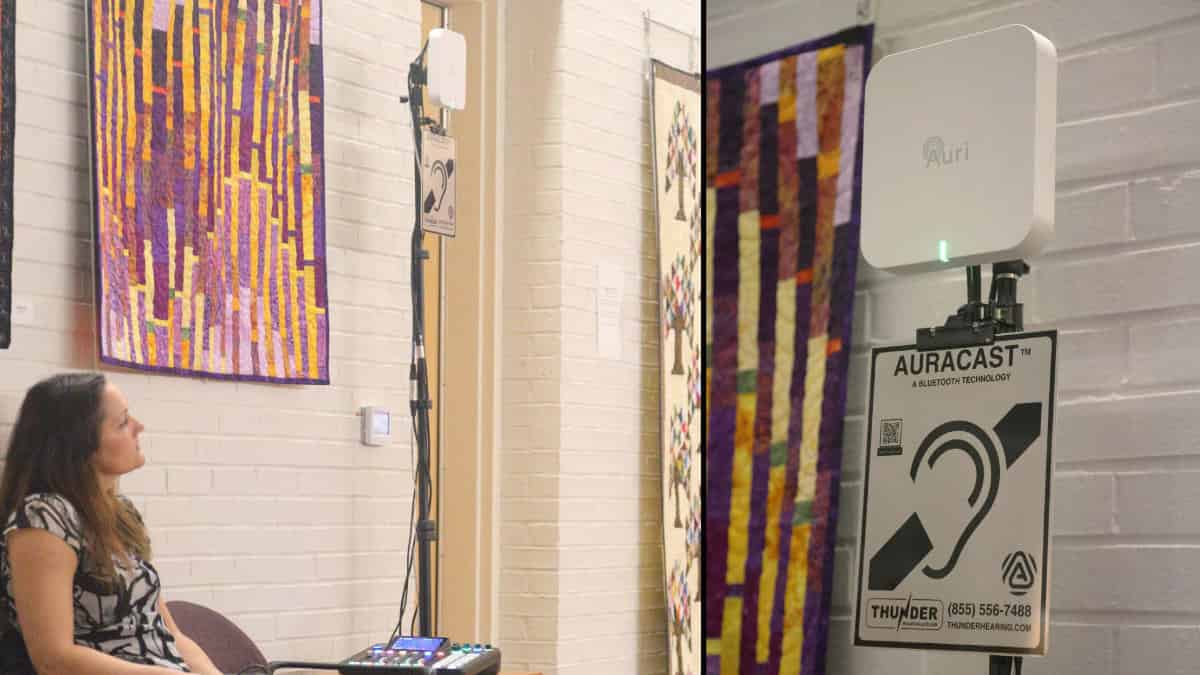
Auracast could put you, your patients, and hearing accessibility in the spotlight in your community.
What is the role of audiologists and hearing aid specialists in improving hearing access in communities? This article outlines critical considerations and includes easy-to-use, actionable handouts to set your patients up for the future and successfully integrate advocacy for , used as an assistive listening system (), into a busy hearing care practice.


is a new wireless technology, built on the Bluetooth standard, that enables a single audio source (phone, TV, public address system) to act like a “radio station” for Bluetooth, allowing users to tune in to audio in public venues via an unlimited number of hearing devices (hearing aids, cochlear implants, or compatible earbuds).
In the very short term, Auracast can become the go-to technology in places without any , although an standard for the technology is not expected to be finalized until late 2027. In the longer term (3, 5, 10+ years), it is expected to replace older, cumbersome assistive-listening systems, such as , to provide a more personalized, discreet experience for users with hearing loss.
:format(webp))
10 Steps to Auracasting
Now is truly the time to get ready for an “ future” while still supporting the existing, proven assistive listening systems—something that is sure to delight your patients.
1. Start with hearing aids built for access
Fit hearing aids that are ADA-Access-Ready. These devices have built-in and Auracast, so your patients are set up for success with any assistive listening system they encounter now and for years to come.
2. Explain why hearing aids aren’t always enough
Inform patients about some limitations of hearing aids, especially for clients who use (nearly) occluding earmolds or have poor speech-in-noise test results. Educate them about their rights under the .
3. Help patients understand their options
Educate patients about the different types of assistive listening systems currently in use and why they are needed.
4. Teach the tech patients can use today
Teach clients how to use existing systems, like (lucky you, if you live in an area where hearing loops are common), and systems with neckloops. This is easy if you offer a (portable) counter loop in your waiting room.
5. Make Auracast part of your practice
Install a commercially available Auracast transmitter next to your waiting room hearing loop. Most commercial transmitters will work with any Auracast-enabled hearing aid and the smartphone app to connect to Auracast broadcast signals.
6. Push for inclusive, ADA-friendly systems
If assistive listening systems are needed in places that are not currently served by one, or if their current system needs replacement, recommend an Auracast system with neckloop receivers to serve users of hearing aids and cochlear implants with telecoils, as well as individuals who have Auracast-enabled devices. It is important to provide neckloops and receivers as they will make the installed Auracast system compliant with the Americans with Disabilities Act (ADA). Encourage patients to use receivers with neckloops.
7. Demo, demo, demo!
Consistent demonstrations of the benefits of Auracast and hearing loops are essential to familiarize patients and significant others with all assistive listening. Put signage up in the waiting room. Demos using both telecoils and Auracast help patients understand how these technologies work and provide a valuable practice opportunity.
8. Turn patients into community advocates
Turn your patients into advocates to gain further traction for your efforts to make your community more accessible to hearing aid users. See how audiologists in Indiana and Wisconsin did this years ago with hearing loops. The process of getting Auracast systems installed is not any different.
9. Work with experienced AV pros, and don't overlook EMI and neckloop users
If you are consulting on Auracast installations in your community, insist that only trained AV professionals with extensive assistive-listening experience (request their client list) complete the work. Resist the urge to do this on your own. Only work with professional-grade Auracast systems that feature built-in AGC in their transmitters and offer solid, easy-to-use Auracast receivers with neckloops. Neckloops ensure that these Auracast meet the Americans with Disabilities Act. Insist that installers measure (Electro Magnetic Interference) in the room(s) where Auracast will be used. Many T-coil-using patients will—before upgrading their hearing aids to include telecoils and Auracast—use these receivers with neckloops, and you do not want their experience negatively influenced by EMI.

“…While picking up an or / receiver with a neckloop may seem inconvenient, assistive listening systems can help you hear much more clearly during a religious service, lecture, movie, or play. Ask for them! You won’t regret it.” — Hearing Better in Public Places
10. Spread the word about the benefits of Auracast to enhance your reputation
Leverage the PR for every Auracast and/or installation. Articles in the newspaper or interviews on a local radio station about this new wireless technology that can help everyone hear better—not just your patients—will benefit you. This PR will enhance your reputation, increase community awareness, and ultimately benefit your practice by instilling confidence in your commitment to improving accessibility and positioning you as a pillar of the community.1,2
I believe will be adopted quickly in places where loops are already prevalent3 and may require more effort in places where professionals have never talked about assistive listening systems, advocated for one, or supported loops. In communities where are common and used regularly, patients with this experience will likely become eager Auracast neckloop-receiver users and more open to upgrading to -access-ready hearing aids. Consumers without this experience may need a bit more convincing that being proactive about assistive listening is worth it.
Further reading
- Taylor B. Unitron Practice Development Series: How to Become a Pillar in Your Community: Knowledge-Based Marketing Tactics. AudiologyOnline. Feb 23, 2015.
- Kochkin S, Dennison L, Jackson L. What is your customer loyalty quotient (CLQ)? Hearing Review. 2014;21(9):16-21.
- Sterkens J. Auracast Is Here. Now What? HearingTracker. April 2, 2025.
Juliëtte Sterkens, AuD
Guest AuthorDutch-born audiologist and TEDx speaker Dr. Juliëtte Sterkens, AuD, has over four decades of experience in audiology, hearing rehabilitation, and assistive listening. She was previously a co-owner of a multi-clinic audiology practice in Wisconsin. Thanks to grant funding from the David and Carol Myers Foundation, Dr. Sterkens has been on her encore career since 2012 as an advocate for hearing loops and other assistive technology with the Hearing Loss Association of America. She has fostered some thousand hearing loop installations in, and many more outside, Wisconsin. She has received several awards for her work, including the American Academy of Audiology Presidential and Wisconsin Audiologist of the Year awards. She serves on the board of HEAR-in-the-Fox Cities, a non-profit that helps pay for hearing aids for children in North-East Wisconsin.