What's It Like to Wear Oticon Reveal Hearing Aids? A Personal Perspective
Hearing aid wearer Digby Cook reviews Oticon Reveal’s Dual AI, music streaming, and simple controls—and finds plenty to like.
Featured Products
Compare allHearing aid glossary
Looking that up…
Terms are matched automatically. A definition may not fit every context.
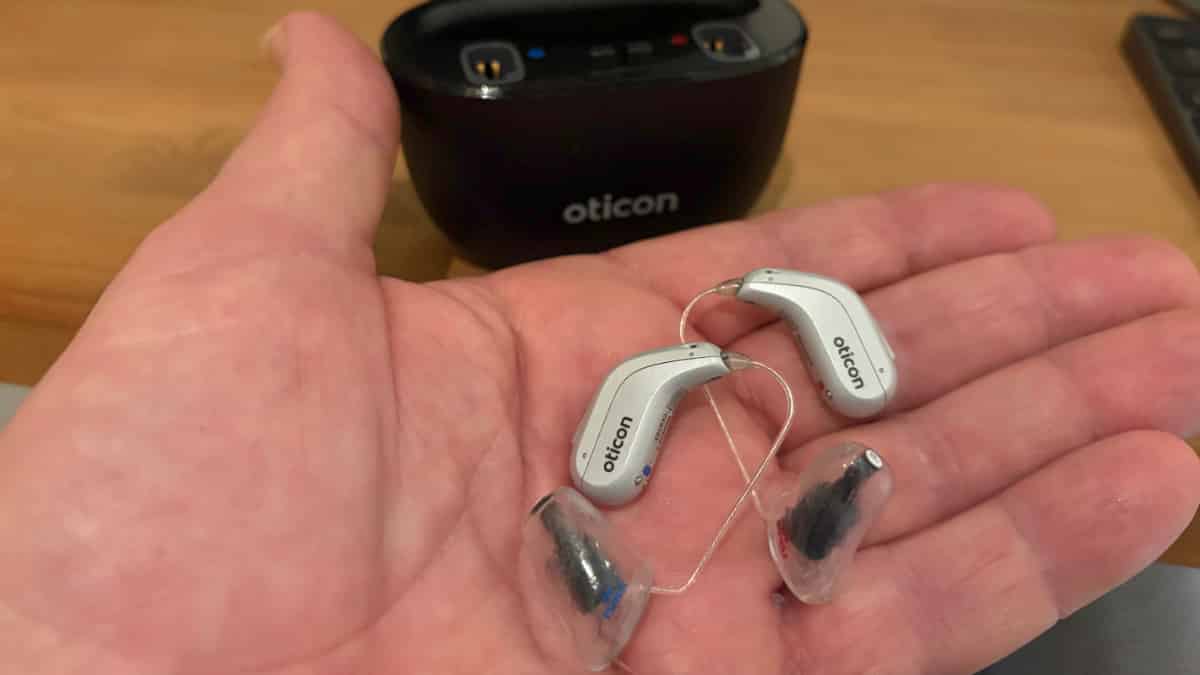
“Gimme Shelter” is one of my favorite songs. I also use it as a benchmark whenever I am checking out and comparing hearing aids or headphones. It’s a relatively complex piece of music with a wide frequency range and I know what it should sound like. Or, frankly, what it used to sound like.
There’s some irony here since The Rolling Stones are partly responsible for my hearing loss.
Streaming that song through a pair of the new Oticon Reveal hearing aids was a real revelation. I hadn’t heard it sound so clean and clear for a long time.


As a journalist with severe-to-profound hearing loss, an experienced hearing aid wearer, and a frequent HearingTracker contributor, I was asked to review Oticon Reveal. Oticon provided me with a pair for this review, and I obtained custom earmolds for them due to the severity of my hearing loss. The opinions and experiences described here are my own, and Oticon had no editorial control over this review.
Reveal is a new premium, prescription hearing aid from Oticon and, like its competitors in that category, it uses . Oticon calls its approach “Dual AI”: two dedicated systems working together to balance speech clarity with access to surrounding sounds. Speech AI identifies and enhances speech, while Context AI recognizes and balances environmental sounds. The aim, Oticon says, is to make conversations easier to follow while preserving the sounds that help us feel connected to our surroundings.
Together they form an example of Oticon’s core philosophy, which they call “BrainHearing.” The idea is to deliver a wide range of sounds to the brain to give it more information and context to work with. The result, they say, is a more natural sound which offers several benefits.
The Threat of Reductionism
It also avoids what Thomas Behrens, Oticon VP of Hearing Aid Audiology, calls the threat of “reductionism.” He says that Deep Neural Networks () that focus primarily on isolating speech at the expense of environmental sounds have a downside. In effect, there’s a price to be paid by reducing what we hear to just voices.

Behrens explains, “Independent researchers are seeing that if you focus on speech, at the cost of all the surrounding sounds, then the brain doesn’t get the kind of stimulation that it needs in order to process sound naturally. It also deprives the person of feeling they are aware of and a part of their surroundings.”
Oticon’s dual system, he says, is designed to deliver a wider range of sound, giving the brain more information to work with.
“We all need that natural stimulation from everything around us to hear best because that’s how the brain learned to process sound as we grew up. Speech never exists in isolation. So even when we’re in a relatively quiet environment, we can always hear a little bit of sound from the surroundings.”
Stocking the Brain Library
Somewhere deep in our temporal lobes, there’s an area where the memories of sounds are stored. Behrens calls it the “Brain Library”. It’s a library that we add to and draw upon as we go through life.
As your hearing fades, your brain has to work harder and harder to interpret the information it does receive. That struggle, he says, means your brain doesn’t have the leftover capacity to memorize or store sounds in the “library” for quick retrieval later.
Behrens says Reveal, with its dual , can deliver a clearer, wider range of sounds the brain can interpret more easily. And that gives it the time and capacity to store that sound so it’s recognized more quickly next time.
“When the sounds are well defined, your brain doesn’t need to spend a lot of effort interpreting the sound,” he says. “And it then has the residual capacity for remembering those sounds. Because remembering is sort of like transferring information from short-term memory to long-term memory. It’s like having a library in the brain. That frees up our brain’s capacity to better interpret conversations to help us understand meaning and emotions.”
Further reading: Inside Oticon Reveal’s Dual AI: A Q&A with Thomas Behrens
Keep it Simple
Another of Oticon’s guiding principles is simplicity. The Oticon Companion app, which controls the Reveal, exemplifies that. The app has a very clean design with very few buttons, sliders, and other controls compared to its rivals.
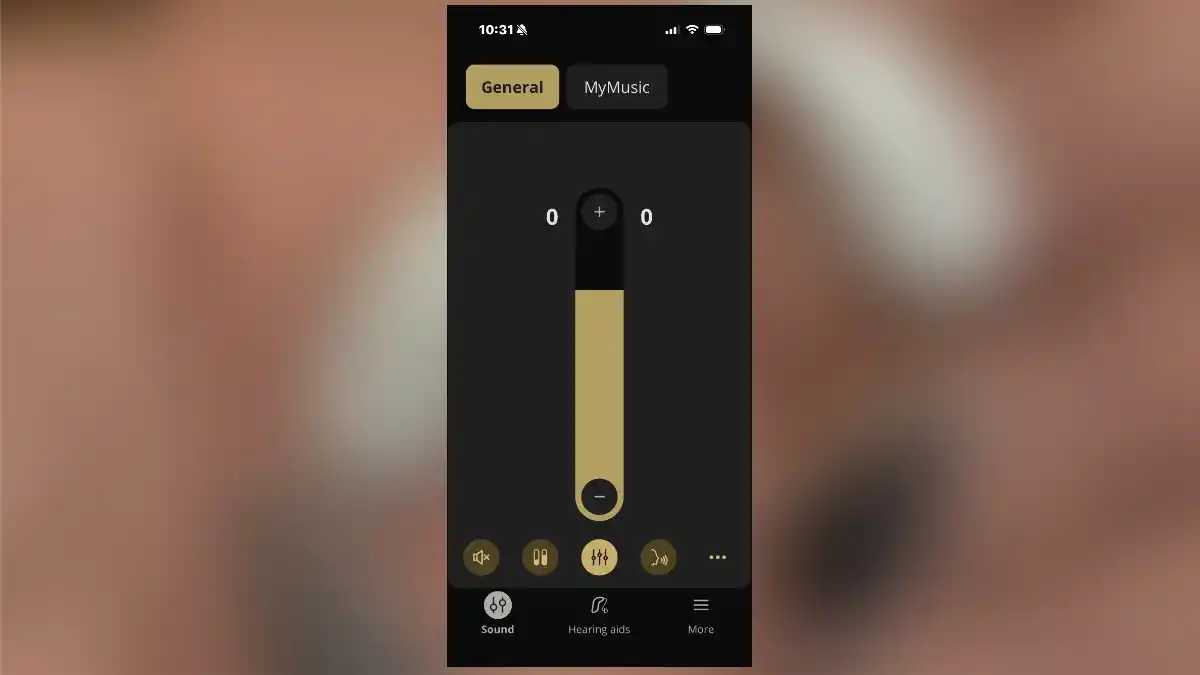
You can’t directly adjust the , but there is a button labeled “Speech Boost” that boosts Reveal’s speech AI, and I found it quite useful in noisy situations.
The app also provides a button to turn on Auracast. It then searches, finds a broadcast, and makes it easy to connect. That’s a big plus as continues to roll out, and it means that Reveal is ready of Auracast right now (as opposed to other hearing aids that are “Auracast-ready” and need a firmware update to use).
The relatively simple controls are probably a good thing since I have found that I sometimes spend too much time fiddling with hearing aid controls adjusting frequencies, trying various features, and selecting different programs. The Companion app offers fewer options to play with. But if you do want more choices, your provider can create a range of custom programs.
That’s what my hearing specialist, Edmond Ayvazyan at Hearing Aid Source, did for me when he created my music program. It’s a little heavier on the bass and offers a fuller range of frequencies to help create a richer sound and compensate for my severe hearing loss.
I can use it for streaming music or listening to a live band. I also switched it on in other situations. I discovered that using it while driving lets me hear the radio much better than I have in quite a while, and not just music, but surprisingly talk radio, too. I am not sure why that is, but I’m happy it does.
Overall, I found the Reveal to be one of the best and best-sounding hearing aids I have ever tried. You could say that wearing them gives me real Satisfaction.
Read more reviews and watch Matthew Allsop’s video about Oticon Reveal
Read reviews and listen to actual sound samples of Oticon Reveal on HearingTracker and our partner test lab, HearAdvisor. Also, you can get Matthew Allsop’s initial impressions of Oticon Reveal in the video below.

Digby Cook
ContributorDigby Cook is a veteran journalist with a wide range of experience in television news, documentaries, and newspapers. As a person with severe to profound hearing loss, his interest in the science of hearing is both professional and personal.