Signia Pure Charge&Go MaX Review
I wore and lab-tested Signia’s MaX hearing aids. Here’s what improved, what I missed, and whether I’d upgrade from BCT IX.Our expert team selects and tests products rigorously. We may earn commissions if you buy through our links. Here's how we keep reviews independent.
Hearing aid glossary
Looking that up…
Terms are matched automatically. A definition may not fit every context.
Quick Take
I found Signia Pure Charge&Go MaX comfortable, easy to handle, and capable of impressive speech focus in everyday use. HearAdvisor lab testing also showed strong overall performance. But compared with the previous Pure Charge&Go BCT IX, speech results were similar, especially after tuning. If you are happy with BCT IX, I don’t see a strong reason to upgrade simply for the additional .
MaX brings Bluetooth Classic, , and a together in one rechargeable hearing aid. There are compromises: I preferred the smaller older charging case, the new Signia One app removes controls I valued, and is still pending. For a first pair or a replacement for much older hearing aids, MaX is worth trying alongside current alternatives.
Launched in August 2026, MaX is Signia’s flagship rechargeable receiver-in-canal hearing aid, with a small speaker that sits in the ear canal. Its Multi-adaptive Xperience platform builds on Integrated Xperience (IX) with four specialized AI systems for speech, noise, your own voice, and the surrounding environment. HearingTracker’s MaX launch coverage explains Signia’s “Live Noisy” goal of helping people follow group conversations while retaining a sense of the sounds around them.
Compare prices & care
Choose a technology level, then compare sellers and the care included. Prices are per pair.

Best for Telehealth
- Audiologist programmed
- Remote fine-tuning
- 60-day trial
- 0% financing

Best for Clinic Care4.8(658 reviews)
- 600+ locations
- Local care included
- 500+ 5-star reviews
- All major brands
Compare technology level features
What Premium adds over Advanced
- 48 vs 36
- 20 vs 18
- 5/5 vs 4/5
- 3 vs 1
- 5/5 vs 4/5
- 5/5 vs 4/5
Never miss a price drop
Get notified when prices drop for this product

Pure C&G MaX is offered in MaX 7, MaX 5, and MaX 3 technology levels. Signia says the hearing aids can accommodate mild to profound hearing loss, depending on the receiver and earpiece configuration. Prices vary with the technology level, provider, and services included; the live offers on this page show current listings.
My review combines daily use with HearAdvisor’s lab results. The laboratory results below apply to Pure Charge&Go MaX 7, the premium technology level. MaX 5 and MaX 3 have not received separate ratings in HearingTracker’s database.


The table below provides a quick overview of Pure Charge&Go MaX:
Feature | Signia Pure C&G MaX |
|---|---|
Type | Prescription (professionally fit) hearing aid |
Style | Rechargeable receiver-in-canal (RIC) behind ear |
Hearing losses | Mild to profound |
Tech levels | MaX 7, MaX 5, and MaX 3 |
Standout technology | Acoustic Intelligence with four coordinated AI systems |
Microphones | 2 per hearing aid (4 in binaural set) |
Battery life | Up to 30 hours |
Bluetooth | Bluetooth Classic and LE Audio; compatible Apple and Android devices |
Telecoil | |
Auracast | Auracast-ready; activation pending |
Tinnitus features | |
App | Signia One App |
Colors | 8 |
About our testing: This review combines hands-on evaluation for HearingTracker with standardized laboratory testing from HearAdvisor. The companies are separate but have overlapping leadership, and author Steve Taddei is also HearAdvisor’s co-founder and lab director. HearAdvisor determines its testing methods and SoundScores independently of manufacturers; HearingTracker is responsible for this review’s editorial conclusions.
What the lab results show
Signia Pure Charge&Go MaX 7 earned a 4.3 HearAdvisor SoundScore, an A SoundGrade, and an Expert Choice award. Its HearingTracker Score is also 4.3, but that is a different rating: it includes ownership categories and price as well as lab sound performance. The two scores happen to match for MaX.
Fine-tuning made the clearest difference to speech in background noise. That score rose from 2.1 to 2.8 after the amplification was adjusted for the test hearing loss, using the same vented sleeves in both fits. Speech in quiet and streamed music also improved. MaX handled whistling well in the lab’s feedback challenges, although it did not eliminate it completely.
Own-voice results were favorable with those vented sleeves. Their openings let some low-frequency sound escape instead of trapping it in the ear canal, where it can make your voice sound boomy. This measurement assesses that physical seal; it does not directly test Signia’s Own Voice Processing .
Your hearing care provider can choose an earpiece to suit your ears and hearing loss, including a custom earmold. A more sealed fitting can retain more bass for streaming and give the hearing aid greater control over background noise, but it may also make your own voice sound less natural. That balance matters when comparing MaX with other hearing aids.
Understanding the results
At HearAdvisor, I tested MaX with the standardized N3 moderate hearing-loss profile and its everyday automatic program. Initial Fit used the manufacturer’s starting settings for that hearing loss. For Tuned Fit, amplification was adjusted toward targets—the recommended amplification for the test hearing loss. Both fits used the same vented sleeves and standard receivers.
SoundScore summarizes laboratory sound performance across the two fits. The recordings and scores describe that hearing aid, earpiece, and programming combination. They do not predict exactly what you will hear with your own fitting.
Signia Pure Charge&Go MaX 7
What I noticed wearing MaX
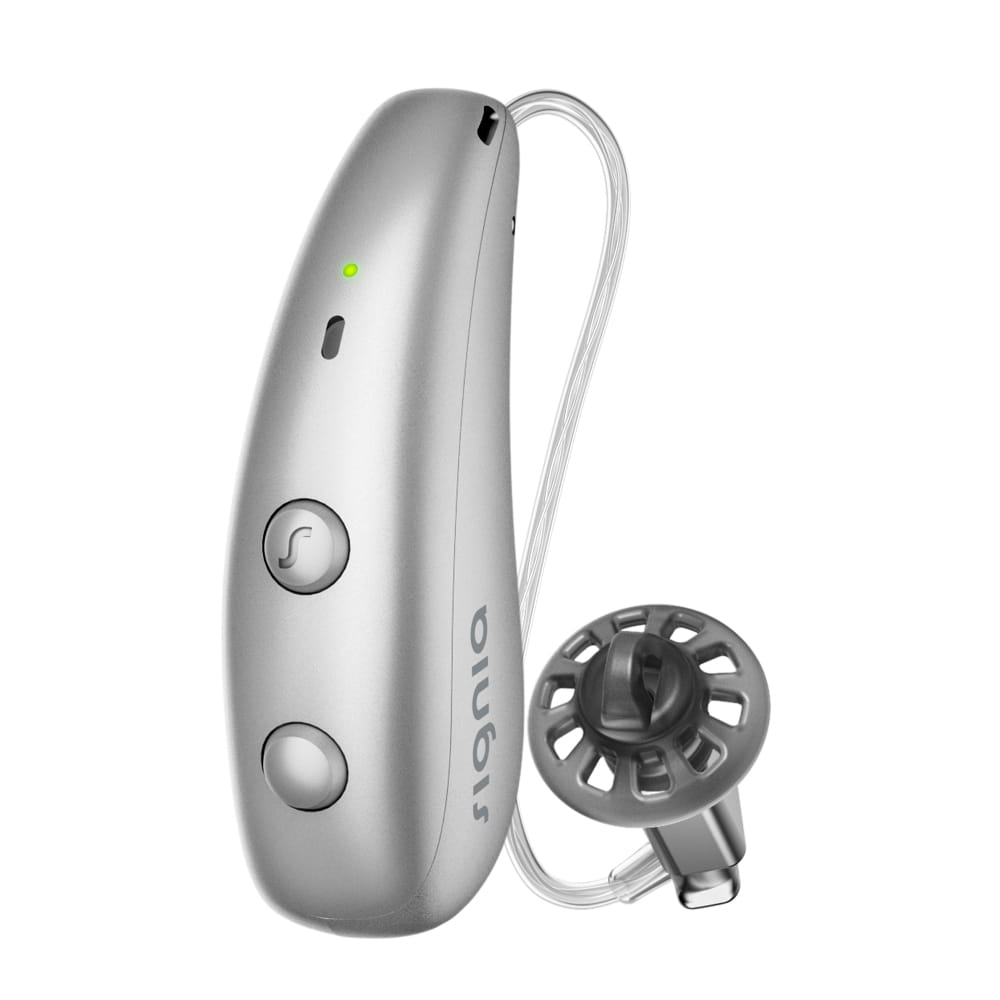
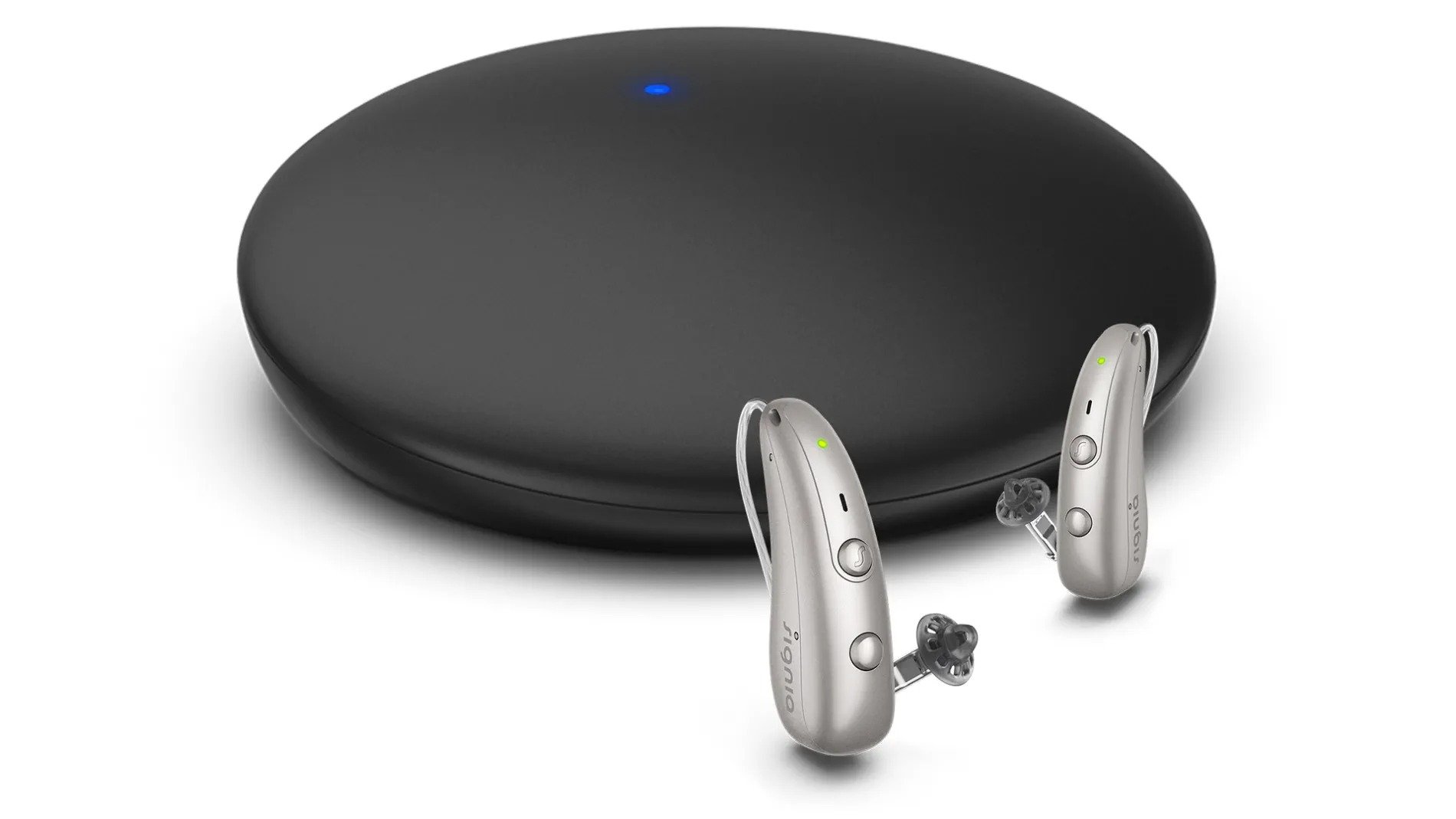
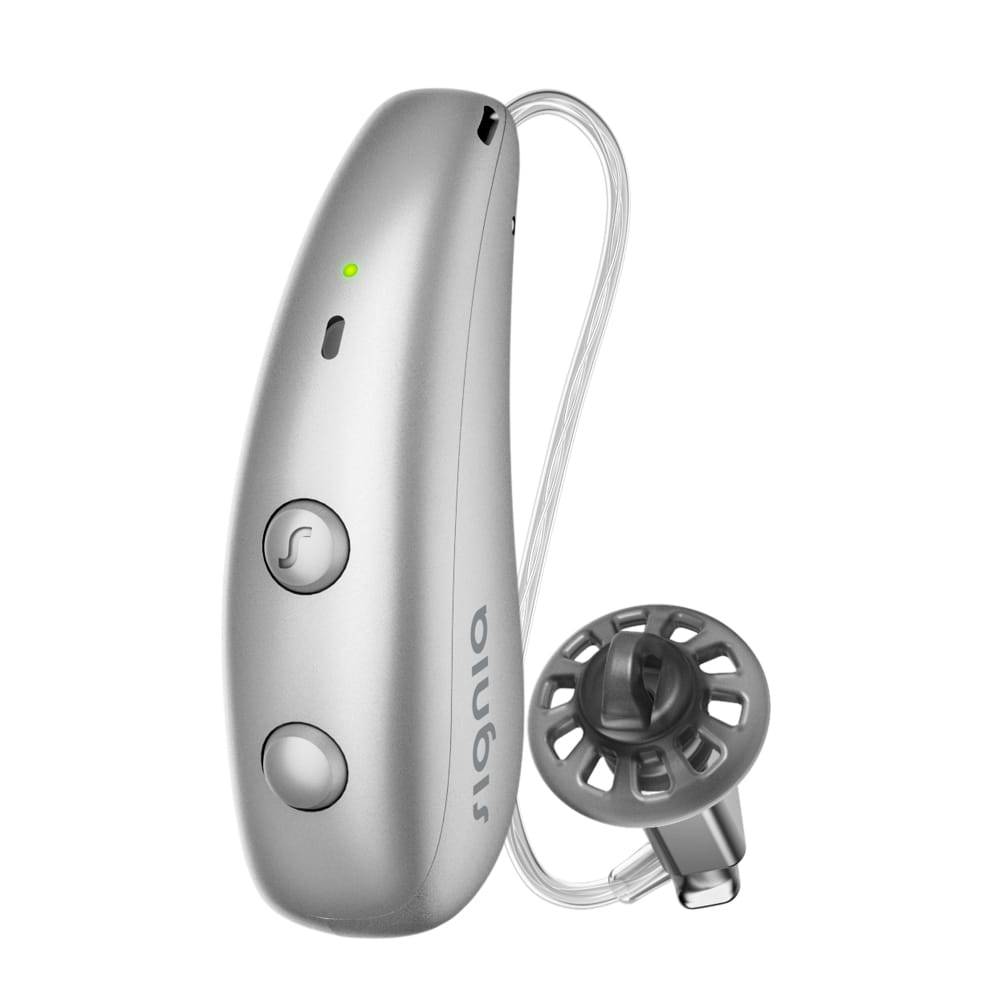
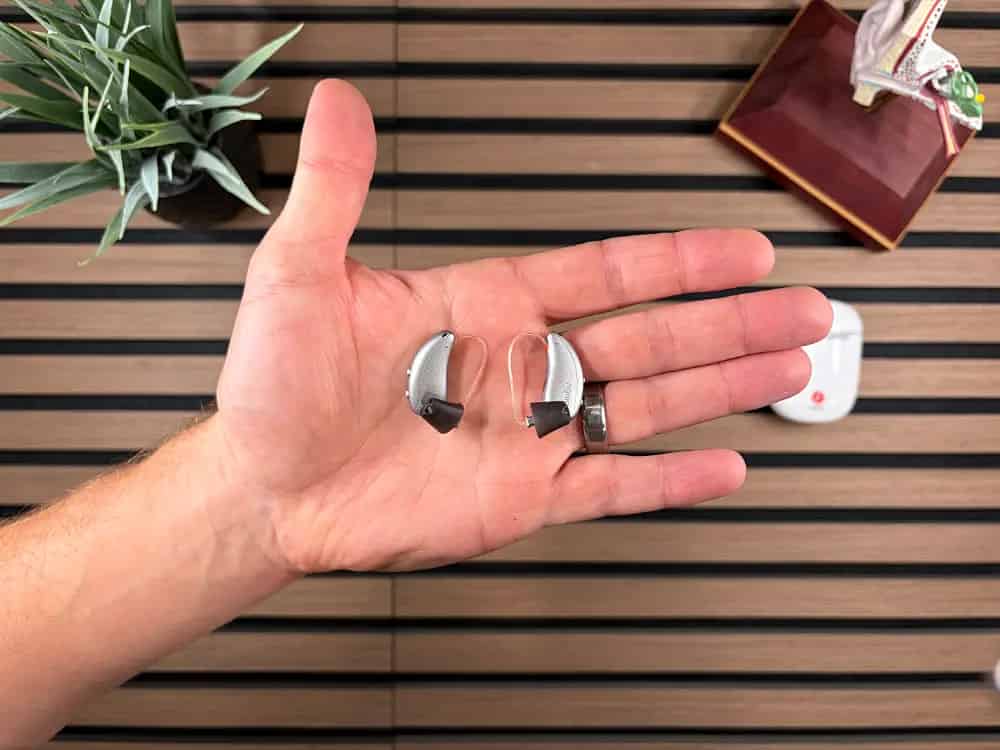
Comfort was great for me. The hearing aids sat nicely behind my ears, and their shape and earwire design made them easy to handle. Once they were set up, I did not run into handling difficulties. If you are new to receiver-in-canal hearing aids, getting the earpieces into place may take some practice.
I liked the slightly rougher matte finish. There are physical buttons for volume, programs, and answering or ending calls. I am increasingly fond of controls that give me an excuse to put my phone down, so I appreciated those. There are no tap controls.
One listening moment stood out while I was outside near a stream. There was quite a bit of splashing water in the background, and I could hear the directional microphones shift their focus. The water became less prominent, making speech in front of me much easier to follow. I was using one of Signia’s more open earpieces, so I was impressed by that speech focus.
That experience tells me MaX can provide a useful everyday benefit. It does not, by itself, establish how much better MaX is than IX or which part of the processing deserves the credit. The lab comparison below helps answer that question.
Four AI Systems Working Together
Signia calls MaX’s processing system Acoustic Intelligence. It uses four task-specific deep neural networks: systems trained to recognize patterns in sound. Signia says they were trained with approximately 40 million sound samples and share information as the listening environment changes.
- RealTime Conversation Enhancement AI (RTCE AI): Builds on the conversation tracking introduced with IX. It follows multiple conversation partners and enhances speech as speakers change. Signia says it processes 75% more sound data per second than its previous technology.
- Own Voice Processing AI (OVP AI): Aims to keep your own voice sounding natural. Signia says MaX no longer needs the individual voice-training procedure used with earlier platforms.
- Ambient Scene Adaptation AI: Evaluates the surrounding environment, including music, reverberation, movement, and other sounds, and adjusts processing as the situation changes.
- Dynamic Noise Control AI: Considers the type and direction of noise and whether the wearer is taking part in a conversation. It adjusts noise reduction while aiming to preserve speech and useful environmental sounds.
The left and right hearing aids also communicate with each other to coordinate their processing. Those features explain Signia’s approach; my listening observations and the lab results show how the tested hearing aids performed.


How MaX Compares With Signia IX
MaX keeps IX’s conversation-tracking approach and adds coordinated processing around it. According to Signia, the new chip provides 54 times the processing power and twice the memory of IX while being 50% more energy efficient. The premium MaX 7 has three Dynamic AI Focus Streams for following separate speech sources; MaX 5 has one, and MaX 3 has fewer advanced conversation-processing capabilities.
Signia says RTCE AI can detect speech in roughly 50 milliseconds. The company also presented pre-launch studies reporting speech-understanding advantages over selected competitors. Those manufacturer-sponsored findings are useful context, but I wanted to see what changed under the same HearAdvisor test protocol.
Compared with Pure Charge&Go BCT 7IX, MaX 7’s speech scores were similar, especially after tuning. There was no clear sweep either way. Feedback handling improved slightly. Both Signia generations used vented sleeves, which makes this a more closely matched comparison than comparisons involving different earpieces.
The original Pure Charge&Go T 7IX is a separate model from BCT IX. Its HearAdvisor report currently shows a 4.1 overall SoundScore and a 4.3 HearingTracker Score; those figures should not be substituted for BCT IX’s results.
Speech in Noise: MaX, EON, and Reveal
In HearAdvisor testing, Phonak Audéo EON Sphere 90 and Oticon Reveal 1 performed better than MaX 7 on both speech measures. If challenging background noise is your main priority, I would include those alternatives in a trial.
The earpieces are part of those results. MaX used vented sleeves, EON Sphere used EasyGuard Vented earpieces, and Reveal used bass domes. The latter two fittings were more occluding than Signia’s in this comparison. A more closed fitting gives processed sound greater influence, while a more open one lets more outside sound reach your ear directly.
We are comparing complete hearing-aid fittings, not isolating the AI systems. The results do not tell us what MaX would score with a more closed earpiece, or how the other products would perform with a fitting as open as Signia’s. Your provider should choose the fitting around your hearing needs and comfort.
You can listen to the MaX lab recordings with headphones, keeping the volume consistent as you compare the starting setup with the professionally adjusted fit.
MaX 7 vs MaX 5 vs MaX 3
All three levels include the four Acoustic Intelligence systems, OneConnect connectivity, hands-free calling, a , and tinnitus therapy. They also share coordinated and adaptive directional microphones, SoundSmoothing 2.0 for sudden sounds, and eWindScreen 2.0 for wind noise.
The higher levels add processing and fitting options:
- MaX 7: Three Dynamic Focus Streams, the strongest Conversation Booster implementation, Spatial SpeechFocus, Auto EchoShield, 12 kHz extended bandwidth, 48 processing channels with 20 fitting handles, and three HD Music programs.
- MaX 5: One Dynamic AI Focus Stream, reduced conversation enhancement, 36 processing channels with 18 fitting handles, and three HD Music programs.
- MaX 3: The core AI architecture and connectivity, with fewer advanced speech and environmental processing features, 32 processing channels with 16 fitting handles, and one HD Music program.
Channels divide sound into frequency bands; fitting handles are the controls a clinician uses to adjust amplification across those bands. Higher-level features may be useful in demanding environments, but the level should suit your listening needs and budget. My MaX 7 results do not establish equivalent performance for MaX 5 or MaX 3.
Bluetooth, Telecoil, and Auracast
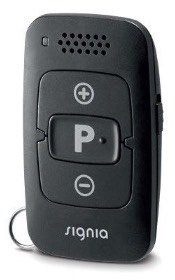
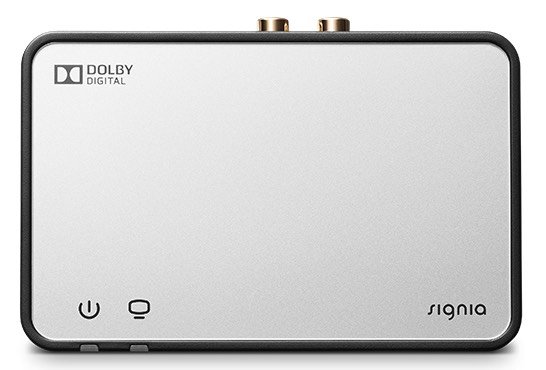
OneConnect combines Bluetooth Classic, Bluetooth , and a in the same hearing aid. That gives MaX connection options across compatible Apple and Android devices, computers, and systems. It also supports direct streaming, hands-free calling, and Signia TV streaming accessories.
Previous Pure Charge&Go IX models divided some connectivity options between versions. MaX brings them together, although BCT IX already connected reliably for me, so connectivity alone would not persuade me to upgrade.
is still pending at the time of this review. Signia says it plans to enable the broadcast-audio feature through a firmware update by March 2027. I would choose MaX for what it can do today, without treating that planned update as an available feature.
Signia One App: Useful Focus Control, Fewer Options
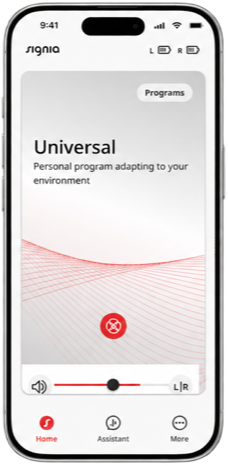
The new Signia One app includes volume and program controls, streaming settings, directional focus, tinnitus settings, battery status, and remote support through TeleCare. The updated Signia Assistant lets wearers describe a listening problem conversationally and receive suggestions or troubleshooting help.
I found the app worked reliably, and I still liked being able to adjust where the microphones focus. The focus icon could be easier to recognize as a control, though. For me, it almost blended into the background artwork.
I was disappointed to lose Speech Boost, previously called Mask Mode, and Sound Balance. I contacted Signia, and the explanation was that the four neural networks make those controls unnecessary. Better automatic processing is welcome, but personal preference still matters. I would like users to have those choices again.
I also tried using MaX with the old Signia app, and it would not let me. There is still no Find My Hearing Aid feature. If you rely on the older app’s controls, those changes deserve attention before an upgrade.
Signia’s app documentation lists iOS 17 or newer or Android 13 or newer for Signia One.
Battery Life and Charging
Signia rates MaX for up to 30 hours on a charge. That is lower than the advertised runtime of the previous Pure BCT IX, but it is still a generous daily-use figure. Actual runtime depends on streaming, programming, hearing loss, battery age, and use; I am not presenting the specification as a measured endurance result.
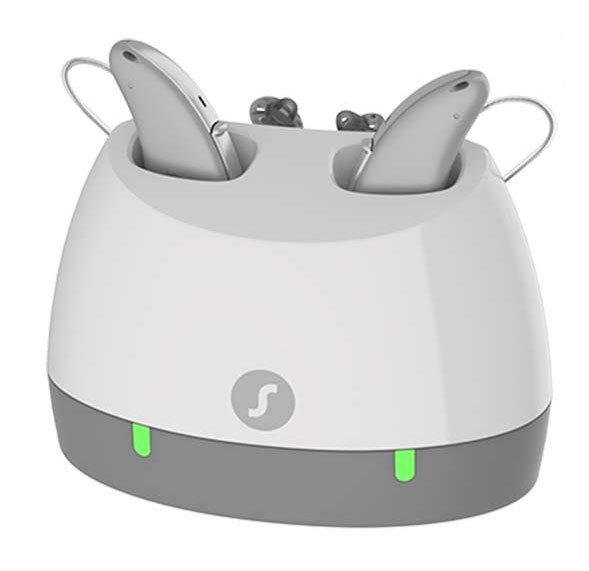
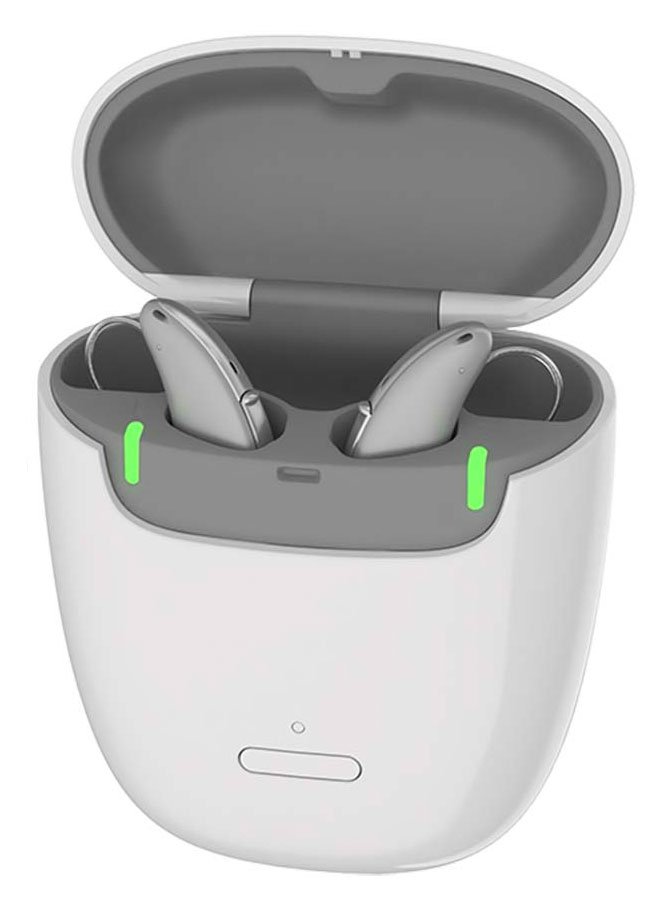
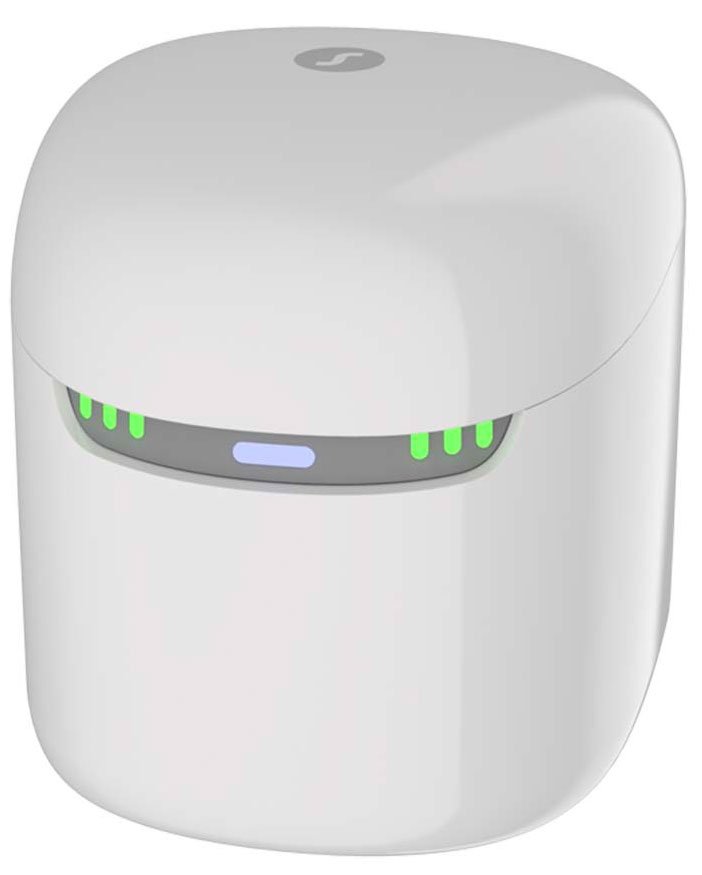
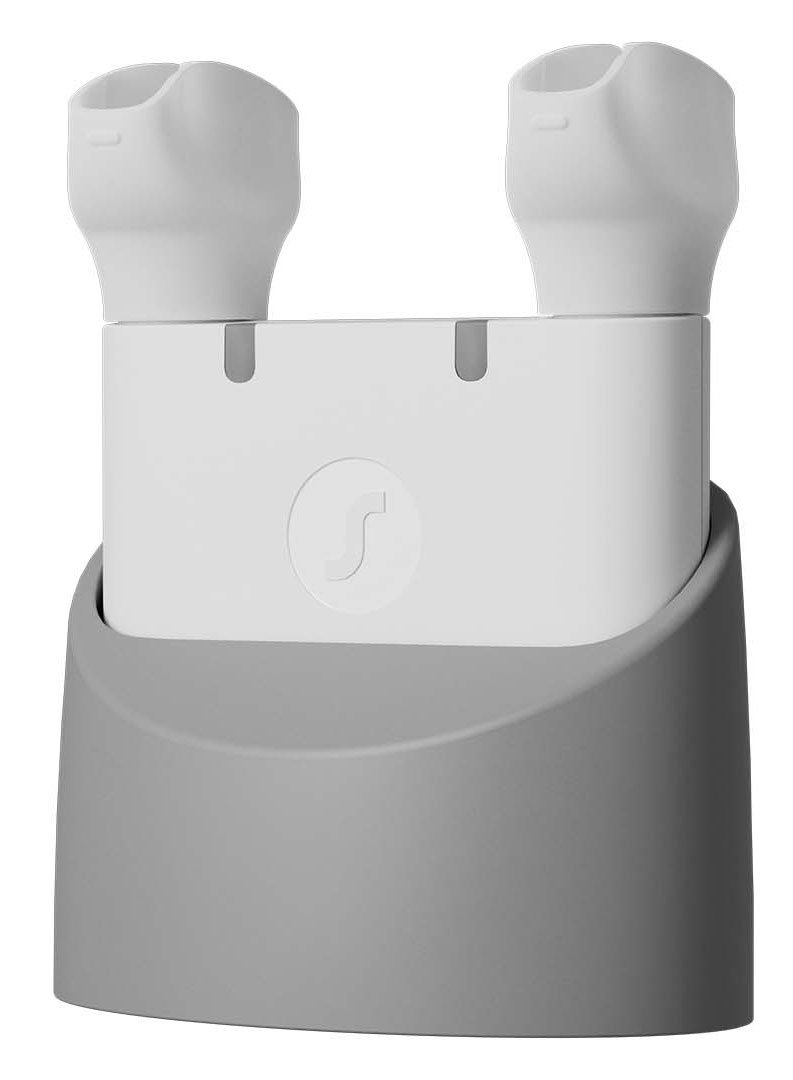
Signia offers a Desktop Charger Pure 2.0 and a Portable Charger Pure 2.0. The portable case feels sturdy, and its magnetic charging base made the hearing aids easy to put in and take out. It stores up to five full charges, compared with three in the older portable case.
I actually prefer the older case. It is smaller, its indicator lights are larger and easier to see, and its case-battery indicator is on the front. On the new case, that indicator is underneath, by the USB-C input. The extra charging capacity is useful, but I liked the older layout better.
According to Signia’s launch information, a full hearing-aid charge takes about four hours, and a 30-minute quick charge can provide approximately six hours of use.

Price and Availability
Signia Pure Charge&Go MaX became available in the United States on August 24, 2026, initially alongside launches in Germany and the Nordic countries, with additional markets following later.
The original launch coverage did not establish a typical MaX clinic price range. It gave $3,500–$6,500 as broad context for comparable flagship hearing aids; that estimate is not a current MaX quote.
The live offers on this page show listed prices by technology level. Compare what is included in each quote: professional fitting, follow-up adjustments, and ongoing care can affect the total cost. Prices also vary with provider, location, and insurance benefits, so an online offer and a clinic quote may cover different services.
My Verdict
If you already wear BCT IX and are happy with your hearing, I don’t see a strong case for upgrading to MaX. The lab results did not show a dramatic change in speech performance, BCT IX already connected reliably for me, and I missed controls removed from the Signia One app. More on the specification sheet would not be enough to change that decision.
For a first pair of hearing aids, or a replacement for something several years old, MaX makes more sense. I found them comfortable and easy to handle, noticed impressive speech focus in daily use, and measured strong overall lab performance. The previous Signia generation is also worth considering if its features and price suit you.
If your biggest priority is help in difficult background noise, I would compare MaX with EON Sphere and Reveal, keeping the different tested earpieces in mind. A trial with your own fitting is the best way to find out how those differences translate to your hearing and preferences.
MaX has real strengths, but I would choose it for the benefit it provides today, with the current app and connection features, rather than the number of neural networks inside.
Review updates
September 23, 2026: Added MaX 7 laboratory results, test-configuration context, and our hands-on findings. Corrected the earlier IX score references and clarified ’s pending activation.
November 12, 2026: Updated with Steve Taddei’s completed review, including his daily-use observations, lab interpretation, BCT IX comparison, and findings on the Signia One app and portable charger.

Steve Taddei, AuD
Doctor of AudiologySteve Taddei, Au.D., is an audiologist, co-founder and lab director of HearAdvisor, and a hands-on hearing aid and earplug reviewer for HearingTracker. He holds an audio engineering degree from Columbia College Chicago and a doctorate in audiology from Northern Illinois University. He also teaches as an adjunct faculty member at several colleges.

Karl Strom
Editor in ChiefKarl Strom is the editor-in-chief of HearingTracker. He was a founding editor of The Hearing Review and has covered the hearing aid industry for over 30 years.