Anker Enters OTC Hearing Aid Market With AI-Powered RIC Device
Consumer electronics giant Anker is bringing its THUS AI audio technology to a new self-fitting hearing aid designed to improve speech understanding in noisy environments.)
Featured Products
Compare allHearing aid glossary
Looking that up…
Terms are matched automatically. A definition may not fit every context.
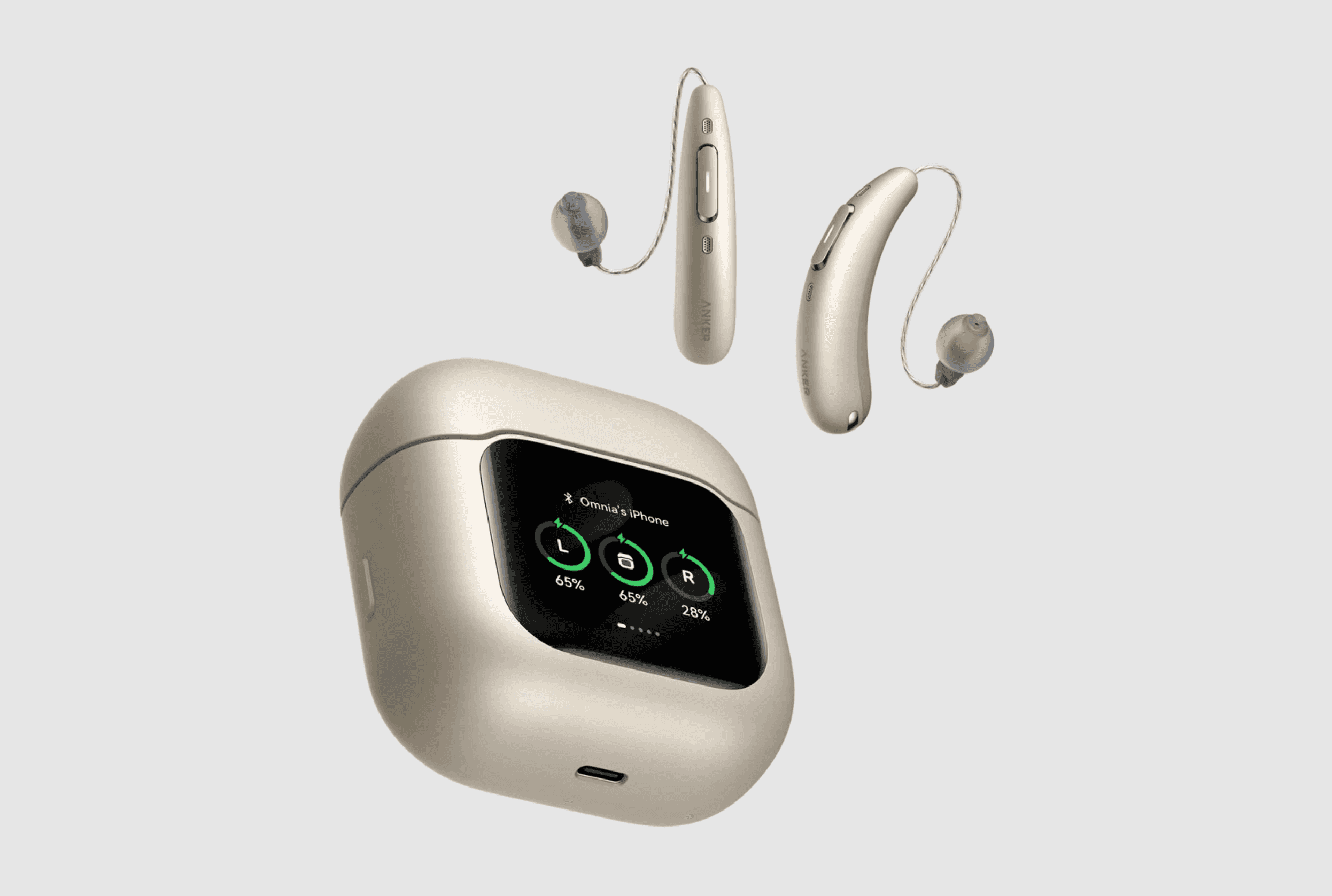
Anker, a global consumer electronics company best known for charging products and its Soundcore audio devices, is entering the over-the-counter hearing aid market with a new receiver-in-canal () hearing aid powered by the company’s proprietary THUS chip.
Anker unveiled its first OTC hearing aid at IFA 2026 in Berlin as part of a broader lineup of new Anker audio products, and it’s currently identified as the Anker RIC Hearing Aids Pro in IFA’s official product listings. The company says the devices are intended to address one of the most persistent complaints among people with hearing loss: understanding speech in noisy places such as restaurants, parties, family gatherings, and meeting rooms.
Anker is a global consumer-electronics manufacturer founded in 2011 by CEO Steven Yang and headquartered in Changsha, Hunan Province, China. Best known for its Anker-branded chargers, power banks, cables, and other mobile accessories, the company has expanded into headphones and audio products through Soundcore, smart-home and security products through eufy, as well as portable power stations, projectors, robotic vacuums, and other consumer technology.
Anker reportedly has more than 5,000 employees in over 30 offices worldwide. The publicly traded company generated RMB 30.5 billion (over US$4 billion) in revenue in 2025, making its move into hearing aids notably different from many of its smaller competitors.
What We Know About Anker RIC Hearing Aids Pro
At the heart of the Anker RIC Hearing Aids Pro is Anker’s THUS AI chip, an on-device processor the company has already deployed in consumer audio products, including its Soundcore Liberty 5 Pro earbuds. Anker says THUS performs 7.2 billion operations per second in its hearing aids and works with four beam-forming microphones to identify and emphasize speech coming from in front of the wearer while reducing competing background noise.


The technology marks an interesting crossover between Anker’s consumer-audio business and hearing healthcare. The company has focused heavily on voice isolation for phone calls in its headphones and earbuds, and The Verge’s John Higgins described the THUS-powered voice isolation he heard in Anker earbuds as particularly impressive. Whether that technology delivers comparable benefits for people with hearing loss remains to be independently tested.
Anker’s marketing materials contrast this approach with hearing aids that broadly amplify surrounding sounds, although most modern prescription and many hearing aids already employ sophisticated directional microphones, noise reduction, and increasingly -based processing to improve speech in complex environments.
The more important question is how well Anker’s implementation performs against established prescription and OTC products in controlled speech-in-noise testing and in everyday use. HearingTracker’s top-rated models currently include the Yeasound RIC800, Audicus Omni 2, Sennheiser All-Day Clear, and Elehear Beyond. Anker will also compete with two other consumer-electronics giants in the market: Apple’s AirPods Pro 2 and AirPods Pro 3 and, more recently, Samsung’s Galaxy Buds3 Pro and Galaxy Buds4 Pro, which use -cleared software features that allow them to function as OTC hearing aids.
Techlicious reports that the Anker devices include an onboard hearing test for self-fitting and physical controls on the hearing aids. The charging case includes a display showing battery status and the selected listening mode, much like the Cearvol Wave and the Audien Atom X OTC hearing aids. The publication also says Anker claims up to 90% speech intelligibility in environments such as restaurants and meeting rooms, although no testing protocol or supporting clinical data for that figure has been made public.
:format(webp))
Battery Life and Availability
Anker rates the hearing aids for up to 12 hours of use on a charge, with the portable charging case extending total use to approximately 36 hours. The company is also emphasizing fast charging: 5 minutes in the case is said to provide another 2 hours of operation—a feature that Anker touts as the fastest charging capability among competing hearing aids.

Pricing has not yet been announced. Anker’s September 3 press release says the hearing aids are expected to launch later in 2026, although Techlicious reports that the company is targeting the first quarter of 2027 for the U.S. market. Anker has not yet provided detailed information about regulatory status, Bluetooth streaming, fitting specifications, customer support, trial and warranty periods, or precisely how the self-fitting process will work. HearingTracker hopes to provide more detailed information in the future.
Anker’s arrival comes at an unusual moment for the U.S. OTC market. LXE Hearing recently announced plans to wind down its U.S. operations, affecting the Lexie Hearing and Eargo businesses. WSA and Sony recently discontinued their OTC hearing aid collaboration, while other major consumer-electronics companies like Apple, Samsung, JVC, and JLabs continue to blur the line between consumer audio and hearing aids. A more recent report this week has Elehear reporting strong growth in the OTC market, possibly suggesting that quality, low-priced products are gaining traction.
With Anker bringing its considerable experience in audio processing, rechargeable electronics, and mass-market consumer products to a dedicated hearing aid, its entry could add another significant competitor to the rapidly evolving OTC category.
Karl Strom
Editor in ChiefKarl Strom is the editor-in-chief of HearingTracker. He was a founding editor of The Hearing Review and has covered the hearing aid industry for over 30 years.