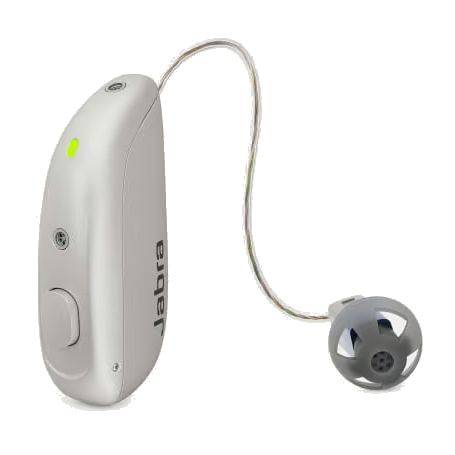
Jabra Enhance Select M3 Review: Lab Results and M Series Guide
My early M3 findings: a tiny, comfortable design and reliable Bluetooth, with stronger lab results in quiet than in background noise.
Our expert team selects and tests products rigorously. We may earn commissions if you buy through our links. Here's how we keep reviews independent.
Hearing aid glossary
Looking that up…
Terms are matched automatically. A definition may not fit every context.
The Jabra Enhance Select M3 gets several everyday details right. These over-the-counter () hearing aids are remarkably small and comfortable, with a charging case I found particularly easy to use. Bluetooth worked reliably in my initial evaluation. The three years of remote audiology care also give them a level of support that many OTC hearing aids lack.
HearAdvisor lab testing showed strong speech in quiet and limited performance in background noise, a concern given Jabra's promotion of Auto Focus for demanding listening situations.
This review focuses on the M3, the flagship of the Jabra Enhance Select M Series. The M1 and M2 are lower-priced alternatives within the same range, and I compare their features and prices below.
Compare prices & care
Choose a model, then compare sellers and the care included. Prices are per pair.

100-Day Returns
- Direct-to-Consumer Hearing Aids
- Telehealth and Remote Audiology Support
- Easy-to-Use Mobile App and Tech Features
- Backed by GN Hearing Expertise
Compare models
Never miss a price drop
Get notified when prices drop for this product
This early review brings together my initial evaluation and completed HearAdvisor lab testing. I'll add my full hands-on review and video review in a later update.
The M3 is worth considering if you want discreet hearing aids and professional help from home. Comfort, reliable Bluetooth, and easy handling were strengths in my initial evaluation. If busy conversations are your main difficulty, its limited speech-in-noise results give me more reason to compare alternatives.
M3 strengths
- Small and comfortable: The lightweight design was very comfortable in my initial evaluation.
- Reliable Bluetooth: Connecting and streaming were straightforward in my testing.
- Useful remote care: Direct purchases include three years of audiology services, including programming and video appointments.
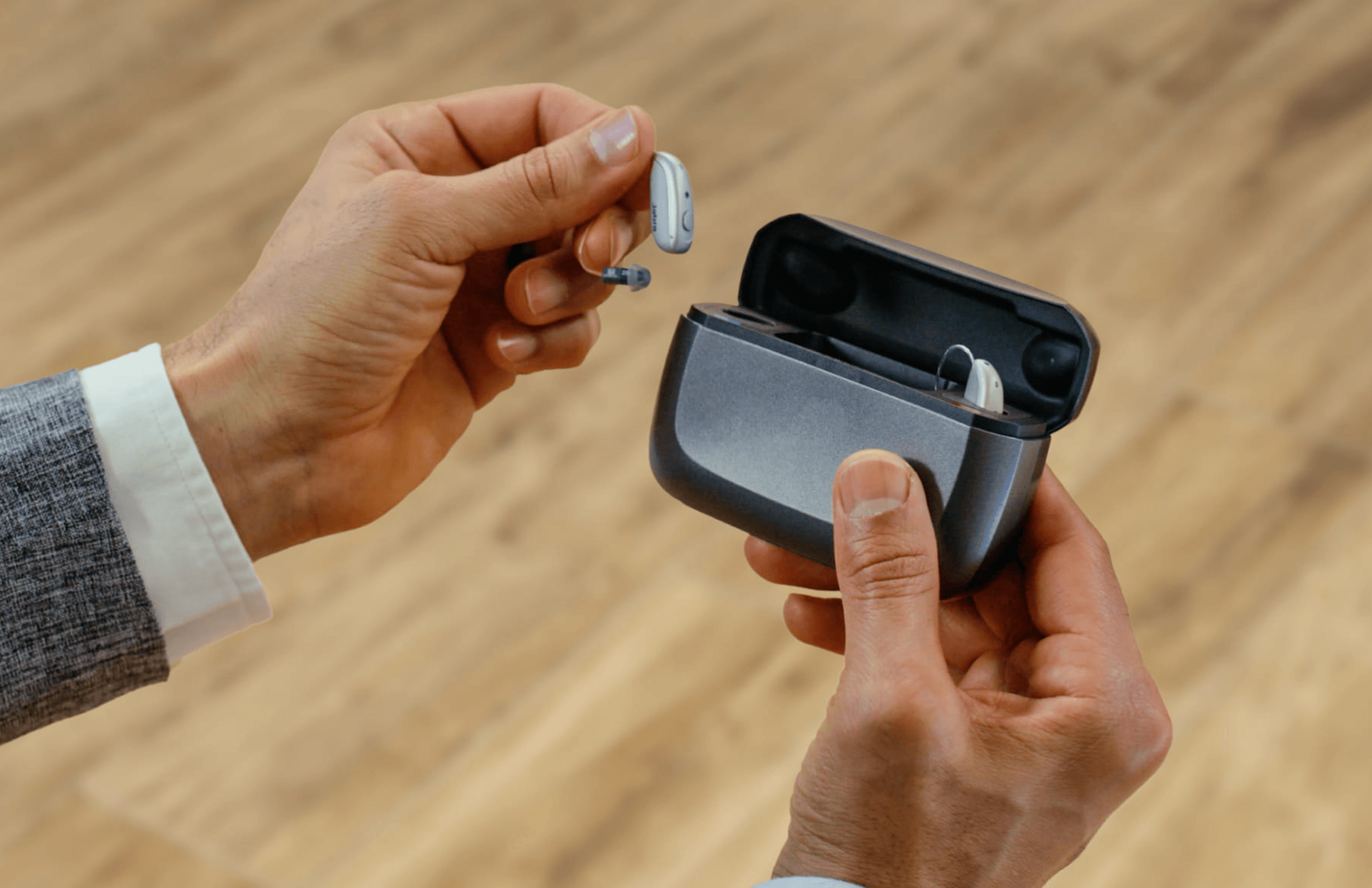
- Easy charging and handling: A well-designed portable case and accessible buttons make routine use easier.
M3 limitations
- Limited speech-in-noise results: Background noise remained a weakness in both tested fittings.
- Remote care has limits: I still prefer in-person appointments when they are available.
- Premium price: At a listed $1,995 per pair, M3 costs more than the M1 and M2.
- Music streaming is mixed: Tuning improved the lab result, but the absolute score remained modest.


About our testing: This early review combines my initial evaluation with standardized HearAdvisor laboratory testing. HearingTracker and HearAdvisor are separate companies with overlapping leadership, and I am also HearAdvisor's co-founder and lab director. HearAdvisor determines its testing methods and SoundScores independently of manufacturers; HearingTracker is responsible for this review's editorial conclusions.
How does the M3 sound?
The M3 earned a 4.0 HearAdvisor SoundScore, corresponding to an A grade, and a 4.2/5 HT Score. SoundScore covers laboratory sound performance, while HT Score also considers HearingTracker's practical ratings and price.
Speech in quiet was the clearest lab strength. Feedback control, meaning resistance to the whistling a hearing aid can produce, was also strong. The speech-in-noise result was limited in both tested fittings. If noisy conversations are your priority, I would give that finding more weight than Jabra's description of Auto Focus.
Streamed music scored above the category average, but its absolute result was still mixed. I would not choose M3 primarily as a substitute for good music headphones.
Understanding the results
HearAdvisor tested the M3 on an acoustic test manikin using a standardized hearing-loss profile. Initial Fit used fitting software to program the devices consistently with Jabra's standard remote audiology service; the app's self-fitting test was not evaluated. For Tuned Fit, an expert adjusted the controls toward prescribed amplification targets, called .

Both fittings used the same AllFit ear tips with ventilation openings, receiver, and automatic listening program. Volume increased from 50% to 55%, and the three-band equalizer's bass, middle, and treble controls were adjusted. Streamed music improved most, speech in quiet changed only slightly, and the speech-in-noise score fell slightly.
The ear tips affect how your own voice sounds. A more open tip generally lets it sound more natural; a tighter seal can retain more streamed bass but make your voice sound boomy. These measurements describe one hearing-loss profile and the tested fitting, including the ear tips; they cannot predict every person's result.
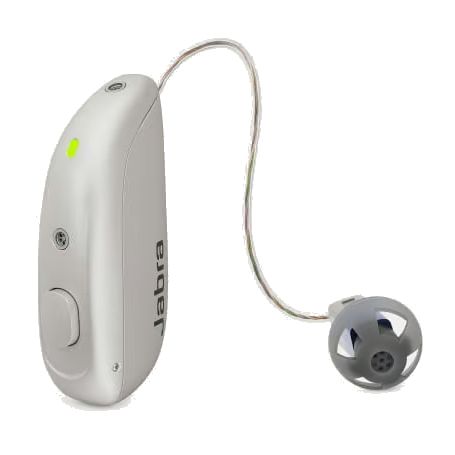
Jabra Enhance Select M3 Micro Size
Comfort, controls, and charging
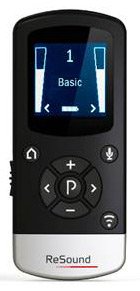
The M3 uses the same very small micro- design as the preceding Enhance Select 700. The main body sits behind the ear, with a thin wire leading to the speaker in the ear canal. I found the small size and low weight very comfortable. The buttons are also larger than those on many devices, which makes changing settings easier.


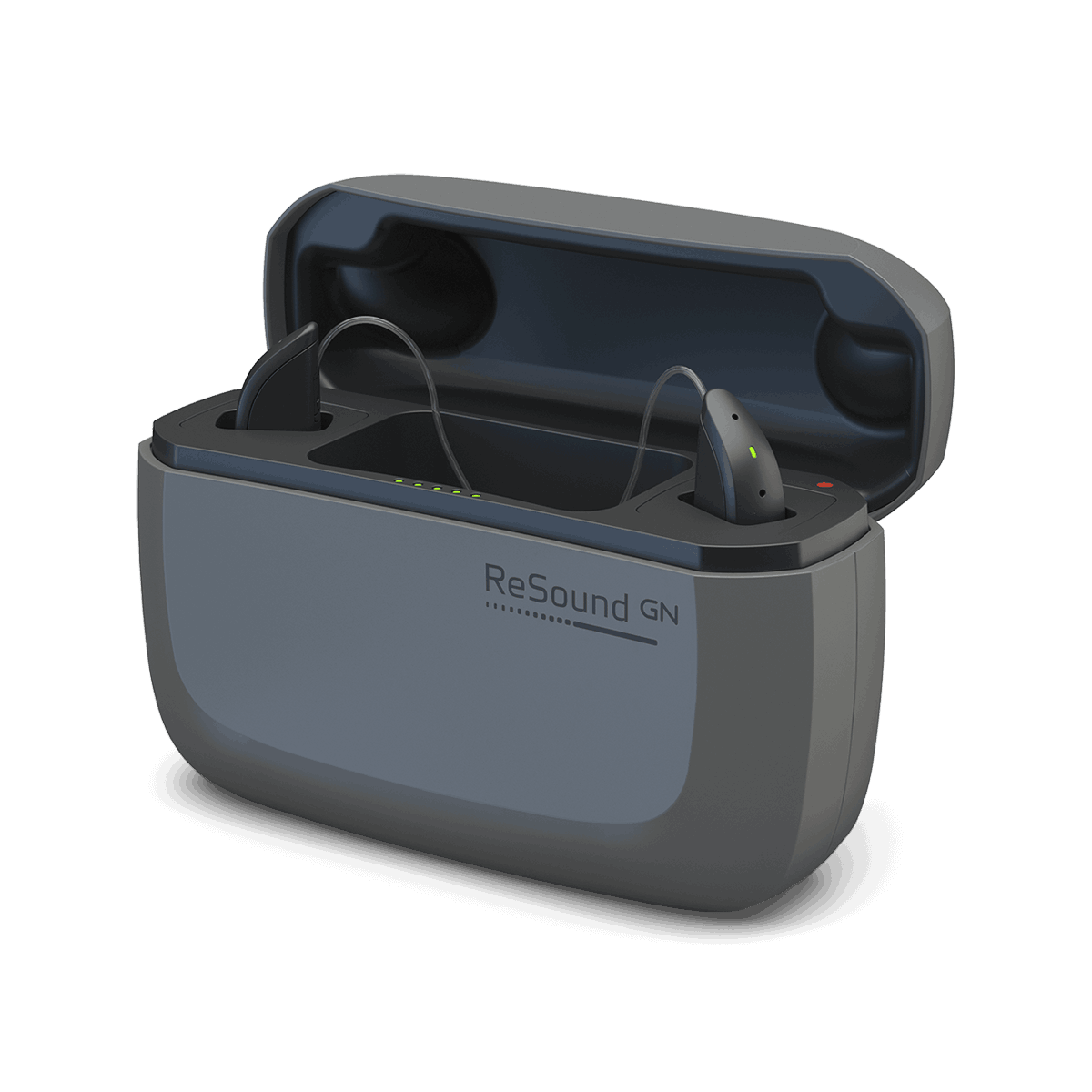
Handling was straightforward in my initial evaluation, although placing a receiver-in-canal hearing aid can take practice at first. Jabra's professional support can help with that learning curve. The charging case is one of the better designs I've used, and the hearing aids feel well built. Their IP68 rating indicates protection against dust and water; it is not a reason to wear them swimming.
Jabra lists up to 24 hours of battery life per charge, with roughly three additional full charges stored in the portable case. That capacity is unchanged from the Select 700. Actual running time will depend on use, including streaming.
Bluetooth, the app, and Auracast
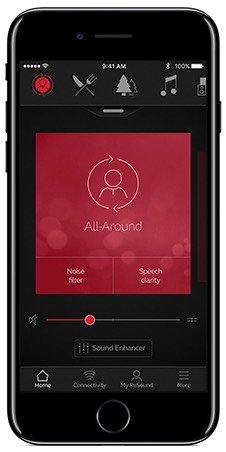
Bluetooth was straightforward and reliable in my initial M3 evaluation, with no connection problems. That is what I've come to expect from Jabra hearing aids. The app also provides useful control over the sound beyond the default programming.
The M3 supports Bluetooth and , which lets compatible hearing aids receive a shared audio broadcast from a suitable transmitter. Jabra also lists hands-free calling on compatible Apple and Android devices, plus TapControl for answering calls with a double tap. Check your exact phone on Jabra's compatibility checker before ordering; streaming, hands-free calls, and broadcast access have different compatibility requirements.
Remote audiology care and self-fitting
Professional support remains one of the stronger reasons to consider Jabra Enhance. When purchased directly, the M Series includes three years of remote audiology services, with video appointments and remote programming. I consider this one of the strongest support offerings among devices, although I still prefer in-person appointments.
The M Series adds an app-based self-fitting test that plays tones through the hearing aids. Jabra can use those results or an uploaded , the chart from a hearing test, to help program the devices and make adjustments remotely.
Remote care cannot provide a physical ear examination or the same hands-on fitting help as an office visit. If that assistance is a priority, compare the care arrangement as carefully as the hearing aids. Direct purchases also include a 100-day trial and a three-year warranty with loss-and-damage coverage, subject to Jabra's terms. Retailer packages can differ, so check the services and return policy attached to the particular offer.
M1 vs. M2 vs. M3: what changes?
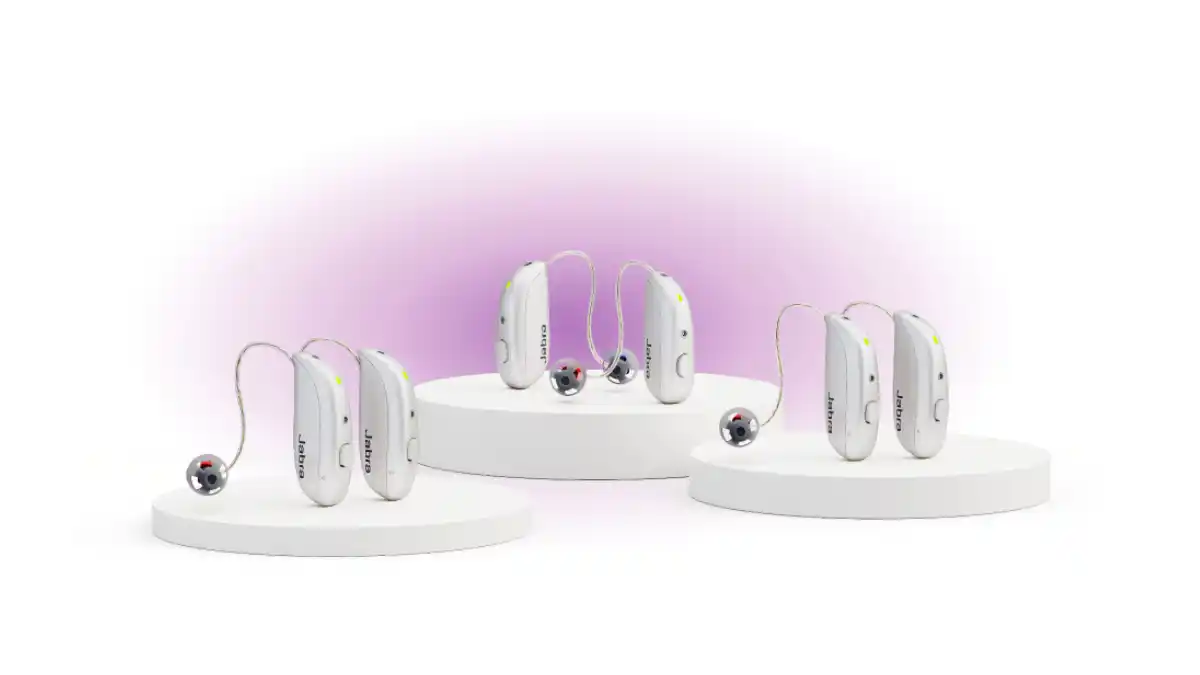
All three are rechargeable hearing aids intended for adults with perceived mild-to-moderate hearing loss. Jabra's direct packages share remote audiology support and modern Bluetooth features. The main differences are the physical design, price, and sound-processing features Jabra includes at each tier.

The table compares Jabra's listed direct prices and feature descriptions.
Jabra Enhance Select M Series comparison
Model | Listed pair price | Main distinction |
|---|---|---|
M3 | $1,995 | Smallest design; Auto Focus and advanced adaptive listening |
M2 | $1,695 | SoundScape with standard adaptive listening and immersive sound |
M1 | $1,195 | Entry model for everyday listening in quieter settings |
Is M3 worth the extra cost?
The clearest reason to consider paying more for M3 is its small, comfortable design and easy handling. At the listed prices, it costs $300 more than M2 and $800 more than M1. I would not pay that premium solely on the expectation that the top tier will solve difficulty hearing in noise.
Only M3 has lab results and reviewer ratings in this review, so I cannot tell you how closely M1 and M2 sound in comparison. Jabra's M1 and M2 pages explain their feature packages. Check the live offers on this page for available pricing.
M3 vs. Select 700 and Costco's Enhance Pro
The M3 follows the Select 700 and retains its tiny design and stated battery capacity, while the M Series introduces the self-fitting option. I would not recommend replacing a pair that is working well solely because M3 is newer.


Costco's Jabra Enhance Pro 30 belongs to a separate prescription range with an in-person service model. A choice between them includes a choice about where and how you want to receive care.
My early verdict
The M3 deserves consideration if you have mild-to-moderate hearing loss and want a discreet, comfortable hearing aid with professional support from home. Bluetooth, handling, and the charging case made a good initial impression on me. If conversation in busy places is your main difficulty, I would compare other tested options and the availability of in-person care before deciding.
Use the 100-day direct-purchase trial to check the things that will matter in daily use:
- Conversation: Try them in the places where you most want help, including background noise.
- Sound and connectivity: Check your own voice, calls, and music with the phone you use.
- Handling and support: Make sure you can insert, control, and charge them comfortably, and that remote appointments meet your needs.
Steve Taddei, AuD
Doctor of AudiologySteve Taddei, Au.D., is an audiologist, co-founder and lab director of HearAdvisor, and a hands-on hearing aid and earplug reviewer for HearingTracker. He holds an audio engineering degree from Columbia College Chicago and a doctorate in audiology from Northern Illinois University. He also teaches as an adjunct faculty member at several colleges.