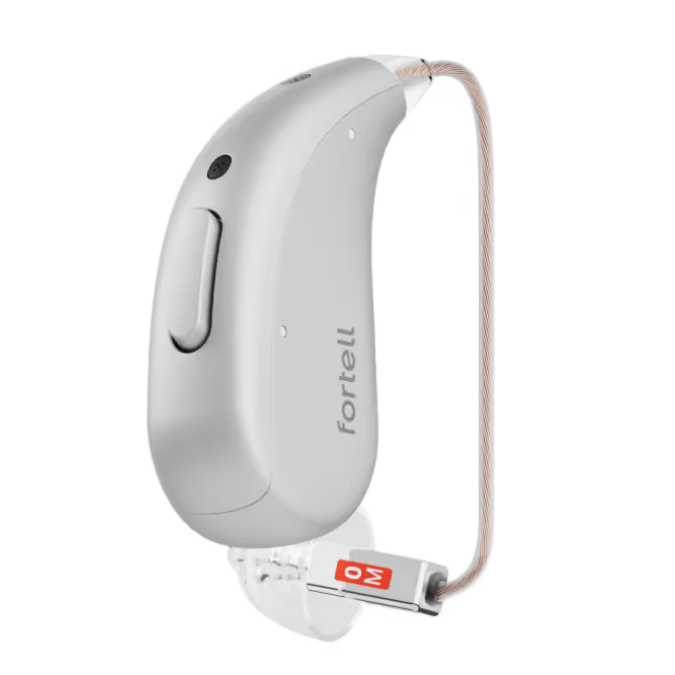



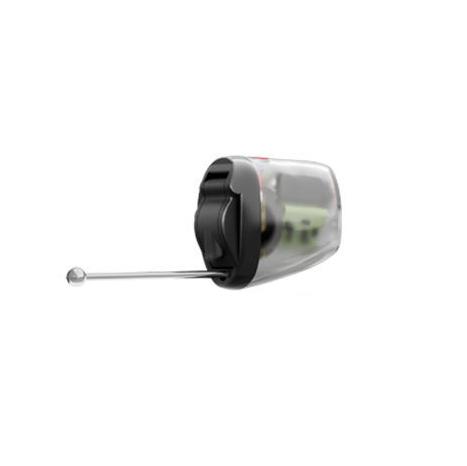
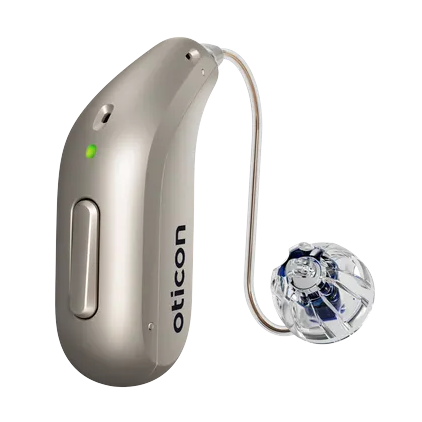
Oticon Reveal
- Receiver in Canal
- Prescription
- Rechargeable
- Bluetooth
- Telecoil
- IP68
Explore hearing aid types, costs, and brands. Compare styles, prices and lab-tested performance, with guidance for your first pair or an upgrade.
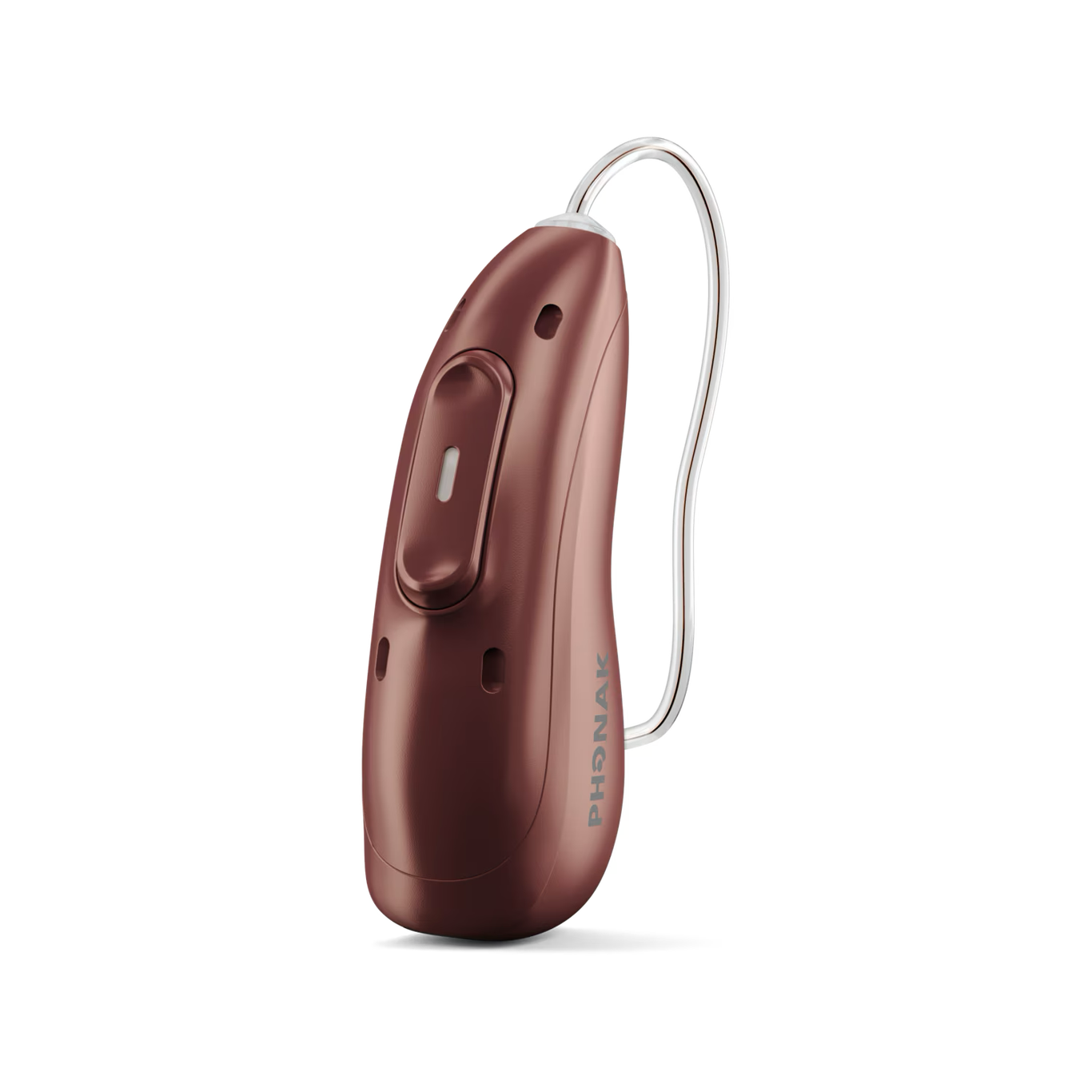
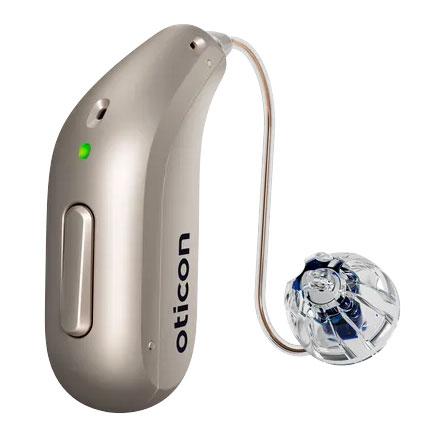
Two models from the research selection below. Not a recommendation. Compare these two, or pick any other pair on our comparison page.
Clinical expertise, independent editorial judgment, and firsthand experience with hearing loss.
At least a week of wear before hands-on ratings, including comfort, handling, and everyday use.
Our partner HearAdvisor uses repeatable lab tests to measure sound performance and calculate the SoundScore.
Our published method explains how lab results, ownership ratings, and price shape the HearingTracker Score.
We may earn commissions from purchase links. Partners cannot buy better ratings or approve conclusions. HearingTracker and HearAdvisor share a founder and personnel.
Hearing aids can sit behind your ear or inside it. The price depends on the technology, where you buy, and the fitting and follow-up care included.
104 models across 53 product families, scored in HearAdvisor’s lab, with prices and sound samples. Pick up to four and put them side by side.
53 product families, 104 models
Hearing aid glossary
Looking that up…
Abbreviations describe the hearing aid’s style and buying category.
Our focused buying guides go deeper into different budgets, features, and listening priorities.
Explore lab-tested prescription, OTC, and earbud-style options, with listening results and trade-offs for each.
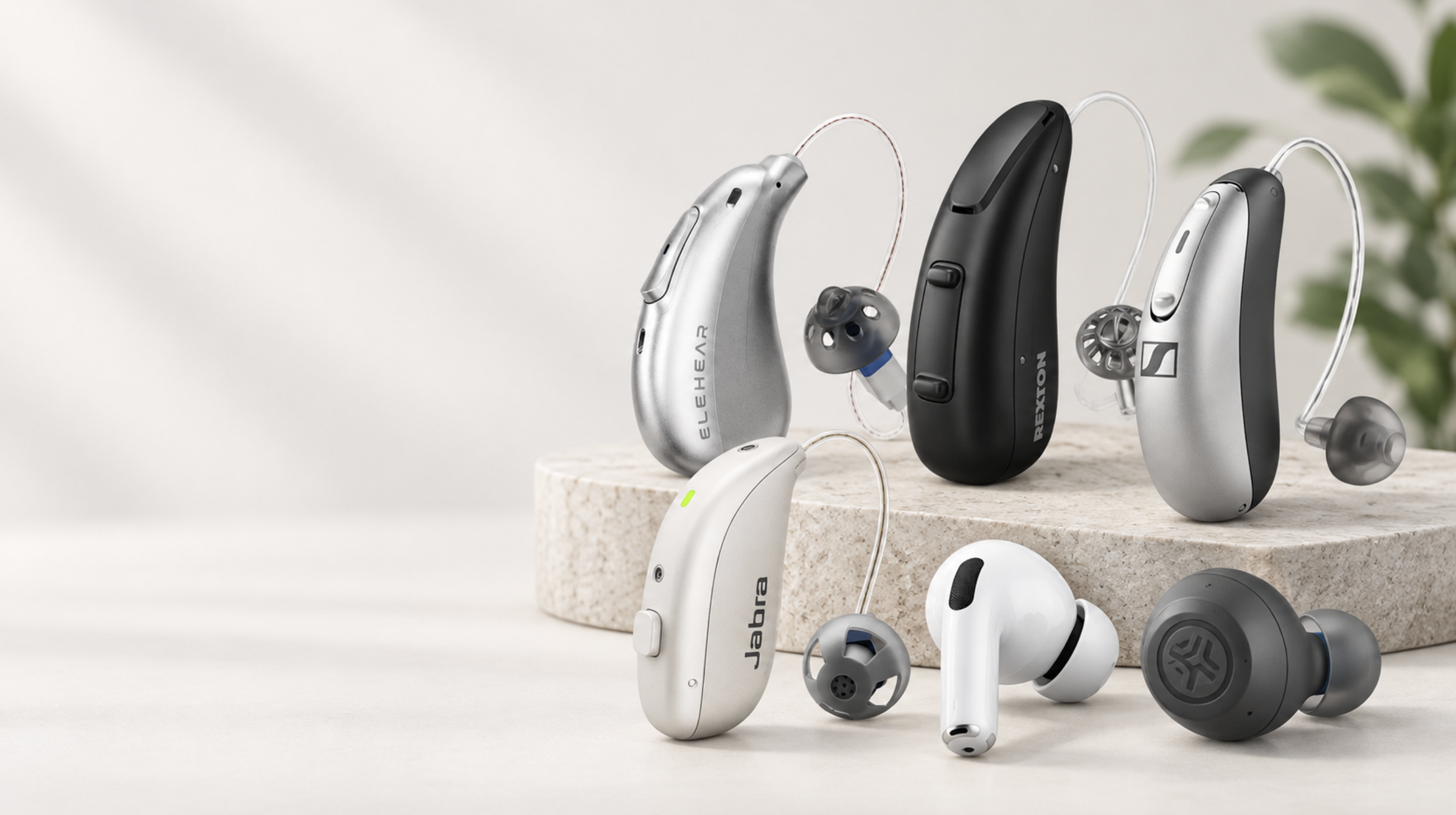
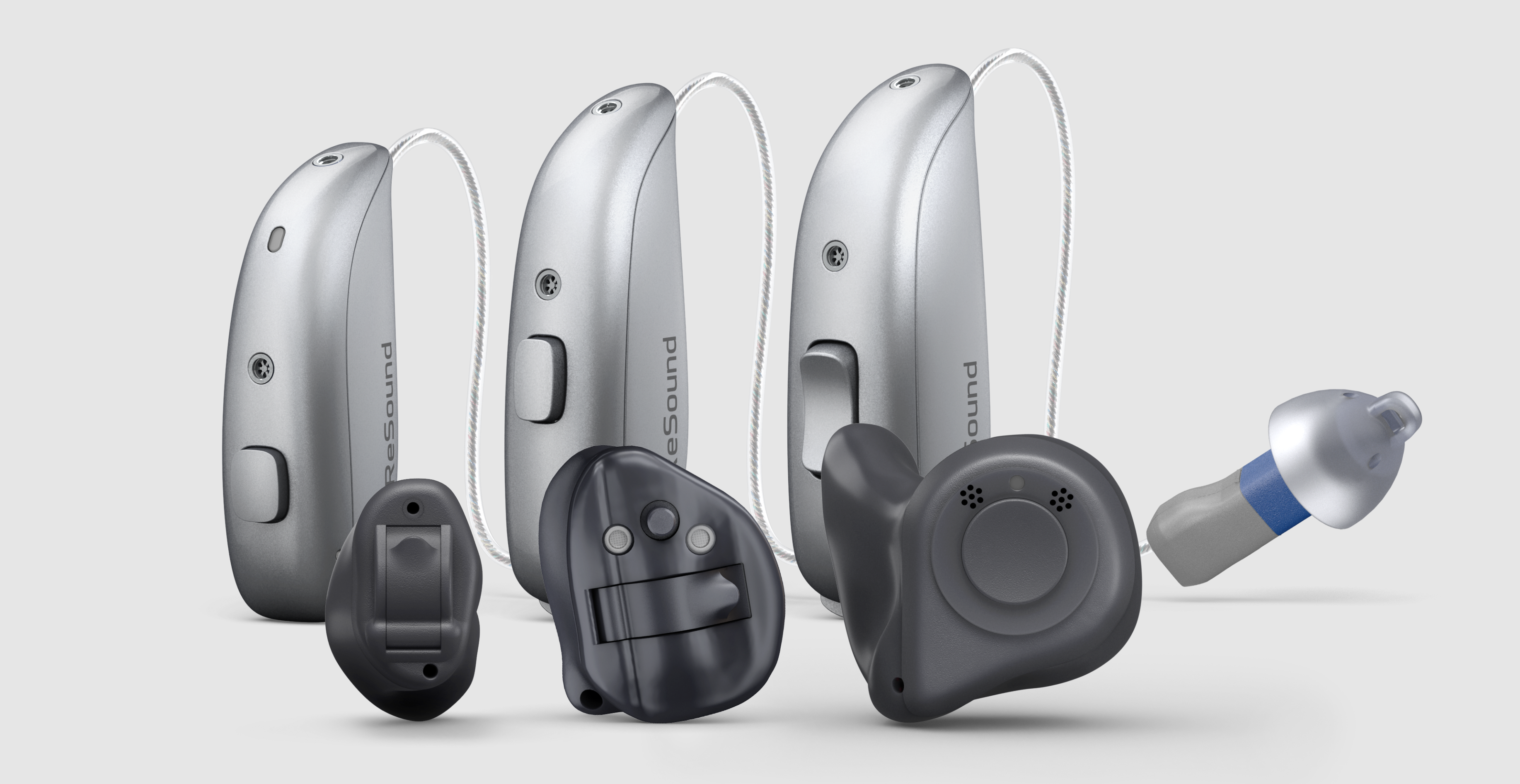
Read the background‑noise guide (new tab)Behind-the-ear hearing aids include traditional BTE and receiver-in-canal (RIC) designs. In-ear styles range from larger ITE shells to smaller ITC, CIC, and IIC devices. Each has trade-offs in fit, handling, and features.
The research selection above uses receiver-in-canal styles only.
Explore more styles in the full directory (new tab)The microphone, processor, amplifier, and speaker all sit in the case behind your ear. A hollow tube carries sound to an earmold or dome.
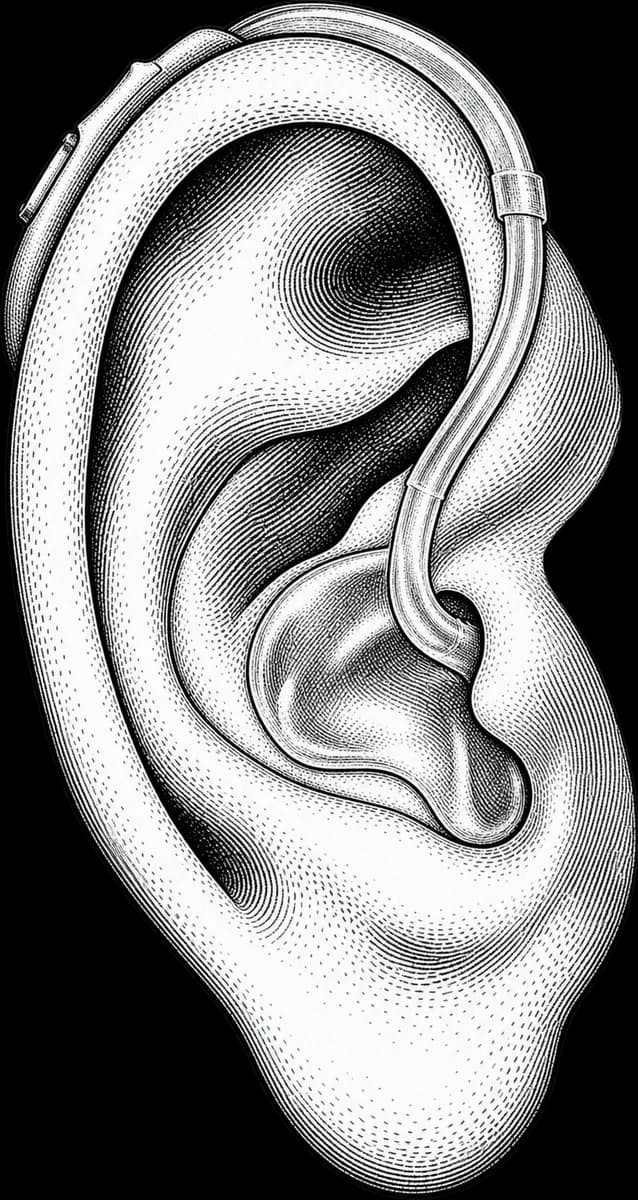
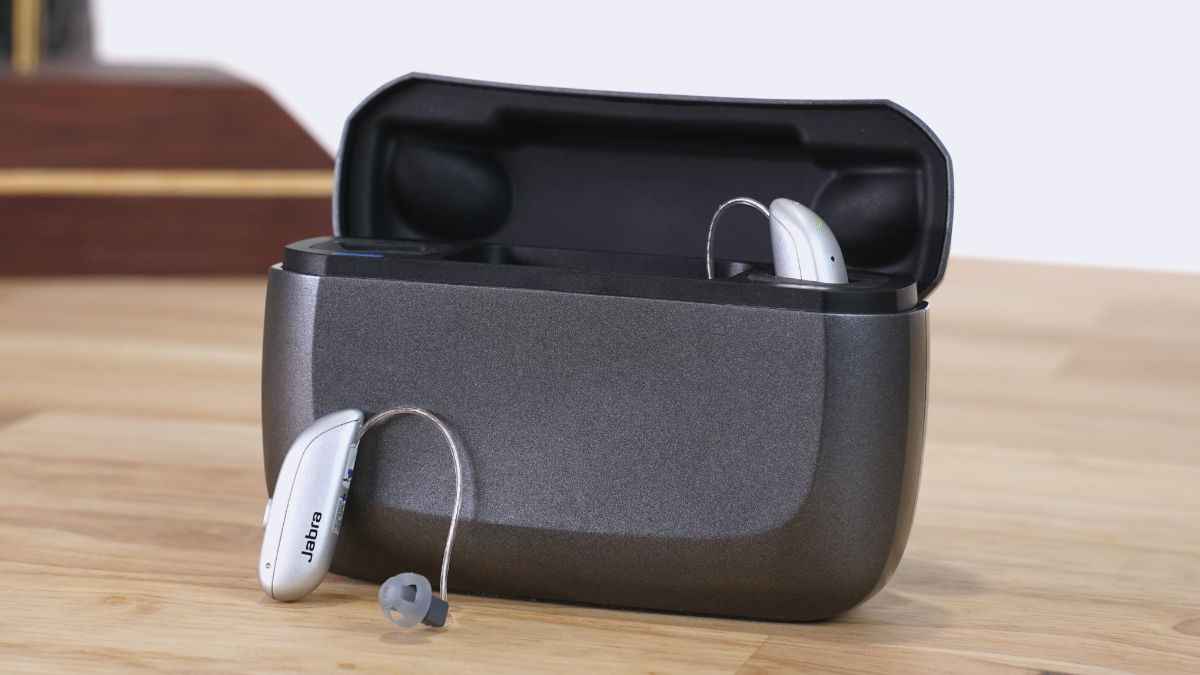
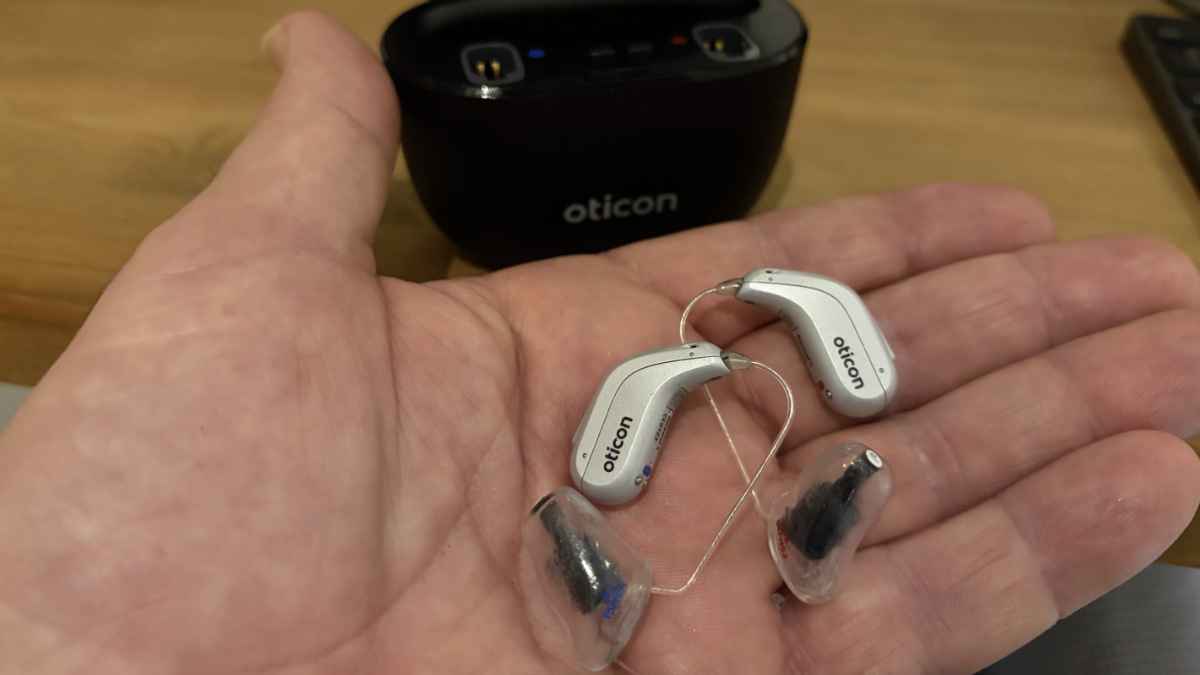
A small case behind your ear connects by a thin wire to a speaker in the ear canal, fitted with an open dome, a closed dome, or a custom earmold.
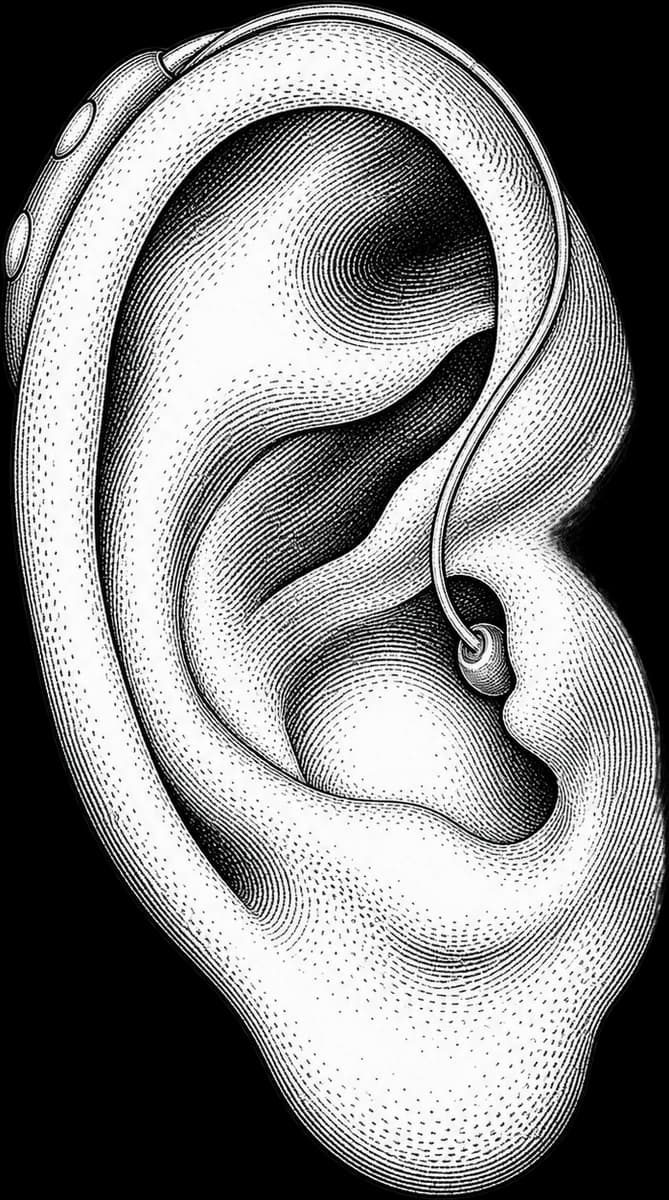
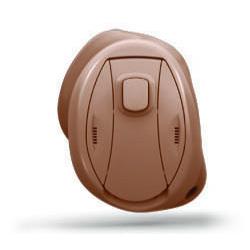
The electronics sit in the outer ear or canal, often in a custom-fit shell: ITE in the outer ear, ITC partly in the canal, CIC and IIC farther inside.
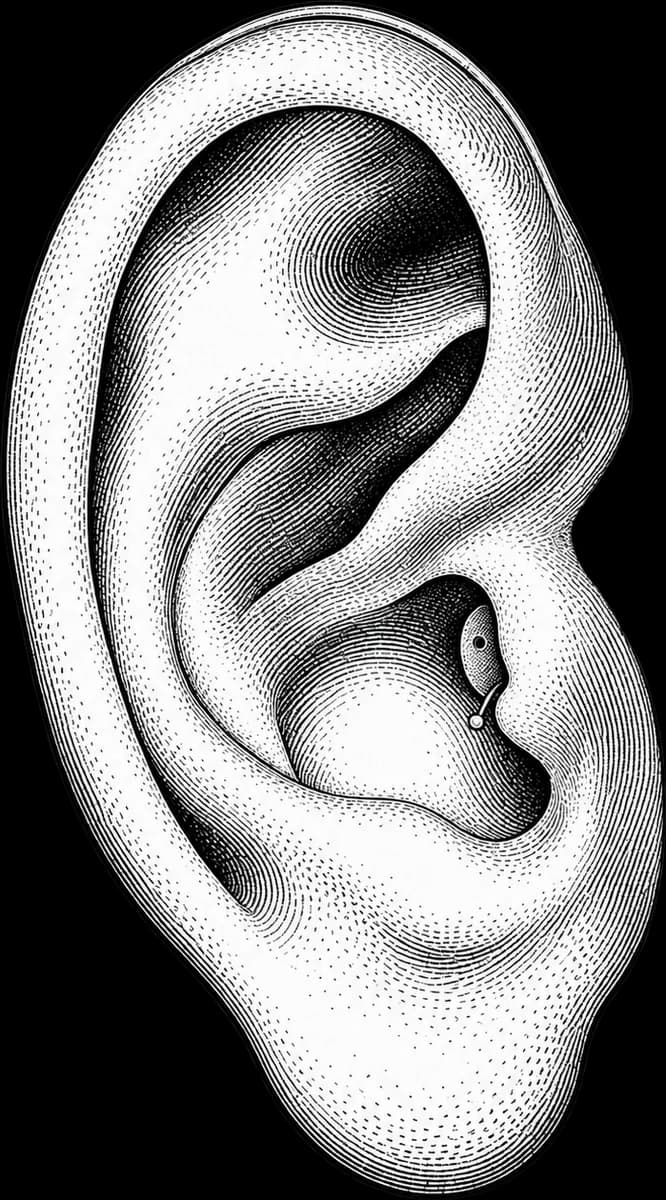
Style alone does not set the price. BTE, RIC, and custom in-ear aids come in different technology levels and service packages, so compare equivalent models and ask whether fitting, earmolds, follow-up visits, repairs, and a trial period are included.
Digital describes how sound is processed, not where the aid is worn. A computer chip adjusts amplification for different pitches and listening situations; analog devices are now less common.
HearingTracker’s 2025 survey found an average price of $2,694 for a pair of hearing aids among US purchasers who reported a price. The buying channel made a substantial difference, as the chart shows.
Digital hearing aid prices reflect more than where you buy:
Ask for an itemized price and compare the total package.
Based on 879 US pair purchases in our 2025 survey; excludes hearing aids obtained through the VA. These are survey averages, not quotes for a particular model. See the full price survey and methodology.
Hearing aids make sounds more audible for people with hearing loss. Your hearing, comfort, daily listening, and support needs all matter when choosing a pair.
A microphone picks up sound, electronics process and amplify it, and a small speaker (the receiver) delivers it to your ear. A rechargeable or replaceable battery supplies power.
How hearing aids work (new tab)Directional microphones help focus on speech from a particular direction while reducing sounds from elsewhere. Some newer hearing aids also use AI noise reduction to help separate speech from background noise. How much these features help depends on the hearing aid, its fitting, and the listening situation.
Find hearing aids for background noise (new tab)A remote microphone worn by a conversation partner or placed on a table sends their voice directly to compatible hearing aids. This can make conversation easier to follow in noise or across a room. TV streamers can send television audio straight to your hearing aids.
Hearing aid apps let you adjust volume and listening programs on your phone. Some also offer noise reduction controls or remote adjustments from a hearing professional. Available features depend on your hearing aids and phone.
Explore hearing aid accessories (new tab)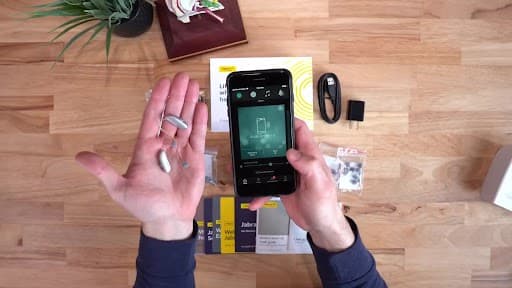
Consider handling small parts, charging or replacing batteries, phone compatibility, and difficult listening situations. A hearing professional can help you weigh the trade-offs.
Get help with the pair you have, from your first fitting to everyday connections and care.
Explore the choices together and make room for their preferences.
Bring the list to a conversation with a hearing care professional.
Prepare with the first-pair buying guide (new tab)A hearing aid brand is not always a separate manufacturer. Five groups make most prescription hearing aids, and retailers may sell their own branded products, so compare the model, fitting, and support as well as the name.
Stäfa, Switzerland
Largest hearing aid group
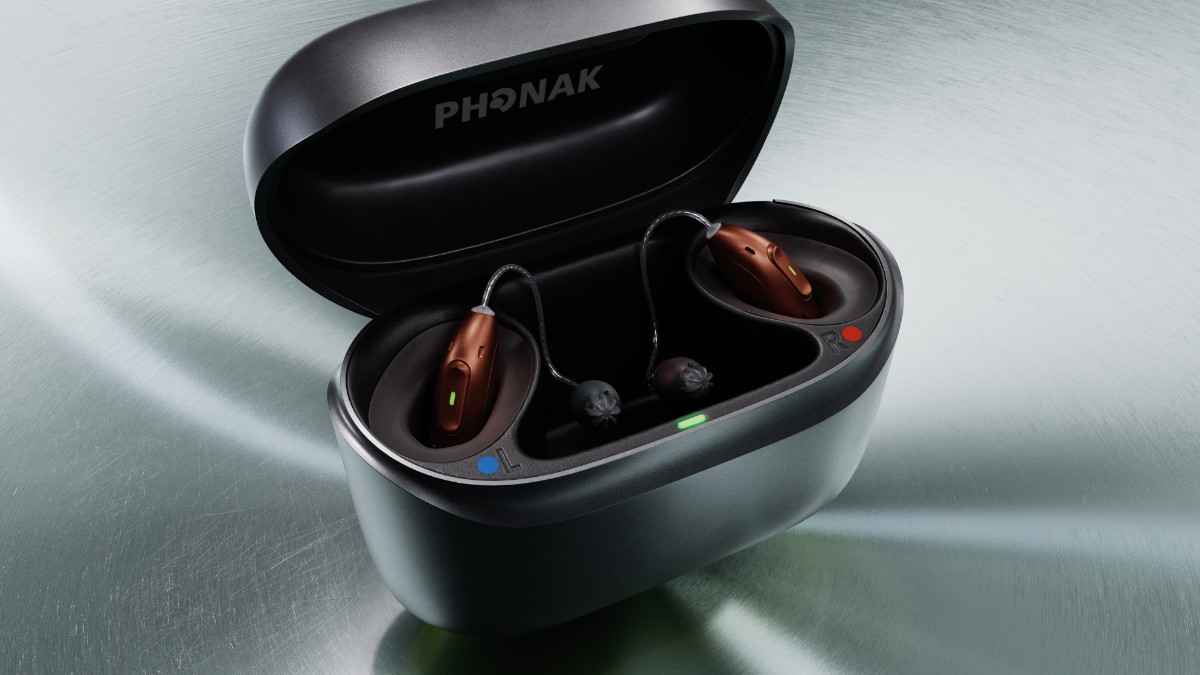
Phonak, founded in Switzerland in 1947, is the top-selling hearing aid brand worldwide; its holding company took the Sonova name in 2007. Phonak shipped the first lithium-ion rechargeable hearing aid in 2016 and still makes Lyric, the only extended-wear invisible aid. The group also owns the AudioNova clinic network and Advanced Bionics cochlear implants.
Smørum, Denmark
Second-largest group
Oticon was founded in 1904 by Hans Demant, whose wife had hearing loss. It launched the first fully digital behind-the-ear aid in 1996 and introduced Made-for-iPhone connectivity with Opn in 2016; Oticon Intent uses motion sensors to judge what the wearer is trying to hear. Demant also makes diagnostic audiology equipment and bone-conduction implants.
Lynge, Denmark
Third-largest group
Formed in 2019 when Denmark’s Widex merged with Germany’s Sivantos, the former Siemens hearing business. Widex built the first digital in-ear aid and keeps a following among musicians; Signia carries the Siemens directional-microphone heritage into its Integrated Xperience line, and Rexton, sold at Costco, shares that technology. WS Audiology also owns the HearUSA clinics and hear.com.
Ballerup, Denmark
Fourth-largest group
ReSound began in the San Francisco Bay Area in 1986 and joined GN in 1999. It claims a run of firsts: the first open-fit aid, the first 2.4 GHz wireless streaming aid, the first Made-for-iPhone aid, and with Nexia the first aid ready for Auracast broadcast audio. Beltone sells through its own network of clinics, and Jabra Enhance covers GN’s online and Costco lines.
Eden Prairie, Minnesota
Fifth-largest group and the only one based in the US
Founded by Bill Austin in 1967, Starkey built its name on tiny custom in-ear aids and offers rechargeable completely-in-canal models in its Signature Series. In 2018 it introduced Livio AI, combining hearing technology with activity tracking; Omega AI, launched in October 2025, uses deep-neural-network processing.
Market positions are HearingTracker estimates. No single brand suits everyone, so ask which brands your provider fits.
Compare clinic chains, big-box retailers, online sellers, and care networks.