Phonak Lyric 4: Invisible Hearing Aids You Wear 24/7
)
Our expert team selects and tests products rigorously. We may earn commissions if you buy through our links. Here's how we keep reviews independent.
Hearing aid glossary
Looking that up…
Terms are matched automatically. A definition may not fit every context.
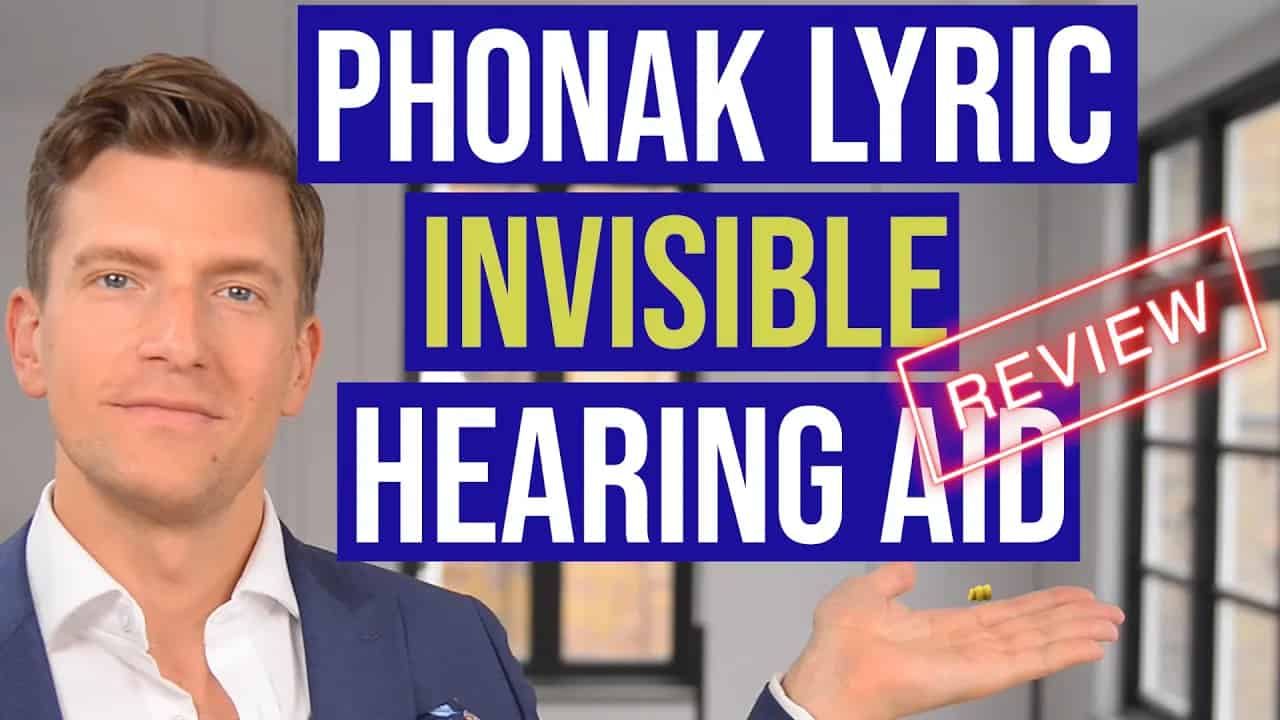
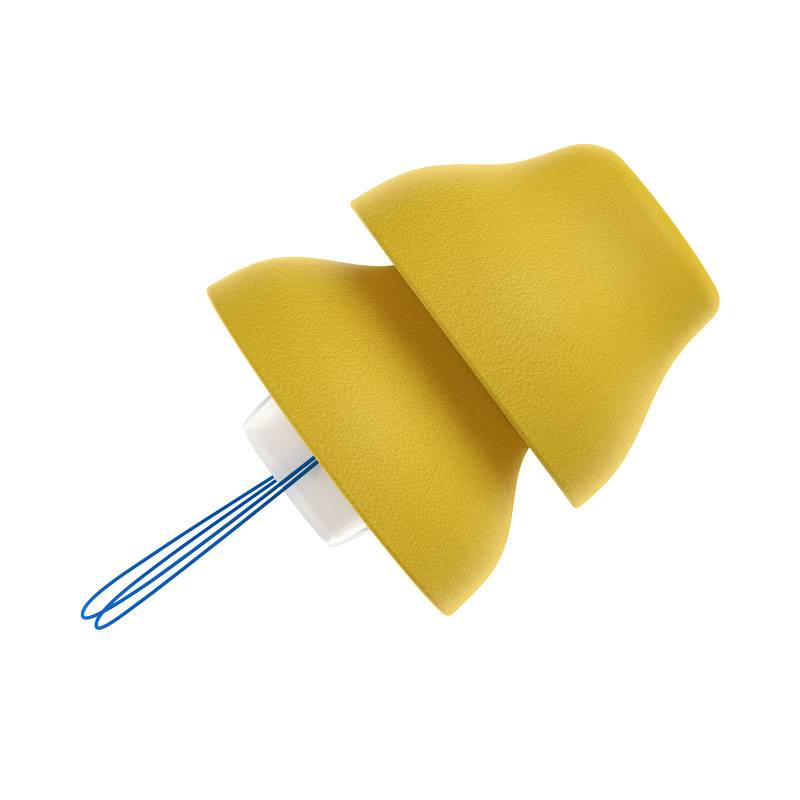
Lyric is one of the most unique hearing aids on the market. Unlike other hearing aids, Lyric is inserted deeply into the ear canal by a specially-trained audiologist or otolaryngologist, where it stays for months at a time. There is no need to recharge the batteries at night, and you don't need to take the hearing aids out when working out, showering, or going to bed. When the battery does need replacing, your Lyric devices would need to be removed and reinserted by a specialist.
Is Lyric really invisible?
Yes. Lyric is the most invisible hearing aid that we're aware of. The deep insertion means it is very difficult, if not impossible, for those around you to see the device. Phonak has been marketing Lyric as an invisible device for years, and the FTC would have stopped them by now if it weren't true.
Does Lyric sound natural?
Lyric is manufactured by Phonak, the global hearing aid leader. Phonak claims that Lyric 4 achieves a "clear, natural sound" by collecting sound deep within the ear canal, rather than from microphones placed outside the ear or behind the ear (like traditional hearing aids). Considering the importance of the pinna effect, this claim actually makes a lot of sense.
How will my voice sound?
Lyric's unique deep insertion means your voice will sound much more natural than it would with other in-the-ear style hearing aids. As it turns out, the smaller the cavity between a hearing aid and the eardrum, the less the occlusion effect (the effect that causes booming in your ear when you speak, etc).
Does Lyric help with tinnitus?
Phonak has published some evidence that the Lyric can help relieve the symptoms of tinnitus. This makes sense given the general role that hearing aids in relieving the symptoms of tinnitus related to auditory deprivation. But, with Lyric being worn at night, the device offers a unique approach to helping relieve tinnitus even at night, when it can be most bothersome to some. While the evidence is still emerging, it seems reasonable that many people would expect an improvement in their tinnitus by wearing Lyric.
Is Lyric 4 better than Lyric 3?
In a recent press release, Phonak outlines the new benefits of Lyric 4 over the previous generation.
- Comfort: A reduction of the medial portion of the module by 0.3mm led testers to rate the new Lyric4 as significantly more comfortable than the previous generation.
- Reliability: A new debris collection design means less clogging from earwax.
- Fitting Rate: Lyric is successful with 75% of appropriate candidates. Phonak believes the reduced medial module should improve the success rate, but this has not been measured.
Is Lyric for everyone?
Lyric is not for everyone. If you have any of the following, you may not be a good candidate for Lyric:
- Short, narrow, or sensitive ear canals
- Heavy earwax (cerumen) production
- Taking blood thinners
- Severe to profound hearing loss
- Sharply sloping hearing loss (ski slope loss)
- A history of ear-related medical conditions
- Underwater swimming or diving


There may be other factors not listed above. Please consult a local Lyric provider to find out if you are a good candidate for the devices.
Potential downsides of Lyric
An annual subscription to the Lyric solution is purchased through a network of independent Lyric providers. Some have questioned the long-term cost of the subscription, with most subscribers paying more than they would for a standard pair of hearing aids at that time.
There is also the question of device reliability. While Phonak has made improvements to the debris collection in Lyric 4, it is still possible that your devices will die frequently and need to be replaced. This means no hearing from the ear(s) with the dead Lyric(s) until your specialist appointment.
Until recently, Lyric also required you to visit your provider's office 4-6 times per year for replacement of the device when its battery power waned; with new clearance announced in May 2024 for self-replacement, the number of visits has been halved for some experienced users.
Lastly, you won't get the same connectivity options offered by modern Bluetooth hearing aids. So that is something to consider if you're wanting iPhone / Android streaming connectivity etc.
Consider These Discreet Alternatives
If you’re drawn to Lyric for its true “invisible” wear, two other ultra-discreet options are worth a look—one prescription and one over-the-counter. Each preserves a low-profile look while trading off different features around connectivity, control, maintenance, and cost.
Prescription: Phonak Virto Infinio
Virto Infinio is Phonak’s latest custom line powered by the ERA chipset. It includes the rechargeable, wireless Virto R alongside two tiny non-wireless options: Virto 10 NW O and Virto Titanium CIC/ with a titanium shell rated 15× stronger than acrylic. All models carry an IP68 rating.
:format(webp))
Compared with Lyric, Virto emphasizes personalization and day-to-day control. The ERA platform with 3.0 and AutoSense OS 6.0/7.0 adapts automatically to changing soundscapes, and Phonak’s newer fitting approach (including RightFit modeling, acoustically optimized receivers, and Harman-curve targeting) aims for a natural frequency response and improved comfort. The Virto R adds rechargeability plus universal Bluetooth for hands-free calling and audio streaming with iOS and Android.
The smallest /Titanium variants are essentially invisible but forgo wireless features and rechargeability. None of the Virto models use size 312 or 13 batteries, which limits larger-battery options. Typical pricing ranges from about $2,500 to $4,000 per ear depending on style, technology level, and clinic.
Over-the-Counter: Zepp Clarity Pixie (near-invisible instant-fit CIC)
Zepp Clarity Pixie is an , nearly invisible designed for mild–moderate losses. It ships with soft multi-flange tips for instant fit, offers app-based controls (including an on-ear hearing assessment and basic EQ), and claims up to 17 hours per charge with a pocketable case that doubles as a power bank. In practice, pricing is commonly at or below $999 per pair.
:format(webp))
Pixie prioritizes discretion and simplicity over advanced wireless features. It does not stream audio, tap controls are not synchronized left/right, and the rating is X7 (good moisture protection, dust protection not published). As with any device, there’s no professional fitting or verification by default, so outcomes will vary.
Which discreet route fits best?
Choose Lyric if you want the most invisible, extended-wear, set-and-forget experience and can live without Bluetooth or daily charging. Consider Virto Infinio if you want custom-molded discretion with clinical personalization and, in the Virto R , full rechargeability and streaming. Look at Zepp Clarity Pixie if you want a very low-visibility, budget-friendly OTC option and are comfortable with self-fit trade-offs and no audio streaming.
Abram Bailey, AuD
Founder and PresidentDr. Bailey is a leading expert on consumer technology in the audiology industry. He is a staunch advocate for patient-centered hearing care and audiological best practices, and welcomes any technological innovation that improves access to quality hearing outcomes. Dr. Bailey holds an Au.D. from Vanderbilt University Medical Center.